Photo of the Week – June 19, 2015

I’ve been on a family vacation to the Corpus Christi, Texas area this week.  It’s been a great week, with pleasant weather and lots of beach exploration.  I’ll have more photos to share next week, but today wanted to share a plant that I very much enjoyed photographing down here.
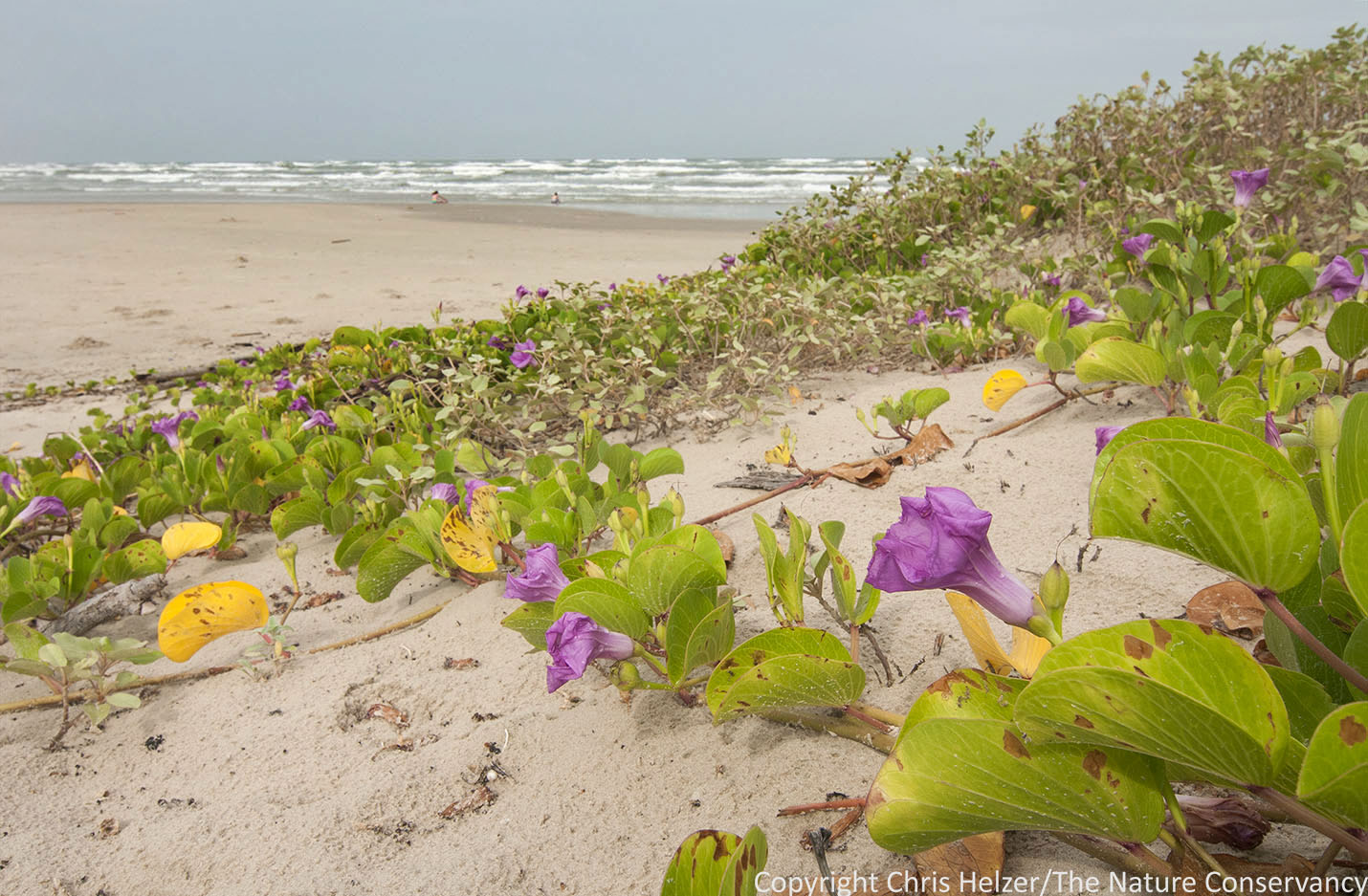
Railroad vine in bloom at Padre Island National Seashore, Texas.

Railroad vine in bloom at Padre Island National Seashore, Texas.

Railroad vine, or beach morning glory (Ipomoea pes-caprae) is a native vine that sprawls across many of the dunes along the beaches of the Gulf Coast of Texas.  Although it is in the same plant family as the bindweed I’m fighting in my home garden, it wasn’t hard to appreciate its color and character.

ENPO150617_D011

We spent Thursday at San Jose Island, just north of Port Aransas, Texas.  Railroad vine was common on the beach dunes there as well.  Also abundant on those dunes were grasshoppers of many colorful species.  The two interacted in at least some cases, with the grasshoppers feeding on the flowers of the vine.

Grasshopper feeding on railroad vine flowers.  San Jose Island, Texas.

Grasshopper feeding on railroad vine flowers. San Jose Island, Texas.

It turns out that photography (at least for me) along the beaches of the Texas Gulf Coast is much like it is in the prairies of Nebraska.  I walk through the vegetation and appreciate the scenery, but mostly focus in on the small creatures (like grasshoppers) living there.  More on that next week…

ENPO150618_D037


Photo of the Week – June 12, 2015

While I was doing some vegetation monitoring in a native hay meadow this morning, I found a bobolink nest.

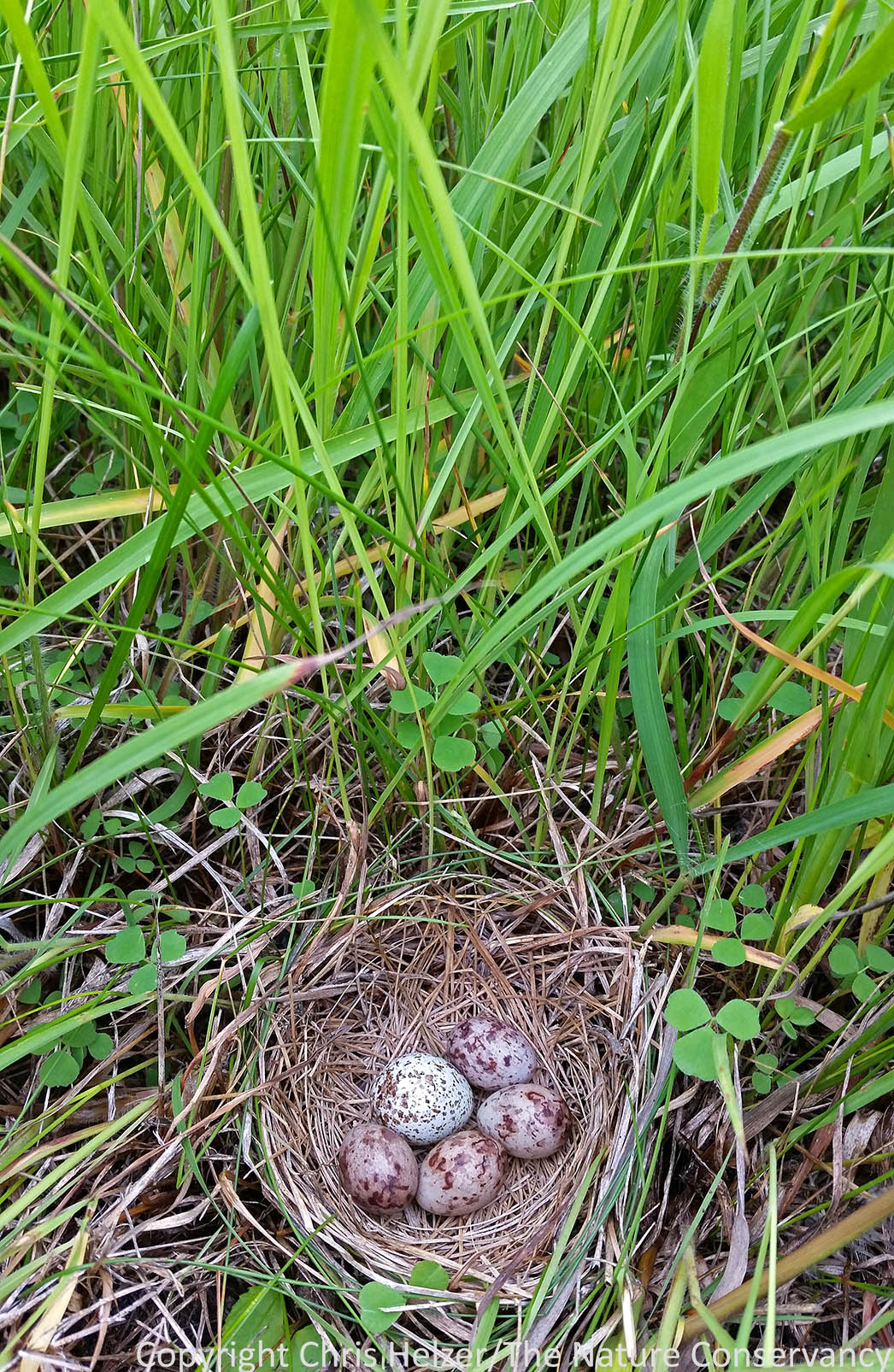
Bobolink nest hiding in the grass - Platte River Prairies, Nebraska.

Bobolink nest hiding in the grass – Platte River Prairies, Nebraska.  Four bobolink eggs and one cowbird egg.

If you’re not familiar with grassland nesting birds, the idea of building a nest right on the ground might seem pretty silly and dangerous.  However, while a predator doesn’t have to fly or climb into a tree to get to the eggs, it still has to find them, and that can be pretty difficult when the nest is out in the middle of a large grassland.  To illustrate how well hidden the above nest was, here is a series of photos taken at various heights above it.

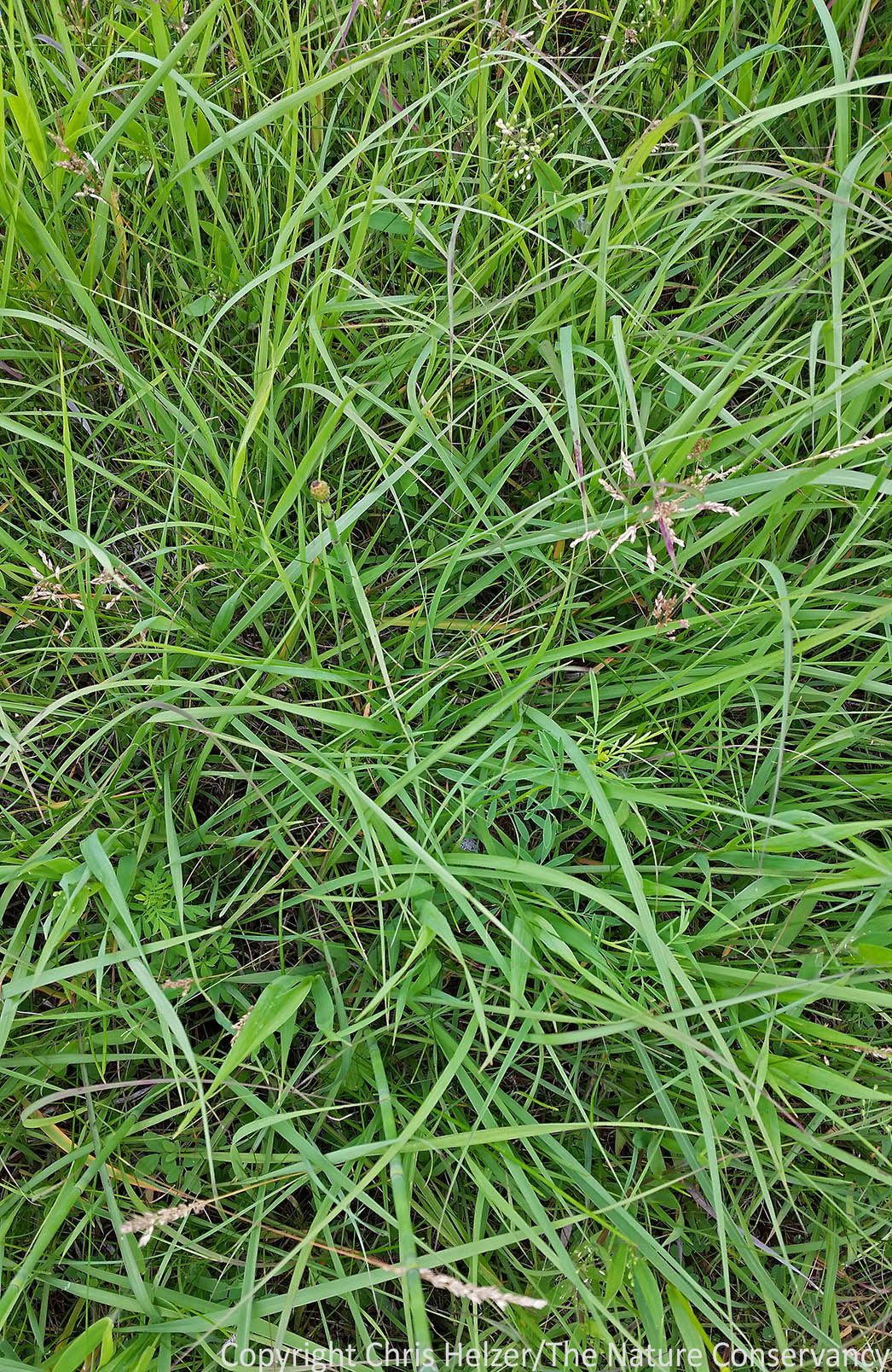
I took these photos with my phone.  This first one was taken about 2 feet  above the vegetation, which was itself about a foot and a half tall.  Can you see the nest?  (No you can't)

I took these photos with my phone. This first one was taken about 2 feet above the vegetation, which was itself about a foot and a half tall. Can you see the nest? (No you can’t.)

This photo was taken right at the height of the vegetation.  If you look closely, you can see the eggs below.

This photo was taken right at the height of the vegetation. If you look closely, you can see the eggs below.

A little closer.

A little closer.

ENPO150612_D003

This image makes the nest look very exposed, but only because I was holding the vegetation away from it to get a good photo.

The only reason I found the nest is that I crouched down in the vegetation a few feet from the nest to examine the plants in my plot frame.  About a minute later, the female bobolink fluttered out of the nest.  She must have waited anxiously as long as she could stand it, but my continued presence that close to the nest finally flushed her – allowing her to fly to safety but exposing the location of her nest.  Fortunately for her and her unborn chicks I took only photographs.  I wish her the best with her family, including one (so far) cowbird.

(For those of you who might not know the story of brown-headed cowbirds, they are brood parasites who drop their eggs in the nests of other bird species.  Those host birds then raise the cowbird young – often at the expense of their own.  This is a host-parasite relationship that has been going on for thousands of years in North American prairies.)