Unknown's avatar

About Evan Barrientos

Evan Barrientos is a naturalist and conservationist living in Fort Collins, Colorado. His passion is using photography, videography, and writing to inspire people to explore and care for nature. He works for the National Audubon Society as the communications and marketing manager for Colorado, Wyoming, and Utah.

Hubbard Fellowship Blog – Wasp Slumber Party

This post was written by Evan Barrientos, one of our Hubbard Fellows.  Evan is a talented writer and photographer and I encourage you to check out his personal blog.
08032015_nebraska_1906

I was enjoying a sunset walk in the prairie when I stumbled upon an alarming sight: several dozen large wasps covering a clump of grass. They had menacing eyes and dagger-like stingers, but I wanted photos of this new species so I could identify and learn more about them. Cautiously edging closer and closer to the wriggling mass of black and yellow, I got my photos and escaped unscathed. Thanks to these photos I was later able to identify these wasps to the Myzinum genus, and by doing so learned that there was absolutely nothing dangerous about them.

08032015_nebraska_1956

After doing some research, it turns out that these wasps weren’t forming a murderous attack squad; they were  just having a big ‘ol slumber party. Male Myzinum wasps are known to sleep together in large groups such as this, although no one seems to know why. Furthermore, males don’t even have stingers, just curved spines that seem to only serve as intimidation. During they day they feed on a vegetarian diet of nectar and look for females to mate with. The females, however, are a little less gentle.

08032015_nebraska_1921

Females actually have functional stingers and they’re bigger, built for digging underground in search of scarab beetle larvae.  Like the last wasps I wrote about, Myzinum larvae are parasitoids, parasites that kill their hosts. When a female Myzinium finds a scarab beetle larva, she paralyzes it with neurotoxins injected from her stinger lays a single egg on it. After hatching, the wasp larva devours its host like a sci-fi alien.

So the next time you find a swarm of scary-looking wasps, instead of grabbing the can of wasp spray, consider that they might just be harmless insects that pollinate your flowers and eat the beetles that damage your flowers and lawn.

For more information:

Hubbard Fellowship Blog – The Vanishing Sparrow

This post was written by Evan Barrientos, one of our Hubbard Fellows.  Evan is a talented writer and photographer and I encourage you to check out his personal blog.

A small brown bird that sounds like it doesn’t even want to be singing; what could possibly be interesting enough about this to justify a blog post? As is often the case in nature, there’s a lot more than meets the eye (and ear). In my ten years of birdwatching I had only seen this species once before, six years ago. Central Nebraska is on the far western edge of its range, so I was thrilled to document it attempting to breed in one of our prairies. It turns out, this brown speck is an elusive and declining species that epitomizes why we need to manage our prairie so that the full range of habitat structure is present.

06142015_nebraska_9145

A Henslow’s Sparrow, not normally found in the Platte River Prairies, made an appearance last June.

Often described as “mouselike,” Henslow’s Sparrows spend most of their time on the ground and prefer to run rather than fly when threatened. The only time they emerge from the grass is to whisper their two-note song, described by Roger Tory Peterson as “one of the poorest vocal efforts of any bird.” While this makes them an exciting challenge to find, it has also made them a difficult species to conserve. Due to their secretive lifestyle, scientists have had a very hard time studying basic facts about their lives, including how many of them there are and what habitat they actually prefer. While most sources say that Henslow’s require large grasslands free of trees and shrubs, there are some shrubby prairies that actually have high Henslow’s populations, such as in Missouri. What is certain is that many of the pastures and hayfields that Henslow’s once nested in have been converted to row crops over the last forty years. Lack of fire and grazing in the remaining grasslands have let trees and shrubs establish, which seem to deter nesting in most cases. As a result, Henslow’s are thought to have declined even more than other grassland birds, although it’s difficult to tell for sure.

The prairie where I found the Henslow's Sparrow, photographed later in the year.

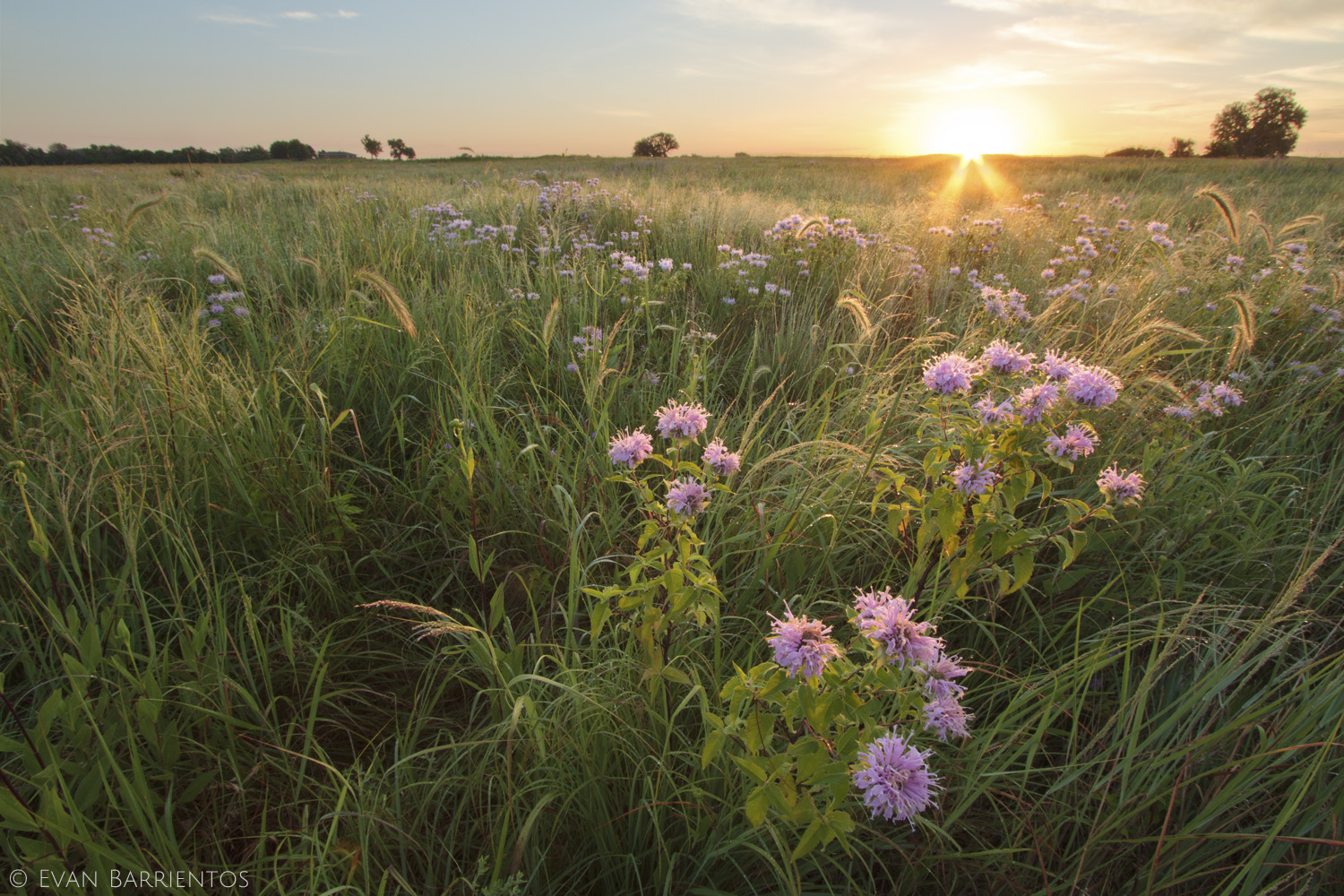
This is the prairie where I found the Henslow’s Sparrow, photographed a month later. To breed, Henslow’s Sparrows seem to prefer large, treeless prairies with tall, dense vegetation. This habitat is becoming scarce in many areas.

Fortunately, land managers and owners can provide suitable habitat for this species by conducting prescribed burns; removing fencelines, hedgerows, and trees; and allowing the grass in some areas to grow tall and rank. The management strategy that The Nature Conservancy practices here on the Platte River Prairies, called patch burn grazing, helps create this habitat. Additionally, Henslow’s have shown signs of adapting to grasslands created by the Conservation Reserve Program. But convincing people to care about species like Henslow’s might be more difficult. How do we raise appreciation for tiny species that require binoculars, excellent hearing, and lots of patience to see well? It’s tough, but I think an important part of enjoying a Henslow’s is understanding how lucky you are to find one. If you do, it probably means that you’re in a scarce type of grassland, a great observer, and a bit lucky. Drab as they may be, Henslow’s are a special species to find. In many ways, Henslow’s Sparrows epitomize the challenges facing all grassland species. For them to survive, we must preserve large tracts of grassland, manage them for specific conditions, and learn to appreciate prairies slowly and thoughtfully.

Sadly, after two weeks of singing, our Henslow’s Sparrow vanished for the rest of the year. Perhaps the prairie wasn’t big enough, or the grass thick enough, but I wish him luck, and I hope it’s not six more years until I find another.

For more information about Henslow’s Sparrows: