

The “tails” on the backside of the wings set the eastern tailed-blue apart from other relatives in our area
Though it’s one of the more common butterflies in this part of Nebraska, the eastern tailed-blue doesn’t get much attention. One reason is that it is pretty small. With a wingspan of about an inch, it isn’t much bigger than the white clover flowers it’s often feeding on in our yard. Its name comes from the protrusions on its wings that set it apart from other blues (butterflies in the subfamily Polyommatinae). The name “blue” comes from the striking color on the dorsal side of the wings of males.
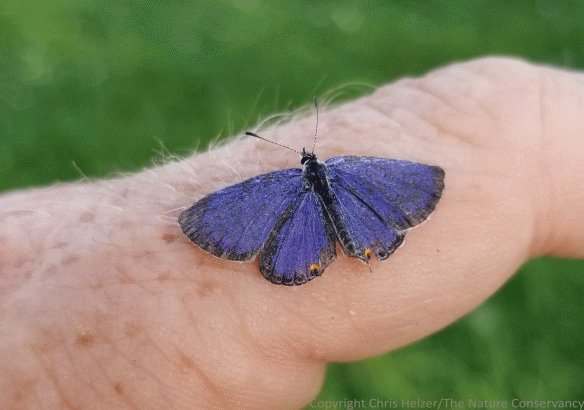
An eastern tailed-blue displaying its incredible blue color while sitting on my finger. I found this male in my yard and it was either too weak, tired, or sick, to fly away when I picked it up. It provided an unusual look at the dorsal side of the wings of this species.
Blues rarely show the dorsal (top) side of their wings except in flight. The rest of the time, all we get to see are the pale undersides of the wings, highlighted by dark spots and splashes of orange – the size and arrangement of which help distinguish species from each other. There are several species of little blue butterflies found around here, including the Melissa blue and Reakirt’s blue, but 95% of what I see in the Platte River Prairies and in my yard are eastern tailed-blues.
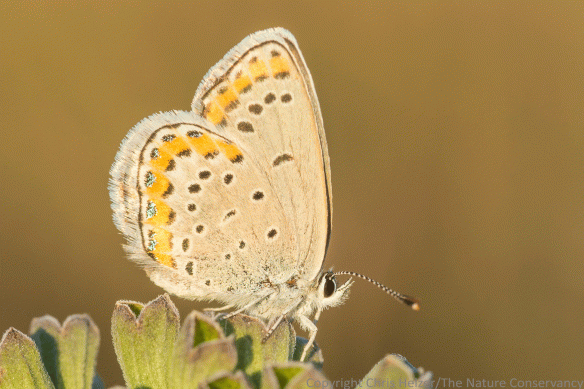
The Melissa blue has much more orange on the ventral side of its wings than the eastern tailed-blue. The endangered Karner blue, found only in a few isolated places in the eastern U.S. is a subspecies of the more widespread Melissa blue.
The eastern tailed-blue is far from the only tiny butterfly hiding in plain sight in prairies and yards across the country, but it’s an easy one to find if you start looking. It’s also one you can feel confident identifying in front of friends and colleagues – assuming you can get close enough to see its little tails…
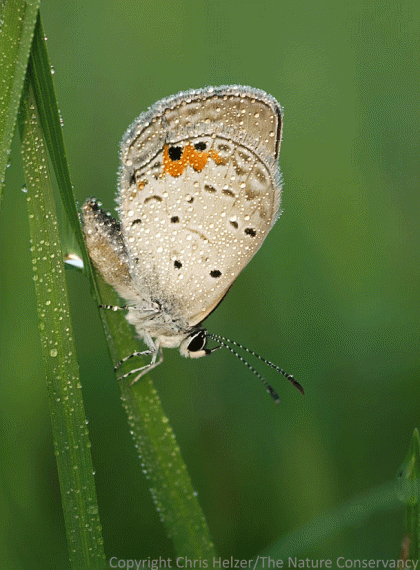
…the tails can sometimes be hard to see when the wings are completely closed…


 The Prairie Ecologist