Hubbard Fellowship Blog- Sprouts

This post was written by Evan Barrientos, one of our Hubbard Fellows.  Evan is a talented writer and photographer and I encourage you to check out his personal blog. If you would like to see more of his photographs, you can follow him on Facebook.

20160321_nebraska_9887

Woolly Plantain (Plantago patagonica) sprouting form a pocket gopher mound.

Watching plants resprout this spring has been really interesting for me. Spending time with Chris Helzer has made me appreciate the small details of prairies, particularly plant diversity and distribution. Through him I’ve learned to read a prairie’s history of management and disturbance even in early spring…and appreciate its minute aesthetics! On March 21 I was taking a sunset walk (looking down rather than at the sky) when I noticed several attractive sprouts growing on the sandy mounds created by pocket gophers as they dig tunnels. I remembered reading how burrowing animals play an important role in plant germination. By providing patches of bare soil, these rodents give seeds an open place to spread their roots and leaves with much less competition from other plants. It was neat to witness this happening for myself!

7D1_0651-INST

On that walk I also found my first flower of the year! Carpeting just a small segment of our trail as it runs through the sandhills were dozens of tiny Sun Sedges (Carex heliophilis) already in bloom. If you weren’t looking for them, you might not even realize what they were. Their flowers were quite small, but in March their waving yellow petals were like thousands of little victory flags. Two nights later, a sudden snowstorm roared through Nebraska. I was eager to see if the delicate flowers had survived, so the next morning I was trekking back to them before sunrise. To my delight, the flowers were still there, poking through the snow. I got on my belly and started photographing. I wanted an image that represented spring’s triumph over winter. As the sun crested the hill it bathed the sedges’ petals in gold. Like dozens of tiny torches, the sedges proclaimed that spring had indeed won.

20160324_nebraska_0788

Sun Sedge (Carex heliophilis) blossoming in snow.
Hubbard Fellowship Blog- Emerging Life

This post was written by Evan Barrientos, one of our Hubbard Fellows.  Evan is a talented writer and photographer and I encourage you to check out his personal blog. If you would like to see more of his photographs, you can follow him on Facebook.

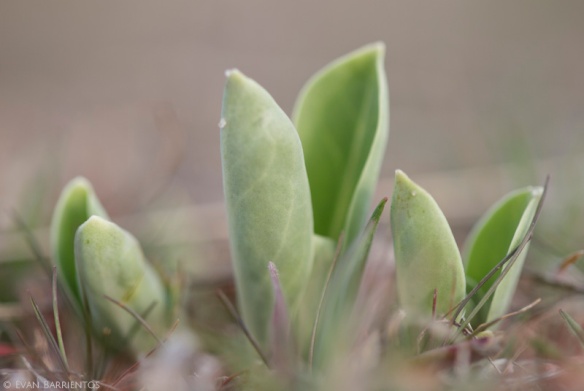
Last week started with beautifully warm weather. Plants, such as this Penstemon grandiflorus, were rapidly sending up tender leaves, eager to rebuild their energy reserves with the sun’s rays.

20160313_nebraska_5315

On a 60 degree Sunday, I was shocked to stumble upon an ant colony hectically rebuilding their nest.

20160313_nebraska_5296

I was repairing a bridge in a muddy part of the prairie on Monday when I noticed a couple puddles no bigger than iPhones. To my amazement, they were brimming with all sorts of life. I lay on my stomach and watched them for several minutes, but I probably could’ve spent an hour staring into them. It amazes me how much life a tiny scrape in the ground can contain, and how quickly that life materializes with a little bit of sun and water. How did so many minute creatures endure a freezing winter and explode so quickly with abundance? My guess is that they spent the winter as eggs in the soil and quickly hatched when the puddle filled with water. But with the very imminent threats of freezing or drying out, these critters must reproduce very quickly. Maybe that’s why they seemed so frantic. (I checked on the puddle yesterday and it was dry. I hope they got done what they needed to!)

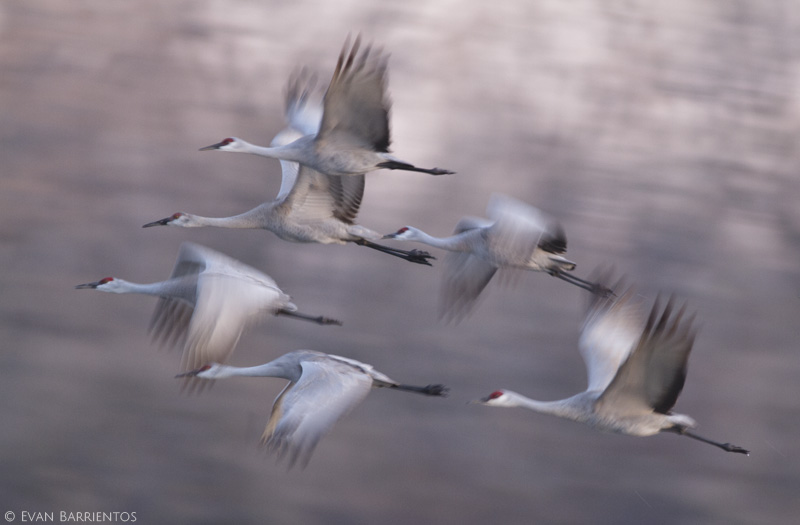
While the warm weather ushered in many new species, it also encouraged the cranes to start leaving, sadly. As I watched the puddle critters, flocks of cranes circled on thermals high into the sky before catching southern winds and continuing on their journey north.

20160314_nebraska_5483

Of course, spring is fickle in nature. By Monday, a cold front produced a spectacular lightning storm that rolled over the prairie.

20160314_nebraska_9809-2

In the days following the storm, the temperature plunged. Cold mornings frosted the tender leaves of plants that had sprouted under more encouraging conditions just days before. I don’t know how plants and animals survive such unpredictable weather at such a vulnerable stage in their lives, yet somehow they do it year after year.

20160316_nebraska_9933