(Nature) Photos From An(other) Ultramarathon

Welcome to the latest in the long, recurring series of posts sharing photos I took while my wife ran very long distances. This time, as a special treat, my son was also running. Not me – I walked around slowly and looked for flowers and spiders.

This past weekend, Kim and John ran a 50K (31 mile) race as part of the FlatRock 101 Ultramarathon along the Elk River Hiking Trail near Independence, Kansas. This was only John’s second 50K run – his first was on the same trail back in September, 2024. In that first race, he finished well behind Kim. This time, he actually beat Kim by about 5 minutes, something I’m sure Kim is absolutely and totally fine with.

Having Kim and John running at similar paces throughout the day made it easier for me to meet them at aid stations and top off their water, etc. as they came through. Since I didn’t have to wait long for one or other to come through station after the other passed, I had more time in-between those stops to wander around with my camera.

Unfortunately, the day was very bright and sunny and there was a strong breeze. It was a great day for running, but a challenging one for photography. As a result, I spent a couple hours doing some photography in the morning, but found other ways to entertain myself the rest of the day.

Rose vervain (Glandularia canadensis) flowers, backlit by the morning sun.
More rose vervain in dappled woodland light.
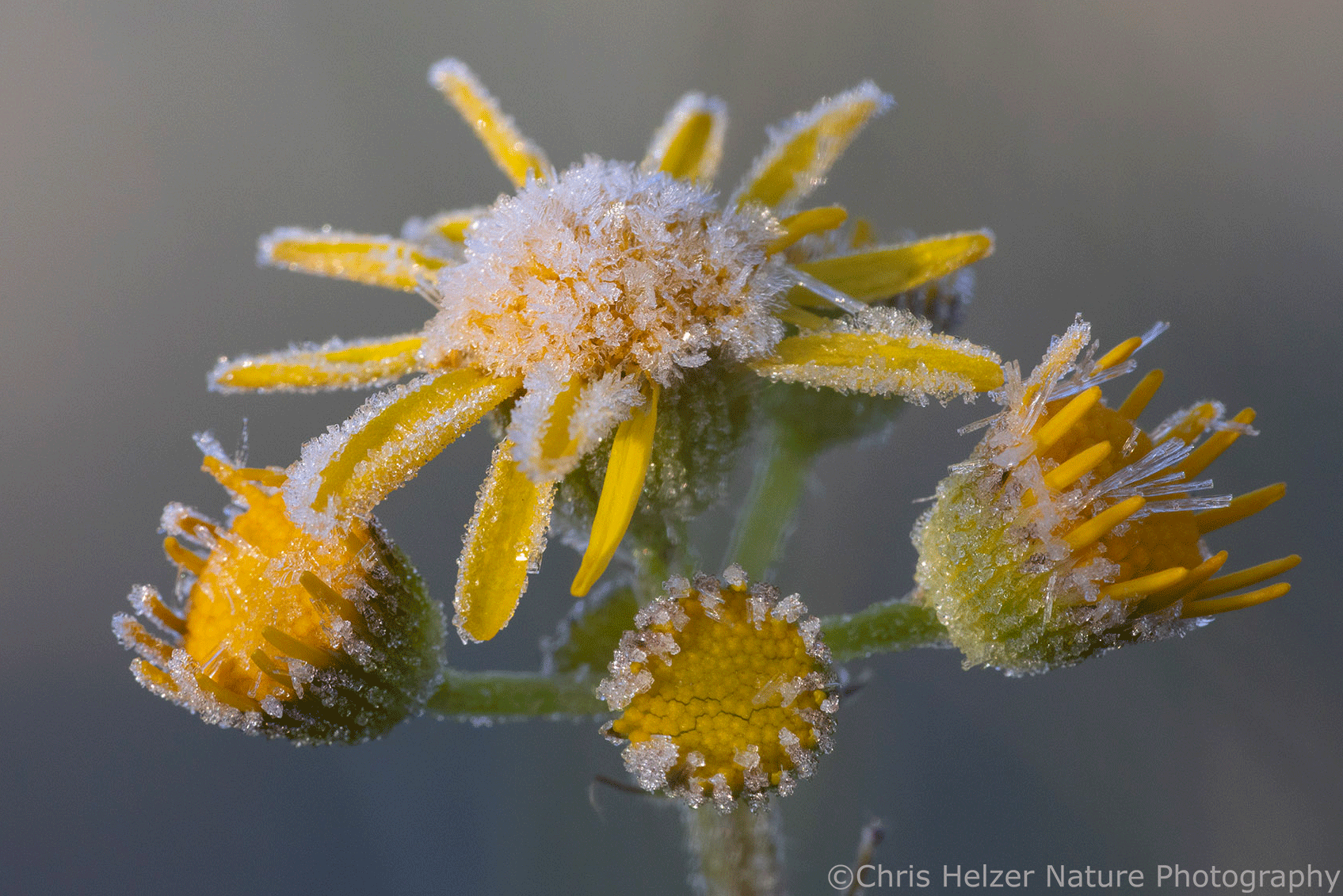
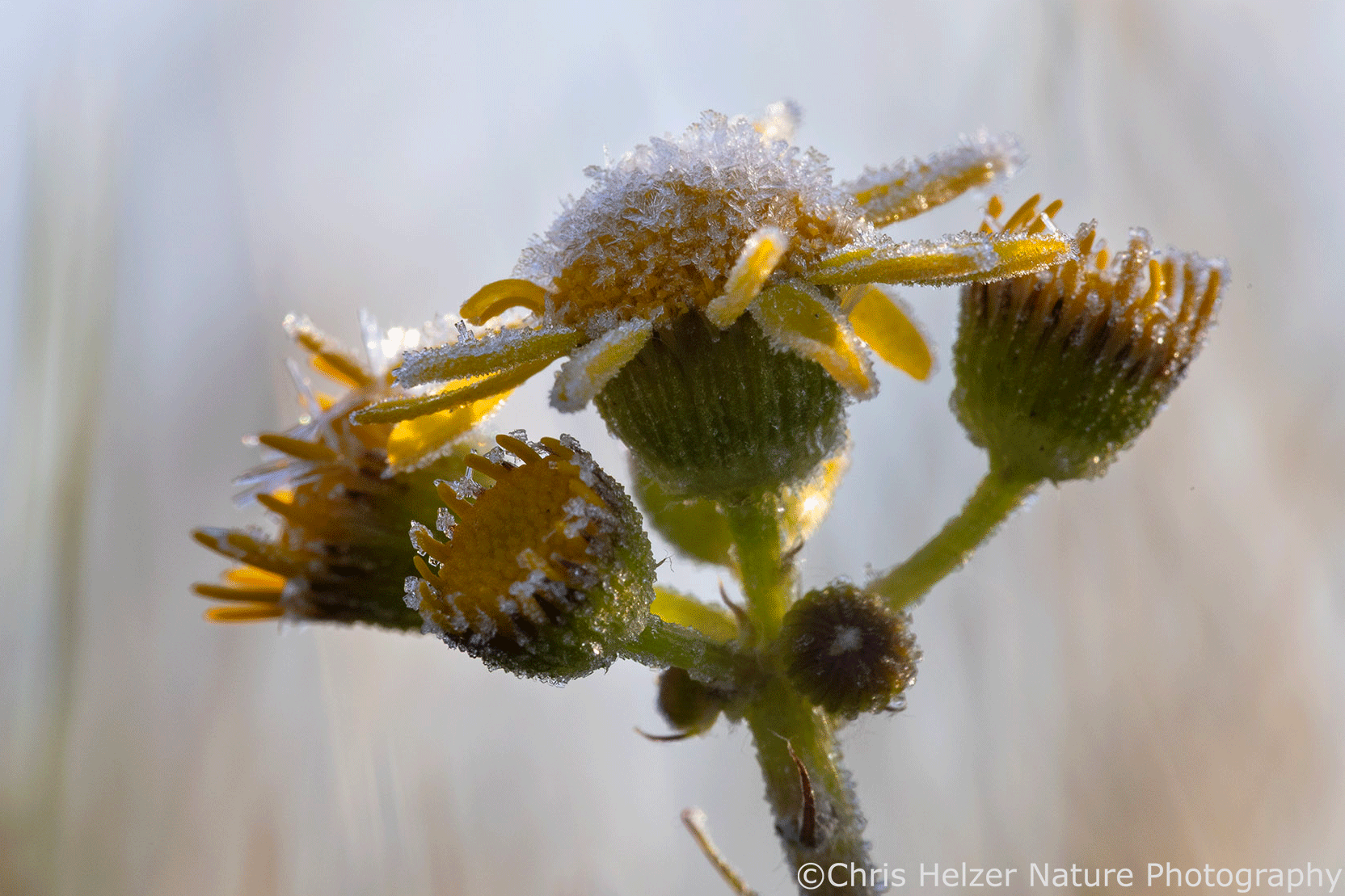
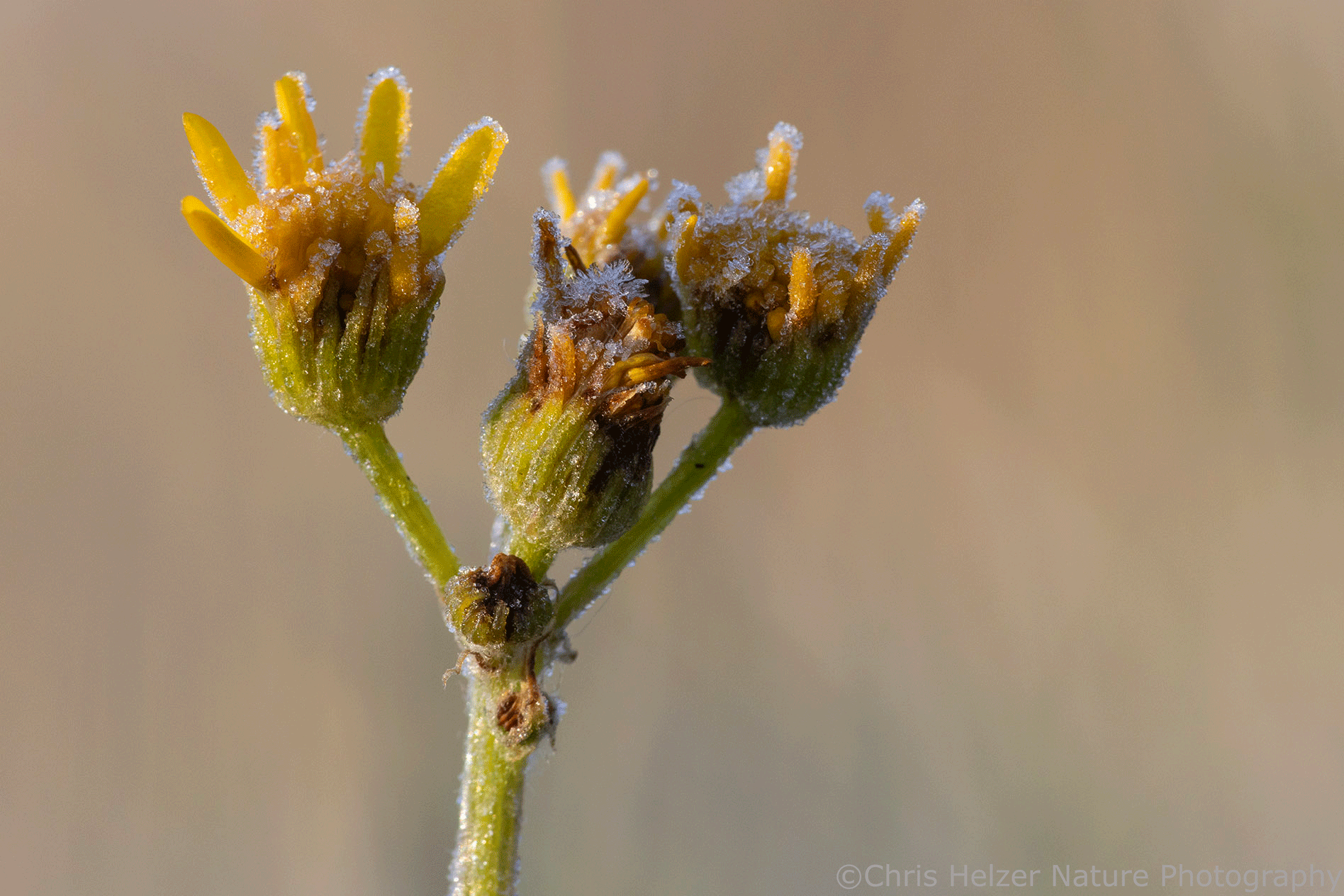
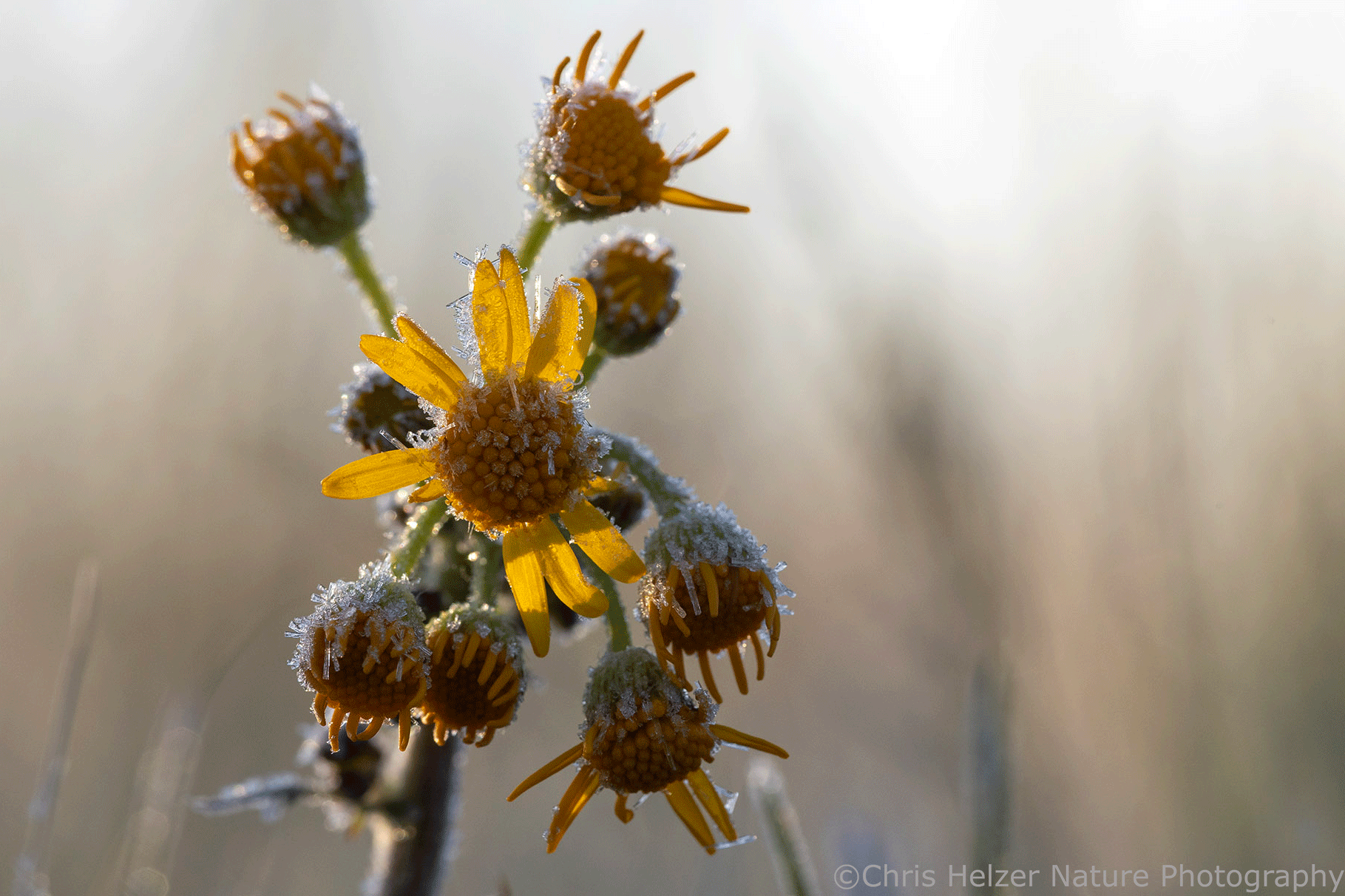
Groundsel (Packera obovata?) at the edge of a wooded area

It was fun to be considerably south of home and see a lot of spring flowers that aren’t yet blooming further north. I didn’t have time to wander very far, so I didn’t get to see nearly as many as Kim and John saw, but apparently there were spiderworts, columbine, phlox, and many others blooming along the trail. I mostly hung out in a little wooded area where I found some flowers, spiders, and fungi.

As a prairie guy, of course, woodlands are not my favorite ecosystem, but I don’t dislike woodlands, and can enjoy a good walk through the trees as much as anyone. In this case, I headed to the woods mostly because of the light conditions. The sun was incredibly bright from almost the minute it breached the horizon in the morning, so lighting was really harsh out in the open. In addition, all the grassy areas close to the race’s aid stations were pretty encroached by trees and shrubs anyway, so I was going to be around woody plants no matter where I went.

In the trees, I could at least find a few areas where the light was being diffused by distant tree leaves and branches. Most of the woodland was in shade, which isn’t ideal for photography, but there were scattered patches of diffused sun and I walked from one to the next, looking for anything interesting.

There were lots of spiders and webs strung between the trees, which kept me busy for a while. I also found a lot of mushrooms and other fungi. The trick was to find the ones that were also well-lit.

A sheet web spider (filmy dome spider?).
Eastern red cedar leaf dangling from spider silk.
A bowl and doily spider in its web.
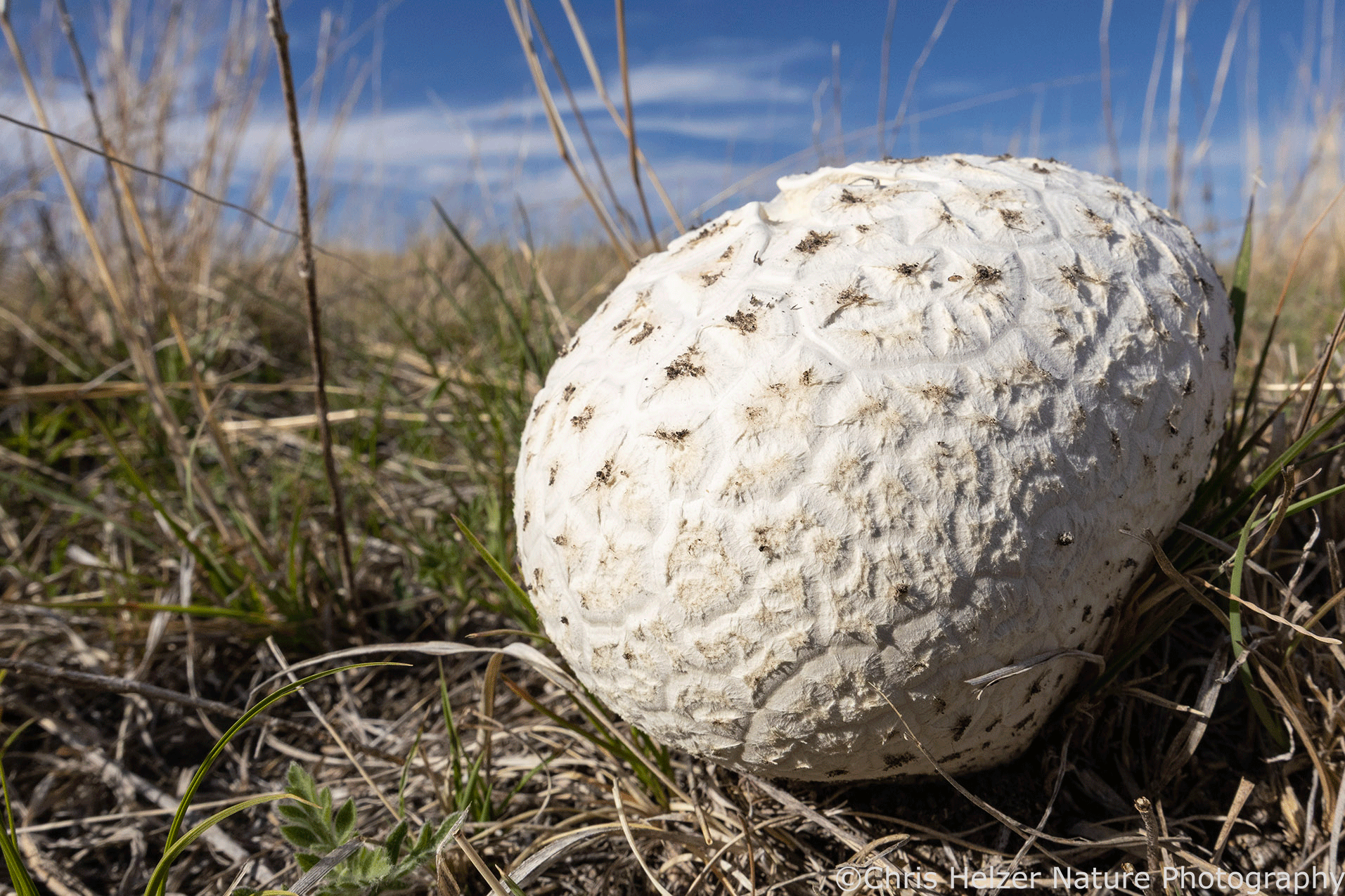
A hygroscopic earthstar fungus.
Mushrooms in dappled light.
A broken mushroom.

A quick note on the runners, since they were the reason for the trip: Kim has been running ultramarathons for quite a while now, so a 50K has become a fairly typical distance for her to train for. This particular trail was a challenging one because it is rough and rocky in places, has some hills, and it had rained hard the night before, making it muddy as well. We don’t have a lot of rocky, hilly, muddy trails for Kim to train on near our home, so it’s hard for her to prepare for a race like this. She really wanted to run this trail in the spring, though, partly because it’s a good time to see wildflowers. (I like to see spring wildflowers, too, but go about it very differently.)

And here’s Kim approaching the finish line.

John was running in only his second ultra. He and Kim now listen to a lot of the same running podcasts, follow some of the same well-known races and runners, and send each other running memes and training tips. It was really cool to see John improve tremendously from his first attempt. I think he enjoyed himself, but immediate post-race conversations aren’t usually the time to get positive reflections from runners. He mostly talked about rocks, his ankles, and his intense dislike for life, running, and pretty much everything else.

Here’s John after running nearly 31 miles.

Kim is John’s step mom, so he didn’t inherit his stamina or training discipline from her, at least not via genetics. However, they share an ability to push through pain, which is obviously important in this sport. There isn’t, as far as I know, an official slogan for long-distance trail running, but if I was asked to write one, it would probably be something like, “A great way to explore nature while in constant discomfort.” It’s hard to believe the sport doesn’t have more participants, isn’t it?

I’m grateful to Kim (and now John) for all the training they do for these races because it allows me to tag along and see fun places while they do most of the work. After all, I got to lie on the ground in the woods for a couple hours looking at spiders and mushrooms! (It’s hard to believe macro photography doesn’t have more participants, isn’t it?)

Photos of the Week – March 22, 2026

I’m sorry not to have posted much lately. It’s not you, it’s me. Well, to be fair, it’s also the roughly 1 million sandhill cranes that come through the Platte River each spring and all the people who come to watch them.

If you’ve never visited the Central Platte River in March, it’s hard to describe what you’re missing. Eighty five percent of the world’s sandhill cranes pour into a fairly narrow reach of the Platte and each bird spends a few weeks or more eating as much as they can. They’re building fat and energy before continuing north to their breeding grounds where they’ll likely be setting up nests in a frozen environment without a lot of available food. While on the Platte, they spend their nights on the river and their days split between corn fields and grasslands, mostly eating corn and various invertebrates.

You can see the cranes by just driving back roads in the area, but the best experience comes from watching them come to the river at night or leave the river in the morning. Check out the websites of our good conservation partners – National Audubon Society’s Rowe Sanctuary and the Crane Trust – to learn more about how to get into a viewing blind along the river bank. If you’re a member of The Nature Conservancy, we also offer a limited number of crane blind tours each spring as a thank you for your support. You can call our Omaha office in January or early February to learn more.

Sandhill cranes coming to the river on a cloudy night near sunset.

I’ve gone out to the blinds with several groups of guests this year and have given presentations to even more groups about this amazing ecological phenomenon. I’ve managed to get a few photos of cranes during a couple of those river bank visits and am sharing some here, hoping to encourage you to come the birds for yourself.

Cranes silhouetted against the cloudy sky after sunset.
Post-sunset viewing from one of our blinds as the cranes settle in for the night.
More silhouettes against the dark cloudy sky.
It’s always fun when the cranes come in on a night with a terrific sunset.
The same sunset and cranes as above.

Because the birds decide when and where to roost for the night based on a lot of different factors, we never know for sure what kind of show we’ll get to see from the viewing blind. About a week ago, we watched them crowd against the north bank to escape blisteringly-cold blasts of wind. One a particularly cold morning, some cranes were lying on their bellies to reduce how much of their body was exposed to the cold.

A cold morning, with several cranes on their bellies to (we assume) help keep warm.

Just a few days later, the cranes were already at the river when we arrived in the evening because they’d been hanging around the water most of the day as a way to mitigate the nearly 100 degree (F) heat.

Sometimes, we see cranes arrive at the roost well before sunset, but often they start arriving as the sun goes down and the majority pour in just before it’s too dark to see them. And, sometimes, they decide to roost in a part of the river that doesn’t include our viewing blinds.

The following four photos from late last week show a time progression over about 20 minutes as the sun dipped below the horizon and cranes poured into the river. This was one of the very warm nights when there were quite a few cranes in place when we showed up, but lots more came in as the night progressed.

Just before the sun hit the horizon.
Just after the sun dropped below the horizon.
All the good standing spots are starting to fill up.
And yet, cranes just keep dropping in.

So, that’s what’s happening around here – along with lots more. I will try to get some more blog posts out soon.

In the meantime, I hope you’re enjoying the spring wherever you are, except for those of you in the southern hemisphere who are in the midst of autumn. I hope you’re enjoying the autumn.

Wherever you are, if you get the chance to come see the cranes on the Platte River, I think you’ll find the experience worthwhile.