
I’ve said many times that I’m no entomologist. I am an invertebrate enthusiast. I enjoy photographing small things, which means I end up with a lot of images of tiny invertebrates. Once I have photos, I love to figure out what it is I’ve photographed and how it fits into the incredible complexity of its ecosystem. The only times I’m ever disappointed by that research is when I can’t find any good information – often because there just isn’t much known about whatever creature I’m looking up. When I can track down a story, it is always fascinating, and reinforces my sense of wonder about the world.
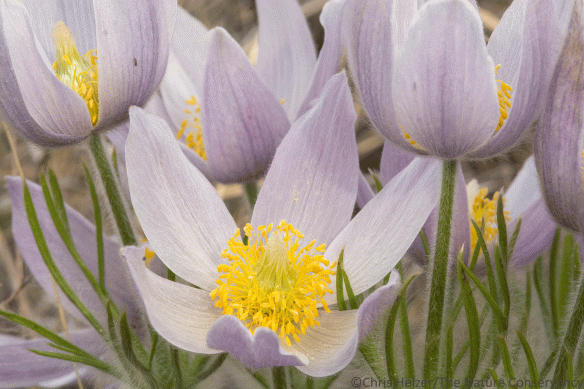
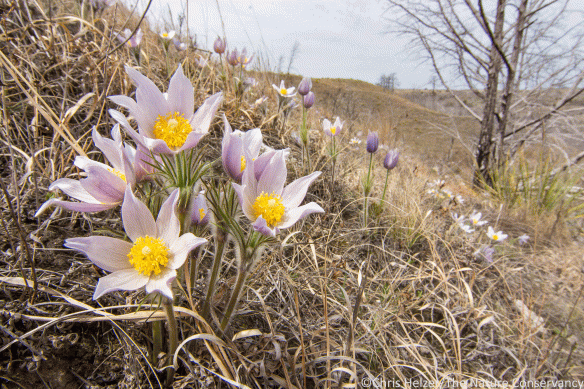
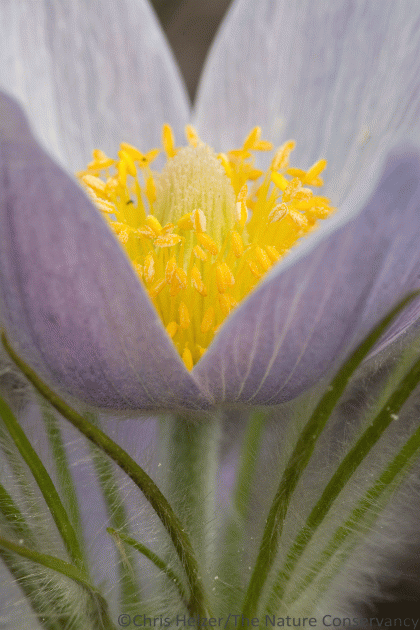
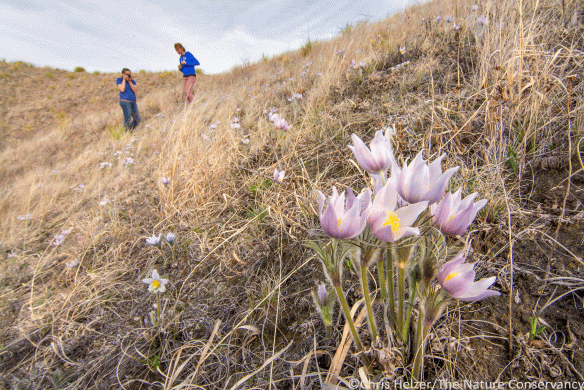
The latest example of that came last week while I was photographing pasque flowers at the Niobrara Valley Preserve. I noticed a few bees and other insects hanging around the flowers, but most were too wary to be photographed – with one big exception. There were several big black beetles with large bulbous abdomens and short wings feeding on pasque flowers. They were intent enough on feeding that I was able to get a few decent photographs, and promised myself I’d look up the species later. Before I had a chance to start doing research, former Hubbard Fellow Jasmine Cutter texted me some photos of what looked like the same kind of beetle feeding on pasque flowers up in North Dakota and asked if I knew what they were. Nope, but I was going to.

An oil beetle feeding on pasque flower at the Niobrara Valley Preserve last week.
After a rare failed attempt to use Bugguide.net, I sent photos to a couple friends and James Trager responded quickly with the answer – oil beetle (Meloe sp.), a kind of blister beetle. Once I started looking for more information, I was shocked that I’d not come across oil beetles before. Ok, not shocked, exactly, since there are way more great insect stories out there than I’ll ever learn, but still surprised, given the abundance of oil beetle accounts online. Of those, I particularly recommend Piotr Naskrecki’s The Smaller Majority blog, as well as Adrian Thysse’s Splendour Awaits site.
So, what did I learn? First of all, oil beetles produce the same kind of toxin as all other blister beetles – a compound called cantharidin. Ingesting only a small amount of cantharidin is toxic to most vertebrates. While that seems like a great way for an oil beetle to get revenge on anything that eats it, it doesn’t necessarily prevent the big flightless beetle from being attacked and killed in the first place. Don’t worry – there’s more. When an oil beetle feels threatened, it can secrete bright yellow hemolymph (the insect equivalent of blood) from its leg joints. As one does. That hemolymph contains enough cantharidin that any contact with the skin of potential predators causes painful swelling and blisters. That, of course, is a pretty good deterrent against predators, as well as any foolhardy humans trying to manhandle an oil beetle.
As a side note, cantharidin has been long recognized by humans as a powerful chemical. Despite its extreme toxicity, it has actually been used (in very small doses) as an aphrodisiac, starting at least a thousand years ago. Because of the severe consequences of even a slight overdose, however, there are gruesome stories of hopeful lovers causing very painful deaths to themselves or others. Cantharidin also has a long and varied history in medicines. Currently, it is being tested for its effectiveness at treating cancer (as in this recent example).

The wings of oil beetles are much too small carry their weight.
The ability to secrete toxic bright yellow fluid from its leg joints is a pretty good story. However, that just scratches the surface of the fascinating natural history of oil beetles. Most beetles mature through a process called complete metamorphosis, in which larvae hatch out of eggs and grow until they pupate and become adults. The larvae usually look completely different from the adult, and often have a very different lifestyle as well. Oil beetles, however, go above and beyond by using a process called hypermetamorphosis.
When an oil beetle egg hatches, what crawls out is called a triungulin, a speedy little creature that looks much like a tiny silverfish. The triungulin cluster together and emit a chemical that mimics the pheromone of female solitary bees (bees that individually make nests and raise young, as opposed to honey bees and other social bee species). A male bee, upon catching the scent, will descend upon the mass of triungulin and attempt to mate with it (guys are so dumb when they’re horny). Instead, the triungulin quickly crawl up onto the bee and hold on tight. They stay with the male bee until it finds a genuine female bee and mates with her, at which time the triungulin scramble aboard the female.
Once onboard the female bee, the triungulin hitchhike back to her nest burrow. When they arrive, they detach themselves and start eating everything then can find in the nest, including the bee eggs and larvae, along with the food the mother bee provisioned for them. You can watch an incredible short video of oil beetle triungulin here. During their time in the host bee’s nest, the triungulin molt into much more traditional grub-like larvae, and eventually pupate and turn into adults. As adults, oil beetles feed on vegetation – including, apparently, pasque flower blossoms.

You’d never know by looking at its cute face that this oil beetle spent its childhood eating baby bees.
Do you see what I mean about the fascinating lives of invertebrates? Who would’ve guessed that a bulbous-butt flightless beetle would have such a great story? Answer: anyone who knows much about invertebrates. As I write this, I have my booted broken ankle propped up awkwardly on the couch, but I’m already formulating plans for how I’m soon going to (carefully) drag myself out into the prairie to collect more images and stories of tiny little creatures. Stay tuned.



 The Prairie Ecologist