
Painted milkvetch (Astragalus ceramicus) is a beautiful plant found in open sandy soils throughout much of the Great Plains and western U.S. It is a perennial legume with white to pinkish flowers, but is most easily recognized by its ornate seed pods, which resemble painted eggs. In Nebraska, the plant is often associated with blowouts (open areas of active wind erosion) in the Sandhills region.

Painted milkvetch is known for its ornate seed pods that are an inch or two in length.
Unfortunately, I’ve just exhausted the sum total of information I have on painted milkvetch. I could only come up with a paltry 78 words to describe this amazing plant. The reason it’s so unfortunate is that I don’t have anything else prepared for this week’s blog post, and don’t really have time to start from scratch on a new topic. I had three nice photos of painted milkvetch ready to go, and figured I’d just do some quick research and create a nice little blog post on the natural history of the species. Is it my fault nobody seems to have pulled together fascinating factoids on painted milkvetch and made them easily accessible to those of us trying to entertain and inform the public? Don’t answer that.
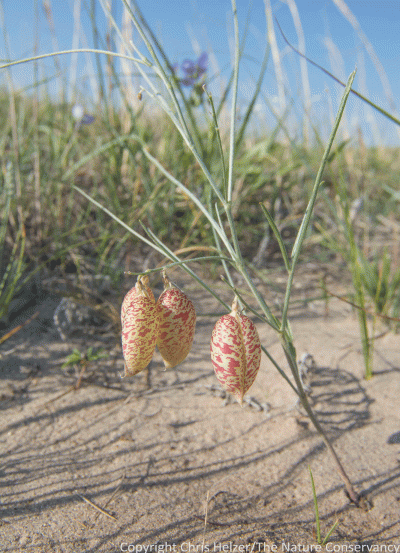
Painted milkvetch really likes open sandy areas like this one.
By this time, you’ve probably realized there isn’t going to be any additional information of interest to you. I’m sorry to waste your time by leading you on like this, but I’m hoping many people will just scan the first paragraph, look at the photos, and click on to something else of interest on the internet. Maybe they’ll check the score of the big game last night, or see what the weather is going to be so they know whether they need to pack a stocking cap or umbrella for the day. If so, they’ll never know that the rest of this blog post is just me blithering on about nothing in order to make it look like there’s a full blog post’s worth of information here. Because there isn’t.
I mean, I could give you a description of the shape and size of the leaves, and general stature of the plant, but the photos pretty much show you what you need to know, right? What I really wanted was some cool stories about the kinds of animals that feed on the leaves or seeds of the plant, specialist pollinators that use its flowers, or maybe even a description of the kind of chemical or physical properties the plant uses to compete with surrounding plants. I bet you’d have liked to learn things like that too, but I didn’t find anything. Again, I apologize for that.

Well, now I’m at about 460 words, which is certainly more respectable than 78 words. I mean, 78 words is basically just a long caption. No one would consider it sufficient for a blog post. Now, if I can figure out how to get to 500 words, that will be


 The Prairie Ecologist