
Thanks to Mark Godfrey (The Nature Conservancy) for alerting me to this project.
One of the things I try to do with my photography is show people creatures and plants that they might otherwise never notice. I love hearing people say things like, “I had NO IDEA something like that lived near me!” when I’m giving presentations. Of course, real success comes when I can inspire those same people to go out and make their own discoveries. It’s hard to dismiss conservation as unimportant when you’ve actually met the species that hang in the balance.
The “Meet Your Neighbors” project looks like a kindred spirit. The project celebrates common species from around the world through portrait-style photographs. They’re working with numerous photographers to capture images of these species in front of a plain white background that causes the viewer to really examine and appreciate the physical attributes of each species.
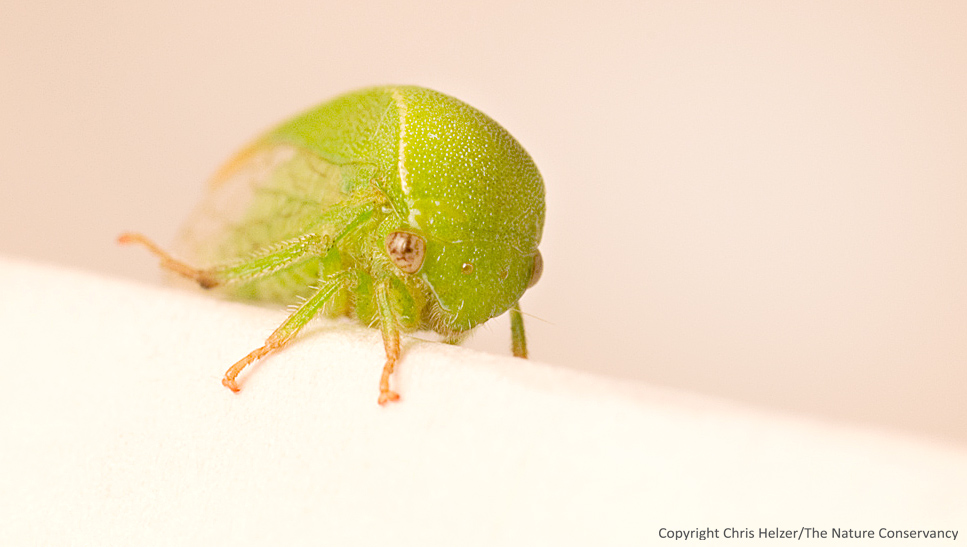
Tree Hopper - Aurora, Nebraska. Although I normally like to photograph insects in their natural environment, I've played around with the kind of studio/white background format used by the "Meet Your Neighbors" project. The power of the format is that it forces the viewer to really pay attention to the creature itself - which is plenty beautiful.
You might wonder why the project doesn’t highlight rare species instead of common species. There’s obvious value in showcasing rare species to get people tuned in to their plight. But I also think it’s powerful to show people the species that are (literally) right in their backyard. Those are the species most of us will actually be able to meet in person, and which can catalyze an interest in nature and conservation. I think it’s a fantastic idea and a well-organized effort. I wish them all success.
Please visit their website to learn more about the project.
http://www.meetyourneighbours.org/project.html

Larva of a Green June Beetle. This big white grub crawls around on its back with its legs sticking up in the air - which is not only very cool, but also the distinguishing characteristic that separates it from other beetle larvae. Thanks to Ted MacRae for identification and natural history information.
 The Prairie Ecologist