
One of the great things about people who work on restoring (reconstructing) prairies is that they tend to be good at making things up as they go. Some say prairie restoration is more art than science. I actually think there’s plenty of science in restoration, but there’s no denying there’s a lot of art as well. My favorite examples of restoration art are the fantastic machines and techniques people have come up with to harvest, clean, and plant prairie seeds.
Prairie seed comes in all kinds of sizes and shapes. That variety makes seeds fascinating to look at and study, but can create all kinds of issues for people trying to get those seeds from plant to the ground in order to make new prairies. We’ve certainly had some humbling experiences here – including the comedy of errors that was our failed attempt to modify an old John Deere combine so that its augers would move fluffy prairie grass seed from the head to the hopper. (We eventually sold the remains of the combine for scrap.)
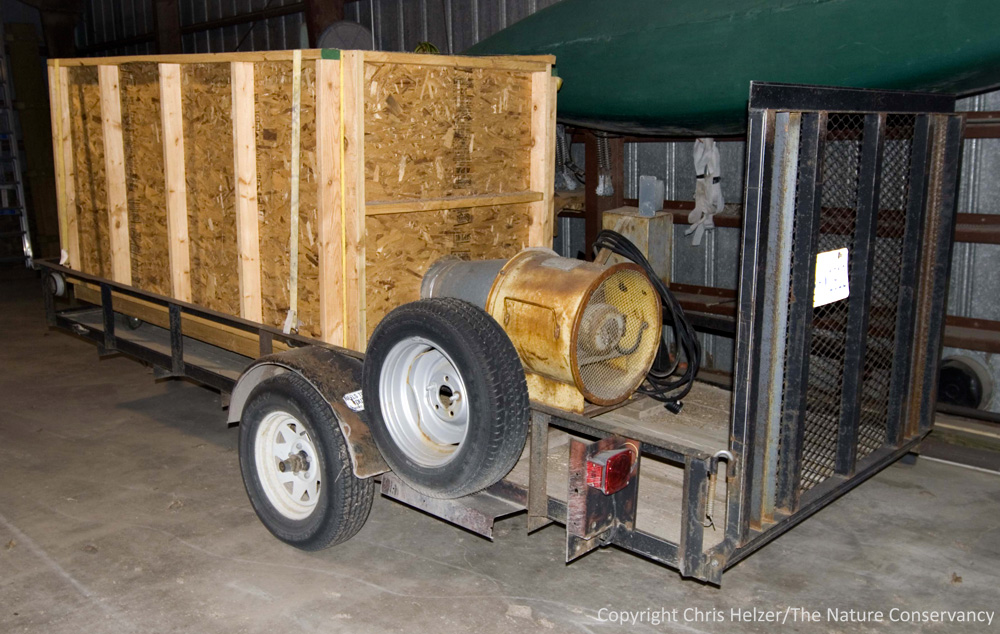
Although our John Deer combine experience didn't work out so well, we've had better luck with our mobile grass seed dryer. This plywood box has a big electric fan hooked up to a 12" perforated pipe that runs along the bottom of the box. We haul the trailer out to the combine and load freshly-harvested seed into it. Then we back it into the shop and plug it in. The seed usually dries overnight. One side of the box then unbolts and makes it easy to unload. This was a team effort, designed by our staff and a local farmer - then built by a boy scout for his Eagle project.
Failures can be educational, but successes are even better. I’ve been lucky to have some smart people to help me come up with ways to make our restoration work much more efficient and effective. I’ve also had the opportunity to visit many other restoration sites around the U.S. and have been amazed at the variety of innovative and individual ways others have solved the challenges we all face.

I learned the trick of burning the silks off of milkweed seeds from friends in Indiana. I've heard it might reduce germination - and we're testing that this year in the greenhouse - but I'm hoping if we spread them thinly enough before burning that it'll work. I hope so - it's fun! (Keep your face away from the heat)
I’d like to celebrate the innovative aspect of prairie restoration by highlighting some of the best tools and techniques that have been developed, but I need your help. Over the next several weeks or so, I hope to gather up photos and descriptions of some of the unique, beautiful, and intricate ways people have addressed prairie restoration challenges. Then I’ll put together a post (or maybe several) that showcases the best of what I find. Hopefully, the result will be both useful and entertaining.
Please send me your favorite examples of tools, machines, and techniques that you’ve invented or modified in order to more effectively harvest, clean, or plant prairie seeds. Failures and successes are both welcome – as long as they’re interesting. Email 1-2 photos of each example, along with a paragraph or two of description to prairieinventions@yahoo.com. Please keep photo file sizes under 2MB. No guarantees, but I’ll try to use as many of your photos and descriptions as I can.

 The Prairie Ecologist