Photo of the Week – July 16, 2015

Scaly blazingstar (Liatris squarrosa) is just starting to bloom in the Platte River Prairies.  It has beautiful and intricate flowers with very long anthers protruding from its tiny blossoms.  At least it usually does…

Blazing star (Liatris squarrosa)  The Nature Conservancy's Platte River Prairies, Nebraska.

Scaly blazingstar (Liatris squarrosa). The Nature Conservancy’s Platte River Prairies, Nebraska.

I was photographing some blazingstar flowers earlier this week when I saw one with a grasshopper sitting on it.  It sat still long enough for me to get a few photos of it.

Grasshopper on blazing star (Liatris squarrosa)  The Nature Conservancy's Platte River Prairies, Nebraska.

A grasshopper standing innocently(?) on top of scaly blazingstar.

Only when I looked the above photo on my computer screen did I notice the absence of most of the long white anthers I’d seen on other flowers.  Surely, I thought, it’s not a coincidence that the grasshopper is present but the anthers are not…?

Grasshopper on blazing star (Liatris squarrosa)  The Nature Conservancy's Platte River Prairies, Nebraska.

The grasshopper eating one of the long anthers.

Sure enough, looking back through my other images, I found one of the grasshopper eating an anther.  Caught red-handed!  (So to speak.)

Just because they are called “grass”hoppers doesn’t mean that’s all they eat.  In fact, many grasshoppers eat pollen and other parts of wildflowers.  Some are fairly specialized, while others are generalists in terms of the plant species they feed on.  Even among the grass-feeding grasshoppers, there is great variety in which grass species and which parts of those grasses each species eats.

For the sake of the scaly blazing star (and our seed harvest efforts this year), I hope at least some of the anthers survive uneaten so the plants can make seed.  As more flowers open, maybe their abundance will be more than the grasshoppers can keep up with.  At least in past years, we’ve usually gotten pretty good seed harvests from blazingstar, so I’m not too worried.

Just interested…
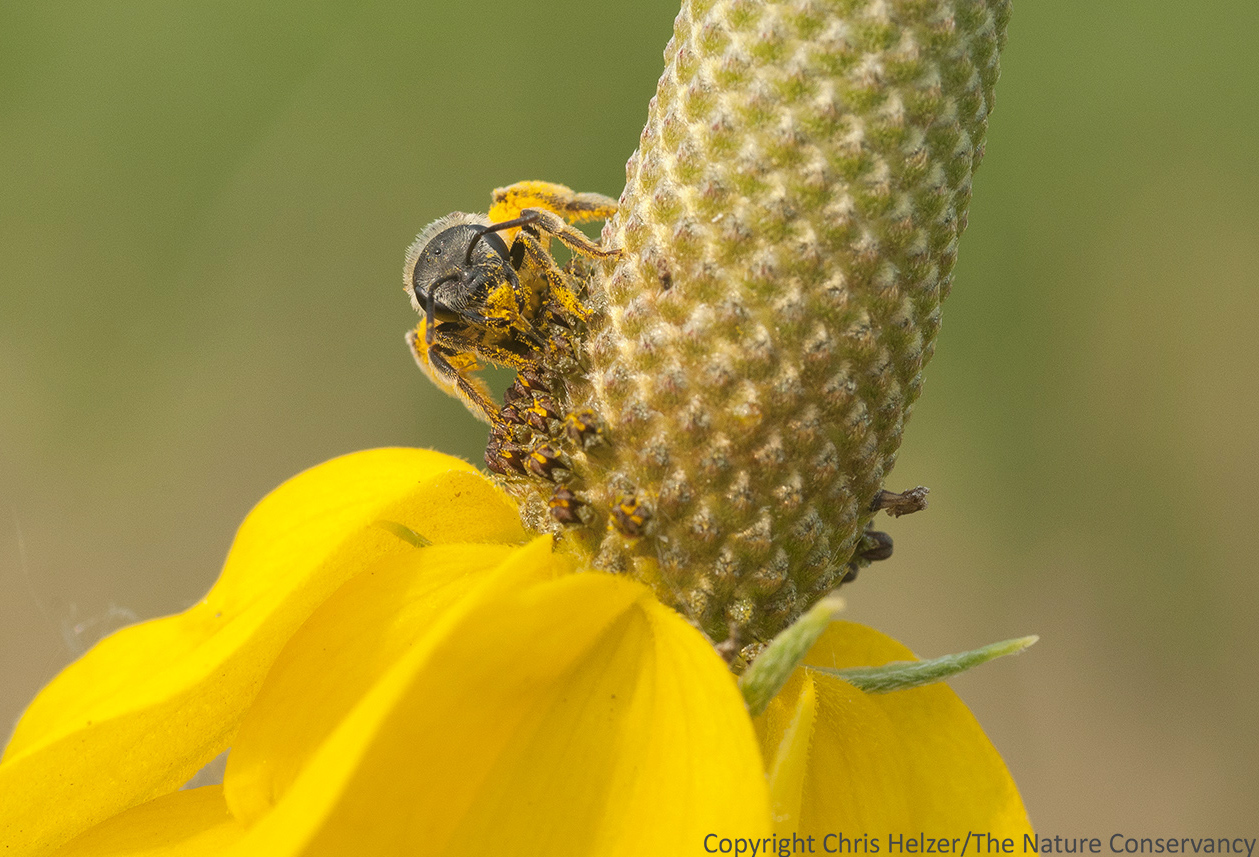
Photo of the Week – July 9, 2015

Upright yellow coneflower (Ratibida columnifera), aka Mexican hat, is blooming all over the Platte River Prairies right now.  As with most showy flowers, the coneflowers are crawling with insects of many kinds.  I spent a fun half hour (31 minutes, to be exact) last week, trying to photograph as many of those insects as I could before I had to pop into our field headquarters for a meeting.

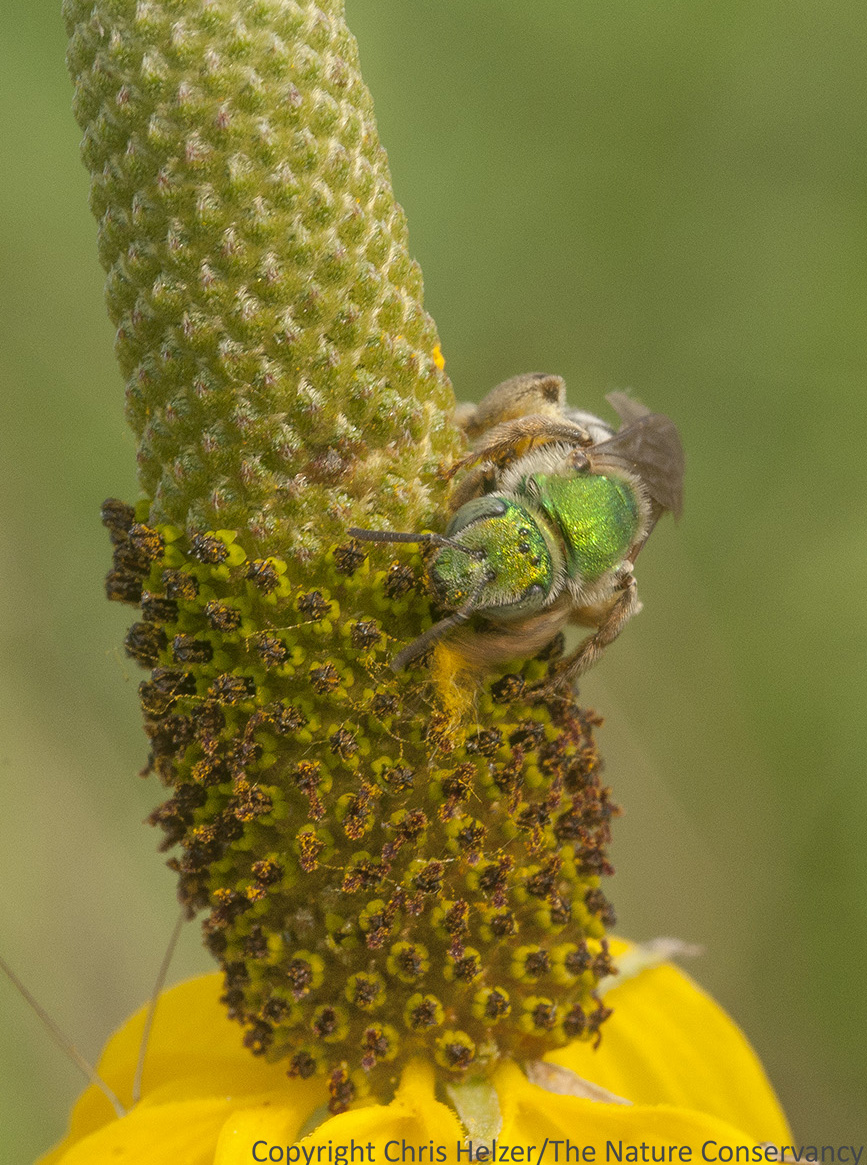
Bee on upright prairie coneflower.  The Nature Conservancy's Platte River Prairies, Nebraska.

Sweat bee (Halictus ligatus, I think) on upright prairie coneflower. The Nature Conservancy’s Platte River Prairies, Nebraska.

Bee and beetle on upright prairie coneflower.  The Nature Conservancy's Platte River Prairies, Nebraska.

The same sweat bee species on a different flower, this time joined by a small brown beetle.

Bee on upright prairie coneflower.  The Nature Conservancy's Platte River Prairies, Nebraska.

A different bee with the antennae of another insect beneath it.

Hover fly (Syrphid) on upright prairie coneflower.  The Nature Conservancy's Platte River Prairies, Nebraska.

It took me a while to finally capture an image of one of these syrphid flies (hover flies).  They were a lot more skittish than the bees.

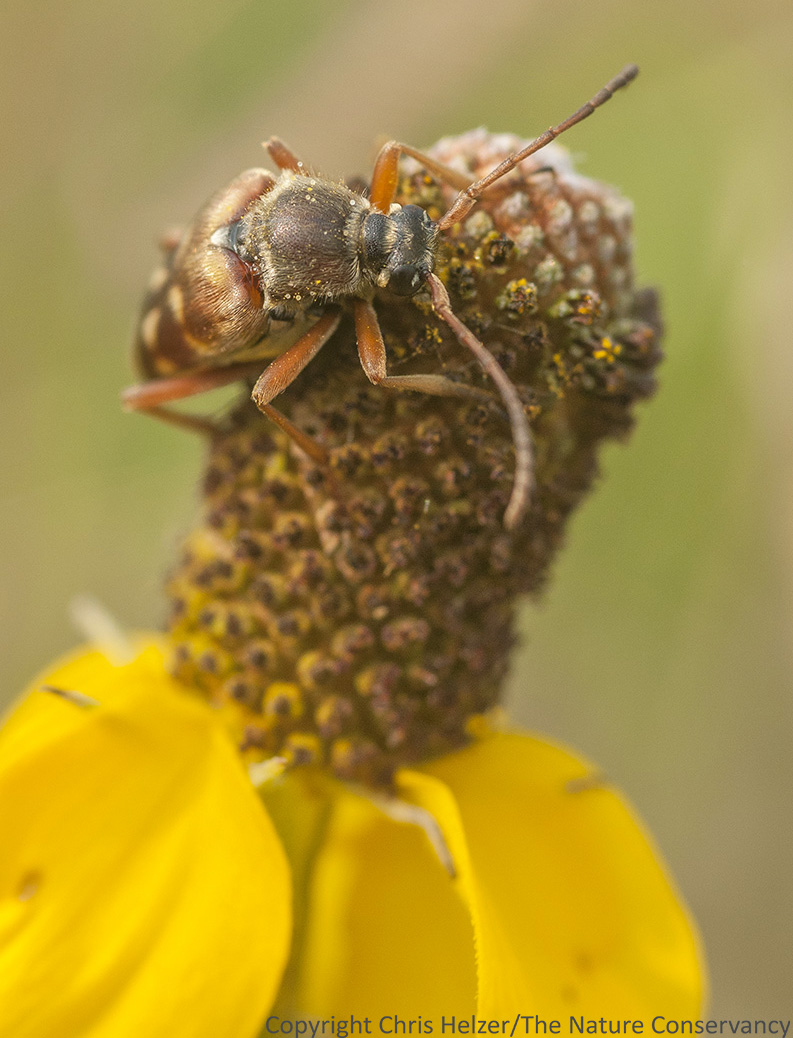
Long-horned beetle on upright prairie coneflower (Ratibida columnifera).  The Nature Conservancy's Platte River Prairies, Nebraska.

Long-horned beetle feeding on pollen.

I wrote about long-horned beetles last summer after photographing them on the same flower species.  I think this one is Typocerus confluens, but I’m just guessing based on photos from last year.  You might remember from last year that adult long-horned beetles feed on flowers, but larvae are wood borers or subterranean root feeders.

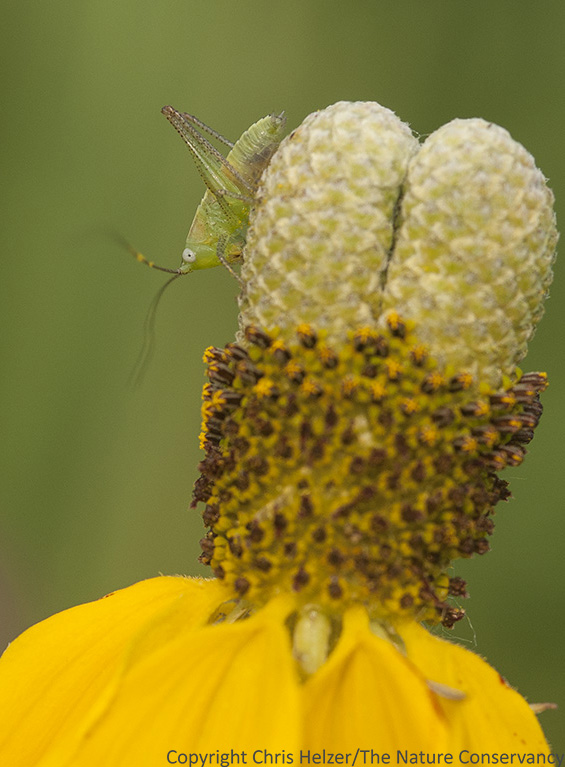
Katydid nymph on upright prairie coneflower.  The Nature Conservancy's Platte River Prairies, Nebraska.

A tiny katydid nymph.

Tree cricket nymph on upright prairie coneflower.  The Nature Conservancy's Platte River Prairies, Nebraska.

A tree cricket nymph.

As is always the case in prairies (and nature in general), the closer you look, the more you see.  The number of insect species feeding on this one flower (and, in some cases, pollinating it) is a great example of the complexity of life found in prairies.  Complexity leads to resilience because there are multiple species that can play fill similar roles.  If one species has a bad year, others will fill in for it.  That redundancy helps keep all systems functioning all the time.

Hurray for complexity!