
We finally got our first measurable snowfall (4-5 inches?) of the year here in east central Nebraska. I took my camera for a walk at our family prairie yesterday evening, enjoying the way a little snow really transforms a landscape. I found and followed tracks of coyotes, mice, birds, and deer, and flushed flocks of meadowlarks and tree sparrows. As the sun started to drop quickly toward the horizon, I wandered through one of the areas we grazed particularly hard last summer, enjoying the broad expanse of whiteness, punctuated by scattered plants poking up through the snow.
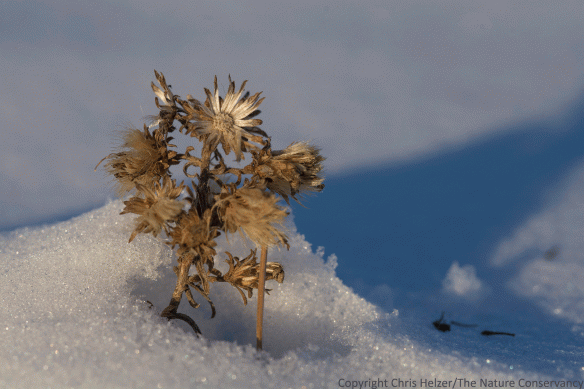
Heath aster (Aster ericoides) protrudes from a tiny mound of snow.
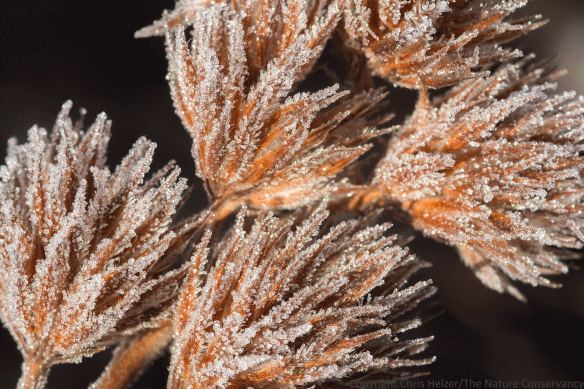
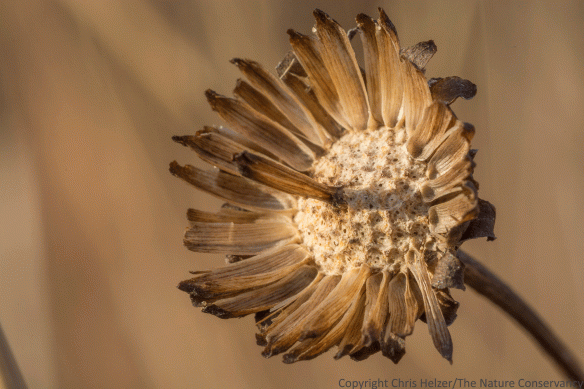
I spent the next half hour mainly lying prone on the snow, tripod legs splayed flat to the ground, photographing heath aster and sideoats grama plants, and having a great time. As you look through these photos, you’ll be able to see how the quality and color of the light changed as the sun approached the horizon. Shadows became much less stark and more blue in color, and the plants and snow both reflected increasingly golden-orange light from the setting sun.
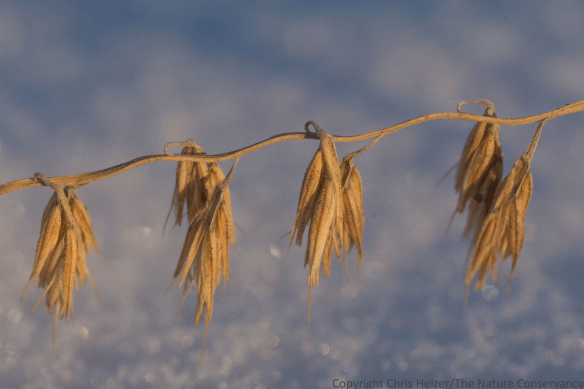
Sideoats grama (Bouteloua curtipendula)

More sideoats

More heath aster

Final sideoats photo, as the sun was right at the horizon.
The opportunity to watch sunrises and sunsets is a big perk of living on the Plains, where we get an unobstructed view of the sun from horizon to horizon, without pesky trees or mountains in the way. On many nights, the combination of a low sun angle, expansive sky, and scattered clouds can provide spectacular views. Other times, however, the best way to appreciate a setting sun is to turn and look in the opposite direction at the changing colors of light and shadows.
Merry Christmas everyone!


 The Prairie Ecologist