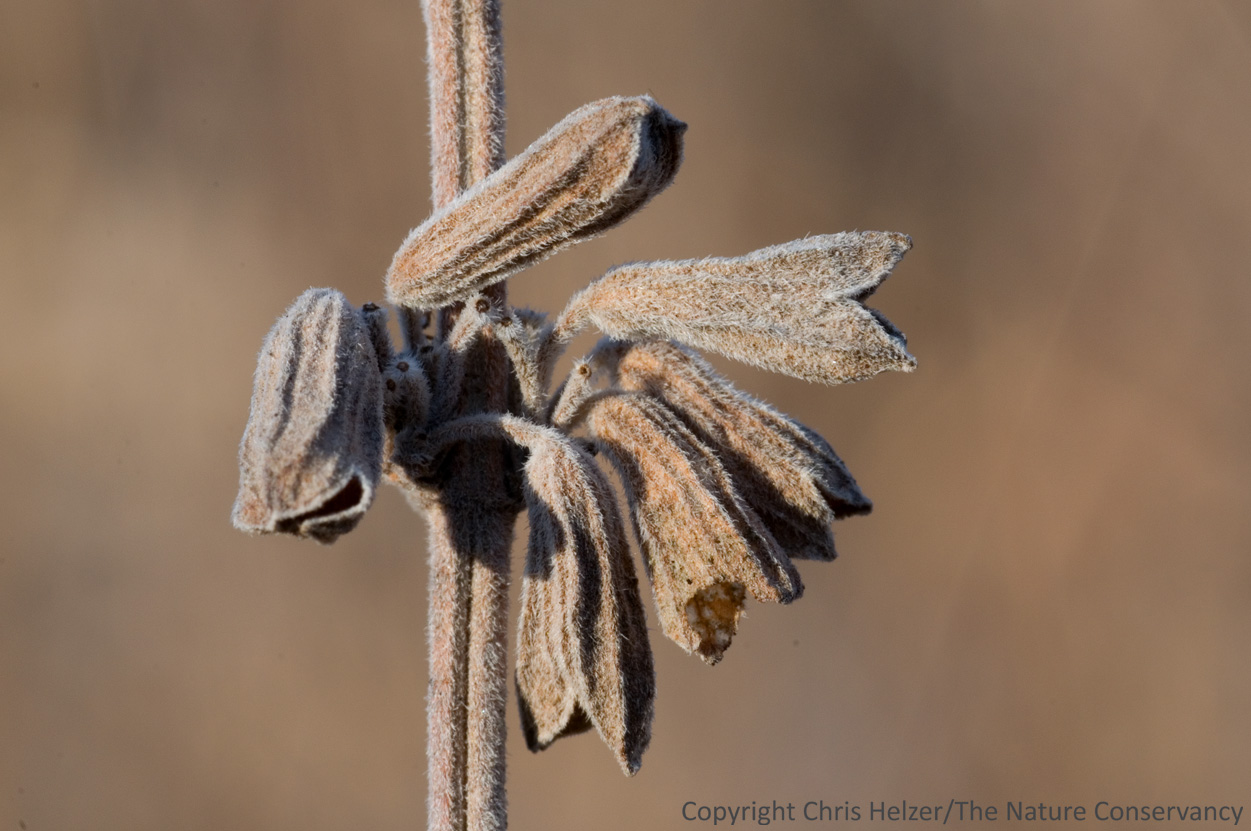
Can you identify this wildflower species from its winter seed head?
If you think you’ve got the answer, write it in the “Comments” below. (either click on “comments” or write in the “reply” space, depending upon which format you’re seeing this post in)
James and Steve are both correct! Salvia azurea, aka pitcher sage. Grows tall with a blue flower and is often used in roadside plantings. It’s native in Nebraska, primarily in the east and south, but shows up further north and west along roads.
For future reference Chris, on your next “can you name this wildflower” question you may want to change the name of the photo you are uploading. Not sure if you can but a blog observer can role their mouse over the image and discover the image title, or right click the image to find out it’s properties.
Thanks Chris – I’ll have to look at that more closely. After the initial post, I did go back in and delete some of the embedded info within the photo, so that might have taken care of it for later viewers. But I’m not sure if I got all of it out! As James said – NO CHEATING!!
(Plus it’s all just for fun – no money or prizes involved!)
It does have a bit of the look of the involucre of P. aspera, Alison, but in that species, the involucre consists of separate bracts, rather the the fused chalice-like shape of this mint’s calyx. (Calyx is Greek for chalice, btw.)
I love quizzes like these! I always learn so much during the search for an answer – more than just about the specific plant to be identified.
If you’re interested, you can also submit your photos to foxden@wildernessawareness.org. They have a monthly e-newsletter and always include a mystery photo for recipients to submit guesses. They’re always looking for more photo submissions.

 The Prairie Ecologist
My wild guess is penstemon.
Nope – good guess though. (Also nice to hear from you!)
Right “off the top”, without checking any resources, I say Salvia azurea. Happy to be proven wrong, but no cheating, anyone.
No cheating indeed!!
My vote is also for Salvia azurea.
James and Steve are both correct! Salvia azurea, aka pitcher sage. Grows tall with a blue flower and is often used in roadside plantings. It’s native in Nebraska, primarily in the east and south, but shows up further north and west along roads.
For future reference Chris, on your next “can you name this wildflower” question you may want to change the name of the photo you are uploading. Not sure if you can but a blog observer can role their mouse over the image and discover the image title, or right click the image to find out it’s properties.
Thanks Chris – I’ll have to look at that more closely. After the initial post, I did go back in and delete some of the embedded info within the photo, so that might have taken care of it for later viewers. But I’m not sure if I got all of it out! As James said – NO CHEATING!!
(Plus it’s all just for fun – no money or prizes involved!)
I appreciate the feedback.
Chris Helzer
Program Director
The Nature Conservancy
Eastern Nebraska Project Office
P.O. Box 438, Aurora, Nebraska 68818
402-694-4191 402-631-9288 (cell)
http://prairieecologist.com
Prenanthes aspera?
It does have a bit of the look of the involucre of P. aspera, Alison, but in that species, the involucre consists of separate bracts, rather the the fused chalice-like shape of this mint’s calyx. (Calyx is Greek for chalice, btw.)
I love quizzes like these! I always learn so much during the search for an answer – more than just about the specific plant to be identified.
If you’re interested, you can also submit your photos to foxden@wildernessawareness.org. They have a monthly e-newsletter and always include a mystery photo for recipients to submit guesses. They’re always looking for more photo submissions.