
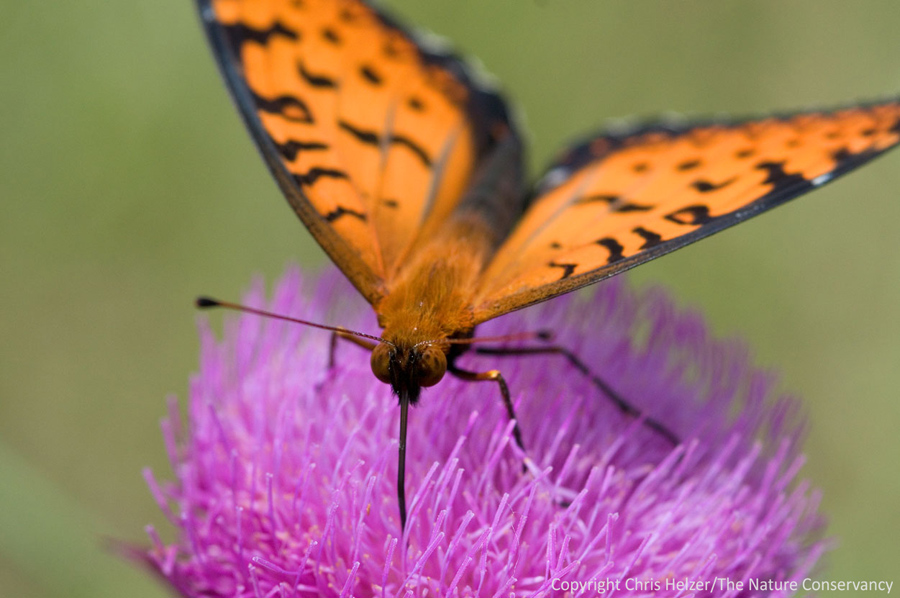
As I mentioned in my last post, regal fritillaries are out in high numbers in our Platte River Prairies. We’re watching – among other things – what plant species they’re using for nectaring, and are interested to see if that use is similar to what we saw last year. Right now, the most attractive plant to fritillaries is one that might surprise you – musk thistles.
On the other hand, if you’ve spent much time watching butterflies, you’ll not be too surprised at the attractiveness of this noxious weed to butterflies and other pollinators. Native thistles are recognized as important nectar sources, but non-native thistles, especially those we’re legally obligated to eradicate, don’t always get the same positive attention. This week our technicians were out looking for both musk thistles and regal fritillaries (for different reasons) and they were finding both simultaneously! We ended up killing a lot of thistles out from under butterflies.
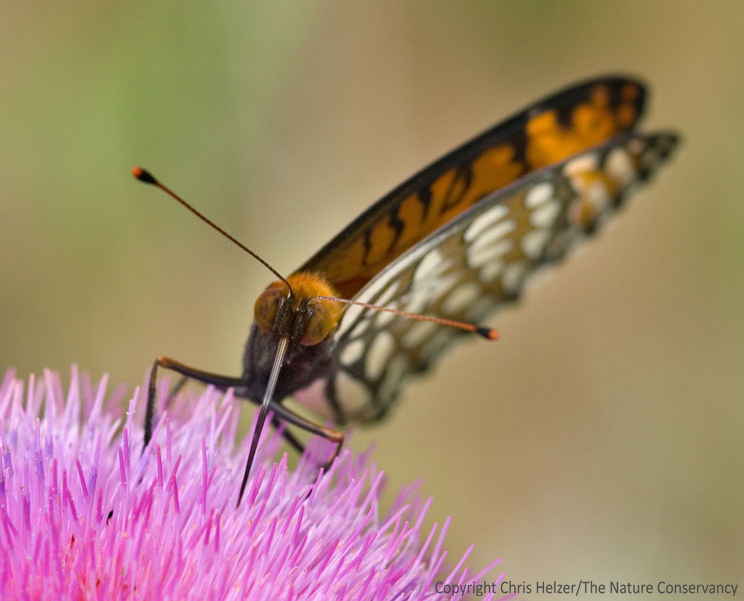
Here is a selection of photos from last Friday, showing fritillaries getting what they can out of these noxious weeds before we kill them off (the thistles, not the butterflies…)


It seemed like every musk thistle had a regal fritillary on it...
.
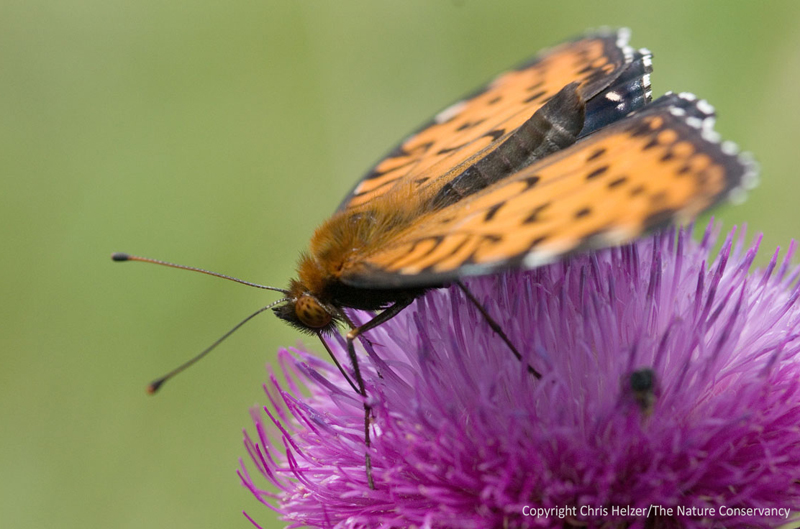
This fritillary flattened itself against a strong wind gust.
 The Prairie Ecologist
I’ve been seeing this for several years now, with a variety of butterflies feeding on non-native thistle. The thought that is always kicking around in the back of my head is: If they’re feeding on this, what AREN’T they feeding on, by that I mean the stuff that they should be feeding on. And what effect is that having?
It’s a good question. I think it’s much less important with butterflies, since they generally (as I understand it) have a minimal impact on overall pollination services. The bigger question is bees. Bees also use non-native thistles, as well as species like sweet clover, which they REALLY like. That could certainly be causing a problem in terms of other plants not getting attention. I’m guessing this has been studied, but don’t know of any particular research projects.
These butterfly posts are splendid! I find myself looking forward to your posts and even attended the Austin Butterfly Forum because of the interest you sparked with your camera and observational skills. Thank you! Well done.
Great – thanks! I’m glad you’re getting something out of the photos/posts. Once you figure out butterflies, you can start on really interesting insect groups like springtails and ground beetles!!
– Chris
And lest we forget – ants!
Well, obviously…
Pingback: Butterflies on Noxious Weeds « IonXchange’s Blog
Chris – are musk thistles the same as bristle thistles?
Adrian – yes. Same species. Carduus nutans… I should have included the latin name to avoid confusion!
There are also many native thistles – beautiful plants that are not invasive. People tend to think all thistles are problem plants, but the native ones we have here, in Wisconsin, are very well behaved and butterflies love them!
Chris,
Is there someplace I can get the names and pictures of invasive thistles in Nebraska. I recently bought a small piece of land and I have a thistle of some sort growing but I’m not sure if they are native or not. I have pictures of them as well.
Tiffany
Tiffany – try this link: http://cgi.unk.edu/hoback/ESCAPE/thistle_start.html
If you’re having trouble, you’re welcome to email me a photo or two and I can take a look. I may be slow to respond over the next week or two (I’m traveling) but I’ll do my best. If you can keep the photos to 1MB or less that’d be helpful!
Chris
This site is great. I have musk thistle! Thank you so much. I was worried that I had an invasive species on my hands. I still might get rid of some of them but there is not enough for it to be a problem. Thank you again for your help.
Glad to help! They don’t seem to be invasive most of the time (at least on our sites) but we’re still required by Nebraska law to eradicate them, so we do our best.
Could painted lady larvae if present in sufficient numbers be used successfully to combat non-native thistles?
I’d never thought of that – I have no idea!
Pingback: Regal fritillary на Carduus nutans - Антэкология