Photo of the Week – November 16, 2012

I really enjoy photography, but I’m glad I don’t have to make my living doing it.  For me, photography is something I get to do for fun – grabbing opportunities when they arise, instead of having to record a particular event at a particular time.  I have incredible respect for journalistic photographers who show up and make beautiful or powerful images out of very challenging photographic situations.  I’ve done that kind of photography a few times, and found it much more stressful than enjoyable.  It’s much more fun to pull my camera out of the bag only when the light is good and I have some time to wander.
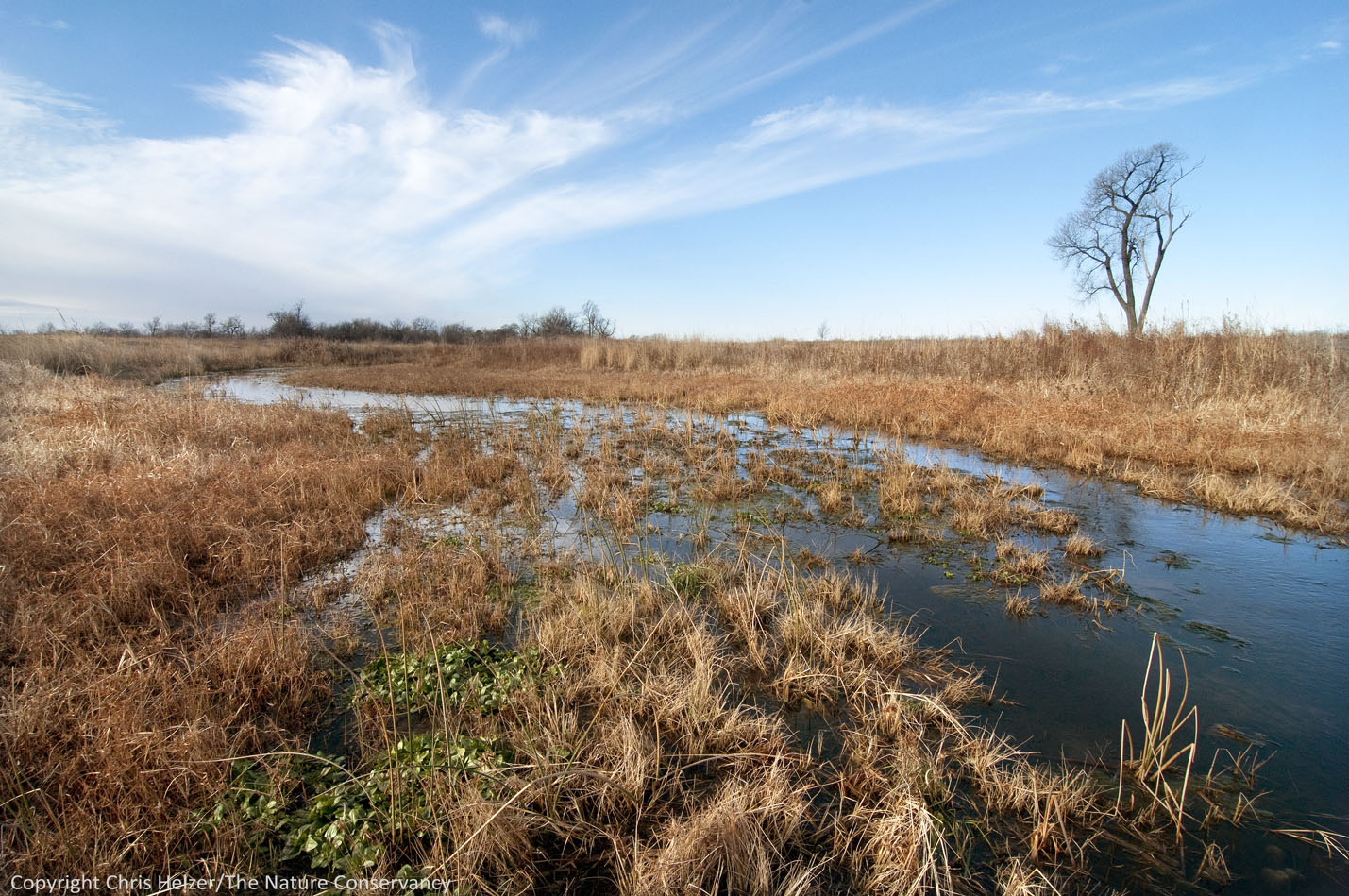
Restored wetland habitat at The Nature Conservancy’s Platte River Prairies, Nebraska. The sun was just nearing the thin edge of a big cloud bank, bathing the scene in warm diffused light – perfect conditions for photography.

Yesterday morning, I arrived at our Platte River Prairies field headquarters a little early for a meeting.  As I was driving in, I was enjoying the beautiful light being produced as the sun neared the edge of a receding cloud bank.  Since I had a little time, I turned onto a short trail road, parked, and hiked into one of our restored wetlands to see if I could find anything to photograph.

As I walked up to the edge of the water, I flushed a great blue heron and a dozen mallards, and listened to several flocks of cranes passing overhead.  During the next 15 minutes or so I walked the edge of a wet swale with my camera – until the sun finally emerged completely from behind the clouds and the light became too intense for my liking.  I packed up and headed for my meeting… and arrived right on time.

Deadline-free photography – it’s a wonderful thing.
Regal Fritillary Butterflies in Burned and Grazed Prairie

We’ve been conducting field surveys of regal fritillary butterflies for the last three years.  During that time, we’ve learned a lot about how those butterflies are responding our prairie management and restoration work.  So far, there are two overwhelming lessons we’ve learned from our work.

1. The number of regal fritillaries produced in our Platte River Prairies is primarily tied to two factors: violets and thatch.  During the spring, when adults are first emerging from their chrysalises, butterfly abundance is highest in degraded remnant (unplowed) prairies that have few showy native wildflower species, but lots of common blue violets (Viola sororia).  While they don’t have much to excite a prairie botanist, these prairies sure produce a lot of regal fritillaries.  We don’t find many regals in recently burned portions of these prairies – only in portions that have built up some thatch.

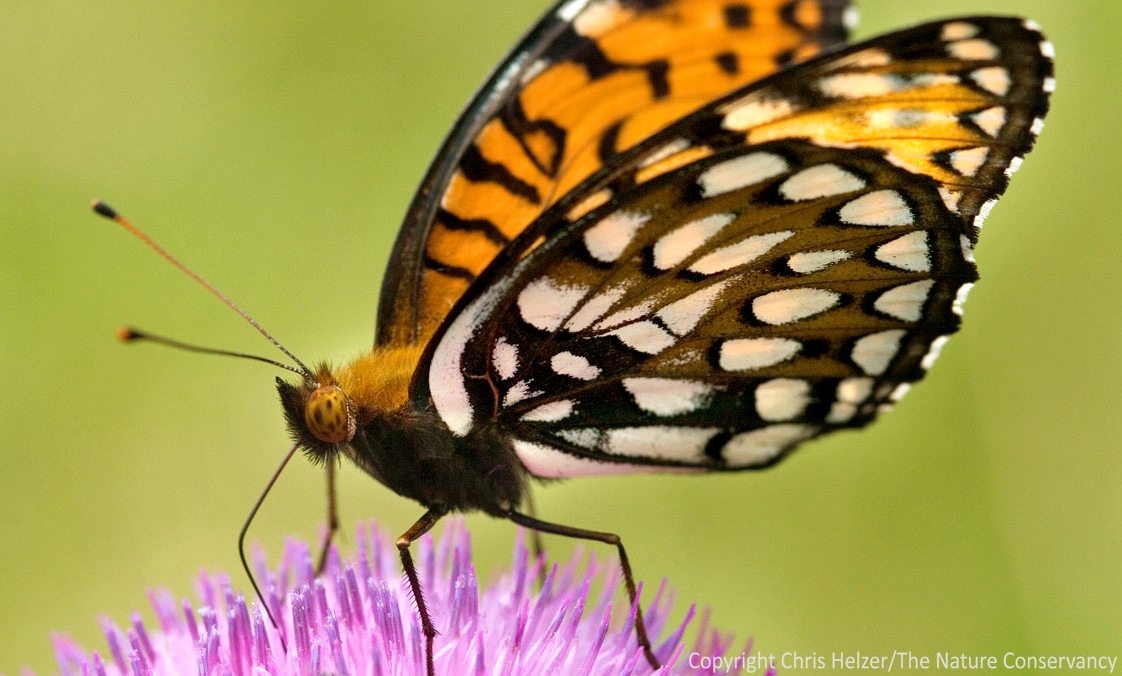
A regal fritillary feeds on a thistle – The Nature Conservancy’s Platte River Prairies, Nebraska.

2. After regals emerge and mate in those thatchy violet-rich prairies, they spread out into more flowery sites to feed.  In our Platte River Prairies, those feeding sites tend to be restored (reconstructed) prairies located around and between those degraded remnants.  Those restored prairies have significantly fewer violets than remnant prairies, but lots of the favorite nectar flowers for regals, including hoary vervain (Verbena stricta), milkweeds (Asclepias spp.), wild bergamot (Monarda fistulosa), and thistles (Cirsium and Carduus spp.).  Interestingly, while we don’t see regals emerging from recently burned prairie, some of the most-used summer nectaring sites are our most recently burned sites.

Continue reading