This was a great week, during which Kim and I attended the North American Prairie Conference in Houston, Texas. The conference was wonderful, and it was great to meet a lot of new people, including a lot of you who were nice enough to come up and tell me how much you enjoy this blog. Thank you for that.
Tuesday was field trip day, and Kim and I got to travel to a couple sites, including The Nature Conservancy’s Roy E. Larsen Sandyland Sanctuary. While there, we wandered through some pine savanna habitats and saw a WHOLE LOT of plants and animals that we don’t get to see in Nebraska. If you’re fortunate enough to live close to this property, I’m jealous – I’d love to explore it on a regular basis. It’s a beautiful site, and very well managed.
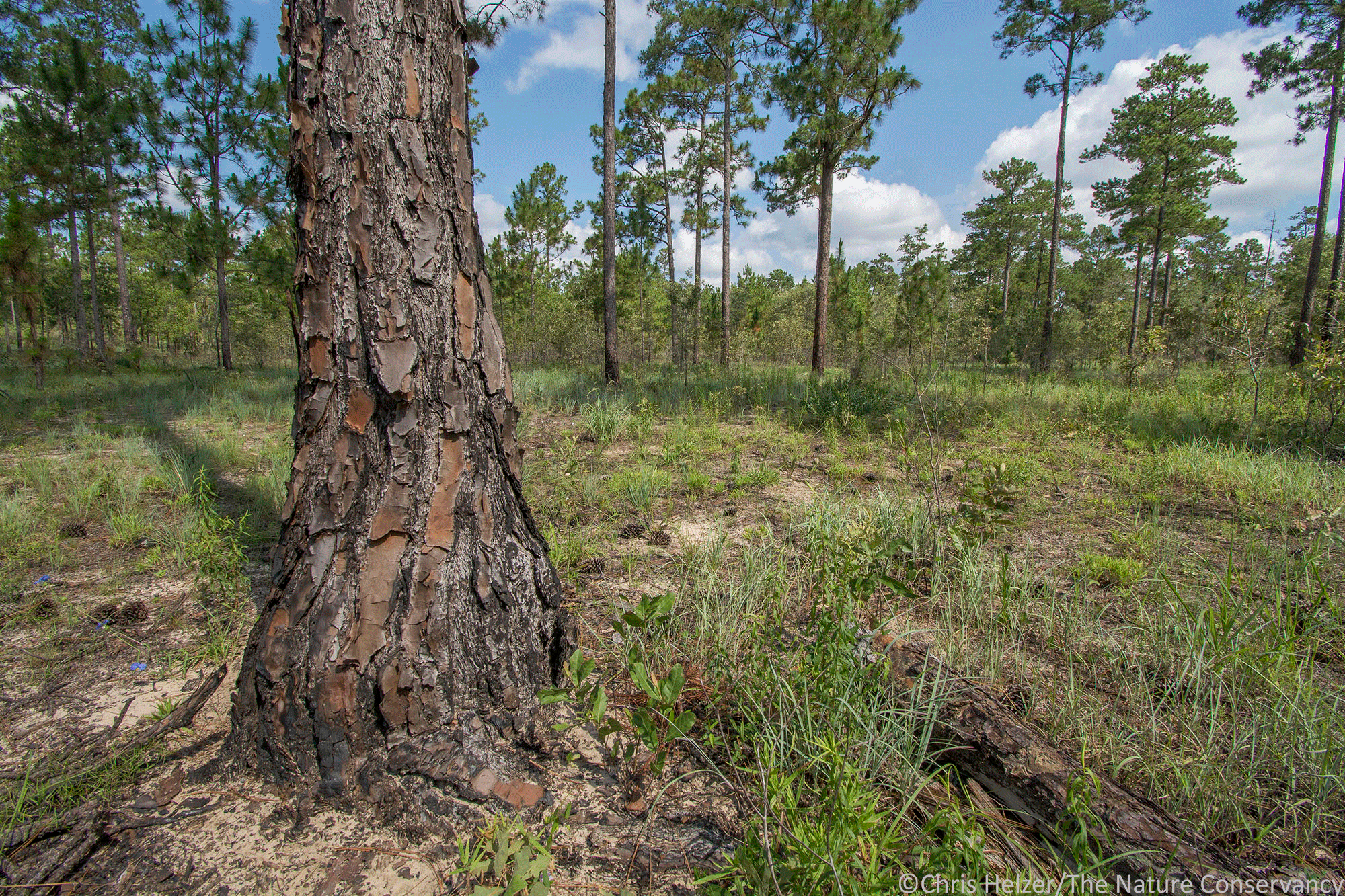
Longleaf pine savanna is essentially a prairie with scattered trees in it. It’s a fire-dependent plant community, and the Conservancy manages this site with frequent fire to keep brush subdued. I’d’ only seen longleaf along the eastern seaboard prior to this trip, so it was fun to see the more western end of the ecosystem in Texas.
I’m sharing just a small sample of the photos I took during the tour, and it was really hard to narrow the selection down. Just about everything I saw was new, and there were quite a few plants that are apparently endemic to a pretty small geographic area around the site. I wish I could share some good natural history stories about each of these, but the best I can do is pass along identifications generously provided by Matt Buckingham, a fantastic ecologist and photographer who has a blog you should all check out. Here are some images from Sandyland Sanctuary:
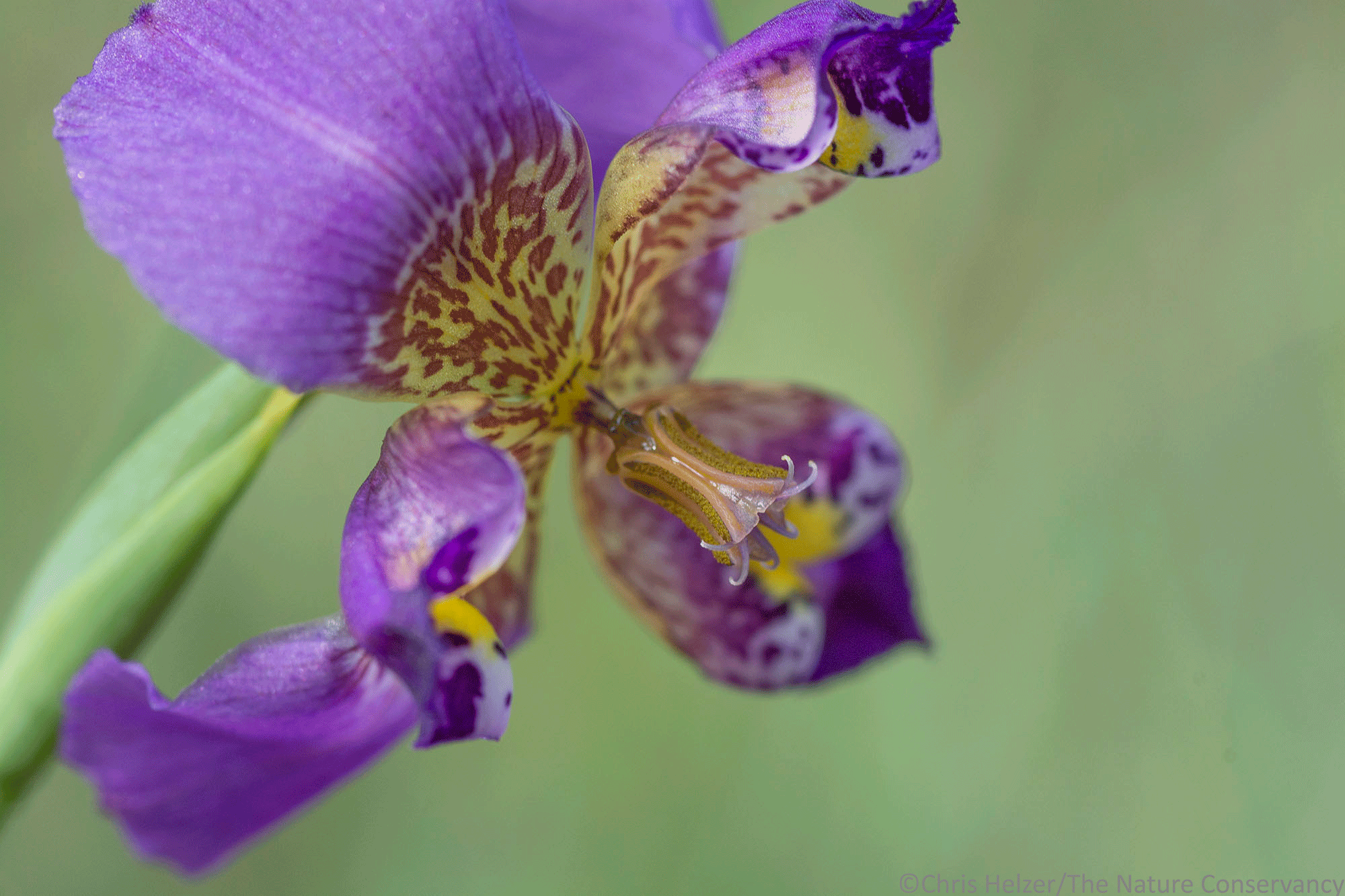
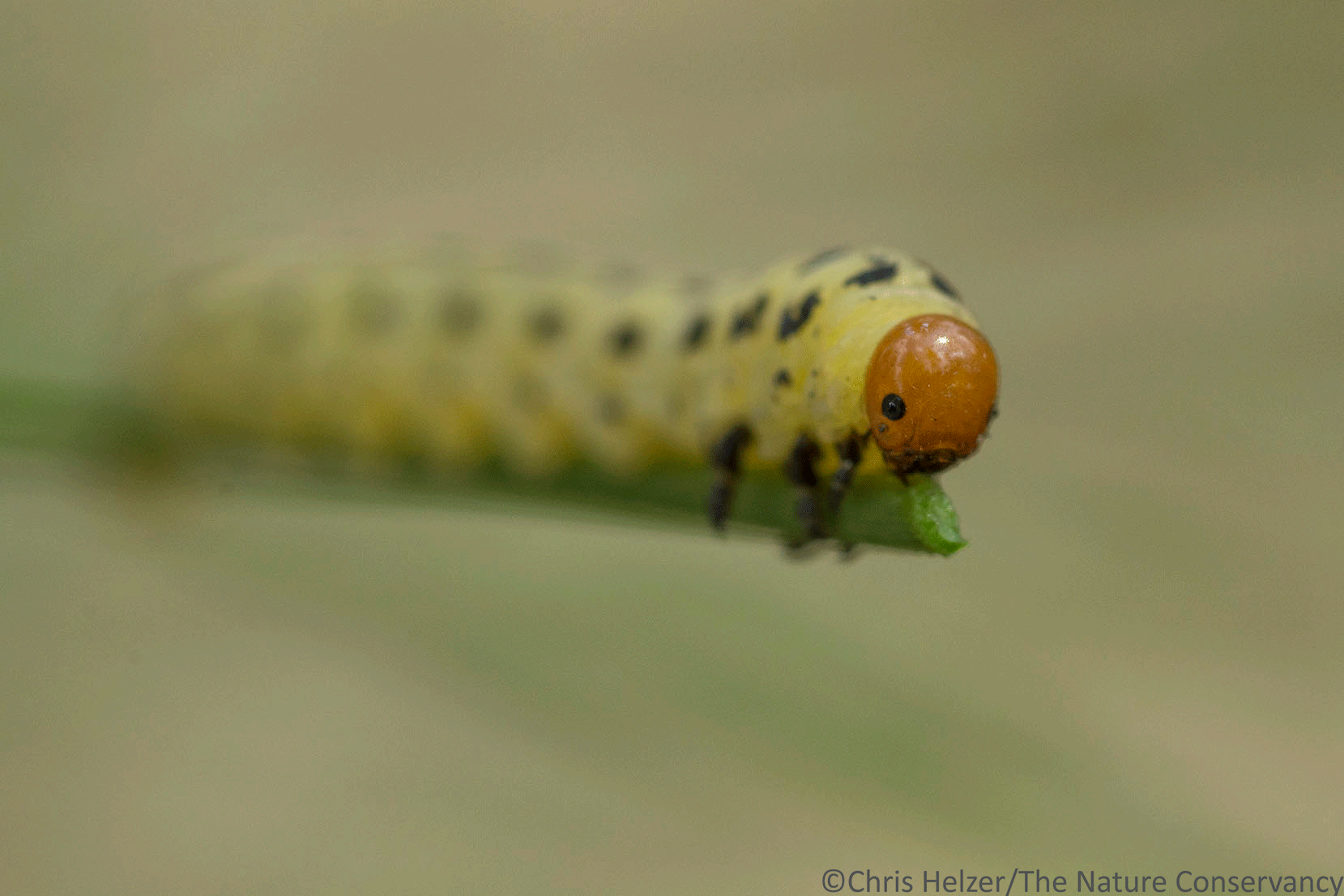
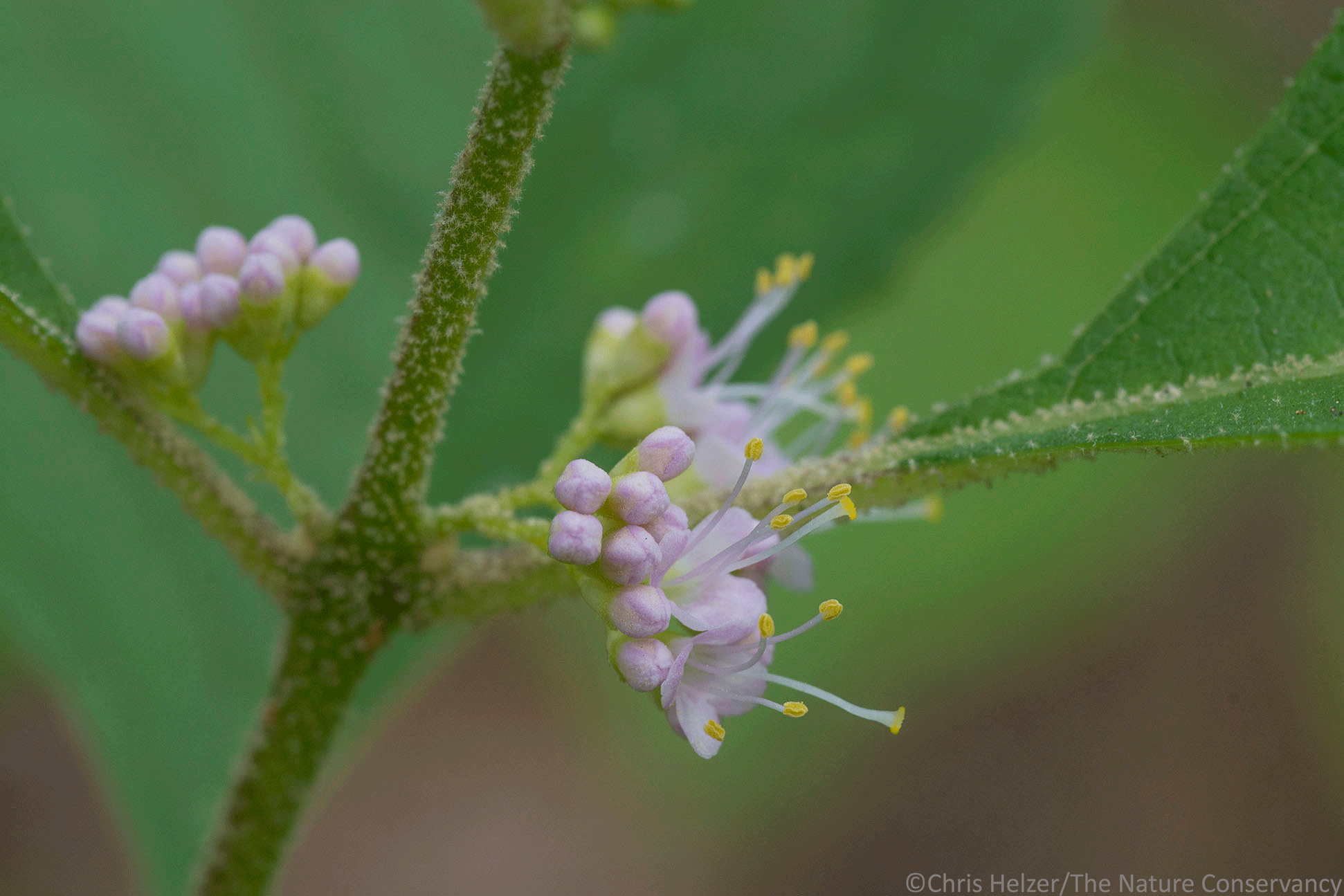
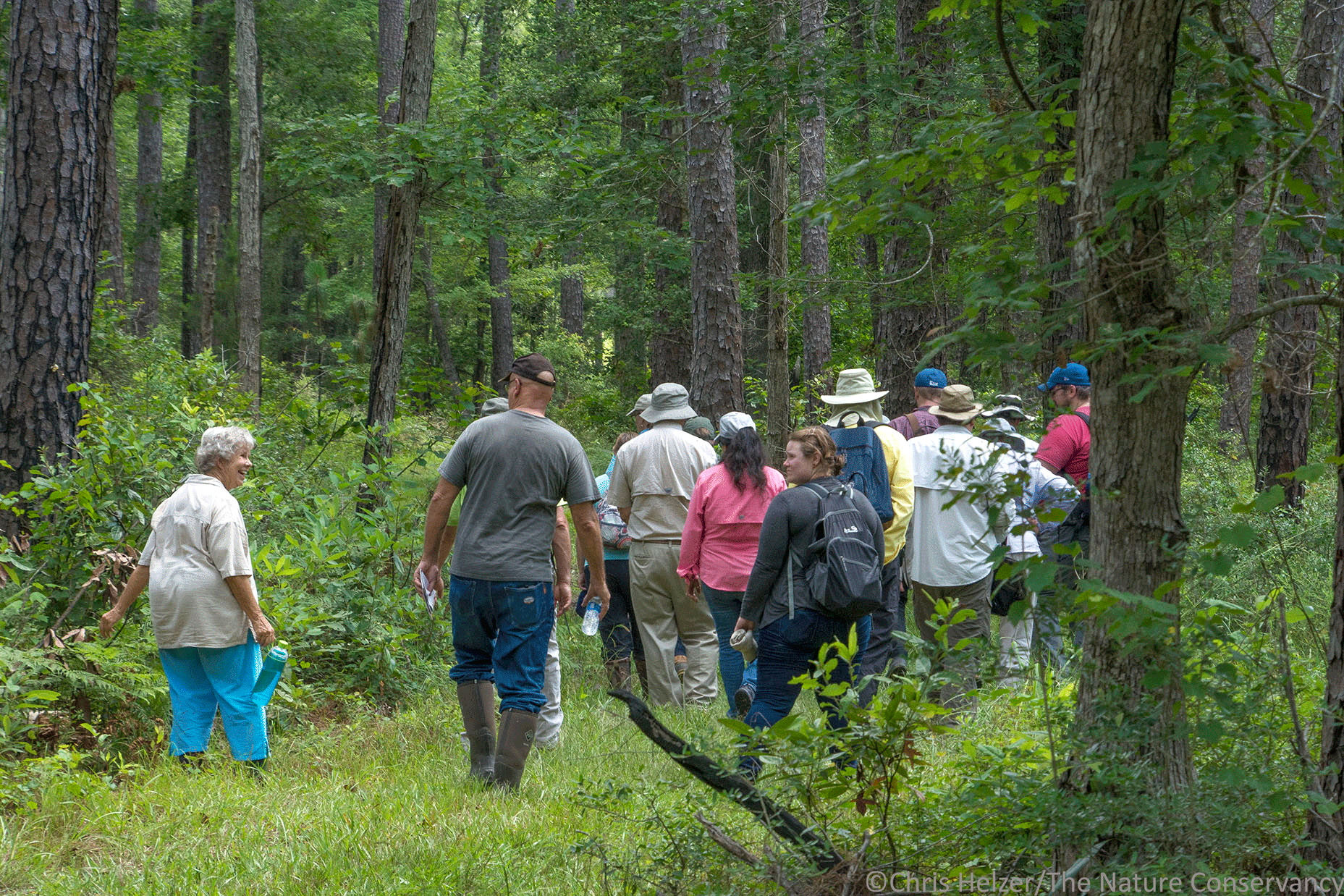
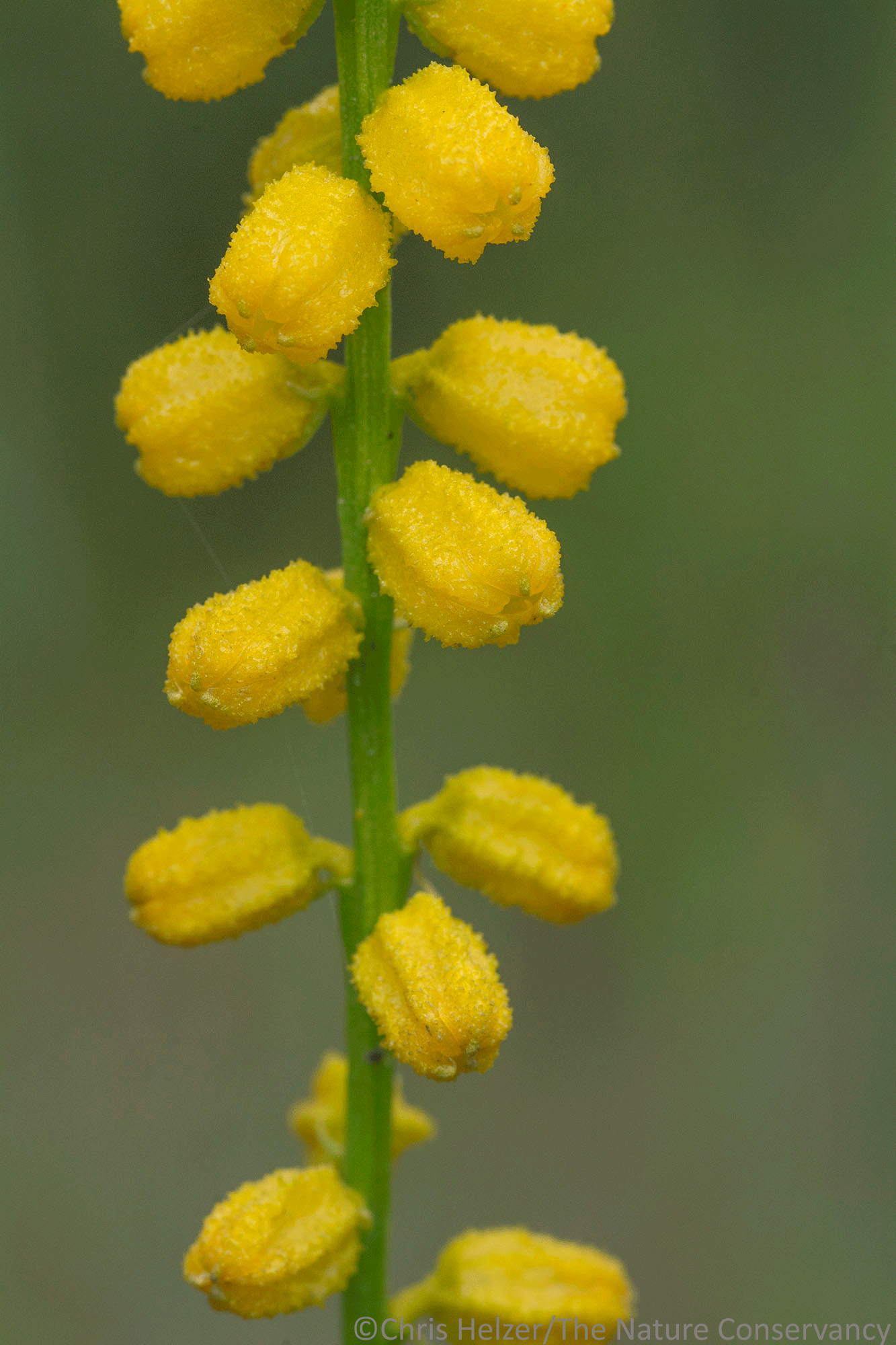
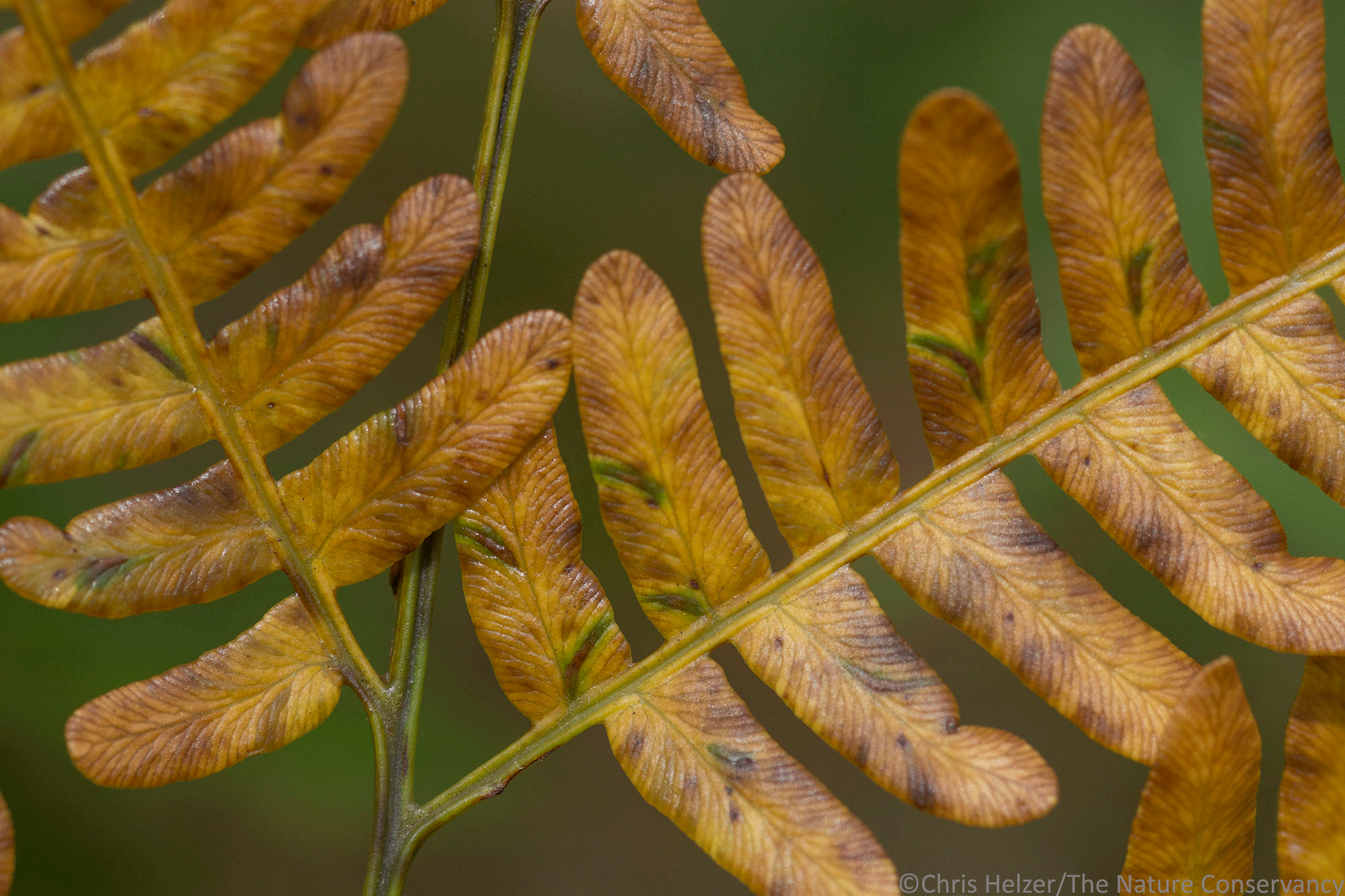
I can’t believe how many Mimosa species we saw in Texas. Matt told me which this one is, but I’ve forgotten, and I didn’t remember to send him this photo to identify after the fact.Alophia drummondii is a gorgeous iris that drew a lot of attention from our tour members.Young longleaf pines maintain a grass-like growth form for several years which allows them to develop a strong root system but weather frequent fires fairly easily. After those root systems are in place, they can shoot up very quickly to get tall enough to survive fire in their more typical pine tree shape.This caterpillar and a friend (sibling?) was busily munching on the leaves of a young longleaf pine.Commelina erecta, a native day flower, was one of the few plants I recognized from the longleaf savanna, though it certainly grows within a different context in Nebraska.Delphinium carolinianum (Carolina larkspur) is also found in Nebraska, but I’ve only seen it in its white form there, and the flowers are smaller and pretty different-looking.Callicarpa americana (beautyberry) is a plant Kim recognized from her horticulture background, but a new one to me.Our tour group, venturing into a wetter portion of the site, where the vegetation grew a little more densely.This green anole sat patiently while many of the tour members took its photo. I was the last, and it was patient enough to allow me a few quick shots before it finally scurried away.Sabatia gentianoides (rose gentian) is related to the gentians I’m more familiar with, but is in a different genus.I bet many of you are like me, and didn’t recognize this as a sedge. It is. Rhynchospora colorata has distinctive white bracts that makes it look more like a wildflower.When we got into the wetter portion of the site, we started seeing a little more dense understory and more loblolly pines than longleaf pines. (I can’t tell the difference between those trees unless I can see the cones). Polygala mariana (Maryland milkwort). Aletris aurea (golden colicroot) was really striking, standing more than two feet tall, with gorgeous yellow flower spikes.Kaytdid nymph with an ant on its foot for some reason.We don’t get to see bracken ferns (Pteridium aquilinum) in my area, so it was fun to see them in abundance. This one had turned brown for some reason, which probably wasn’t positive for it, but made for a beautiful image.
As strongly focused as we are on biological diversity, conservationists have done a pretty poor job of focusing on diversity within our own ranks. Quick – think of a famous conservationist. Got one? Chances are good the person you just visualized is a white male, or at least white. If you want to explore this topic further, take a look at Wikipedia’s List of Prominent Conservationists.
This is an issue I have long been aware of, but a workshop I
recently attended helped crystalize some things for me. As a straight, cisgender, white man in an
affluent country, my perspective on this topic is clearly limited, but I’ve
also been granted some advantages I feel obligated to take advantage of. At the end of this post, I’m sharing a few
strategies I’m personally hoping to employ toward diversifying conservation. I’m hoping others will chime in with
additional ideas and information.
Because the majority of conservation professionals in this country (and across much of the globe) fall within a fairly limited demographic range, we represent a limited range of perspectives and experiences. If only a narrow slice of humanity is designing conservation strategies, those strategies won’t apply equally well to everyone. That’s problematic, because it means only a fraction of the public sees conservation as relevant to them. To combat climate change, public apathy, habitat loss, and other major threats to the earth and its inhabitants, we need everyone pulling together, or we don’t stand a chance.
This is a photo showing the participants in a Grassland Restoration Workshop in Missouri. It was a bunch of great people, and we had excellent discussions, but the diversity among us was pretty limited. What aspects of grassland restoration and conservation were missing from our conversations because of our limited diversity?
A 2016 National Public Radio story discussed the lack of ethnic diversity among National Park visitors. One example they shared was that less than 2% of annual visitors to Saguaro National Park self-identify as Hispanic. That’s particularly striking because roughly 44% of nearby Tucson, Arizona residents identify as either Hispanic or Latino. Do some people feel less welcome, or even less safe, in parks and other natural areas? The answer is yes, and it’s not limited to ethnicity. Gender, sex, age, wealth, geography, and other many factors play into whether people enjoy, or even visit nature sites.
There are numerous and well-documented problems that arise
when people don’t have exposure to nature.
People without positive experiences in the outdoors tend to think nature
is boring, scary, and/or irrelevant.
They certainly won’t be interested voting for, or otherwise supporting
conservation initiatives, let alone pursuing a career in conservation. Finding ways to get more of our population,
across all demographics, positive exposure to natural areas needs to be a high
conservation priority.
Increasing visitation of natural areas is only part of the
issue. Conservation should increase
quality of life for people, regardless of where they are. Clean air and clean water should be
universally available, for example.
Knowing that there are pristine mountain tops where the air is clear and
water is pure doesn’t help someone living in an urban food desert surrounded by
lead pipes and smog. To touch down in
people’s lives, conservation needs to happen where those people are – in addition
to wilderness areas where people are scarce.
Most importantly, to recognize and address the needs of a diverse
population around the world, we need the field of conservation to be
representative of that population.
Let me quickly address one related issue. Some in the conservation world get nervous
about the proposal that conservation actions need to benefit people. I get that.
There are certainly cases in which it is difficult to connect the survival
of a particular snail or frog species to human welfare. That doesn’t mean we should ignore those
conservation needs. We should absolutely
be doing conservation for its own sake, but that doesn’t mean we can’t also
work to make conservation relevant and valuable to people. Most of the time, the two are connected
anyway. It’s unlikely that the habitat
loss, water quality, or climate change issues that are the ultimate drivers of
snail or frog declines don’t also have an impact on humans.
Conservation affects everyone’s quality of life, but we need
to make sure everyone understands that – especially in cities, where most of
the population lives. As we make the
argument, it would sure help if the demographic profile of conservationists was
representative of that of the planet we’re working with. When it isn’t, it is much more difficult to
make sure that conservation messages and strategies are designed to be relevant
and helpful to everyone, regardless of ethnicity, race, sex, gender, age, or
any other characteristic.
There are no downsides to including more voices and
perspectives in conservation – only upsides.
As conservationists, we had better successfully address our internal
diversity problem so we can successfully address the world’s biological
diversity problem.
Here is a list of things I’m personally going to work on,
related to this issue. I hope it’s
helpful to others. Please add your own
suggestions in the comments section below.
Actions
1. Be actively aware of the lack of diversity within
conservation. Pay attention to who
attends, leads, and is vocal at meetings, conferences, volunteer work days,
fundraising affairs, and any other conservation-related event. Share your observations with others.
2. Listen to understand.
Talk to colleagues, partners, and others who are different from you, and
learn about their stories, perspectives, and ideas. Make sure those are
included in discussions, conservation-related or not.
3. Amplify voices of those less well represented within the conservation
field. Make sure their perspectives are
heard and considered. This can take a
lot of forms. It can include calling
attention to points made by colleagues in meetings, sharing social media posts,
helping to train and enable people to get in front of media cameras and
microphones, and much more. While I’m on
this topic, here’s just one small specific step on the social media front: I would encourage you all to check out the
social media posts of Laura Connelly, who is on Facebook as Laura Lux and on
Instagram as @prairie_godmother. Laura
is a brilliant and engaging voice for conservation and ecology, and someone
whose perspectives and stories need more attention.
4. Examine job descriptions and career paths from the
perspective of underrepresented groups. Are
you asking for skills that are found predominantly within certain demographic groups? As an example, many land management career
paths in the central U.S. start with seasonal positions, for which job
requirements emphasize experience operating and maintaining tractors and
chainsaws. Those skills tend to be much
less prevalent among women than men, especially early in careers, and are less
common in people who grew up in urban areas than in rural areas. By making those particular seasonal jobs the
primary entry point for land management jobs, we’re cutting out a lot of people
who have many other skills and perspectives.
Why can’t we build more training into those positions or develop
multiple entry points for land management careers – or both?
5. Look for ways to build up conservation interest and outdoor
skills within communities you want to recruit from so candidates from those
communities will be more competitive. That
can mean volunteering to speak about nature and conservation in schools or
other venues, but it can also go much deeper.
It might mean reaching out to community leaders and advocates to learn
more about those communities and their challenges, regardless of whether you
see an immediate tie to your conservation work.
The conversations that ensue might lead to some surprising potential
partnerships.
6. At a broader
scale, don’t exclude poverty and other social issues from conservation
discussions – they are often tightly linked.
Many global issues are strongly tied to poverty, for example. It’s hard to stop deforestation when local
people are cutting down trees for basic cooking and heating needs, or to clear
space for subsistence farming. It’s also
pretty foolish to expect people and their leaders to support species and
habitat restoration projects if their primary concerns revolve around basic
healthcare and food/water/shelter needs.
Of course, conservation can sometimes be relevant to those basic needs,
but other times, addressing those primary concerns can be a necessary preamble
to conservation discussions. See numbers
2 and 5 above…
I would love to hear what you think about this topic. Please include your responses, suggestions,
and other thoughts in the comments section of this post. Thank you.









 The Prairie Ecologist