This is the time of year when I start feeling a little frantic about the coming end of the growing season. The last of the flowers are blooming. Insects are becoming less abundant, and migratory butterflies, dragonflies, and birds are heading south. Grasses are turning golden brown and fluffy seeds are floating through the air. It’s a gorgeous season, but one tinged with sadness as another season nears its terminus.
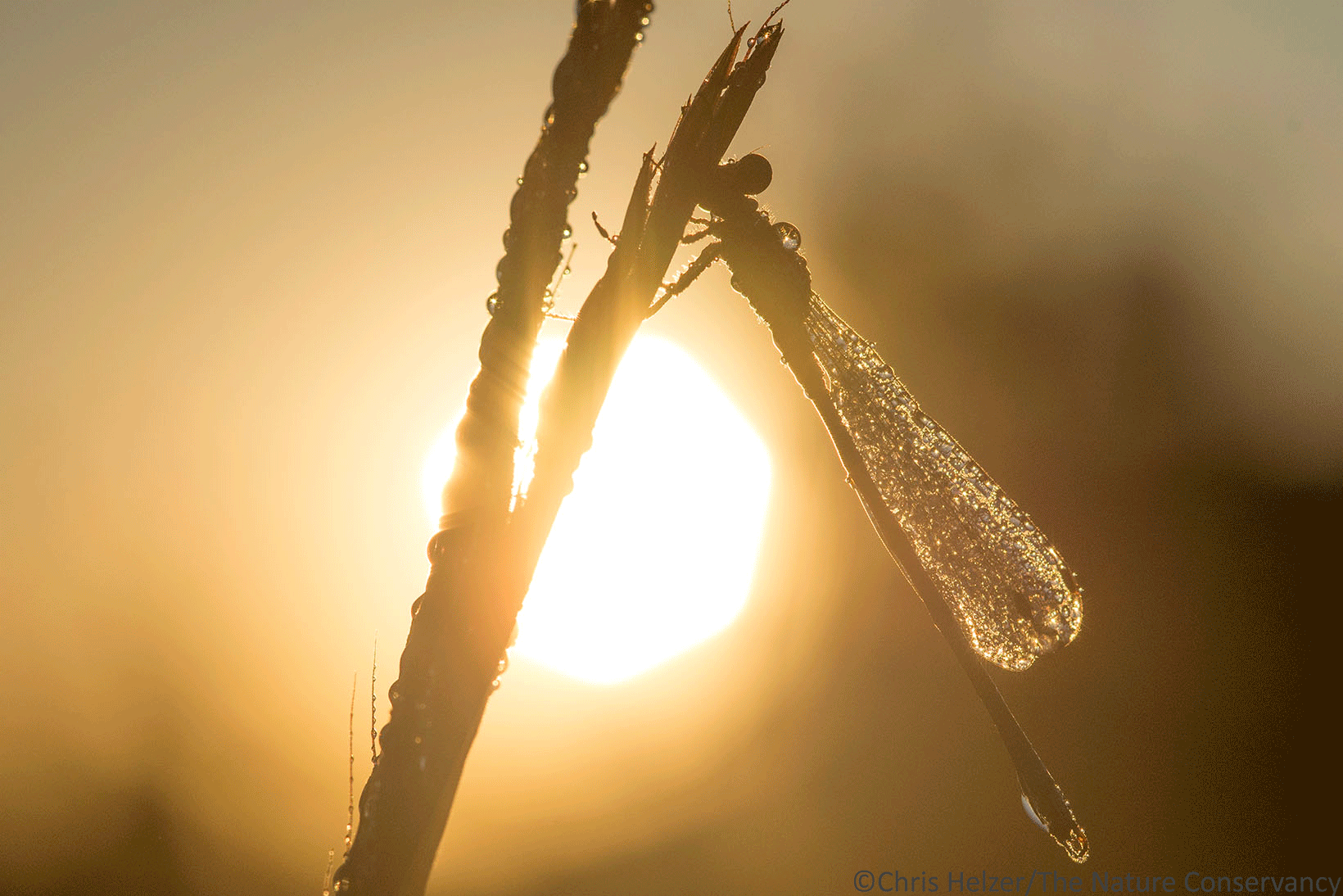
A damselfly makes goofy faces at me on a dewy morning.
I’ve been sneaking out for quick photo trips as often as I can. I can feel winter creeping up on me and I feel a strong need to get as many flower and insect photos as I can before it’s too late. As a result, I’ve got hundreds of photos from the last couple weeks. Here is a small selection from that image library.
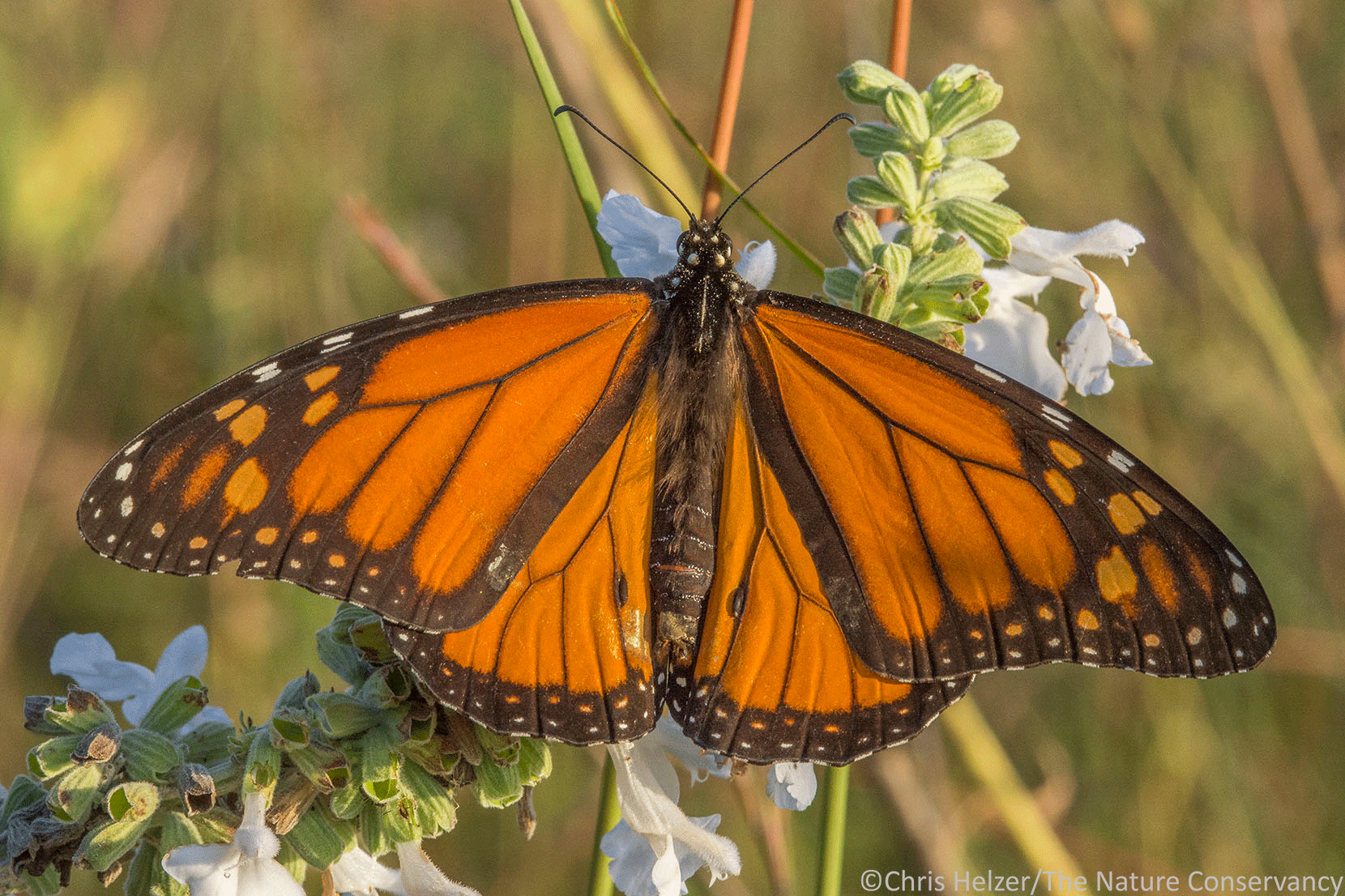
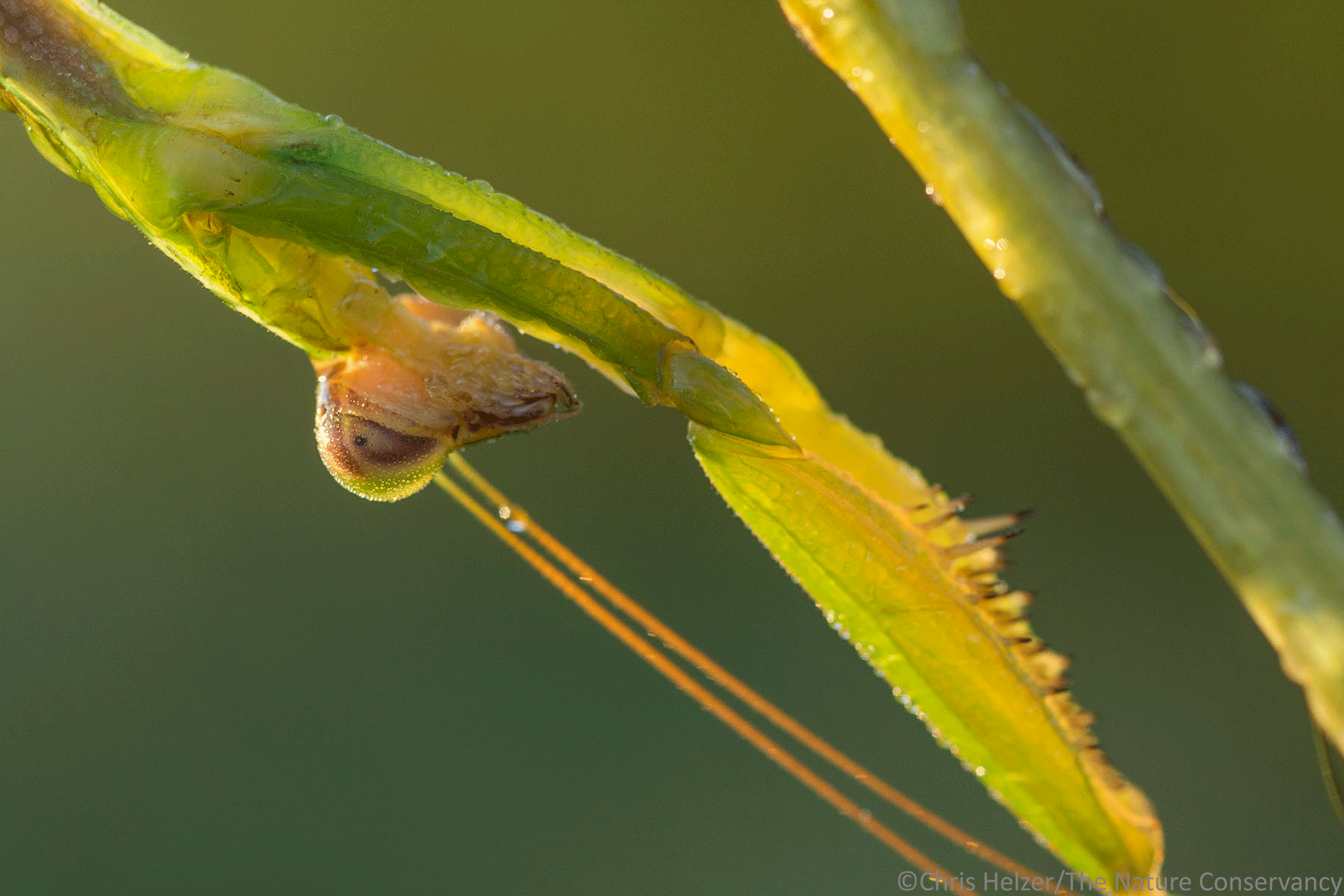
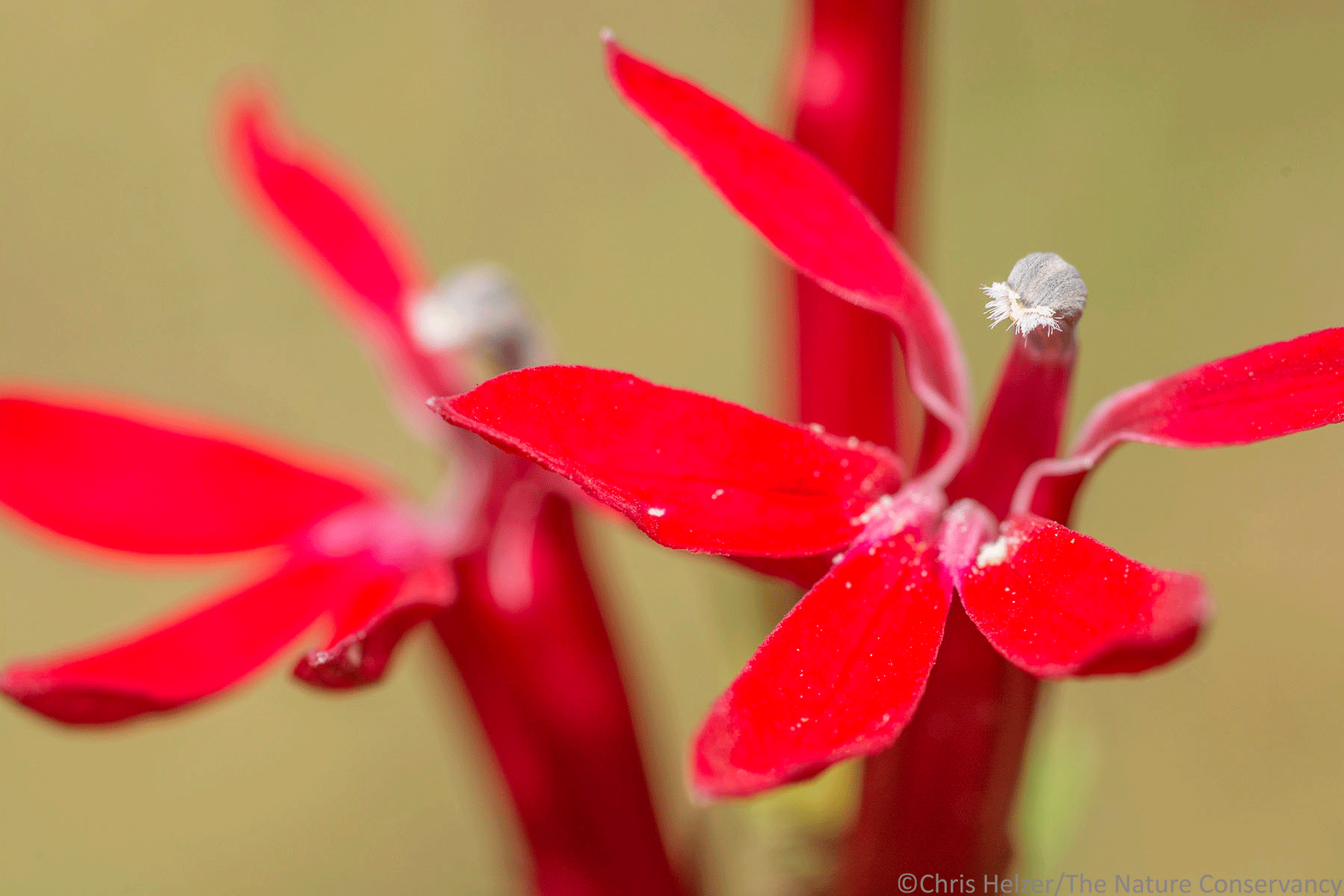
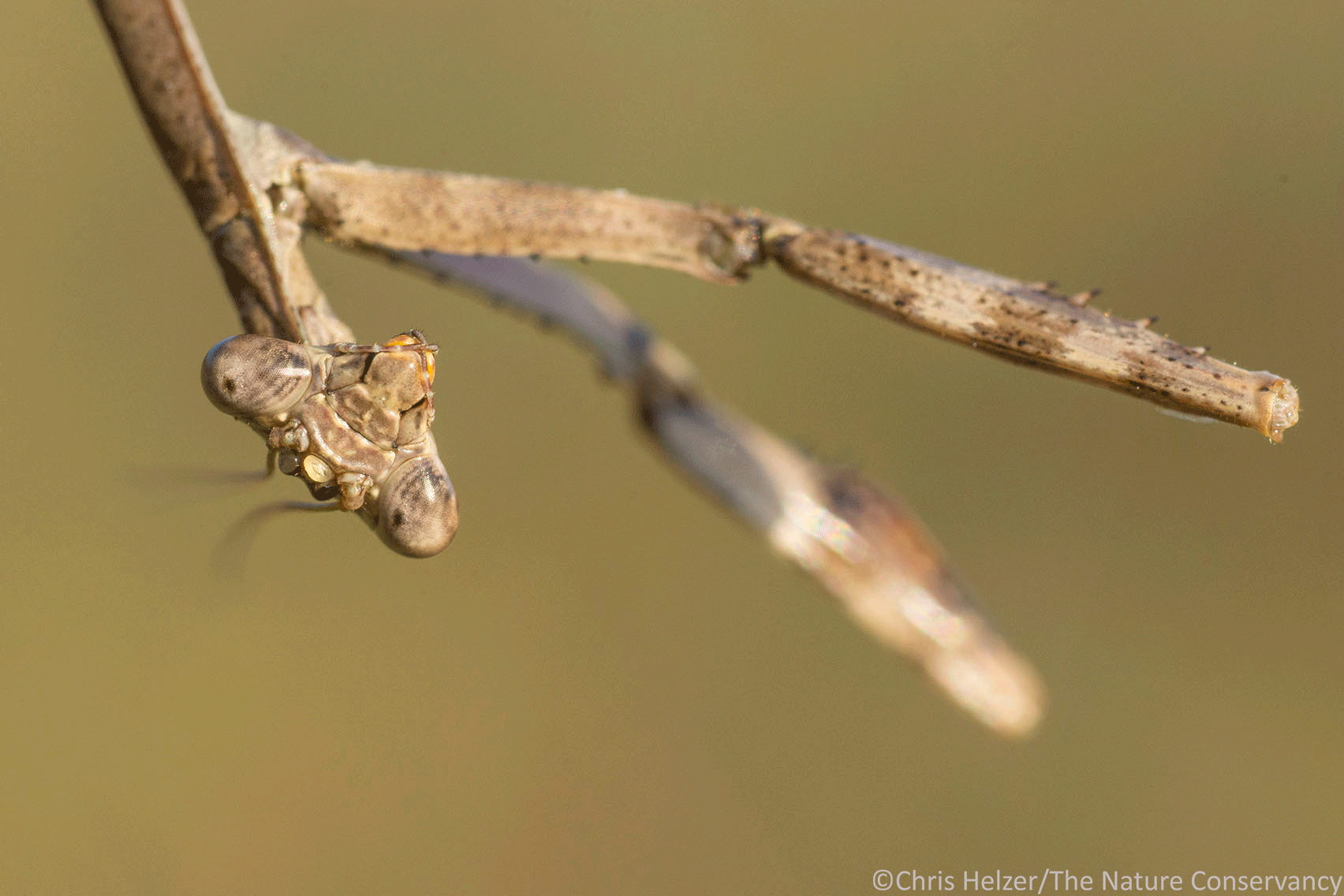
New England aster is a magnet for pollinators, including butterflies, bees, and flies – like this hover fly.Monarchs are seemingly everywhere right now as they migrate south after an apparently productive summer.This Chinese praying mantis was holding itself upside down and parallel to the grass stem it was hanging on to, making itself difficult to see.A tiny beetle is silhouetted on a common milkweed seed at sunrise.Nodding ladies tresses (Spiranthes cernua) seems abundant this year. This one is in a former crop field restored to prairie.A dewy damselfly at sunrise.Cardinal flower (Lobelia cardinalis) in a restored wetland.A native Carolina mantis in Lincoln Creek Prairie, here in Aurora.
This post was written by Hubbard Fellow Mary Parr. Mary has a strong interest in botany and has picked up the local plant species around here very quickly. If anyone is looking for someone to do plant surveys or seed harvest next season, she would be great at it! (…but you can’t have her until February)
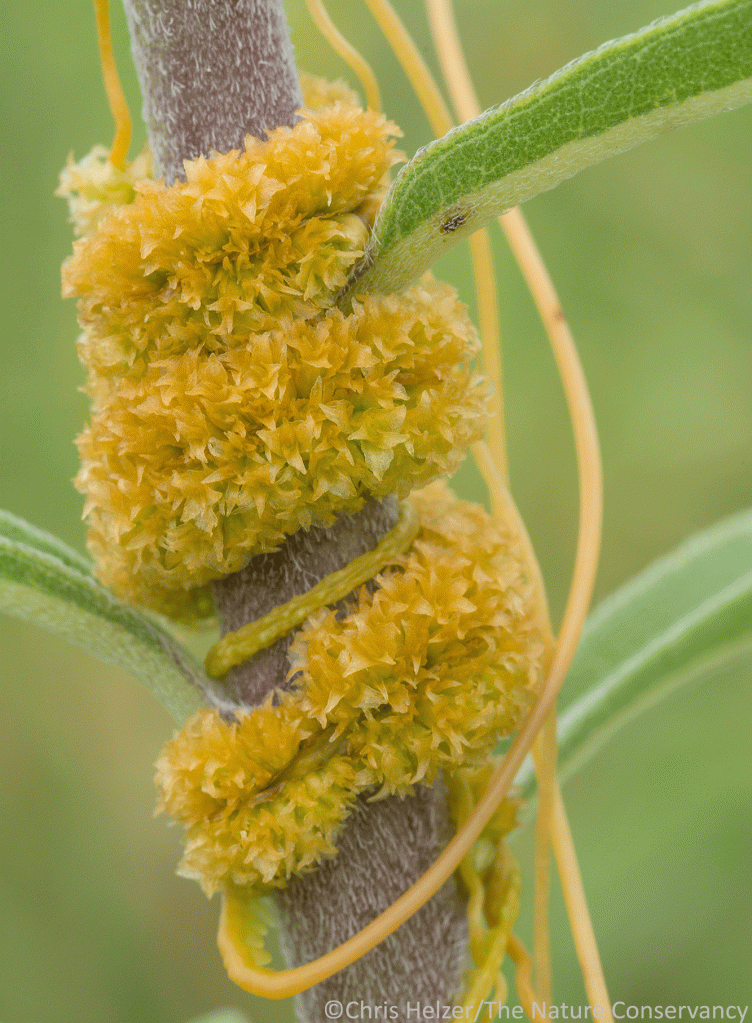
Of the many new plants I have observed on Platte River Prairies, the most fascinating has been an unusual parasitic one. It was early summer when I was first struck by its appearance – a gnarled mass of neon orange silly string entangling a 6×6 area of plants. Shocked at this vivid spectacle, I investigated further, finding no leaves or connecting stem to the ground! What was this botanical blasphemy?! Well, I’ll tell you what it is. It is Rope dodder (Cuscuta glomerata), otherwise known as wizard’s net, devil’s guts, strangleweed, witch’s hair, or my personal name for it – “orange spaghetti plant”. All dodder species are obligate parasites, meaning they bear no photosynthetic material and rely completely on a host to complete their life cycle. While many people consider parasitic organisms sinister, I revel in their amazing strategies of survival!
Listen to this! Rope dodder begins its life cycle in the
soil as a seed like any other plant. From the first moment of germination, it
is relying completely on its limited stores of energy in its embryo and
immediately begins to search for a host. The first emerging strands literally
sniff out their hosts by their scent! They use specialized chemosensory cells
that can identify airborne volatile organic compounds from their preferred host
and grow towards them. Rope dodder has been noted to prefer sunflowers and
goldenrod in the Aster family. Once a host is identified, the plant will
immediately start to twine around the stems. Rope dodder then begins to invade
the plant tissue, working its way into its vascular system. It does this by utilizing
two different modified root-like structures called haustoria. The first form
will invade the water transporting xylem, and the second will target the sugar
carrying phloem. Rope dodder will then completely abandon its own root system,
living unattached to the ground! How crazy is that? Wait there is more!
When time for reproduction comes around, the orange spaghetti strands will wither and vanish leaving only spiraling dense inflorescences on the host stem. Some select species of wasps (Hymenoptera) have been identified pollinating the tiny flowers. The seeds of the dodder genus have very robust seed coats enabling them to persist in the soil for up to 20 years! Dispersion mechanisms of the seeds are widely discussed. Largely, the seeds will fall in the area below the plant, but occasionally are dispersed through water movement, the gut of herbivores, humans, or our field equipment.
Seed transmission for some species of dodder is very bad. A majority
of the 50 dodder species in North America are considered noxious weeds and can
cause significant economic damage on agricultural and horticultural crops.
While a parasitic plant may not kill its host, it will weaken its ability to
resist other pests, fungus, and diseases. Dodder has even been found to
transport diseases among plants as it is connected to its vascular system! (Unfortunate
for the host, but still pretty cool right?) While many dodder species are
considered noxious, there are remaining native species that are uncommon and
even threatened in some states. These rarer forms of dodder have been used as
site health indicators. Rope dodder is one of the native species that largely
grows in the Midwest in prairies, open roadsides, and mesic areas.
In our prairies, we don’t see rope dodder as a threat
because we barely see it at all. The patches are far and few and a fun surprise
to find when walking through the prairie. We have no shortage of goldenrod and
asters, and in some areas could use a bit of competition. Largely, rope dodder
is adding heterogeneity and diversity to the landscape.






 The Prairie Ecologist