I frequently hear that people like living in forests and/or the mountains, but it’s pretty tough to see the sunrise when you’re surrounded by all those visual obstructions. I feel badly for people who have never seen a prairie sunrise, especially in a landscape of horizon-to-horizon grassland. Having said all that, I rarely photograph sunrises these days. That’s not because I don’t appreciate them – I certainly do. It’s just that I’m usually pointing my camera away from the sun, trying to capture the prairie and its organisms as they are bathed in the gorgeous warm light of early morning.
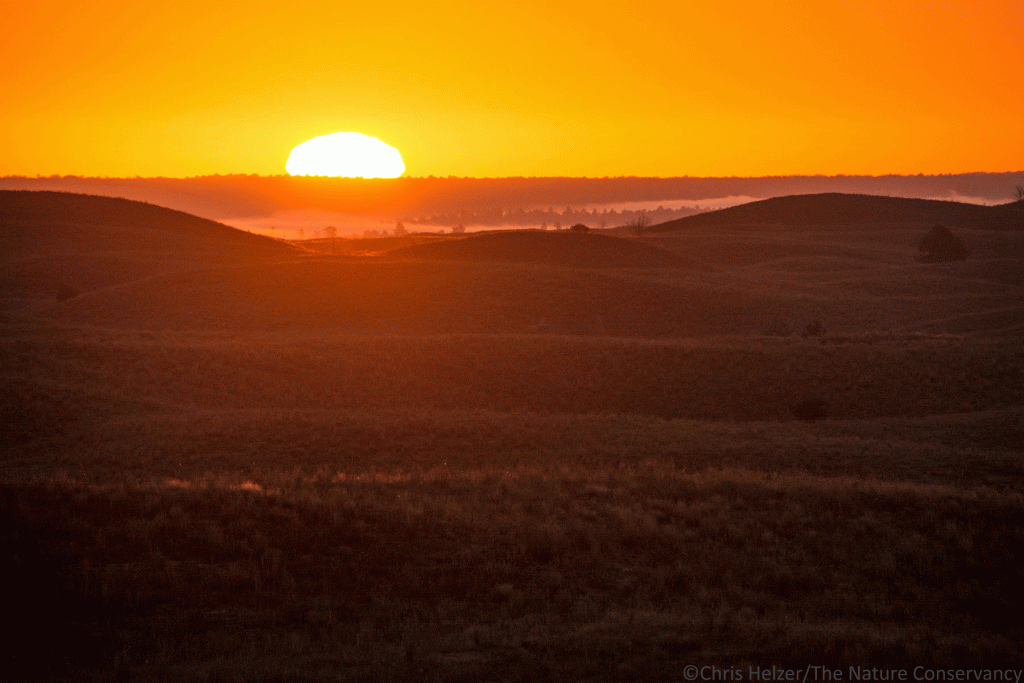
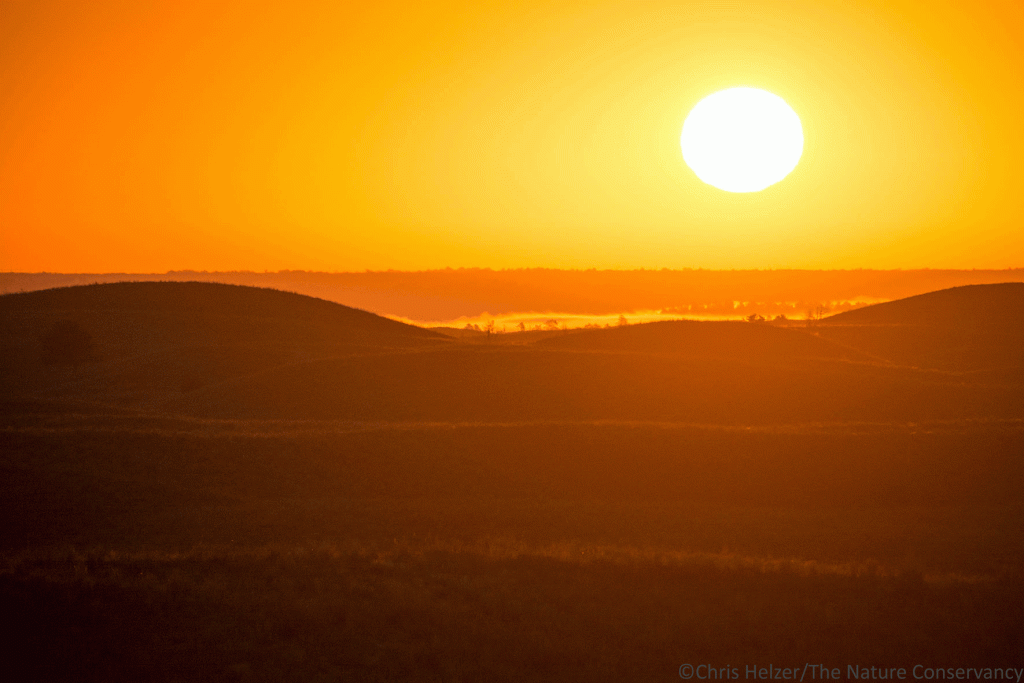
I broke pattern this week, though, at the Niobrara Valley Preserve. I meandered out early on Wednesday morning and saw a hazy horizon with an orange/pink glow where the sun was about to pop up. I climbed a big hill in the east bison pasture and captured photos of the sun as it peered over the horizon for the first time. I stayed on that hill for a few minutes, watching and photographing the sun as it climbed higher. After a while, I went looking for some subjects to put between me and the sun before it got too bright.
With all the rain we’ve had this year, indiangrass is blooming prolifically in the Sandhills prairie. Morning light coming through indiangrass flowers is pretty hard to resist. I found a few different ways to frame the indiangrass/sun combination.
After a while, I started looking for other foreground subject matter and enjoyed the linear nature of a two-track driving trail and the south fenceline of the bison pasture. I played around with that theme for a little while, but I had other work to do, so I eventually moved on. Don’t feel too badly for me, though – my next project was to find the bison and get some aerial photos of them with the drone. Mine is not such a bad job, all things considered…
Spotted cucumber beetles (Diabrotica undecimpunctata) are very visible in prairies around here right now. Farmers know these creatures as the southern corn rootworm and they can be a pretty serious pest in crop fields. In gardens, they feed cucurbits (cucumbers, squash, melons), as well as other plants. The beetles do damage by chewing on the plants, but do more as a carrier of bacterial wilt when they carry bacteria from infected plants to uninfected ones. Larvae feed on roots while adults feed on leaves, stems and pollen.
A spotted cucumber beetle (a cousin of the striped cucumber beetle) on curly cup gumweed.
Despite their status as a pest insect, spotted cucumber beetles are native insects that have happened to adapt well to the abundance of crops we’ve provided for them. When I as at our family prairie last weekend, I saw quite a few of them out in the grassland, feeding on flowers. I assumed that abundance was linked to the cornfields surrounding our prairie, but they were happily feeding on the pollen of curly cup gumweed (Grindelia squarrosa) and sunflowers (Helianthus sp), despite being within site of healthy corn plants.
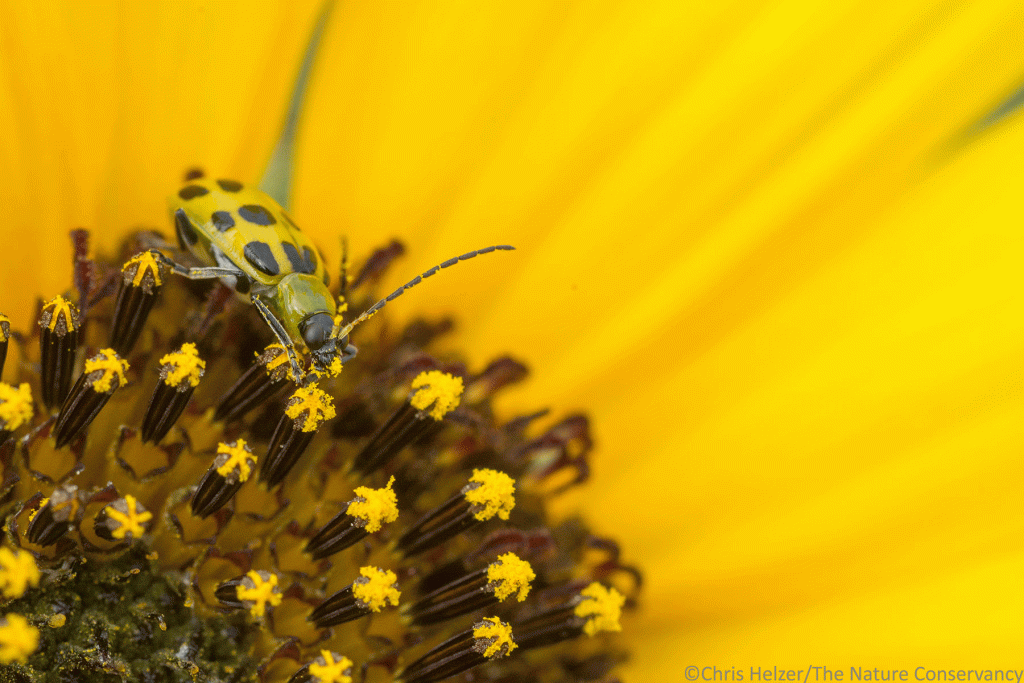
Spotted cucumber beetle adults are strongly attracted to the pollen of many plants, including this sunflower.
My assumption that the beetles at our family prairie were there because of the surrounding crop land was challenged later in the week when I saw a bunch at the Niobrara Valley Preserve, which is pretty far removed from any corn fields. I guess I shouldn’t have been surprised to see them, given their mobility. The beetles migrate northward each summer into states where they can’t overwinter. With favorable winds, the beetles can move hundreds of miles per day. With that ability, finding their way to the Niobrara River Valley doesn’t seem like such a big deal.
These small beetles are sometimes mistaken for green lady beetles, which is a reasonably good way to describe them to someone, but they are in completely different taxonomic families.
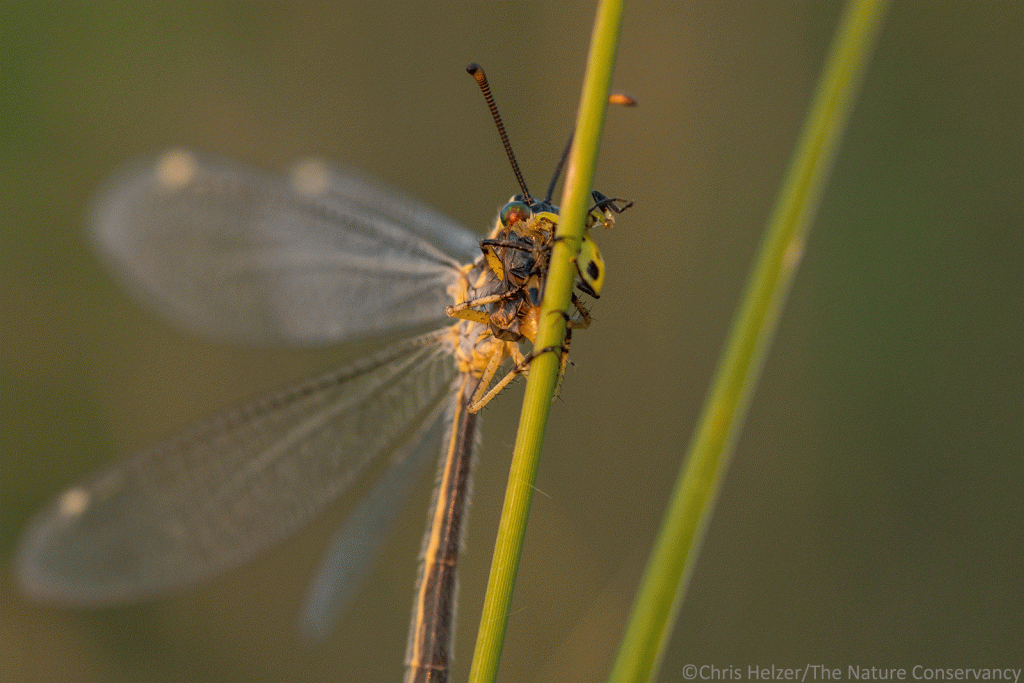
I assume many predators take advantage of spotted cucumber beetle abundance each summer. I frequently see crab spiders feeding on them, and since the beetles aren’t very agile, they are probably easy prey for many other hunters as well. At the Niobrara Valley Preserve, I was surprised to see one being eaten by an antlion adult. I’ve written before about antlions, which are among the coolest predators in the world – at least as larvae. I’d forgotten, however, that some species can also be predatory as adults (most feed on pollen and nectar).
This antlion adult was feeding on this cucumber beetle when I first spotted it, just as the sun was nearing the horizon.I followed the antlion to a couple other grass stems as it carried its prey and tried to avoid the pesky photographer getting up into its business.
Most people don’t think of insects as long-distance travelers, but quite a few of them are. Strong fliers, including many butterflies, moths, and dragonflies, make long annual migrations. But even small clunky-looking beetles can move impressive distances each year, in search of food. That mobility will give them an advantage as growing conditions and plant communities continue to change rapidly in coming years. Less vagile (your ten dollar word for the day) animals will have to deal with those changes where they live, but others like cucumber beetles and many others will have the opportunity to fly to new areas. That should work out well for them – until they are caught by a crab spider or antlion…
Eventually, the antlion got down to the last remnants of the beetle and, since the sun was disappearing anyway, I left it in peace.






 The Prairie Ecologist