
After eight consecutive weeks of quarantine quizzes, I’m taking a break. We may or may not see the return of the quizzes, but for this week, I thought I’d offer a free service to readers who may struggle to identify common – or uncommon – insects and spiders.
I post a lot of insect and spider photos on this blog. The fact that I often provide identification of those creatures – at least to family or order – tends to give people the impression that I have extensive entomological knowledge. Nothing could be further from the truth!
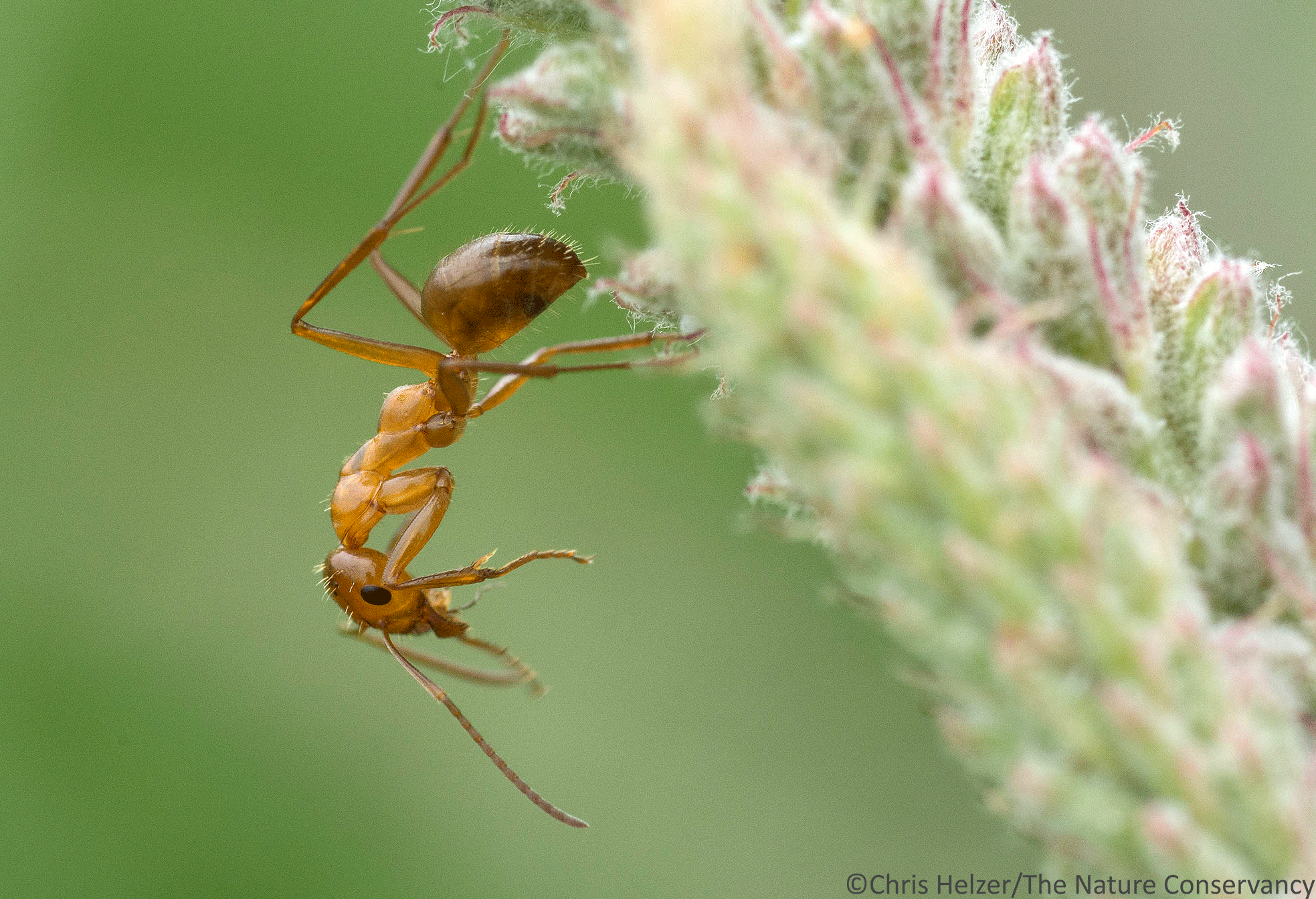
As I’ve told many people, I am an insect enthusiast, not an expert. I like to photograph small creatures and then learn about them. However, before I can dig into their fascinating stories, I first need to know who they are. Through years of practice, I have gradually developed and honed a very simple system of identification. Today, for the first time, I am making that system available to the public – at NO CHARGE.
There are, of course, multiple terrific resources available for the identification of invertebrates. Those include various old school field guides, as well as online resources such as iNaturalist and Bugguide. I see my method as complementary to those other resources, if considerably easier to use. It works for any species of insect, spider, or other invertebrate (and, honestly, with vertebrates and plants too). All you need is a reasonably good photo of whatever it is you’re trying to identify. Then, just follow the simple chart below and identify your bug!
You’re welcome. Stay safe, everyone.

(Thanks to James Trager, the expert who identified Formica incerta for me)



 The Prairie Ecologist