
It’s sunflower season at the Platte River Prairies. Stiff sunflower is winding down its flowering, but Maximilian and sawtooth sunflowers are going crazy, especially in some of our newer restored prairies. During a brief period of good photography light this week, I grabbed some photos of sunflowers from both the ground and the air.


There are several interesting things to see in the above photo (you can click on these images to get better views of them). First, while this land was formerly cropland, we did some excavation work before our recent seeding projects and recreated slough wetlands (old river channels). In fact, if you look at the first aerial photo, which shows a broader view, you can see how our restored sloughs match up with the sloughs in the foreground of that photo (below the yellow) which run through unplowed prairie. These prairies are on alluvial soil laid down long ago by the Platte River and the old river channels and sandbars now host their own individual prairie plant communities. In the restored areas, you can see the ‘sandbars’ we recreated from the spoil removed during the excavation of the wetlands as we tried to produce a similar diversity of soil and plant community types.
Second, you can see the abundance of yellow sunflowers, especially in the more recently planted (and ungrazed this year) part of the site. A lot of that yellow is Maximilian sunflower (Helianthus maximiliani), but on this mesic to wet-mesic prairie, there is also a lot of sawtooth sunflower (H. grosseserratus), and stiff sunflower (H. pauciflorus) on the drier areas. Common annual sunflower (H. annuus) is also present – especially in small patches where perennial grasses and forbs haven’t yet fully established. Other plants chipping into the yellow color include several species of goldenrod, a couple Silphiums, and various others.
The left side of the photo shows a restoration that is three years older, but the lack of abundant yellow isn’t due to age as much as to this year’s management. Cattle have been grazing that area at a moderate intensity all season. They are creating lots of small ‘grazing lawns’ where big bluestem, especially, is grazed almost to the ground. But there are also lots of taller patches of grass scattered around. The cows have also been nipping at the sunflowers all season, keeping most plants to waist height or shorter. They’ve also cropped off quite a few of the flowers. Flower abundance is a lot higher in reality than this aerial photo shows, but the grazing definitely affected the height and density of sunflower plants – just as we’d hoped.
Finally, on the right half of the photo, you can also see the varying density of yellow across the prairie. That’s driven by soil, not by anything we did during the seeding process. There are some areas where forbs, and especially perennial sunflowers, are really abundant, and other places where grasses are much more dominant. Even where sunflowers are pretty thick, they’re far from a monoculture, but they’re pretty dang thick.
The more scarce yellow in the grazed area to the left hints at some of the impacts of grazing, but the story is pretty complex. If this site follows the pattern we see in most of our restored prairies, our ‘shifting mosaic‘ approach to grazing will affect the relative abundance of prairie plants quite a bit over the next decade or so. Those big sunflowers will become less visually dominant (smaller, less vigorous plants), and somewhat less abundant, as will big grasses like big bluestem, indiangrass, and prairie cordgrass. Many other plant species will become more abundant around those plants, increasing overall plant diversity. It should be fun to watch.
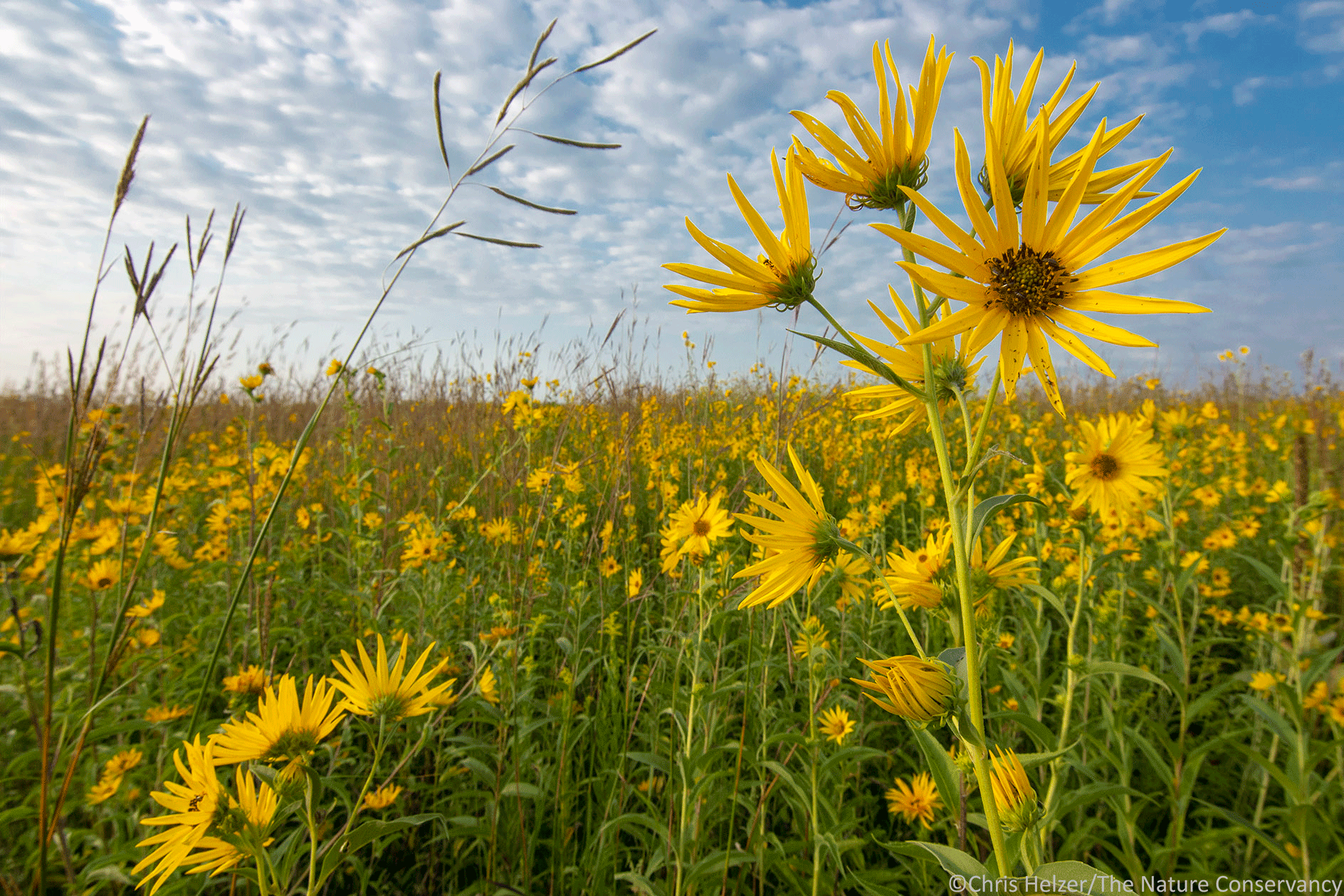


Late August and early September are very yellow periods in our prairies. The big sunflowers and goldenrods are all going strong, and joined by other less abundant flowering species. Those plants are loaded with pollinators and herbivorous insects that are feeding on the flowers and other parts of the plants. Tiny predators are all over too, chipping away at the abundance of the other invertebrates.
Our newer restorations definitely have the most dramatic yellows. Longer-established sites, especially those that have had years of fire and grazing treatments, tend to have less concentrated yellow, but only because the overall diversity of plants is higher. Patches of sunflowers don’t appear as big monocultures in those older sites, but instead blend into the broader matrix of plant species that make up the plant community. There’s still plenty of yellow, but it’s mixed in with lavenders, whites, blues, and the other flower colors produced by plants that benefit from management that prevents a few species from becoming dominant. Those older prairies might look less striking from the air, but they’re healthy and diverse and literally buzzing with life.

 The Prairie Ecologist