
Well, if you’re reading this, you’ve made it to 2024. Great work, everyone. This is the year all our efforts to convince people that prairies are amazing will finally pay off.
Right?
Right.
Also, a new year is as good an excuse as any to test your ecological knowledge with a serious, no-frills nature quiz. Unfortunately, you’re reading The Prairie Ecologist blog and that’s not the kind of quizzes we have here. Instead, you get this weirdness…
Good luck, and enjoy!

What is happening in this photo?
A. An insect larva is emerging from a seed pod after consuming all the seeds from within it.
B. A unicorn lost its horn and then an alien found it and decided to hide in it.
C. Um…?
D. Nah, it’s an aquatic caddisfly larva living in a case it made out of silk, grains of sand, and other materials. Among other things, the cases provide protection from the larva against threats such as dragonfly larvae.
E. Also, unicorns don’t lose their horns. If they did, they’d have to call them antlers.
F. And then we’d have to call unicorns uniantlers. Or unicantlers? Either way, it wouldn’t work.
G. Caddisflies are pretty amazing, though, huh?
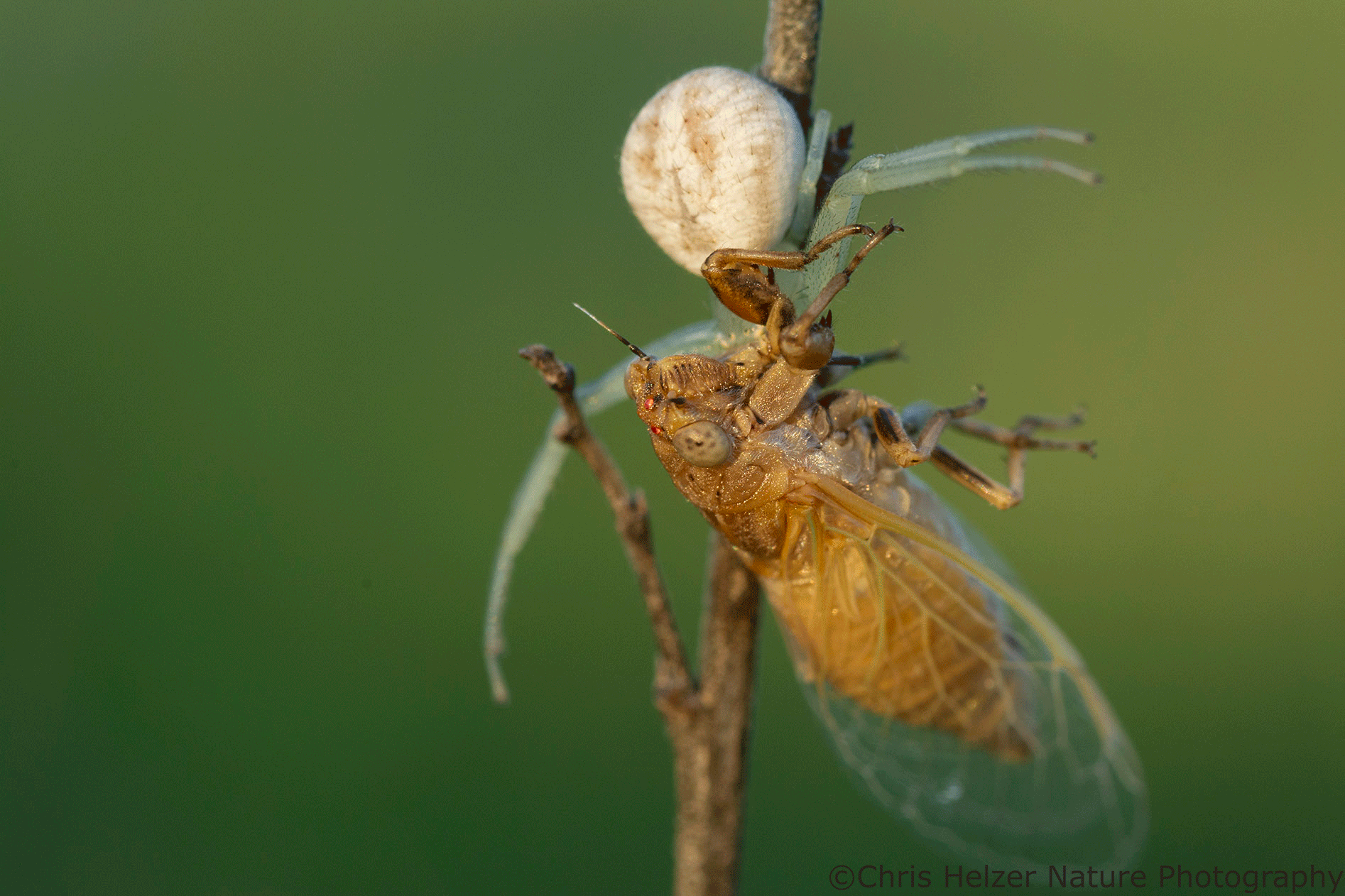
What is happening between this crab spider and this cicada?
A. The cicada slipped and fell and the crab spider boldly and compassionately, at great personal risk, reached out and caught it, saving it from a perilous plunge toward the ground.
B. With its venomous fangs?
C. Well, yes.
D. So, another interpretation might be that the crab spider ambushed the cicada and paralyzed it with a venomous bite when it got within range?
E. I’ve instructed my client not to answer any more questions.
.

Why is this cancer root plant (Orobanche fasciculata) brown but actively flowering?
A. It’s dying from the bottom up and the flower hasn’t yet gotten the news.
B. It’s undead and will thus have its own show on Netflix very soon.
C. Hang on, let’s look at this logically. It must be alive because it has a flower. And it doesn’t look dry, it just looks brown.
D. Good point. It must be one of those weird parasitic plants that isn’t green because it doesn’t have chlorophyll and just pulls nutrients from the nearby plants it taps into.
E. Nature is weird.
.
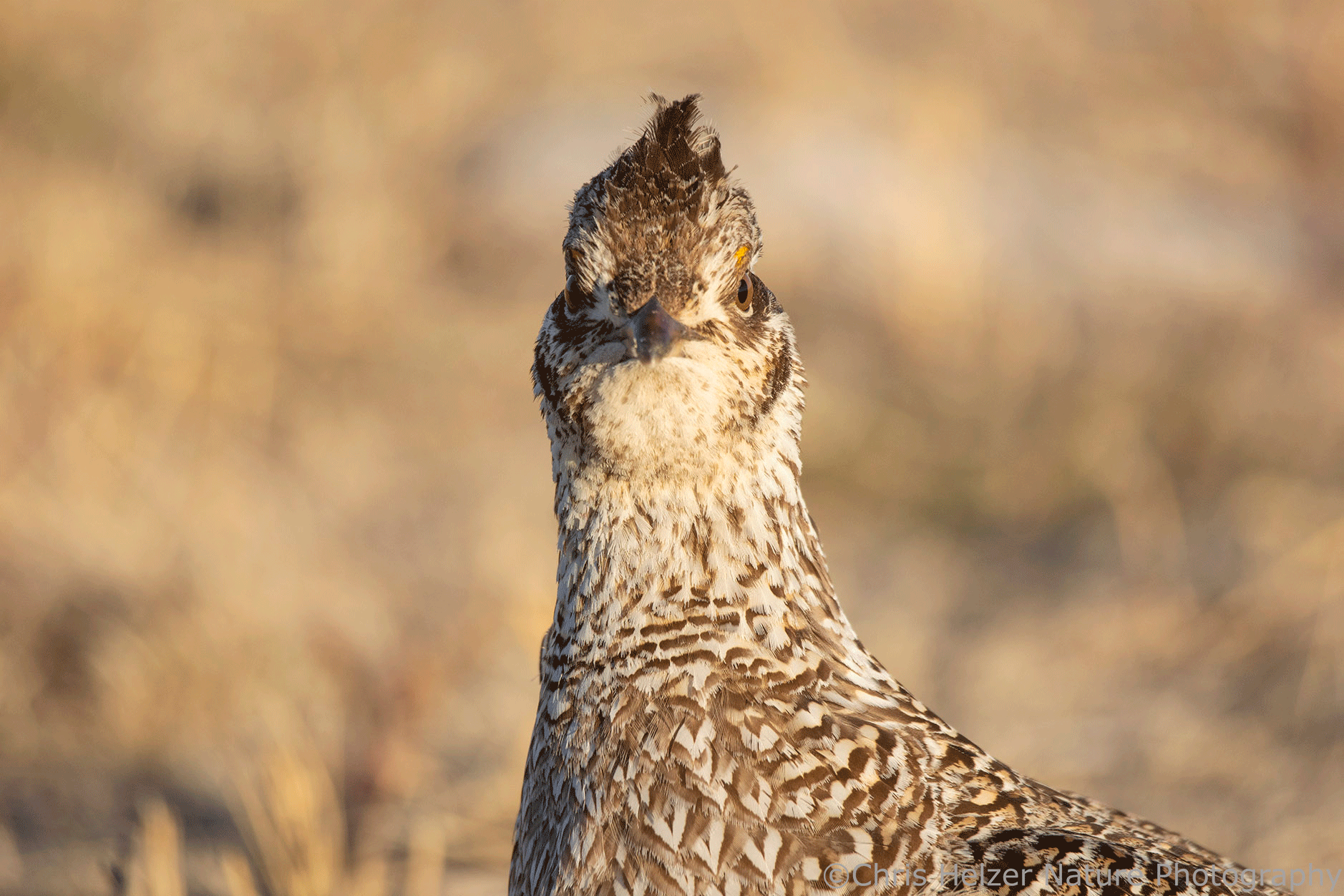
Why does this sharp-tailed grouse look so angry?
A. One of his buddies told him his tail wasn’t very sharp and all his other ‘friends’ started calling him a blunt-tailed grouse.
B. You know what ‘grousing‘ means, right? It’s what they do.
B. He isn’t angry – it’s just that you’re seeing him from the front. From the side, he looks charmingly curious.
D. Hey, there are two B’s.
E. No there aren’t.
F. Two B’s or not two B’s? That is the question.
G. No, the real question is “Why does anyone read this blog?”
H. I thought the question was about a grouse that looked angry. Also, there’s no C.
I. No C?? Oh no – what will happen to all the whales?
J. Good grief.
.
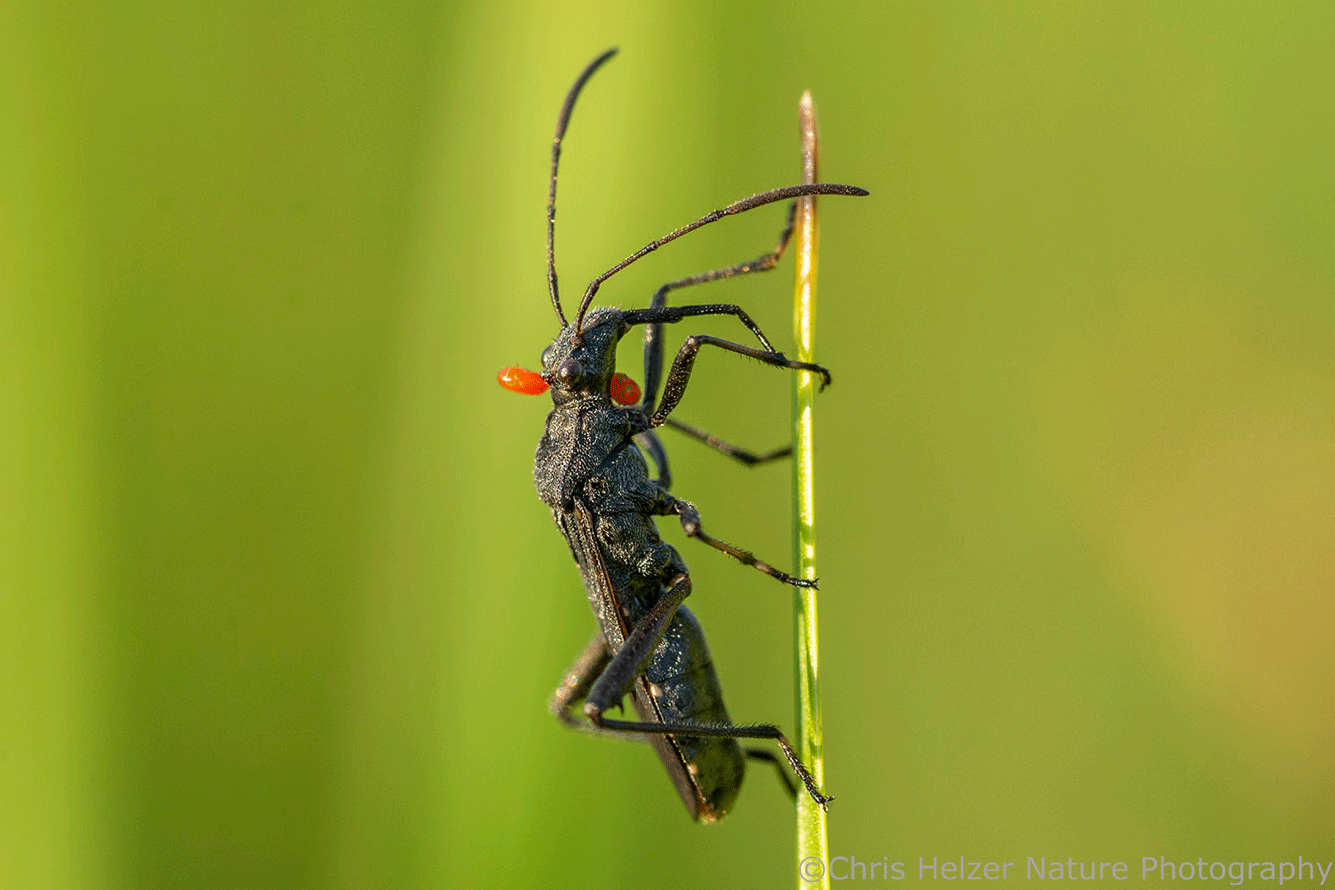
What are the little red things on this black bug?
A. Jelly beans
B. Parasitoid eggs
C. Little bits of plastic that are stuck to the bug by static electricity.
D. Mites
E. Mites? Like little parasites that are attached and drinking blood?
F. Yes
G. Creepy.
H. Yes, but also cool – as long as you’re not the one with big red mites sticking to your neck.
.

What does this big-eyed toad bug eat?
A. Um, what bug are you talking about?
B. I don’t see any bugs in that picture.
C. Wait, is it hiding in the bottom right corner?
D. Oh, nope, that’s just a shadow.
E. Also, come on… ‘big-eyed toad bug’ is obviously a made-up name.
F. Little insects. The big-eyed toad bug eats little insects that it catches and holds with front legs that resemble those of a praying mantis. The toad bug has a sharp ‘beak’ that it uses to poke a hole in its prey, inject a digestive enzyme, and then suck out the pre-digested insides of its prey.
G. Dang. Nature is weird!
.
.
Well, that was a dumb quiz, huh?
A. Yes
B. No
C. Happy New Year
 The Prairie Ecologist
Starting the year in great form! Amusing and informative. Love these!
Best quiz ever!! Starting the year off in fine form!!
Okay, I know nothing about bugs, insects, creepy-crawlies. I read this column regularly because of the photo art and because it. . .is. . .fun! A scientist with a sense of humor is wonderful. I’m forwarding this email to a friend. She may actually know the answers to the quiz.
Happy New Year, Yourself!!
>
Levity lifts our spirits
Good stuff, Maynard.
Great post – good humor.
A great start to the new year!
Ha ha! Great post – thanks! And Happy New Year!
wonderful, imaginative, reads like a poem
Loved your quiz!
love everything about this, thank you for sharing your wonder and silliness and beauty with us, and happy new year!
B!
I loved it!
I love a humorous (but ultimately correctly informative) bug quiz.
I guess I’m about as weird as nature.
So funny. Thank for docere ET delectare.
That was fun and funny. Thanks for the good laugh and the interesting pics! Sent from Yahoo Mail on Android