
I promise I’ll cover other topics besides my square meter plot project this year. Today, though, I’m dragging you back to it once again. Rather than wait until the end of the month, I’ve decided to share photos from the first two weeks of June because I’ve already got way more than I can squeeze into a single blog post.
All the photos in this post were taken within my 1×1 meter plot at Lincoln Creek Prairie between June 1 and June 14, 2024. It’s the exact same plot I used during my 2018 project. As a reminder, I’m trying to photograph everything I can within that little plot over the course of the year.
I started this iteration of the project in May. It’s not just a species inventory – I’m photographing everything that I find interesting. For the species count portion, though, I’m only counting what I get good sharp photos of, so I’m not including all the critters – and there are lots of them – that fly, jump, or crawl out of the plot before I can photograph them.

My species count for 2024 is at about 120 species, which has already exceeded the 113 species I photographed in the same plot during all of 2018! I’ve struggled to explain why I’m seeing so many species so fast this year and I have three possible explanations. First, the plot was burned in 2024, but not in 2018, which both makes it easier to see things and probably increased habitat quality for many insects, which make up the vast majority of species I’m finding.
Second, I have new camera gear, including a mirrorless camera (Canon EOS R8) that I trust to shoot with a pretty high ISO number (up to 5000 or 6000) at times to capture photos in low light. That, combined with a Laowa 90mm 2x macro lens is allowing me to get decent images of really tiny creatures I struggled to photograph back in 2018.
Third, though, and probably most important, is that I’m a better observer now than I was at the beginning of my 2018 project. I learned a lot in 2018 about how to look closely and patiently at a small area of prairie. Even more, I became inspired by the possibilities of this project and the kind of diversity that can be found. In 2018, I didn’t spent a lot of time poking around in May and early June because the big wildflowers hadn’t started blooming yet. That is a mistake I’m not making this year!

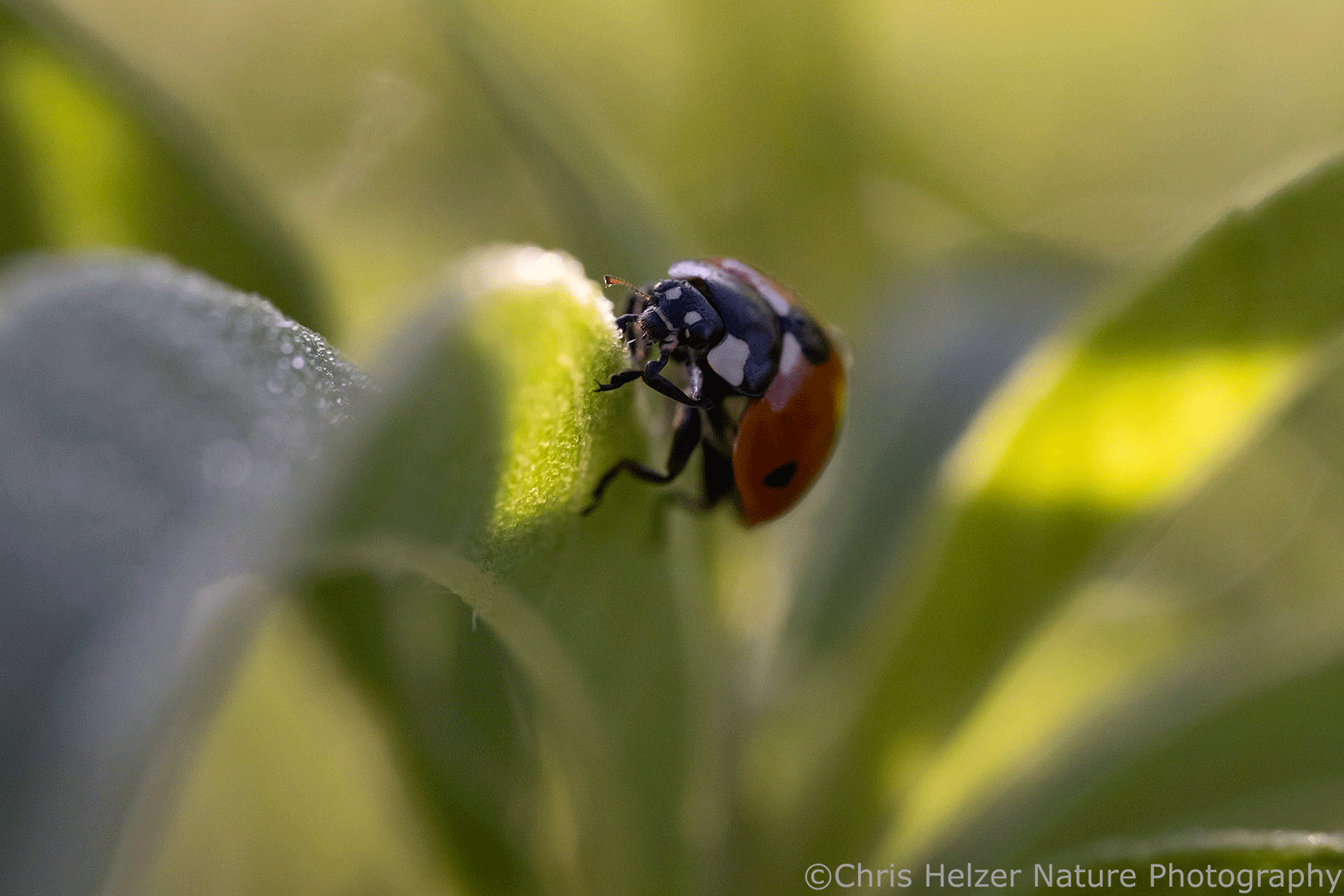
While I’m definitely focused on finding species I’ve not yet photographed this year, I really am taking the time to find beauty as well. Rain drops and dew drops have captured my attention many times, and I’ve enjoyed trying different compositions with them. I’ve also tried to photograph insects and plants in creative and interesting ways, rather than just documenting their presence. The seven spotted ladybug photo below is an example of that. I’d already gotten several identifiable photos of the species, but really liked the way its surroundings were lit up the other day and photographed it again!
The Asian lady beetle below was a new species for 2024. I’d expected to see it earlier, actually, since I’ve already captured photos of a few other ladybug species. Ladybugs, lady beetles, and ladybirds, by the way, are equivalent names that refer to beetles in the Coccinellidae family.

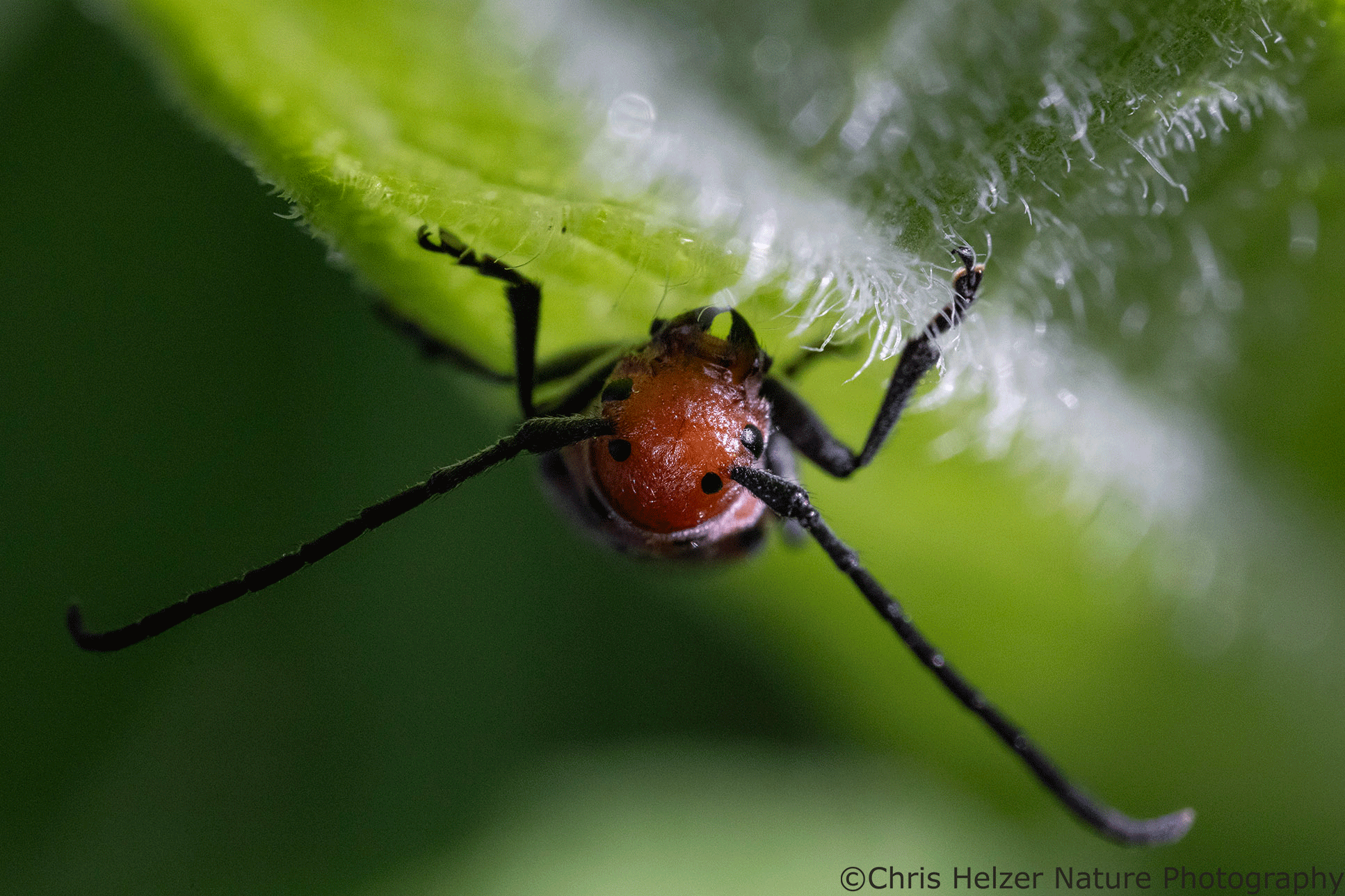
I’d captured a photo of the red milkweed beetle, aka longhorn milkweed beetle back in May, but I still followed another one with my camera as it moved from grass to the adjacent butterfly milkweed plant on the morning of June 9. It was nearly two hours after sunrise, and the light was getting a little too bright, but the beetle eventually settled onto the backside of a milkweed leaf in a spot where the leaf diffused much of the light and a little direct light illuminated its face very nicely.

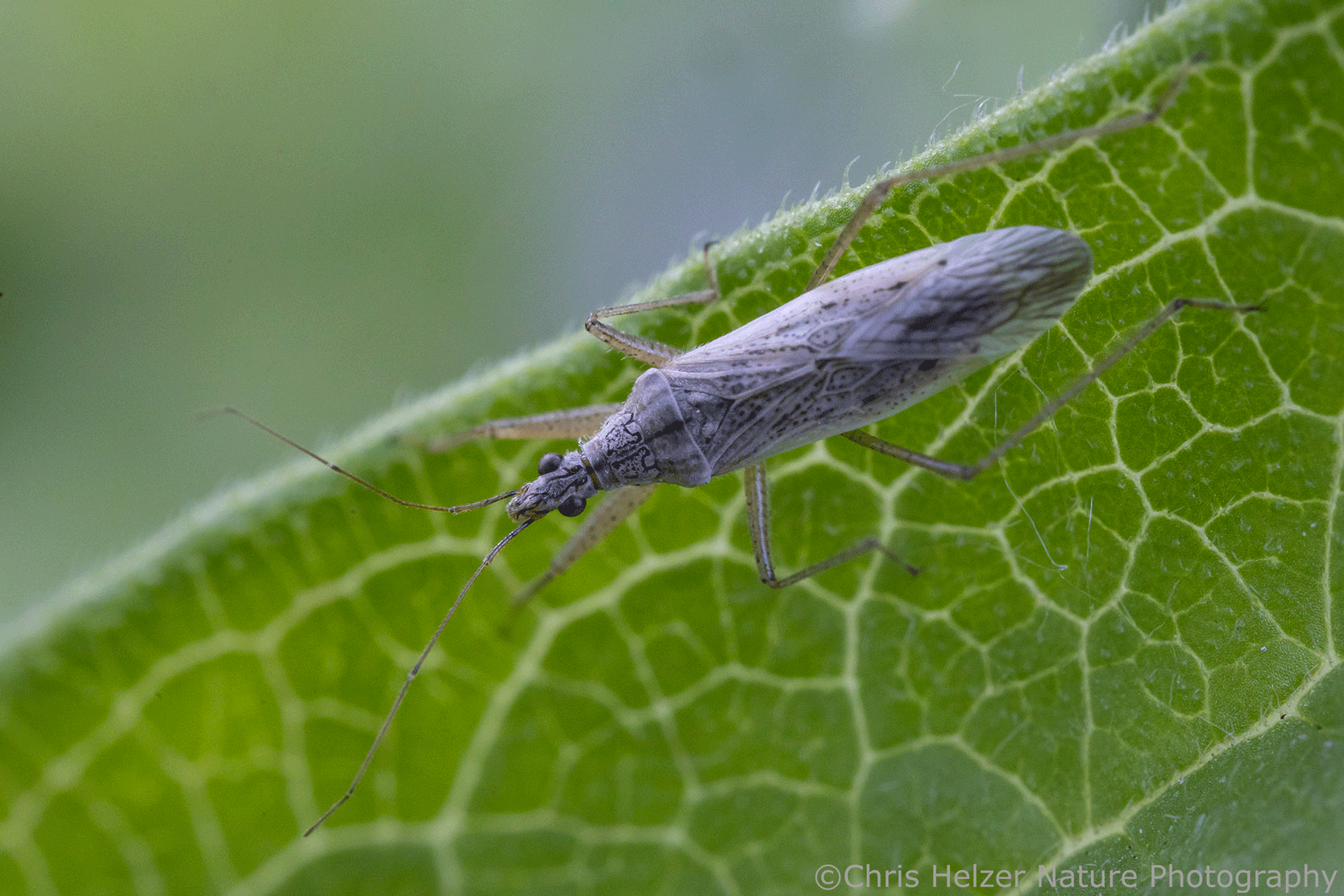
I’ve seen a damsel bug (a small predator) multiple times. I like to think it’s the same individual, but I know that’s unlikely. Unlikely and impossible aren’t the same thing, though, so I greet it each time as if we know each other. Maybe that’s why it has been relatively accommodating as I’ve tried to stick my lens in its face.

Likewise, there’s a skinny green plant bug I’ve seen several times that has made itself available for portraits. I haven’t yet seen it feeding on any plants, but I’m hoping to.

There are some tiny black flea beetles hanging around – mostly on Maximilian sunflower leaves. After the first two or three times I’d seen them, I finally started to catch them actually feeding on those sunflower leaves. They’re not doing much damage, but I enjoy checking in on how much they’ve eaten between my visits.

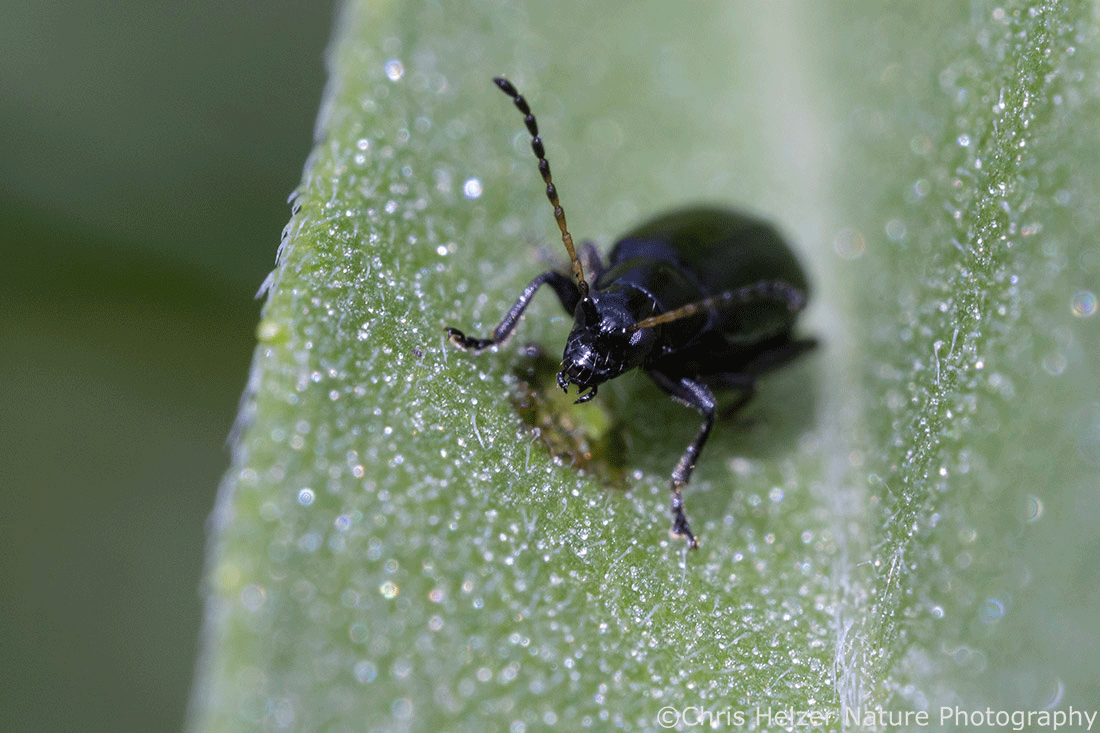

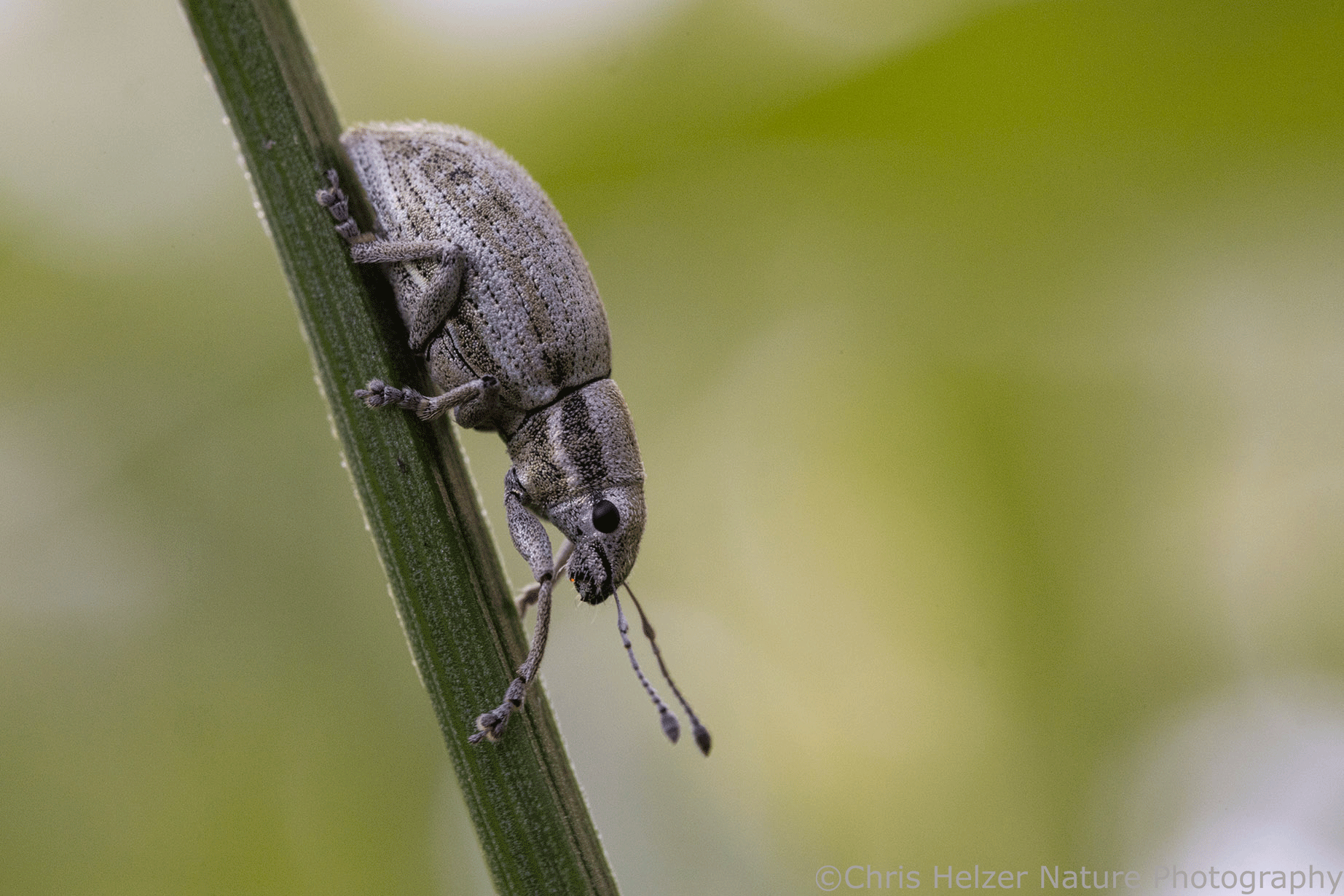
I found two beetles on the same day that I’m pretty sure are two different species of broad-nosed weevils. The first was about half the size of a lead plant leaflet (a nice common measure of length I think we should use more often). The second was at least twice as big and had different markings, convincing me it was not the same weevil species. My confidence is high, but not high enough that I’d be shocked if someone corrects me.

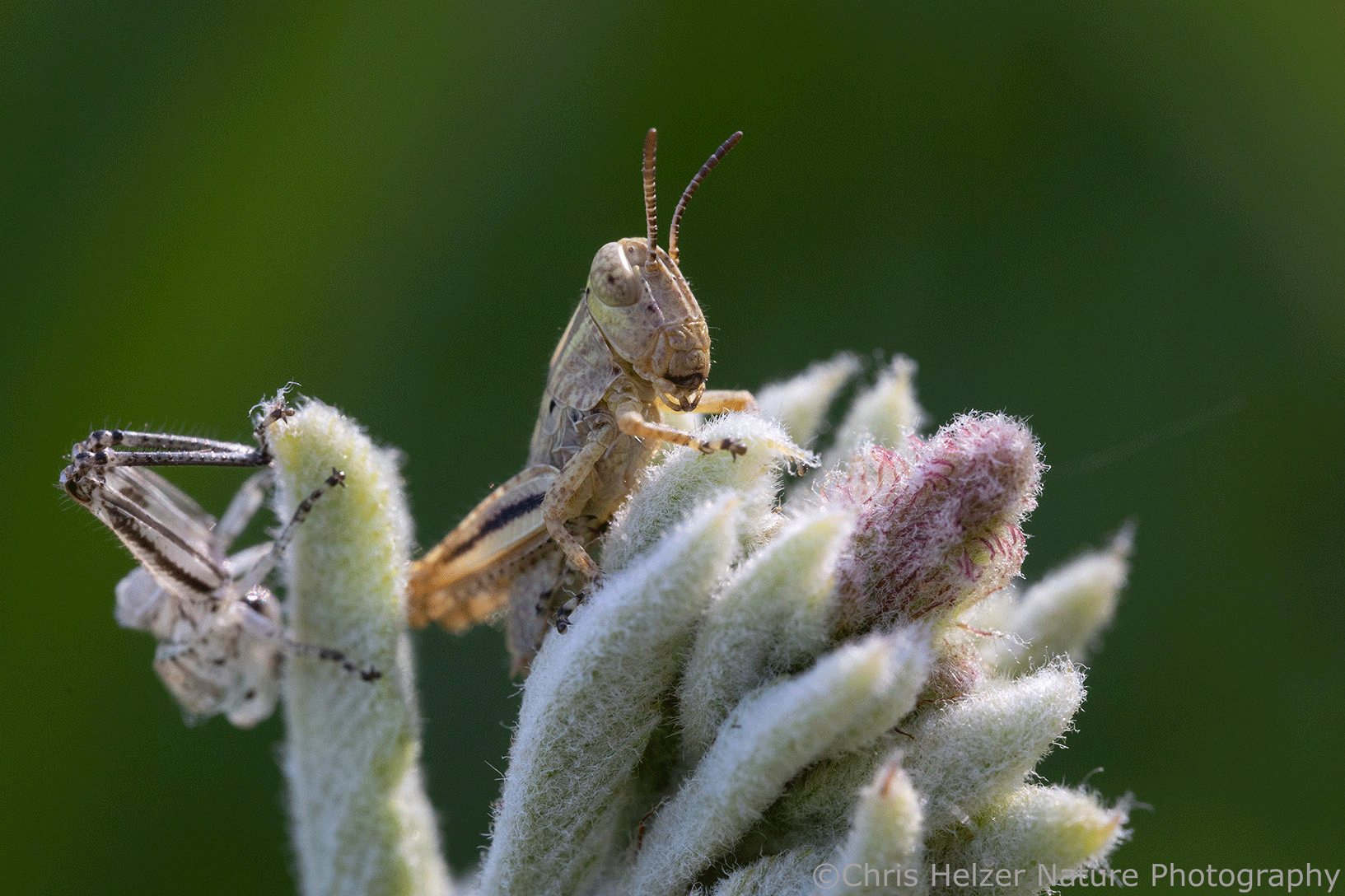
So far, I’m not sure I’ve seen more than one grasshopper species. I sent a few photos to a friend and she agreed that all of those seemed to show the same species. Last week, I found a grasshopper nymph sitting next to a recently-shed exoskeleton. Did that nymph come from that exoskeleton when it molted? I’d like to think so, but I didn’t see it happen.
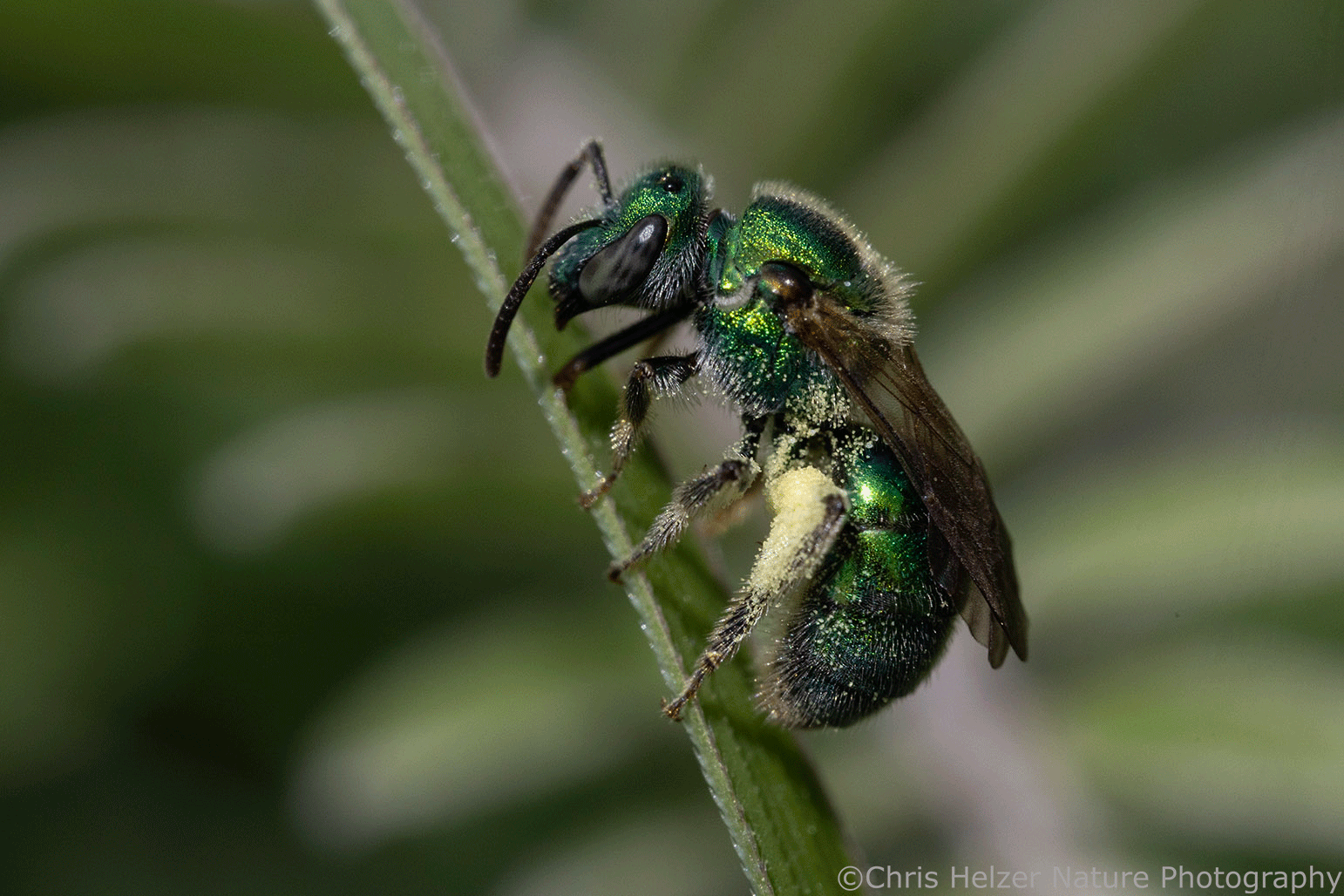
I’m up to three species of bees already, which I feel pretty good about since no wildflowers have yet bloomed. During the last two weeks, I’ve photographed a small carpenter bee and a green metallic sweat bee. The sweat bee had pollen on her legs, so she must have been feeding on flowers nearby. The small carpenter bee was a male, so maybe there are nesting females nearby?
By the way, “small carpenter bee” is not just a description of size – it’s the common name for solitary bee species in the genus Ceratina, as opposed to the carpenter bees you might be thinking of, which are much larger and in the genus Xylocopa. Some of the big carpenter bees look a lot like shiny bumble bees, but the little ones look much more like sweat bees. The little carpenter bees make nests in hollow plant stems (or by hollowing out plant stems) and females generally work by themselves to build and provision those nests.

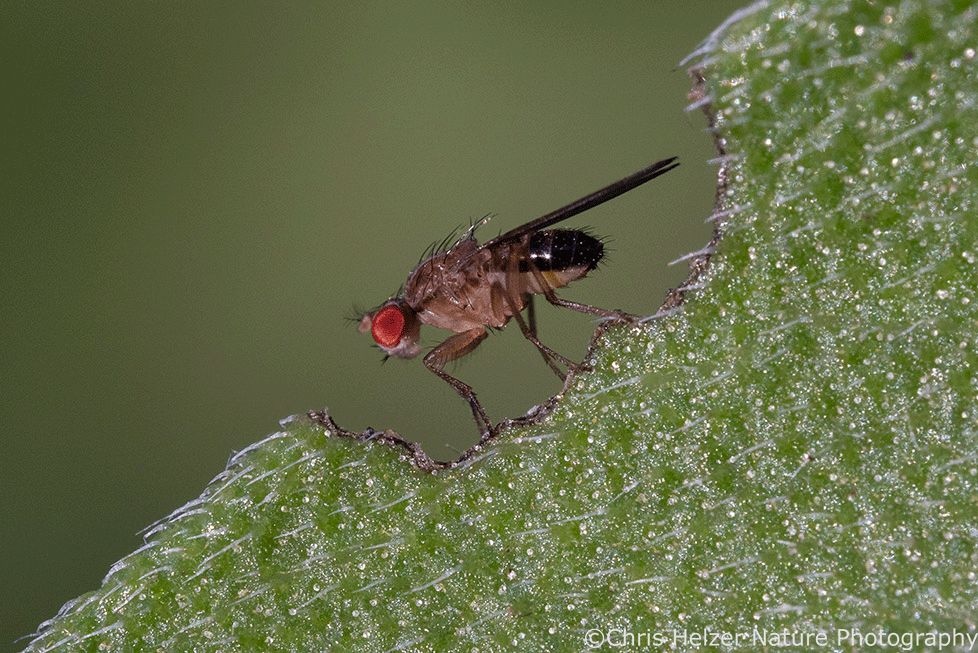
Flies are the most diverse group of organisms on my list so far, with about 25 different species. I’m trying to be conservative as I decide which species may or may not be the same. Hopefully, that means I actually have photos of more than 25 species, rather than fewer. Bugguide.net experts have been helpful, but often just tell me what family or subfamily a photographed fly is in. That’s not their fault – I’m not always giving them photos that show the best characteristics. Plus, scientists think there are about 61,000 species of fly in North America, many of them not yet named.

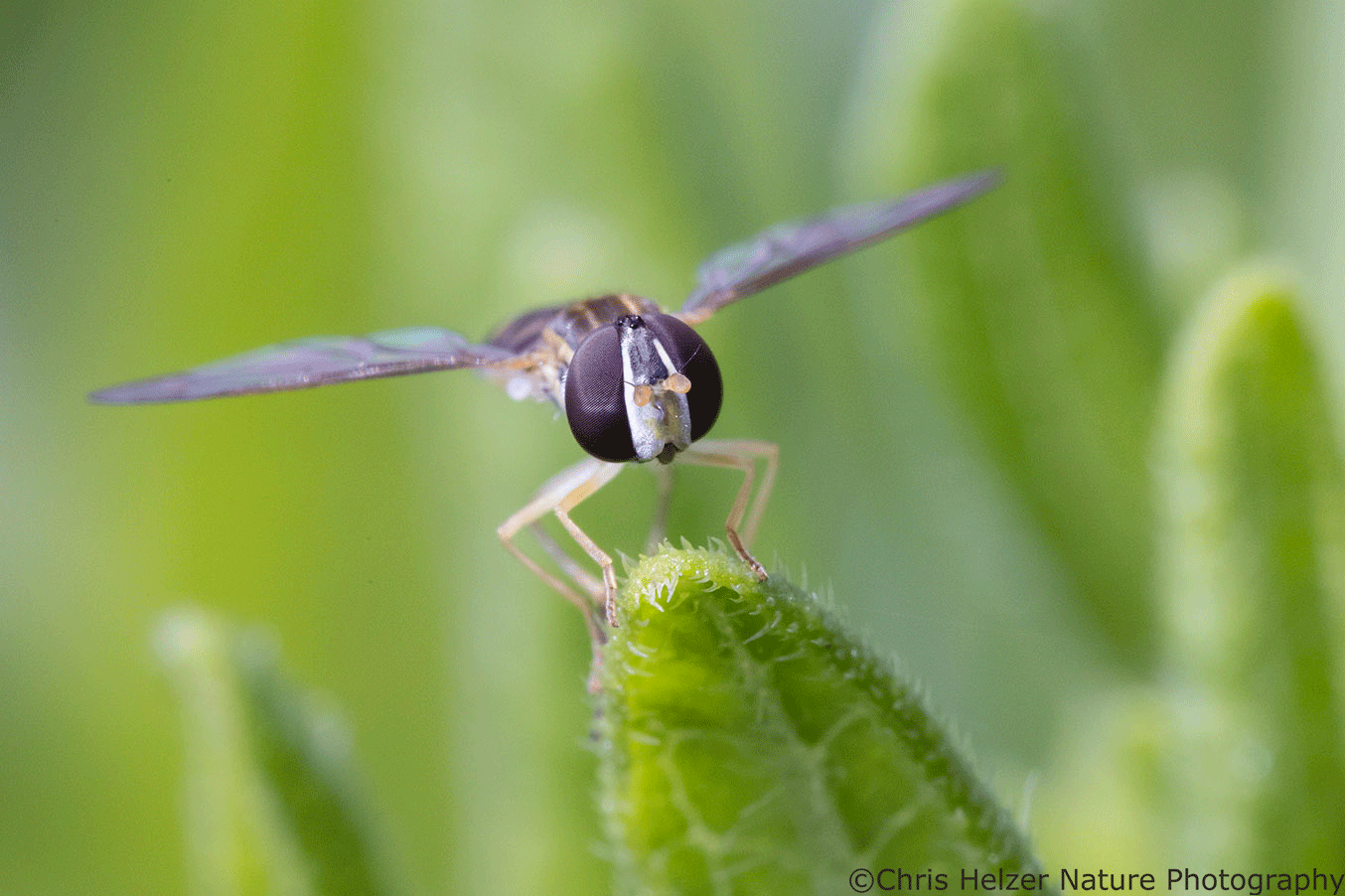
Hover flies are frequent visitors to the plot, though there hasn’t been a lot of pollen for them to feed on yet. I did catch one feeding on sedge pollen, but I’m guessing they’re looking forward to when the lead plant starts blooming. In the meantime, I’ve managed a variety of photos of what I think is one species of hover fly during the last couple weeks.



I’m still amazed that the shiny, graceful long-legged flies I see are actually predators. (Long-legged fly is the name of the fly, not just a description.) I haven’t seen one eating something yet this year, but I have seen it previously. Long-legged flies are often in my plot, usually sitting in the sun on a leaf, so I’m hoping I can get a photo of one with prey sometime.


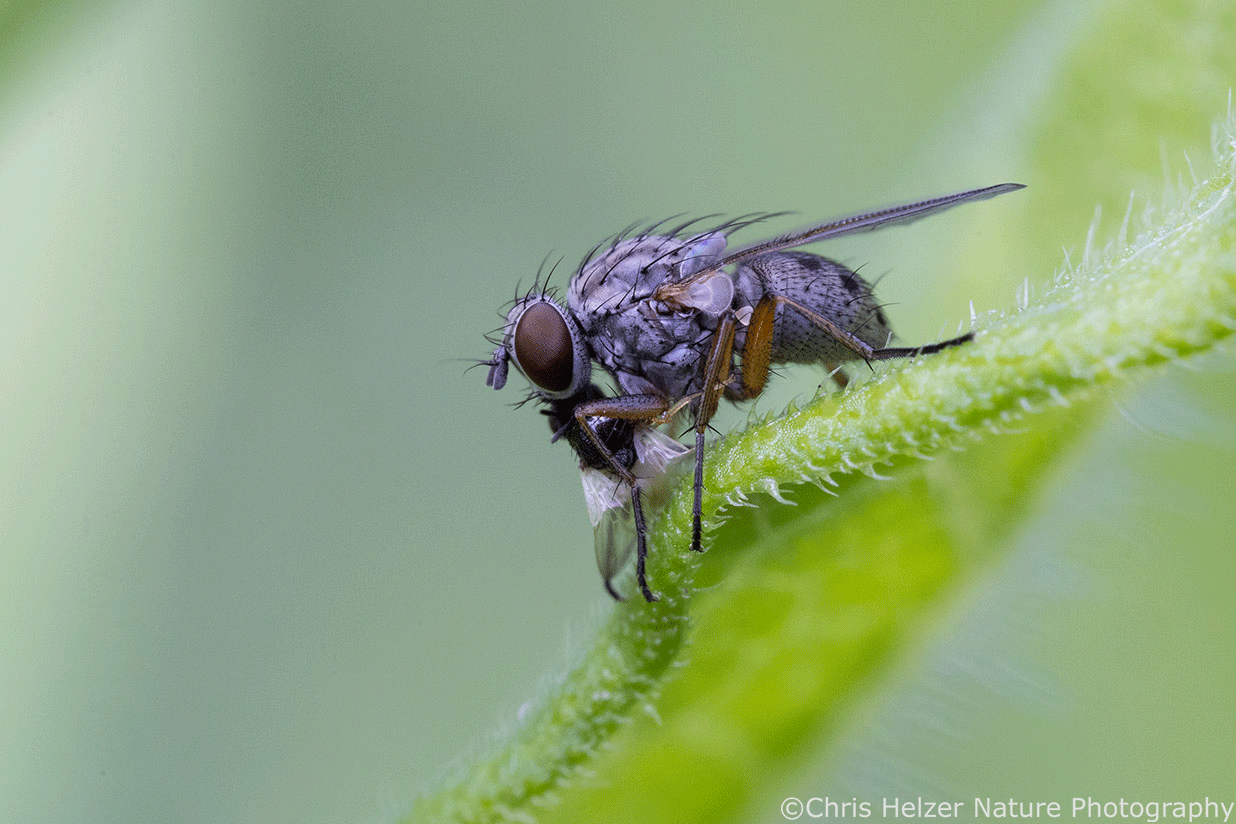
While I haven’t gotten a photo of long-legged flies acting like a predator, I did get some photos of a different predatory fly. It was another one I wouldn’t have guessed was a predator upon first glance. The photo below shows the fly – a tiger fly of some kind (there are multiple species.
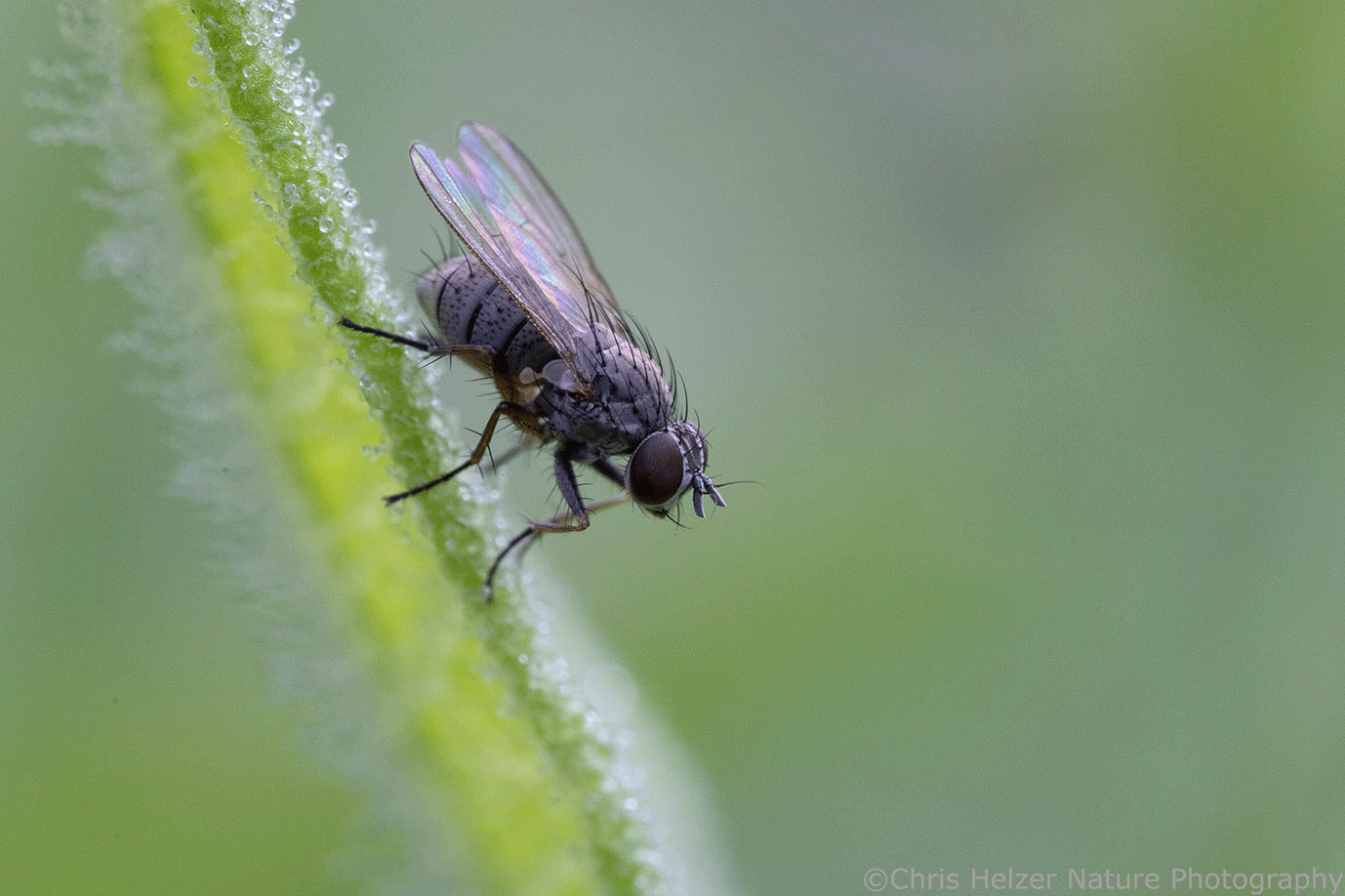
The tiger fly I photographed with its prey was feeding on a smaller fly. I’m pretty sure the smaller fly is a species I’ve already photographed – one with a white abdomen – but I didn’t get a great angle to confirm that. As I understand it, there is one common tiger fly that is a non-native species in North America and a bunch of native species. I’d love to know which I have.
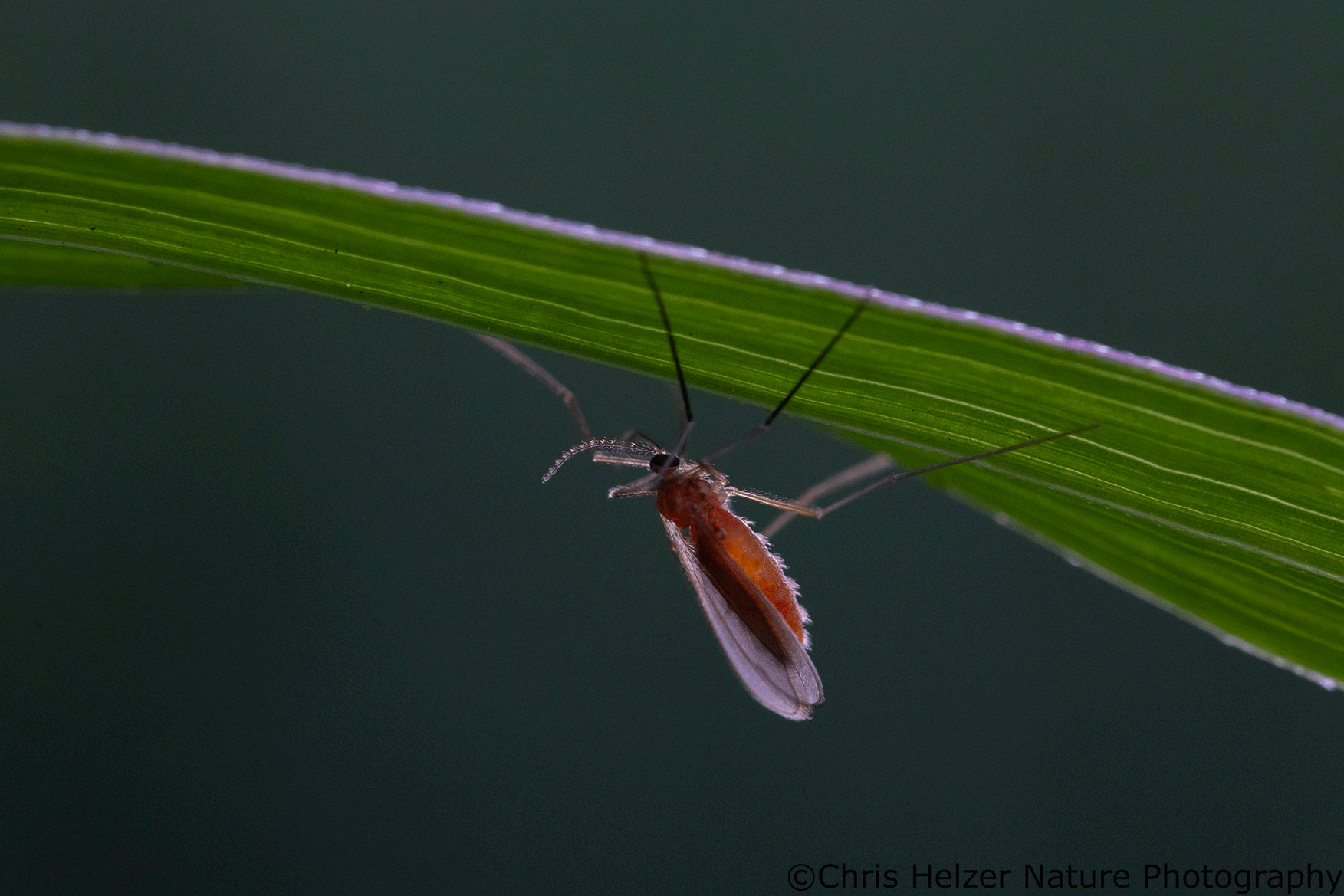
Bugguide.net has been helpful throughout this project, but rose to the occasion again with the photo below. I figured it was some kind of Dipteran (fly) but couldn’t narrow it down beyond that. Within an hour of submitting the photo to Bugguide, I heard back that it was a gall midge. I don’t know much about gall midges, other than their larvae tend to live in galls and feed on plant tissue, but I’m going to try to learn more.
I, like the hover flies, am eagerly anticipating the blooming of lead plant. In the meantime, I’m having fun photographing the leaves. I caught a nice dewy morning, recently, and got a shot I really liked. I’ve seen a butterfly egg (as yet unidentified to species) on a lead plant leaf, but now have a new mystery. I have no idea what the shiny red sphere is that I found attached to a leaf. Help?


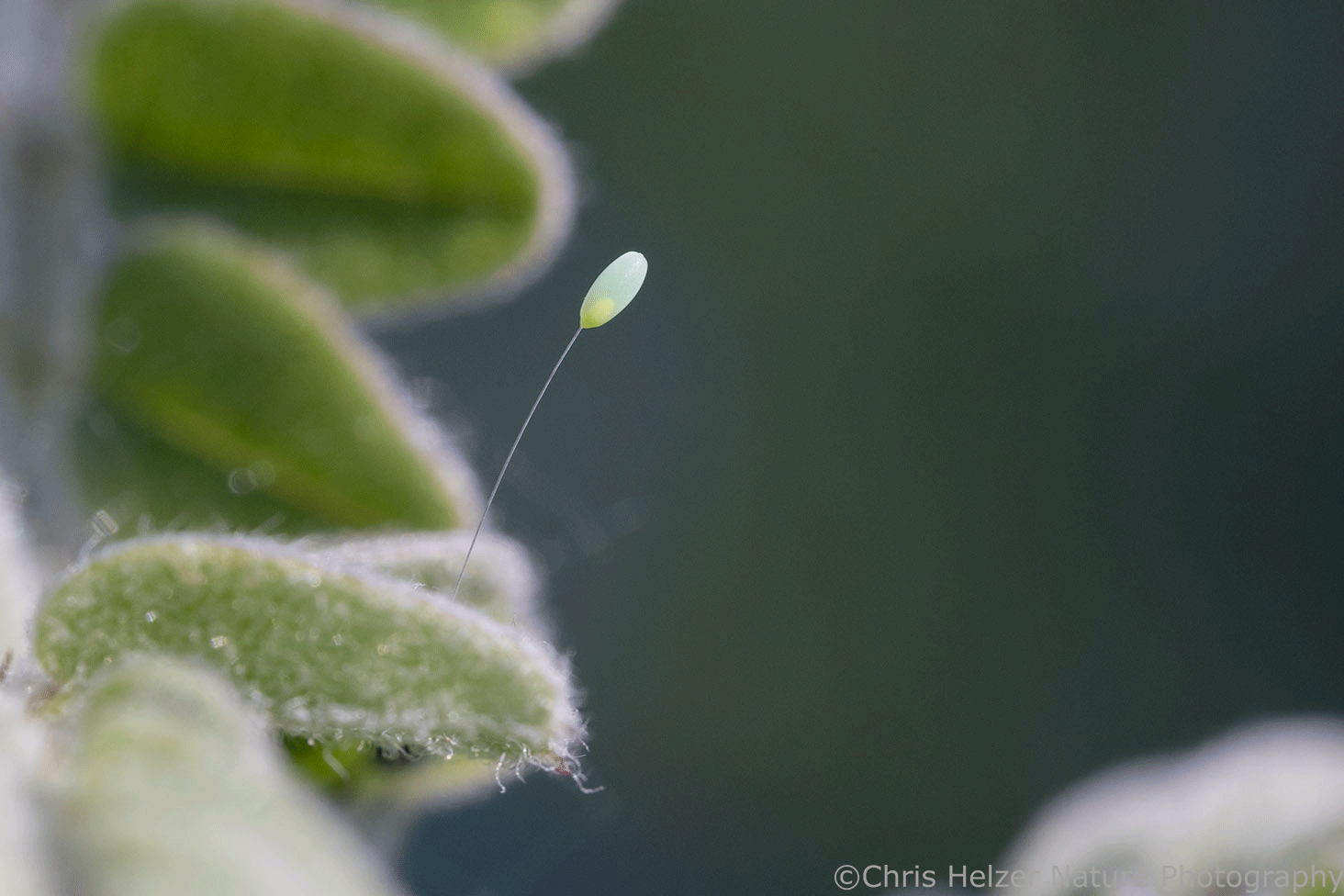
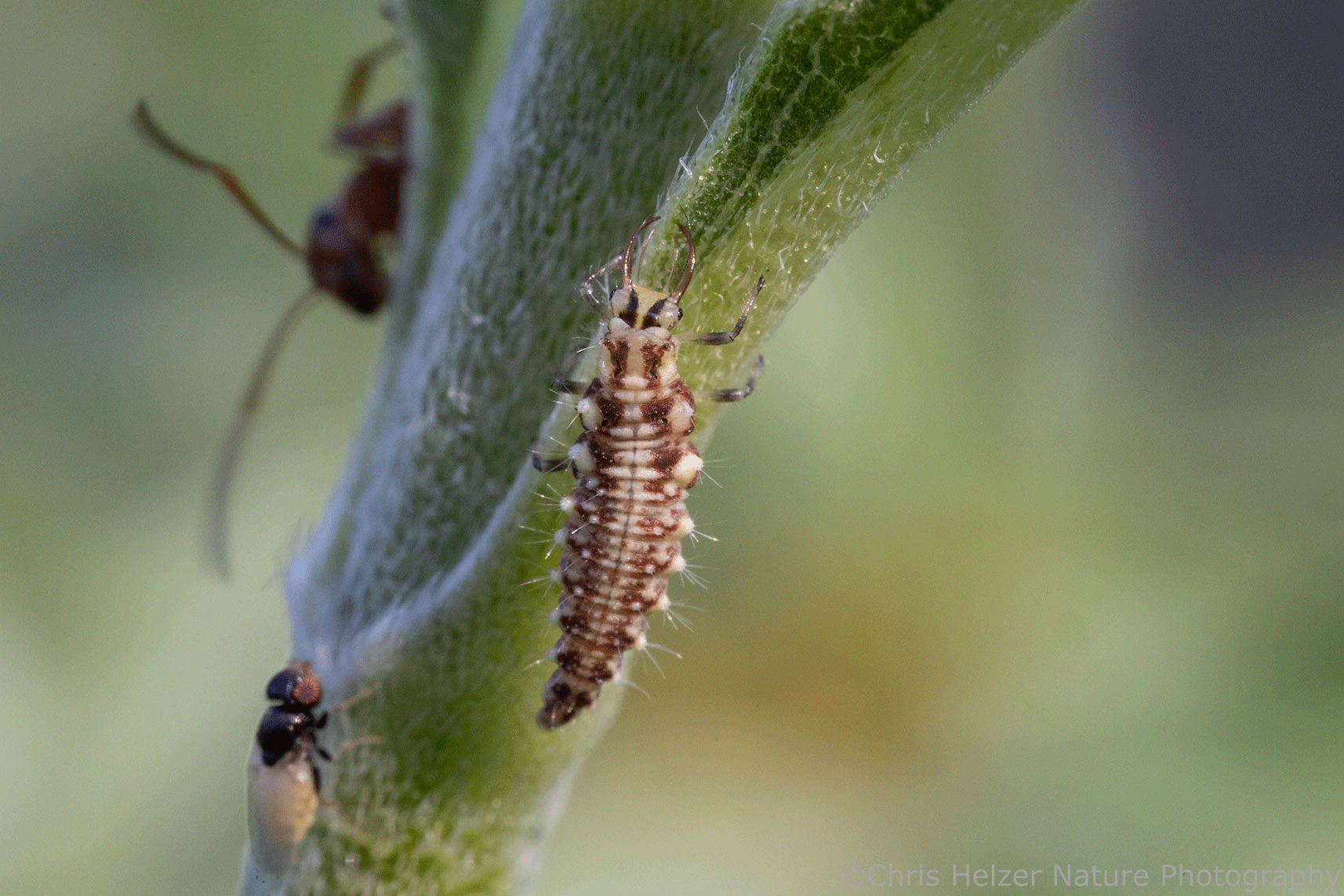
I’ve been seeing green lacewing eggs pretty often. They’re small enough that I don’t know if new ones are appearing or if I’m just finding eggs I’ve previously overlooked. Either way, given the number of eggs, I’ve been hoping to see some lacewing larvae and finally got my wish last week.
I’ve seen a long-jawed orbweaver in the plot several times, including twice on a web. The most recent one (below) was really tricky to photograph because the web was built deep in the increasingly dense vegetation. I had to very slowly and stealthily nose my camera lens between sunflower stems to get the shot I wanted. I also had to time the photo to catch the light just right because the sunflowers were waving in the breeze, creating alternating shadow and light patterns across the spider. Whew! This is hard work!

I’m seeing lots of crab spiders, which I love, but that’s another group of creatures that I imagine will be happy when some of the flowers start blooming. I’ve not seen crab spiders with prey yet, but one of them came really close to catching a stilt bug the other day. I’m not sure if it missed or changed its mind at the last minute. It made a lunge, but didn’t grab the lanky little insect.


I’m hoping to have butterfly milkweed and lead plant flowers within the next couple weeks. If Kim thinks I’ve been visiting the plot a lot up until now (and I have), just wait! I’m not losing steam at all, and big showy flowers will just add more coal to my engine – or something. How about that for a dated reference? Anyway, the point is, I’m having a great time with this project. I hope you are too.

 The Prairie Ecologist
“I promise I’ll cover other topics besides my square meter plot project this year.”
I’m happy to read whatever you write but the square meter content brought me here!
I love that you are revisiting this project. Finding out about the original brought me to your blog in the first place. I’m inspired to try this for myself at some point. Likely in my own garden, as I don’t have nearby prairie or habitat I can use. It would be interesting to see what I’d find in my own garden in a small Texas town, though.
The fly on the sedge could be Toxomerus politus, which prefers grass pollen to flower pollen. Maybe they like edges too?
“sedges”!
I think you mean “damsel bug” and not “damselfly.” Love your photos, and thanks for the info about your camera setup.
<
div dir=”ltr”>
<
blockquote type=”cite”>
Good grief. Yes, of course. I’ve edited the post. Thanks for letting me know!
I’m accustomed to thinking of damselflies as smaller and differently arranged companions to dragonflies in the Odonata. It’s interesting that a quite different insect has the same common name, although that certainly happens often enough in the floral world.
It’s great to see your project beginning again. Your reports are a terrific learning tool, not to mention being flat enjoyable.
You’re absolutely correct. I meant to type damsel bug, not damselfly, but my brain wasn’t fully functioning. Thanks!
I have a friend who coined ‘thinkos’ to cover such situations: mental ‘typos,’ if you will. It’s a term I use frequently!
Beautiful insects and in their native habitat. Love your commentary about your findings.
WOW!!!