
I made two early morning trips to the Platte River Prairies last week to catch the sunrise and explore with my camera. We’re in the early stages of the late summer yellow phase of those prairies. Three of our sunflower species are in full bloom, including one perennial (stiff sunflower) and two annual species (garden sunflower and plains sunflower). Three other perennial sunflowers are just beginning to open their flowers as well (Maximilian and sawtooth sunflowers, as well as Jerusalem artichoke).
Missouri goldenrod has been yellow for several weeks, but is now being joined by its cousins, including Canada, giant, and stiff goldenrod. Black-eyed Susans, upright prairie coneflower, buffalo bur, fabulous oxeye, and other yellow-flowered plants are in the latter stages of their blooming period, but still around. The prairie is dressed to the nines right now and most of its favorite accessories are yellow.

There are many other colors in the late summer prairie, of course, and lots of texture. Flowers of white, blue, purple, and other hues are scattered throughout the scenery. Most of the grasses in the prairie have bloomed by now, as well – some much earlier in the season and others just getting going. Most of those flowers are on tall skinny stems, adding a lot of vertical lines to the prairie canvas.
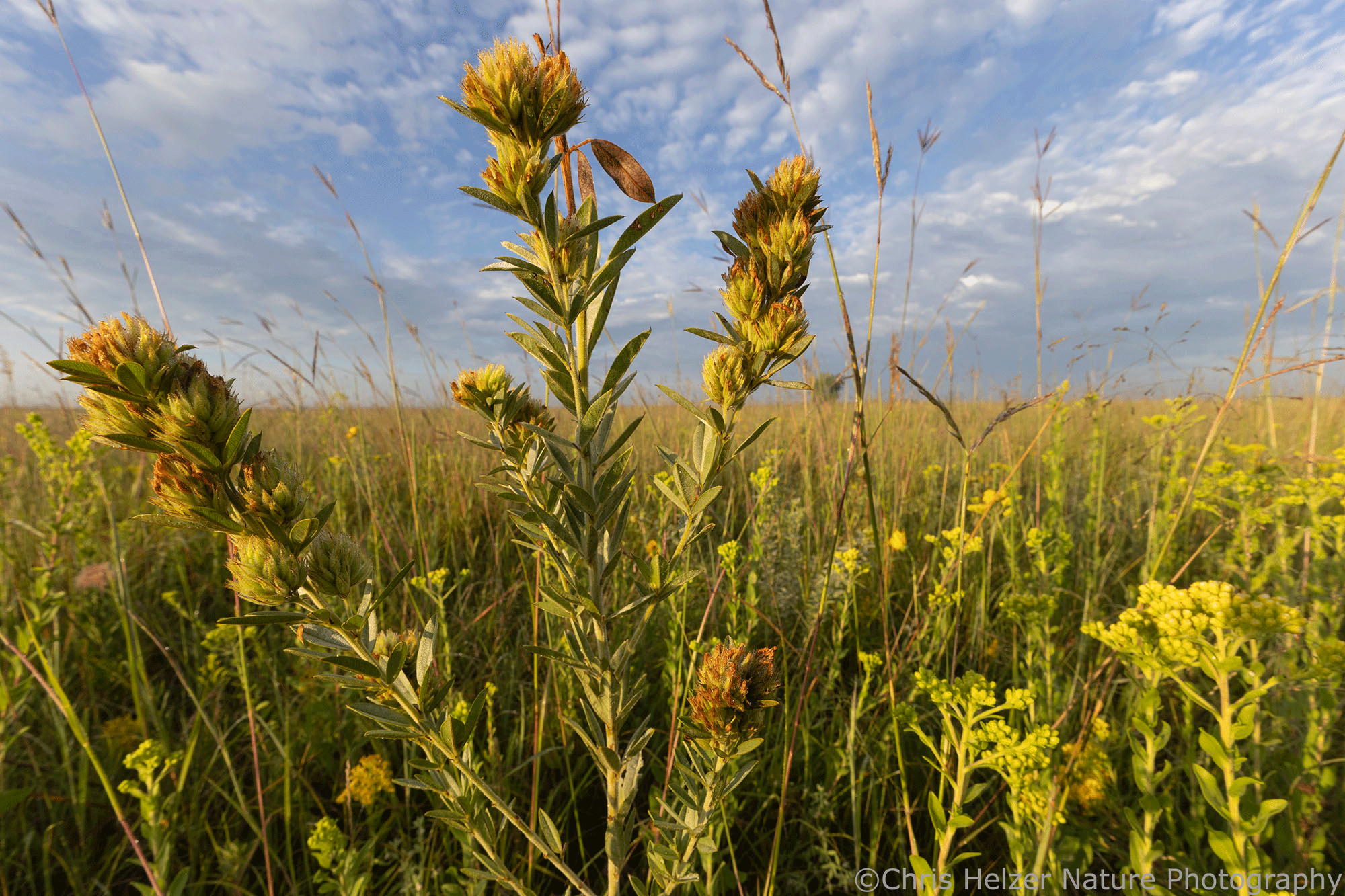
Ok, that’s enough of me sounding like an amateur poet. The thing is, this is a pretty spectacular time of year to be in the prairie. Ungrazed prairie can be tall and woolly enough that I have to deploy my ‘tallgrass gait’ to avoid being repeatedly slapped in the face by grasses and wildflowers. I’m sure every prairie enthusiast has their own version of the gait, but mine involves each foot making an outward-circling (wax off) motion as I push it forward. That does a pretty good job of moving the vegetation out of the way just long enough for my face to pass through before it closes in again behind me.
Personally, I find myself spending most of my time exploring sites that are currently being grazed, or – even better – recovering from last year’s grazing. Those sites are easier to walk through because the vegetation is less tall and dense. Plus, the recovery patches tend to have the most wildflower and insect abundance, which is helpful in my macro photography efforts.
Most of the photos shown here were taken within those recovery patches, except for the photos of cattle. Those were taken in patches that are being actively grazed. You probably would have figured that out on your own.
All the photos above, along with the next several, were taken in a patch of prairie I planted back in 2000. I used an old EZEE-Flow ‘drop spreader’ machine to plant the grass seed, but broadcast all the wildflower seed by hand. I did that as I drove back and forth on an ATV with a bucket hanging off the handle bars. It took a couple days to plant all 60 acres and my shoulders were really sore by the end – both from tossing seed and from driving one-handed.
The memory of that effort surely colors my appreciation of the site today, but it really is a special patch of prairie, even from an unbiased perspective. As I said in my last post, I get a lot of gratification from prairie restoration work, and this planting happened as I was starting to feel confident in what I was doing. It also happened at the beginning of a 5-year drought, so the establishment was slow and agonizing, making the eventual success even more meaningful.
Good grief. I sound old, huh?
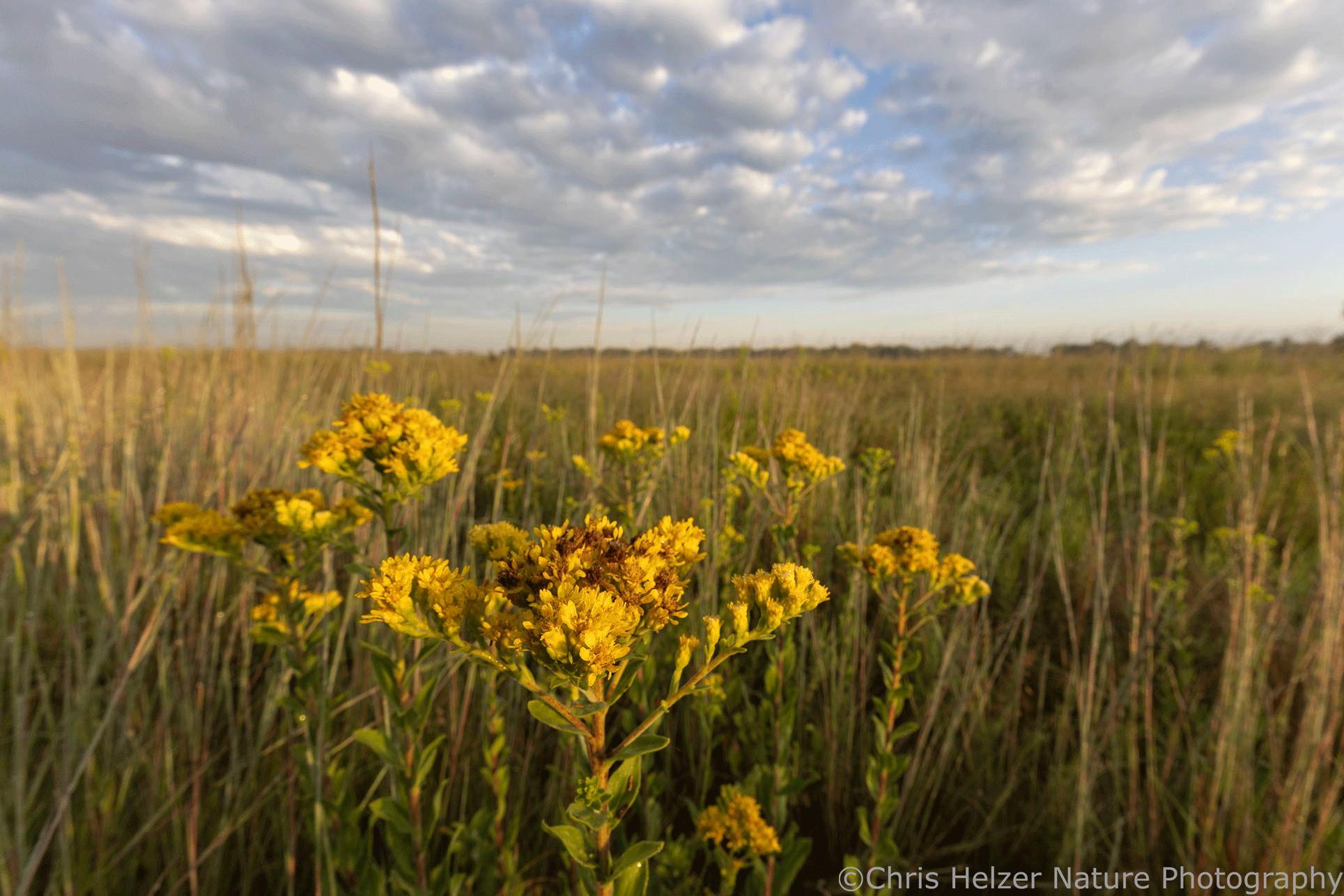
Apropos of nothing, here’s a quick trick for photographing flat prairie landscapes, in case you’re interested. The photo above was taken with my camera just above the top of the stiff goldenrod in the foreground. The horizon behind is mostly visible, emphasizing its flatness and the vegetation looks like it’s all the same height. Meh.
The photo below was taken with the same plant in the foreground, but the camera was moved about a foot lower. Now the prairie looks more like it really is – a mixture of heights and textures. The horizon is broken up by the plants poking above the grass canopy, which makes the scene feel much more as it felt to me at the time (beautiful and diverse). It’s also more like the way most inhabitants of the prairie see it, which seems right.

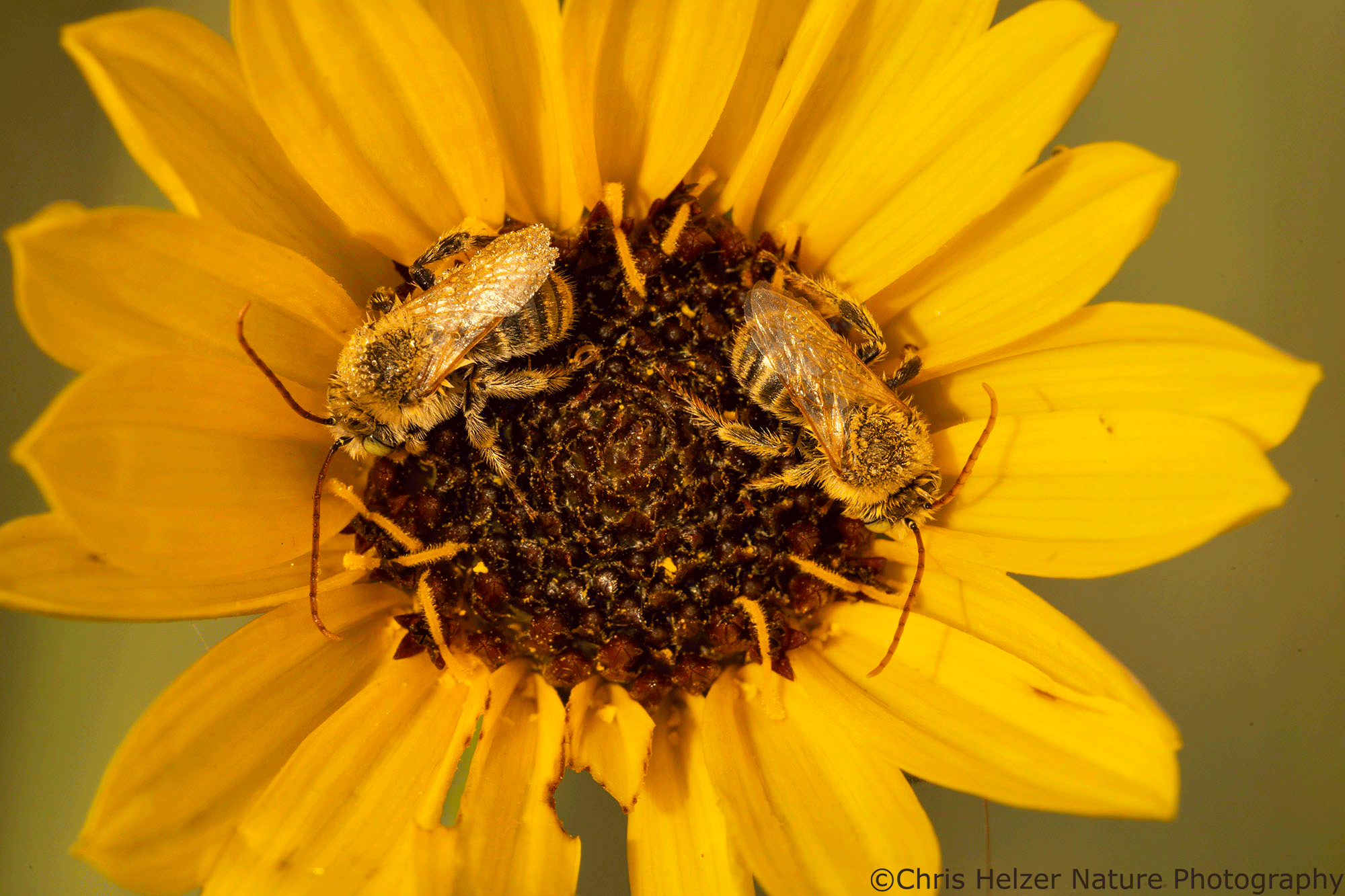
The photo below shows another longhorned bee that spent the night perched on a flower. Since most bees are solitary (not social, with queen, workers, etc.), and only the females make themselves nests and bring food to the eggs they’ve laid there, males don’t have a sheltered tunnel to sleep in overnight. As a result, they just find a spot to hang out all night. This time of year, they are often covered with thick dew by morning, making them easy photo subjects.

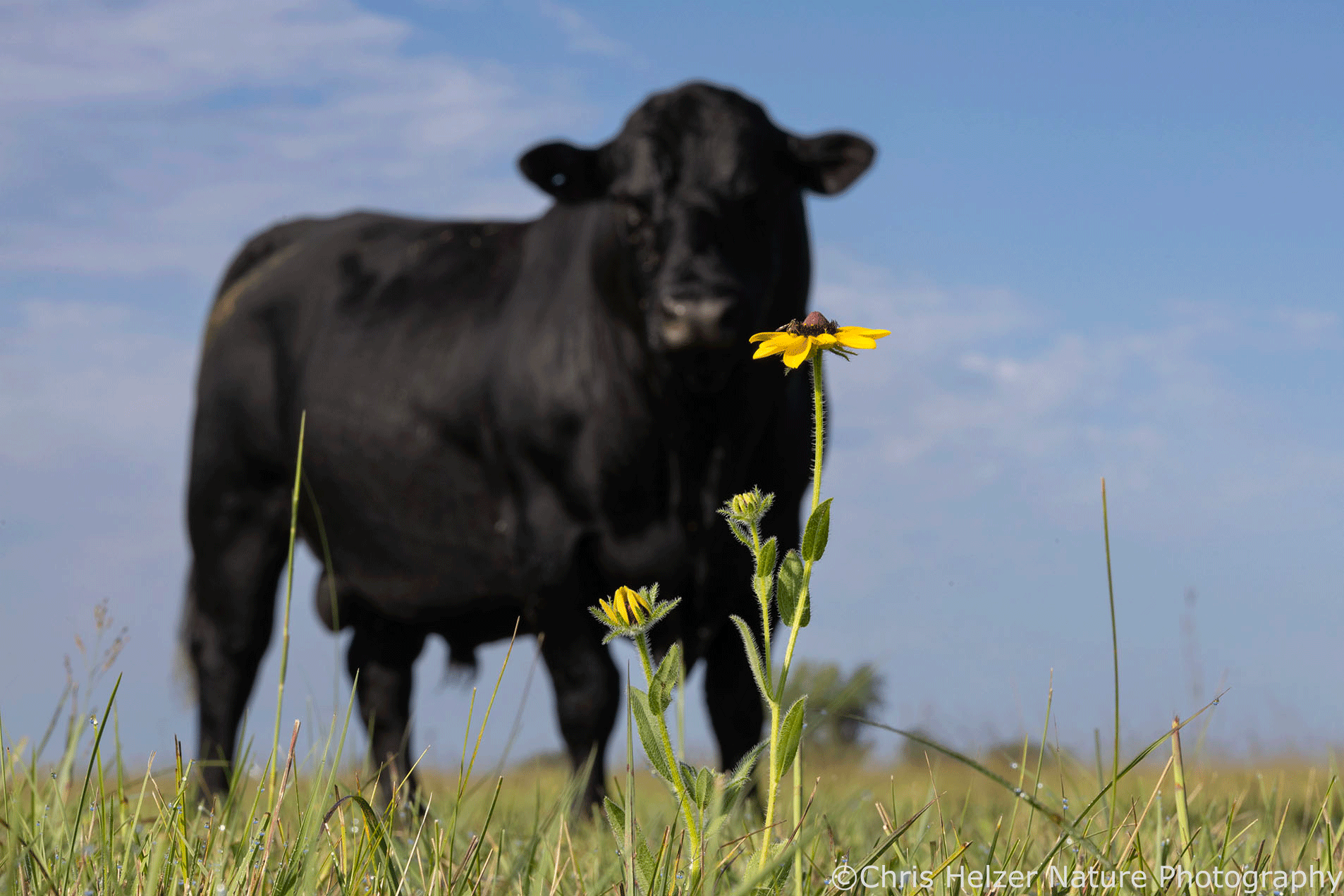
The next photo shows a big black bull, which, along with the rest of the herd, was grazing part of the restored prairie. The taller prairie vegetation from the earlier photos is just behind the bull, but you can’t see it because of the angle of the photograph (taken while I was lying on the ground). The cattle were grazing this particular patch of prairie because it was hayed earlier in the summer, creating an area of lush, nutritious regrowth.
Cody, our Platte River Prairies Preserve Manager, is using that hayed patch much like we use fire in our patch-burn grazing and the cattle are following the pattern very nicely. The hayed area is getting lots of grazing because of that nutritious regrowth, maintaining short habitat structure for the plants and animals that want that. Despite the cattle having access to it, the unhayed area is largely ungrazed. It’s fairly tall, but not as tall as it will be next year when the grasses have had another year to fully regain their vigor from being previously burned and grazed.
There’s another patch – burned last summer – within the same pasture. It’s fun and messy, but I didn’t get over there before the sun got too bright for good photography. I’m only one man. I can only do so much.
On Saturday morning, I woke up early and decided to go catch the sunrise again. This time, I went to a different site we’d burned last summer. It got grazed pretty hard late last summer and somewhat earlier this year. Cody created a new burn patch this spring that pulled a lot of the grazing off the summer burn, though, which is speeding its recovery along. I was curious to see what it looked like.
By the way, ‘recovery’ isn’t really the right word. The prairies aren’t injured or anything, it’s just that the grass vigor has been weakened and that leads to a pulse of wildflowers that ordinarily struggle to compete with full-strength grasses. I need to come up with a better term to describe that period. Post-grazing flower party, maybe? I’ll keep working on it.
Anyway, I arrived in time to catch the sun breaking the horizon and used some big patches of stiff sunflower as foreground for photos. The prairie hasn’t ever been plowed, as far as we can tell, but we’ve overseeded it with some plant species that were missing because of a ‘difficult history’ of management before we acquired it about 20 years ago. Stiff sunflower is one of the species that has established well from that overseeding, though it’s still patchy in occurrence.

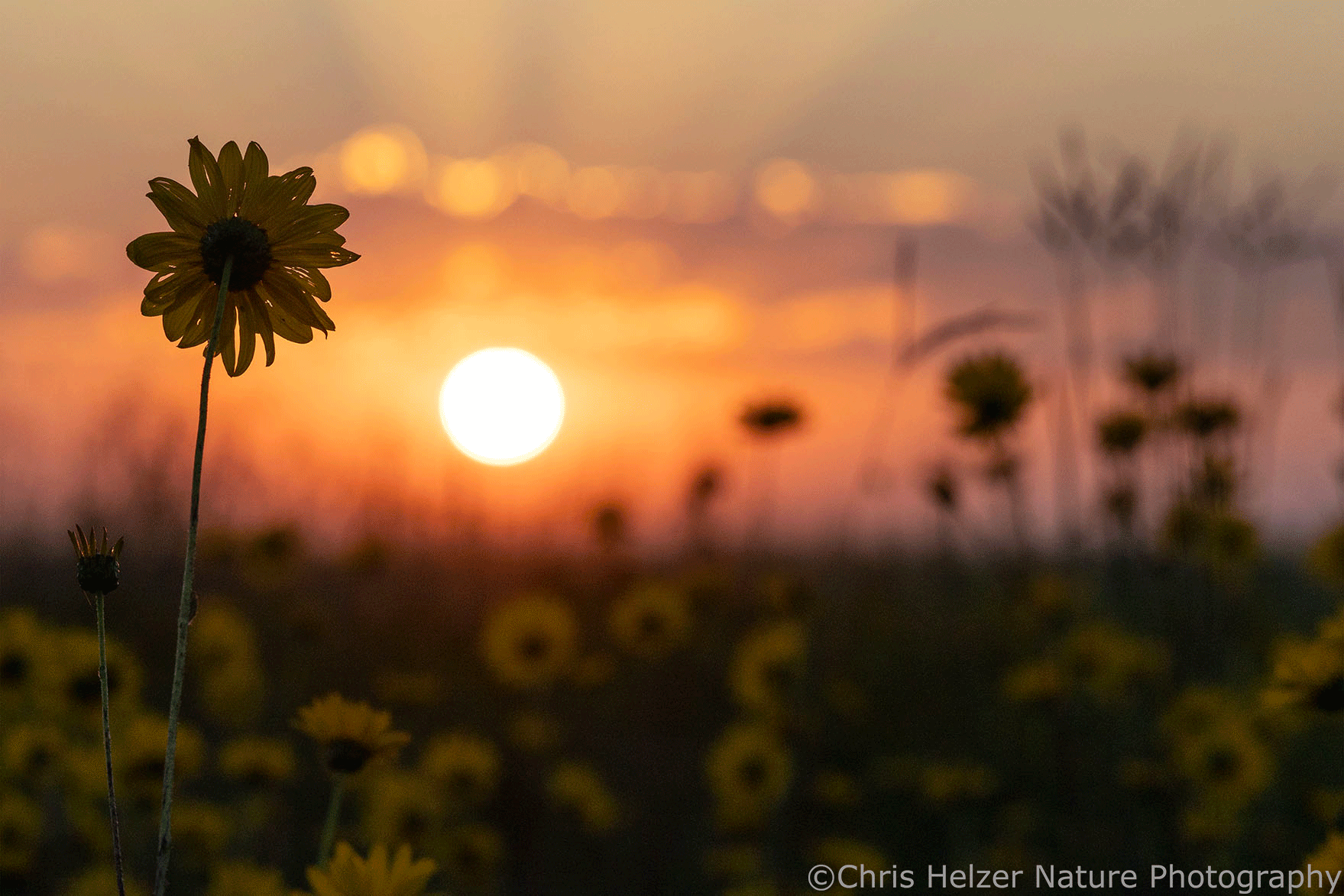
I was having a lot of fun with the sunflowers and sunrise, which led to me taking way too many photos. Too many, because it created some difficult decisions about which ones to show here. I promise these three are all different from each other, though the overall feel is very similar. It was an absolutely gorgeous morning.

Maximilian sunflower was starting to bloom along the edge of a big slough, so I used it as a foreground, too. Sometimes, I put the sun on the left side of the sunflower. Other times, I put the sun on the right. Variety is the spice of life.
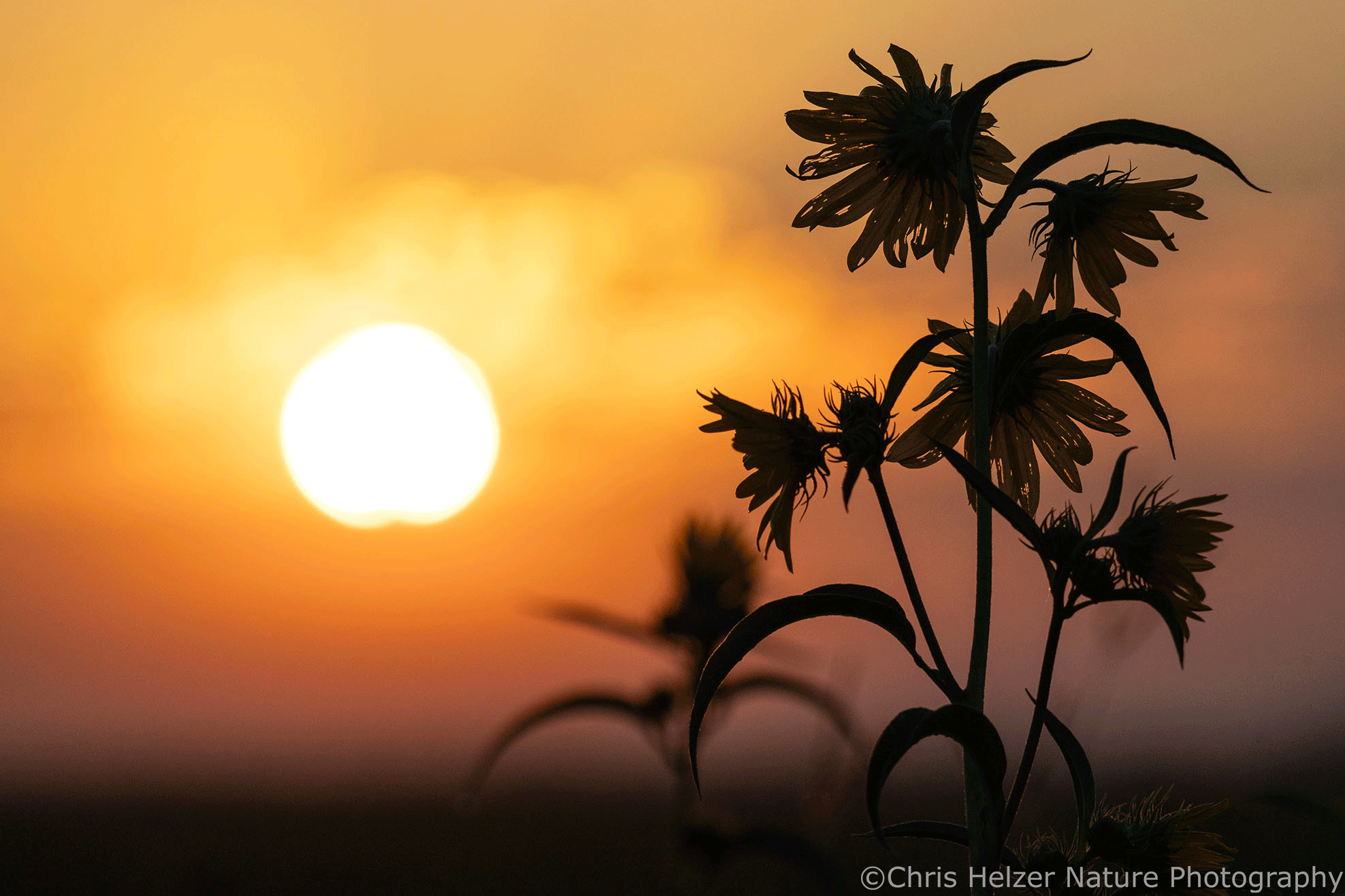
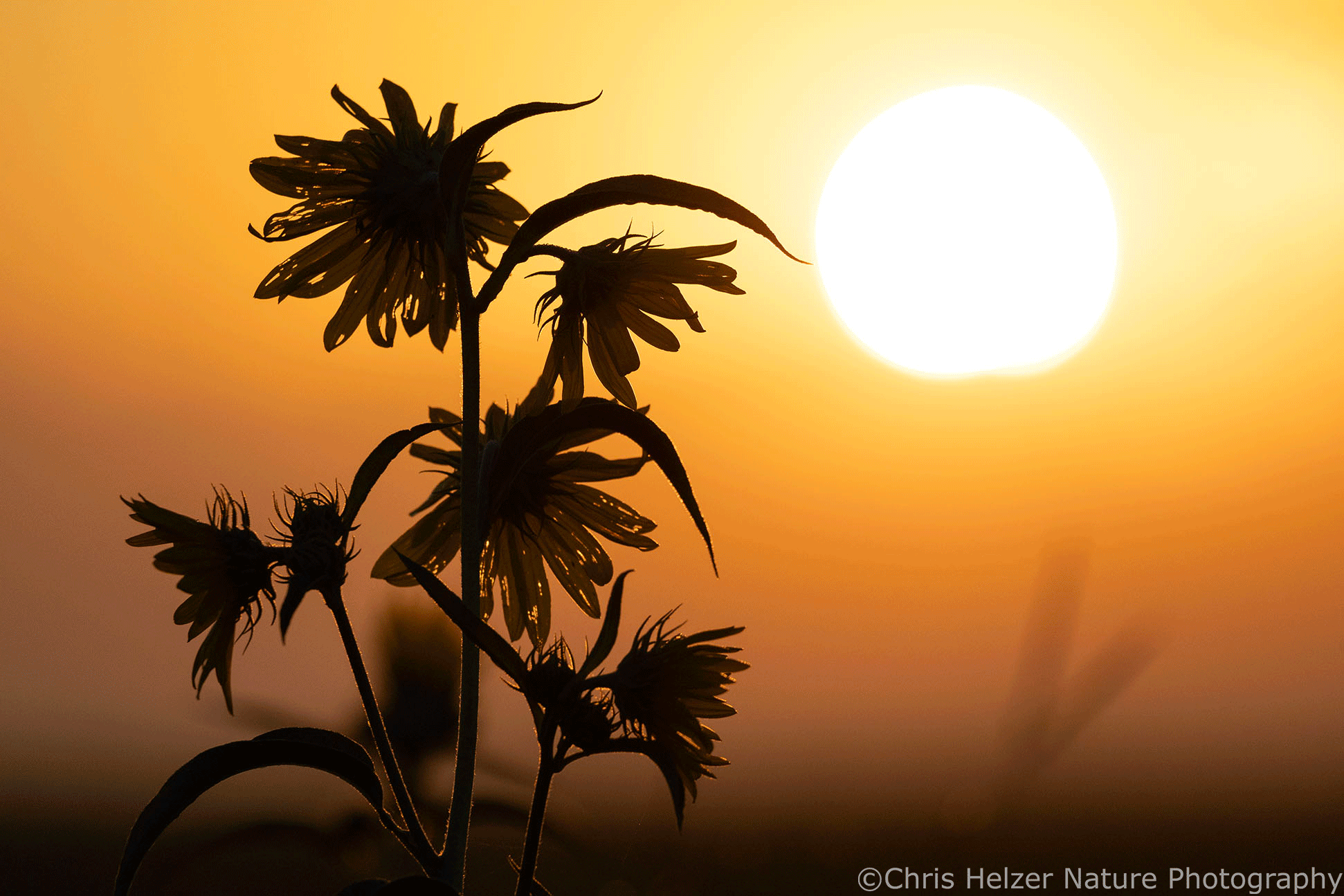
Here’s one more photo (below) of the Maximilian sunflower patch. All these were taken with a telephoto lens (100-400mm lens) to get the sun to look big. It looked big in real life, too, but without a longer focal length lens, it wouldn’t have appeared that way in the images.

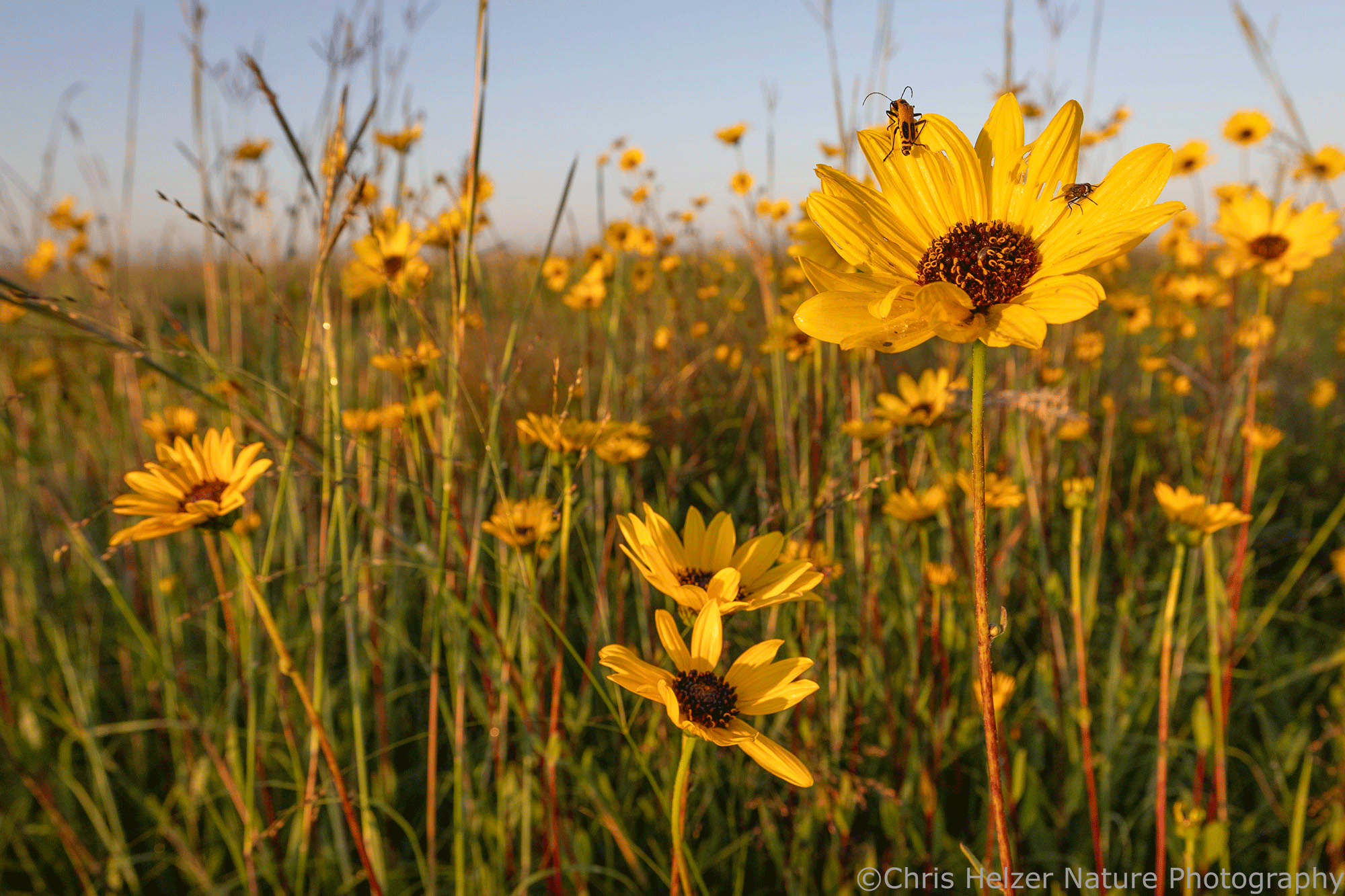
After most of the color left the horizon, I switched to a wide angle lens and played around with another stiff sunflower patch. Similar to the guidance I shared above, I made sure my camera was below the height of the flowers, making the images more interesting and letting the viewer feel like they were in the prairie instead of just seeing it from above. I don’t want to give you the impression I invented this technique, by the way. I’m just passing it along in case you’ve not heard of it. No one has a patent on the idea of holding your camera a little lower when you take a photo. At least, I hope not.


Pretty soon, the sun had risen high enough that the light was getting bright and the contrast tricky to deal with. I realized I hadn’t really photographed the actual prairie much (just sunflowers), so I turned around, put the sun to the my side, and tried to capture photos of the grassland around me. This was the patch we burned in the summer of 2023, so I was pleased to see both good numbers of wildflowers, along with grass that looked like it was regaining its vigor.


Before I lost the light altogether, I wanted to do a little insect photography, so when I came across a couple male wasps on big bluestem, I switched to my macro lens. Shortly after that, I spotted a buckeye butterfly. I got a couple photos of it before it flew off. Then, I stalked it for a few minutes and I got a couple more photos of it on its next two perches. I left it alone after that because it was clearly trying to soak up the warmth of the sun and it felt mean to keep shifting it around.


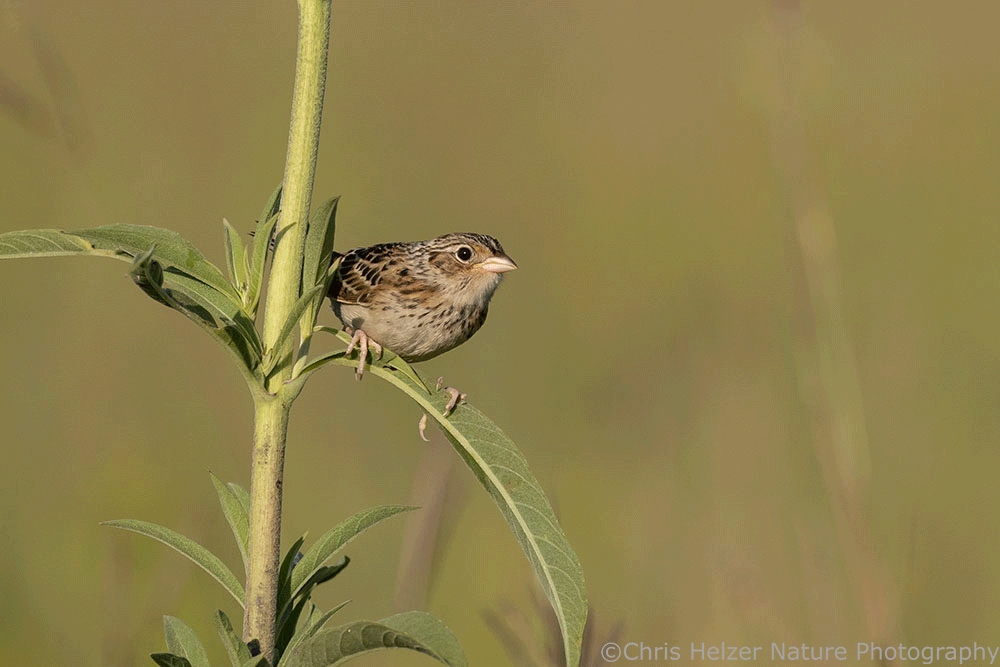
As I was leaving the prairie, I stopped to say hi to the cows and check out this spring’s burn patch. This is the area the cows have been hitting the hardest, but even so, the grazing was pretty patchy. Coming out of a couple years of drought, Cody had reduced stocking rates for this year. Then, of course, the rains came, the vegetation has exploded, and we don’t have enough cattle to keep it all cropped down in the burned patches. Nothing wrong with that, but we don’t have the big expanse of short habitat we’d normally have.
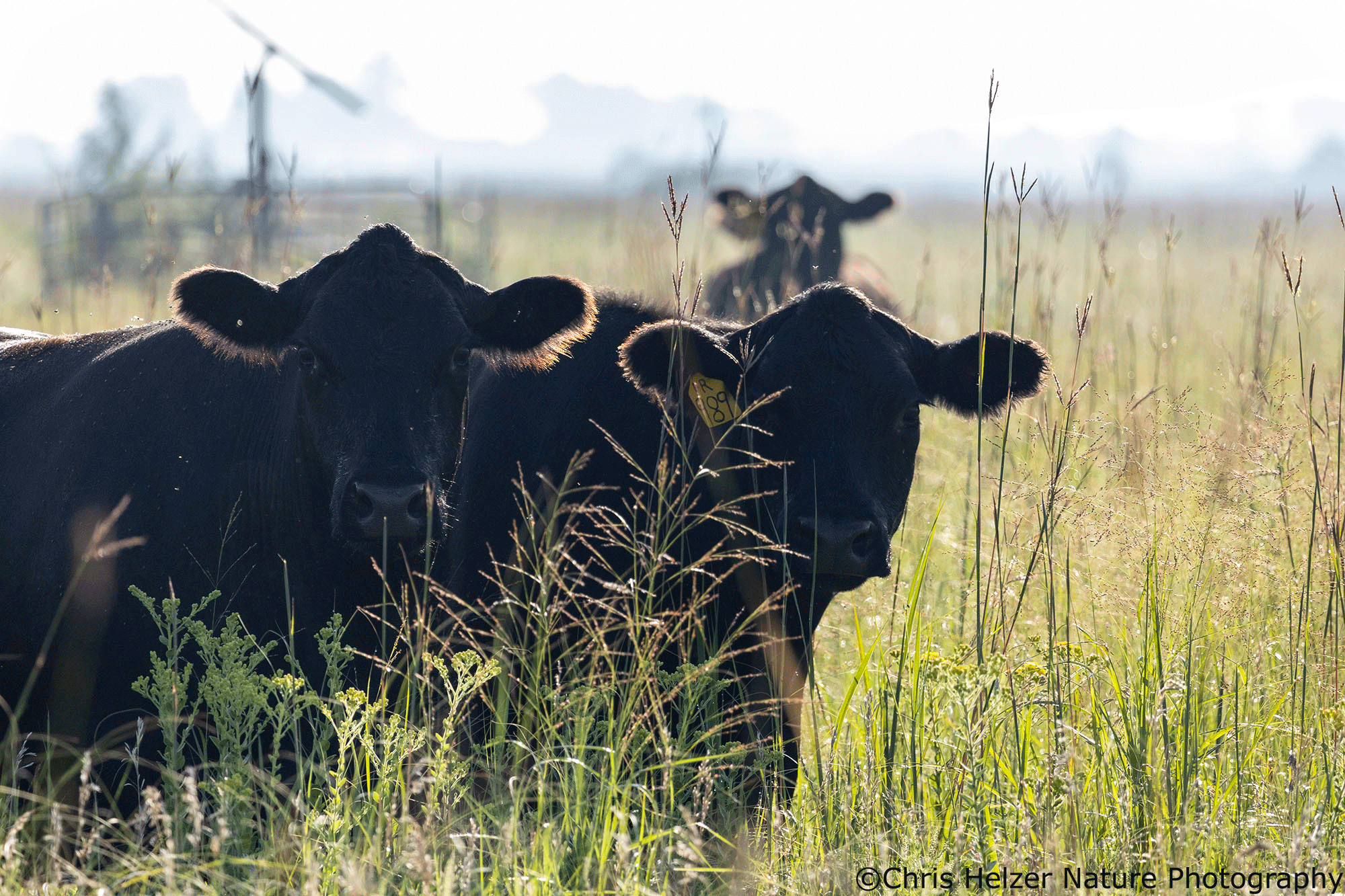
The photo below shows the patchy nature of the grazing in this spring’s burn patch. Some of it is being grazed short, but there aren’t enough cows to graze the whole burn patch short. This area is part of a low-diversity grass planting from before we owned the property, so plant diversity isn’t great, but there are at least some big yellow-flowered plants like Maximilian sunflower and some goldenrods.
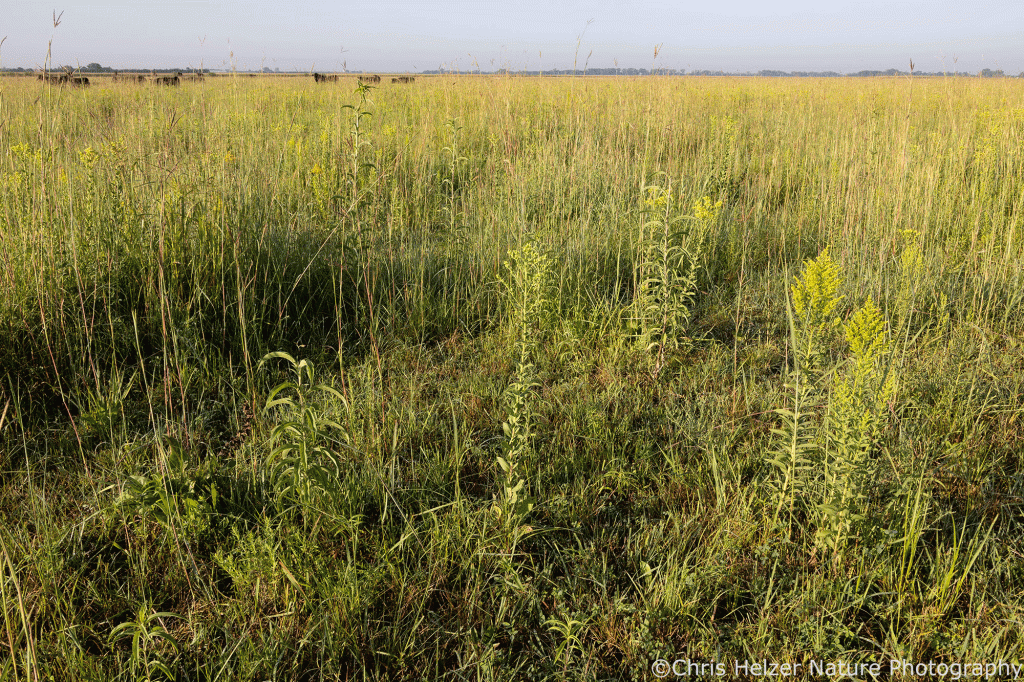
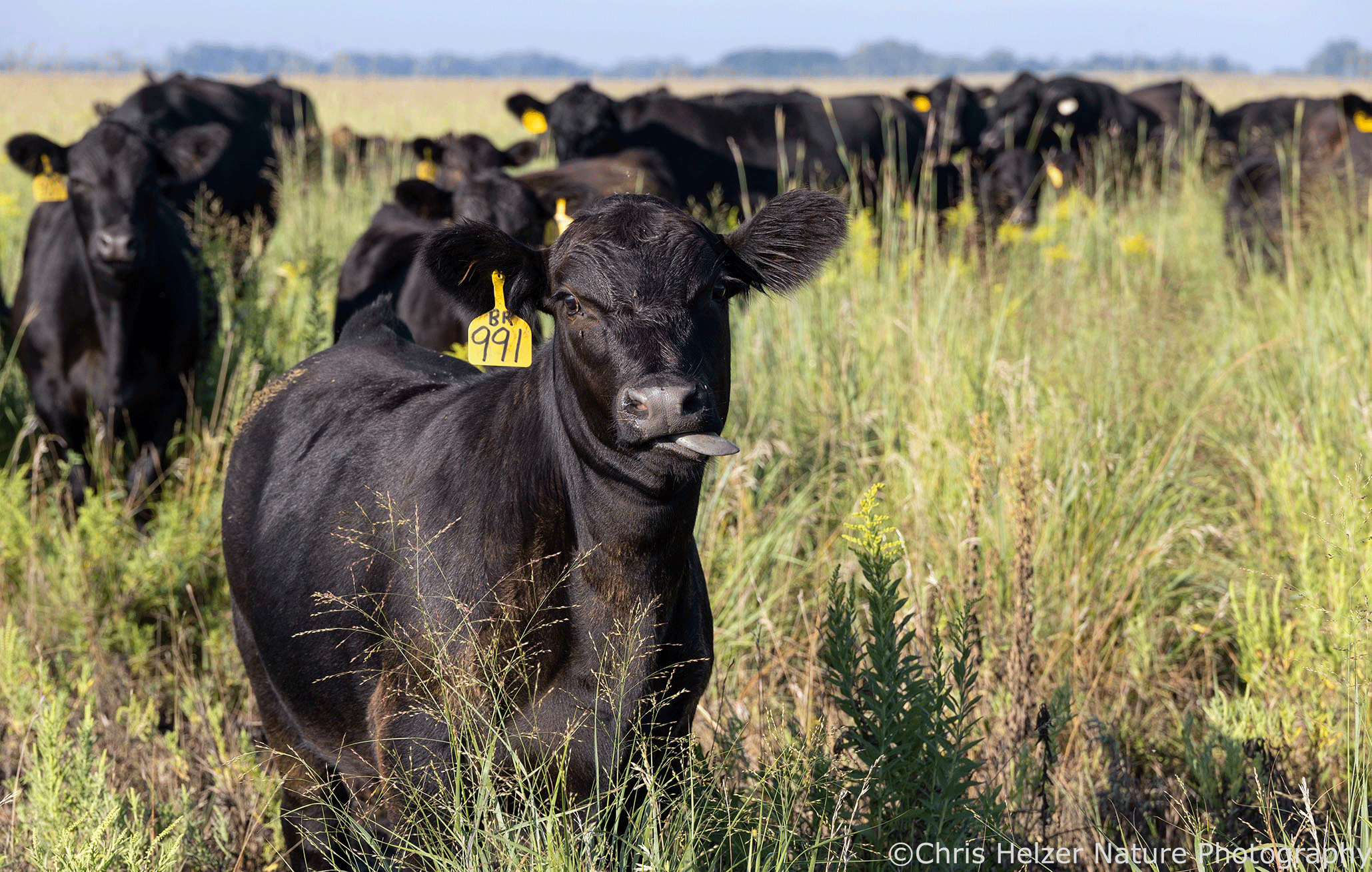
Just as I was ready to hop in the truck to head home, the cows came up close to say hi. I took a photo of a calf with its colleagues behind it. I took several rapid-fire shots. Just as I started, it stuck its tongue out and made me laugh. I don’t think it was being goofy on purpose, of course, but it sure seemed similar to a kid trying to ruin family picture day!
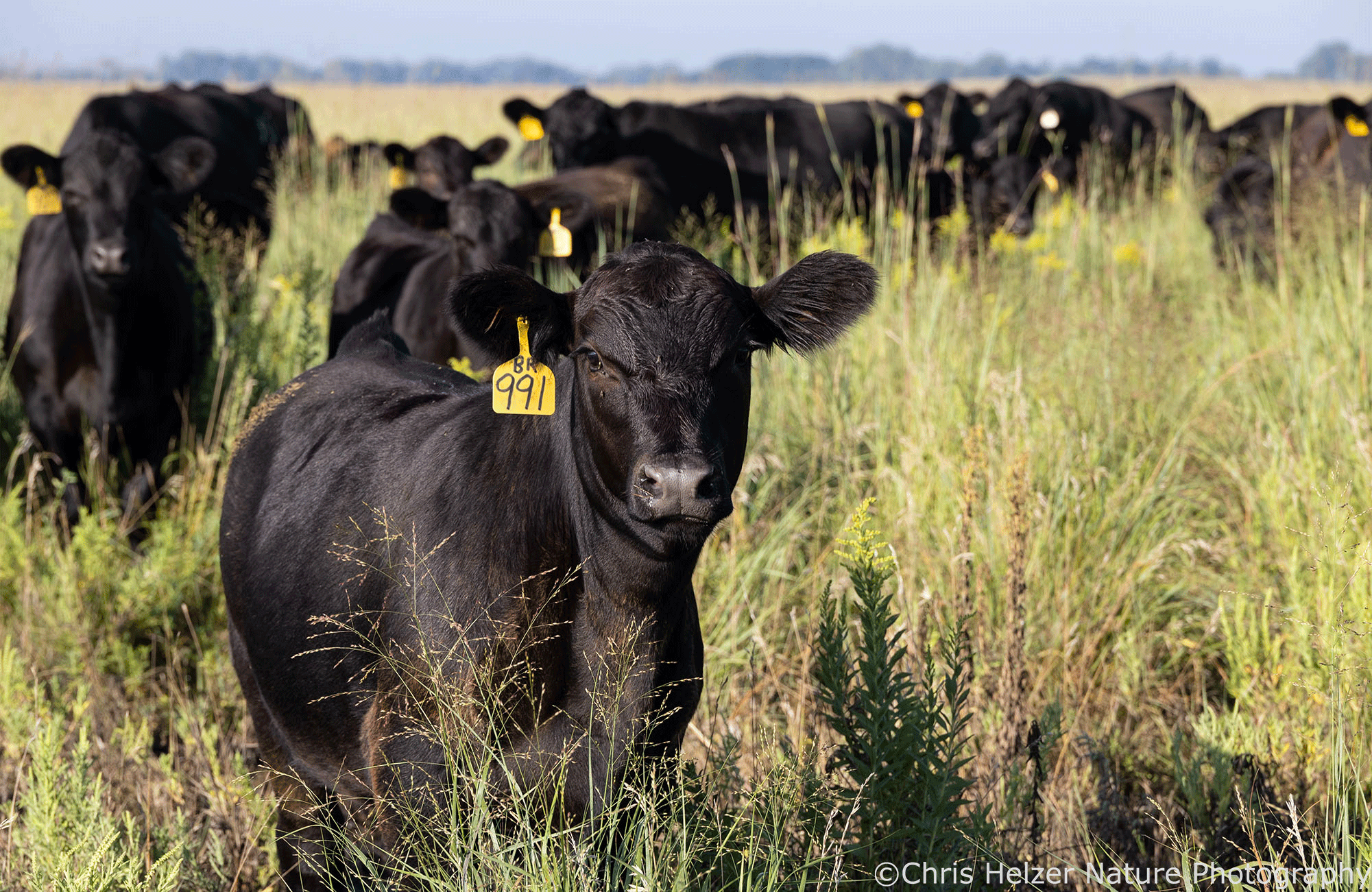
It’s always worth getting up for sunrise, but this time of year might be the best of all for an early morning prairie walk. There’s usually dew to help slow and highlight invertebrates, and the morning wind speed is often low. That, mixed with the abundant color and varied habitat structure of late summer prairies makes it a pretty spectacular experience. I hope you can get out and see a prairie sunrise soon!
 The Prairie Ecologist
Very nice photos, as usual, Chris! Things are quite as yellow down here in southeast Colorado, where it’s still getting up in the 100s in the daytime. Still, you can tell that fall is not too far behind.
Your photos always spur me to go out and get more shots, too.
Beautiful. Interesting. Informative
really impressive on all accounts. Marvelous, the tall grass prairies.
The “silly face” in the last picture really made me laugh when I opened it up to take a closer look. Great pictures all around. I’ve got to practice my prairie bug shots!
People work really hard to get cattle to pose the way they want them to for pictures so it always cracks me up when they just do it on their own like that bull. LOL He is showing off. “Look at me, I’m a handsome dude!” Or maybe he can’t figure why you’re taking pictures of flowers.