
For most people, bison and prairie dogs are the two strongest icons associated with North American Prairies. I sometimes wonder if that’s a problem.
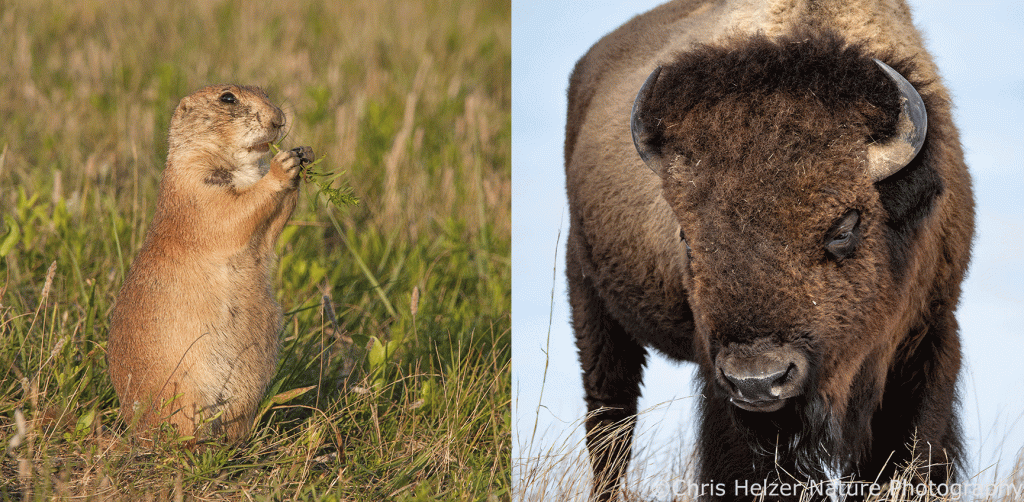
Bison are, of course, wonderful animals. They have strong cultural significance and can play valuable ecological roles in grassland systems, especially through their grazing, wallowing and other behaviors. Prairie dogs are cute, talk to each other, and create burrows and other habitat features that draw in lots of other animals. If you’ve heard anything about prairie dogs, you’ve probably heard them called a keystone species – a species that has an outsized effect on an ecosystem, helping to support a broad diversity of other ecosystem members.
So, if a prairie doesn’t have bison or prairie dogs, is it still a prairie?
Of course it is.
Well, those of us who work in prairies know that. Does the general public know it? Or do they expect to see bison and prairie dogs in a real prairie? If they do, it’s probably our fault. Those of us who promote prairies sure do talk a lot about those two animals, even though they are found in only a tiny percentage of today’s grasslands.
This presents a conundrum, doesn’t it? Bison and prairie dogs are two of our most charismatic characters. Talking about prairies without including them would be like talking about the arctic without mentioning polar bears or penguins. (That was a test, of course, and you passed because you know penguins don’t live in the northern hemisphere. Well, except in the Galapagos, but those are kind of the exceptions that prove the rule, aren’t they? Good work.)
You get my point, though, right?
Unfortunately, the prairies most accessible to the majority of North Americans don’t have either prairie dogs or bison. So, why do we keep using those two icons to sell people on prairies? If my local zoo had photos of pandas on their signs, I’d expect to see pandas when I visited. When I arrived and found out pandas weren’t actually there, I’d probably turn around and leave. We don’t want that to happen with prairies. Prairies are incredible, complex, and beautiful ecosystems with or without bison and prairie dogs.
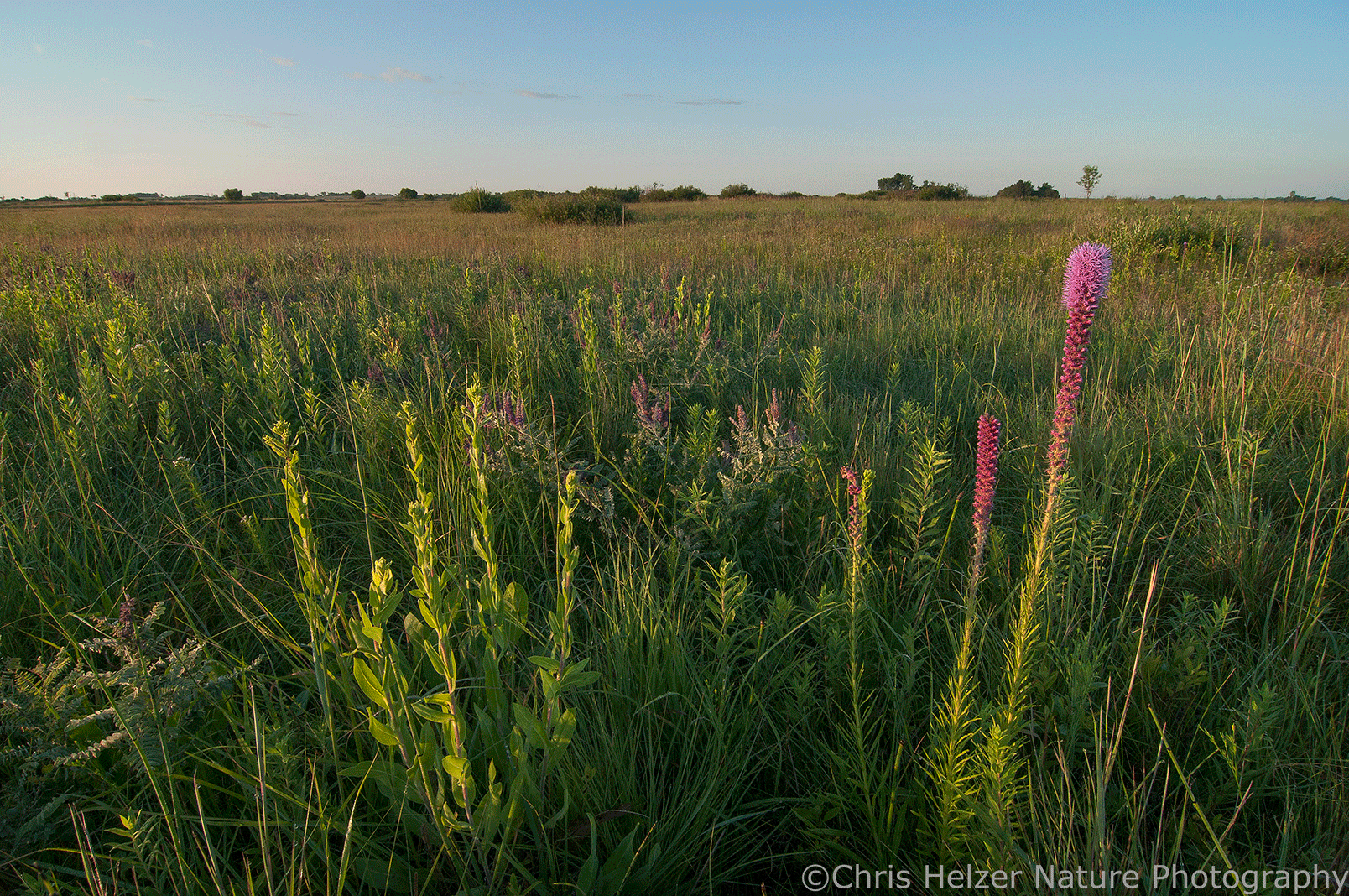
Let’s diversify our prairie iconography. It’s not like we’re short on choices, but we should be thoughtful about our decisions.
I often see rare butterflies like regal fritillaries featured in prairie-related media. Lately, the rusty patch bumblebee has been prominently displayed and discussed in conjunction with many Midwestern prairies. Here’s the problem. Most people aren’t going to see a rusty patch bumblebee or regal fritillary when they visit their local prairie.
We should absolutely talk about prairies and their value to regals, rusty patches and other increasingly rare insects. At the same time, though, why can’t we also talk about intriguing prairie species people can see in just about any prairie? Rare species are important, but, by definition, it’s hard to find them. There are plenty of common prairie species we can highlight, and all of them have fantastic natural history stories.
People like birds, right? Let’s talk about red-winged blackbirds! Sure, they’re also associated with wetlands, but I see them in lots of prairies – often right off the side of the road where they’re easy to watch. Dickcissels are another great choice. They like hanging out in smaller prairies with a lot of tall wildflowers. That describes a lot of the prairie habitat closest to our largest human populations in the Midwest and Great Plains.
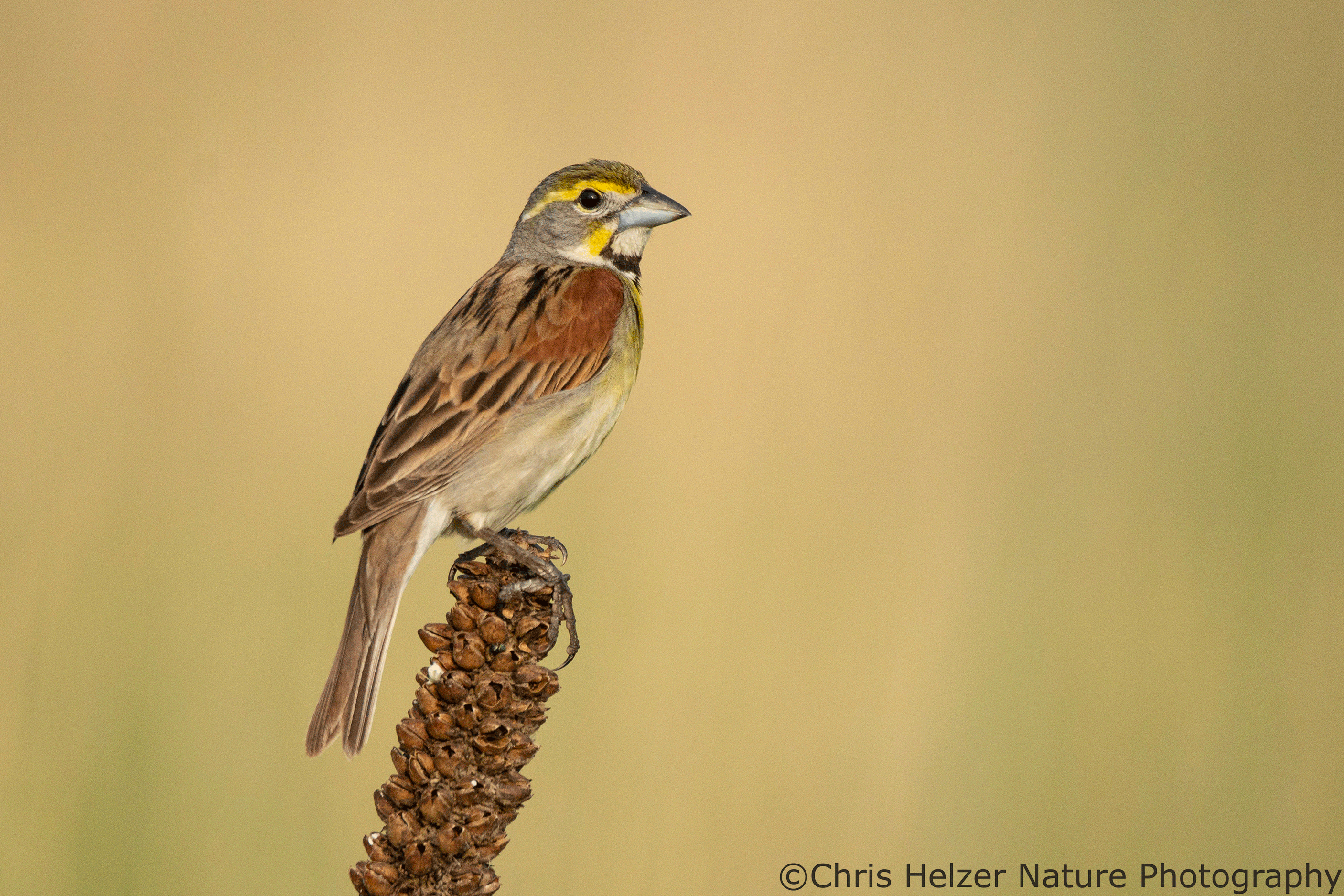
Both of those birds have obvious territorial behaviors we can describe to people, so they know what to watch and listen for when they see them. We can talk about their migration patterns, their diet, their songs, and lots more. If you live in a place where you don’t have red-winged blackbirds or dickcissels, surely there are other bird species that hang out in most of your prairies. Pick a couple and promote them!
Wildflowers like black-eyed Susans, sunflowers, milkweeds or others can also be great options to highlight. We have to be a little careful about timing, since they don’t bloom all season, but it’s not hard to list a few common wildflowers people might see at different times of year and talk about why they’re fascinating. Using plants people might know from their own yards or neighborhoods can be a big help. Seeing familiar plants in a new place is kind of like seeing friends when you arrive at a party – it provides an instant feeling of comfort and reassurance.

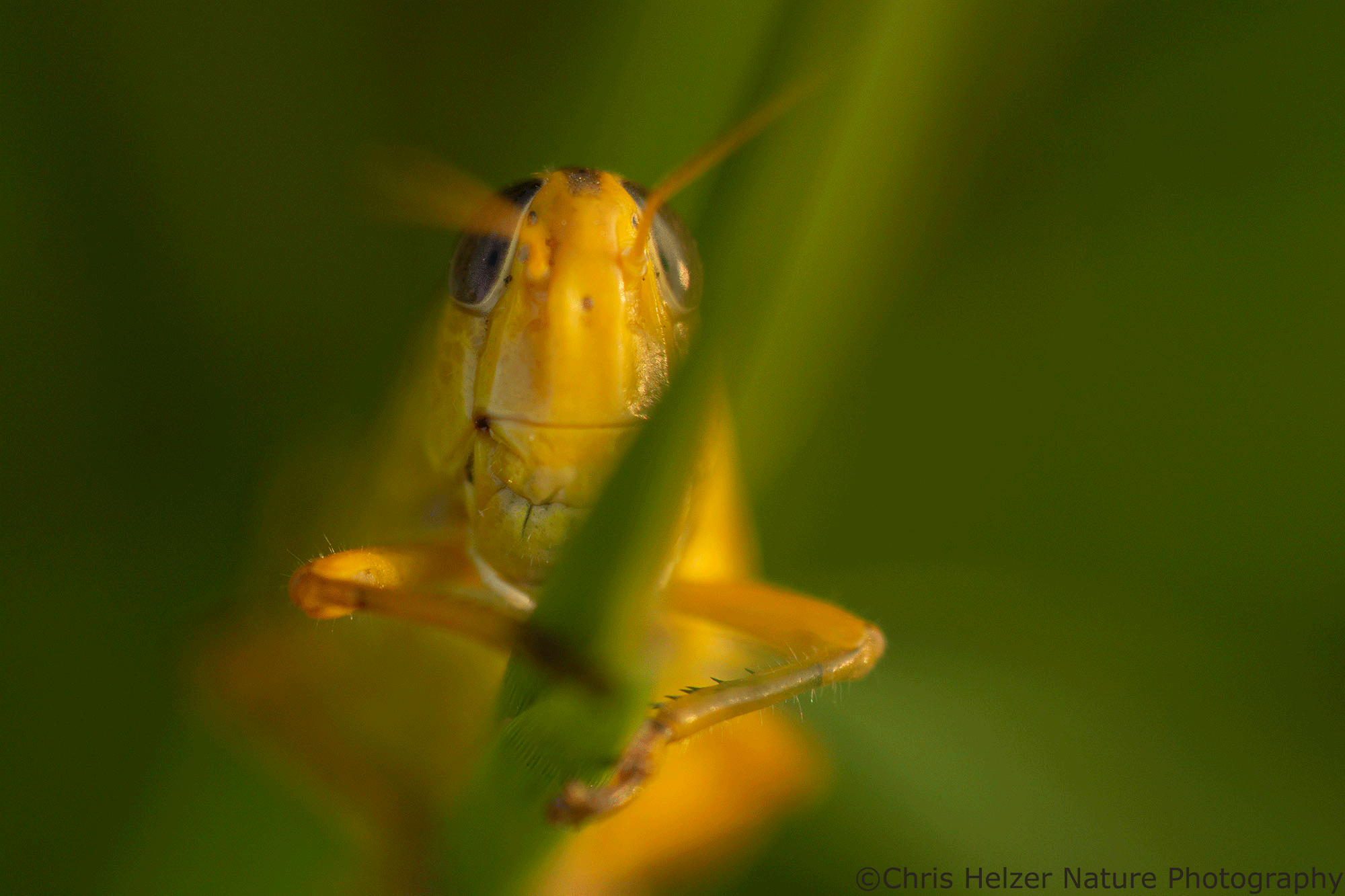
Obviously, we’re not short on invertebrate options. We don’t have to pick individual species, either. Grasshoppers and katydids, for example, are easy to spot. Pointing out that there are lots of different species – each with their own color patterns – can give people a reason to go look for them and keep exploring after they see their first one. Butterflies and moths fit the same criteria (easy to see and full of variety).
All those insects have incredible life history stories people can dig into and learn about. Plus, in both grasshoppers/katydids and butterflies/moths, people can look at the antennae to see which is which. (Grasshoppers have short antennae and katydids have really long ones. Butterflies have little knobs at the end of their antennae and moths don’t.)
Anyway, you get the point. These are just a few quick examples among many available to us.
Is it really hurting prairie conservation efforts to rely so much upon prairie dogs and bison as our ambassadors? I don’t think it’s our biggest conservation concern, but I do worry about it. It feels like we’re living in the past a little bit, and trying to sell people on a kind of prairie ideal that doesn’t really exist.
None of this means we shouldn’t continue working on bison and prairie dog conservation efforts. It’d be great to see both those species in more places, both for their own sake and because they really are a great draw for getting people to come visit grasslands. In the places where it makes sense, let’s keep pushing forward.
At the same time, there’s no reason we can’t also promote some other prairie ambassadors to draw people to the prairies near their homes. By picking common plants and animals and highlighting their stories, we give people opportunities to find and build relationships with local prairie species. If we do it right, people will be excited to come to our party and feel welcome and comfortable when they arrive.
 The Prairie Ecologist
Compass plant is emblematic for me with its distinctive leaves and periscope up! floral array. Of course it isn’t found everywhere. Maybe big bluestem would be a better choice? Wouldn’t it be great if people recognized the types of prairies based on species endemic to them? Great entry as always, thank you.
Terrific post and photographs. I’m a volunteer at a Tall Grass Prairie Visitor Center that offers visitors an overview of the breadth of plants and species that can be discovered throughout the seasons. While they may come for the bison most seem tuned in to the abundance of life that the prairie holds. Thanks for the suggestions, always appreciate your insights and grounded perspective.
Ummmm…Chris…I’m disappointed…I read all the way to the bottom and you didn’t even MENTION those cute spiders you love so much! :-)
Was the comment on the Galapagos Islands being in the northern hemisphere another test? Sly one, Chris, sly one!
Great point to make Chris! While prairie dogs were still fairly common when I was a boy (80 years ago) they aren’t now; and bison were still at the almost-extinct stage 80 years ago. I had to drive all the way to the Wichita Mountains preserve in Oklahoma to see a herd of them, or up to South Dakota. I was fortunate in that I lived within very easy driving distance of the Flint Hills in eastern Kansas though, and saw them several times a year. For me it was the big bluestem that represented grasslands — an incredibly beautiful, even magnificent plant that existed then in vast numbers, and still does.
I would also vote for featuring ants. There can be as many as a half million per acre and they form critical liaisons with plants. One of my favorite stories is about how the wild violet (Viola nutali) times the release of its seeds so that ants tend to find them rather than rodents. The ants eat the elaiosomes that circle the seed, but don’t destroy the seed as rodents do.
You make a great point though. The charismatic species pull at human heart strings more than “day laborers” like ants. :) Gary
Suggestion: put a link to Mastodon and Bluesy in your sharing tools. I am now sharing your blog pot to both, and people love them.
Oh! and how about meadowlarks as a prairie symbol? Or red tailed hawks? Your ideas are a great way to entice people to view prairies a vibrant ecosystems
Agree that human perspective is a lot of it with regards to these two species being associated so closely with prairies. However I believe that in actuality, there were probably significant areas of Pleistocene prairie areas in North America that had neither bison or prairie dogs.
Agree with the gist of the article. But prairie dogs as “iconic”? I guess…but they way many people on my (west) end of the state view and treat them…hardly what I’d characterize as befitting an “icon”…
Bringing up grasshoppers reminds me of the giant grasshopper statue at the Konza Prairie station. Seems like they’re ahead of the curve in this project :)
Love your enews! Up in Alberta (I’m in Calgary), huge efforts are being made to bring the iconic buffalo ‘back’. The prairie dog, not so much. But, as you so well stated, there’s more to the prairies than bison and ‘dogs’. Birds, insect and bug life? My goodness. We have magpies. And it was such a surprise to find out that bison and magpies had quite the mutual relationship. They have become ‘city’ birds in the last 50 plus years (?). That said, how many bison do magpies sit on and pick away at ‘bugs’? Yet, it’s been noted by our city biologists that they do go after various bugs that survive winter and tend to give our moose grief. These ticks can kill baby moose by simply feeding on blood in incredibly huge numbers. While magpies have an interesting relationship with humans—many don’t like them as they are about as noisy as a bird an be and have all the corvid ways you can imagine. I admire them. Sadly, when it came to pick Calgary’s iconic bird, it didn’t win. But, it’s still a winner for me! And a bird that got turfed off its home range—prairies and successfully became a bird that can live in trees and is quite the scavenger.
>
Sorry to disagree but whenever I think about prairies I see your beautiful photographs of prairie flowers and insects. One time, though, you did have some bison pictures…