
Flies are an astoundingly diverse and important group of organisms. I’ve written about them quite a bit, including broad overviews and more specific pieces about behavior, etc. I’m going to keep writing about them and there’s nothing you can do about it. I mean, you don’t have to read what I write, I guess. And if enough of you stop reading, I’d probably stop writing. But apart from that, just try and stop me!
Today, I want to talk about predatory flies. Because of their incredible diversity (estimated 61,000 species in North America), flies fill lots of roles in ecosystems. As adults and larvae, they are pollinators, scavengers, herbivores, decomposers, parasites, and more. A few of them even come into our dwellings, buzz around our windows and lights, and taste our food. If flies disappeared from the earth, it would be a huge problem, notwithstanding those food-tasting buzzers.
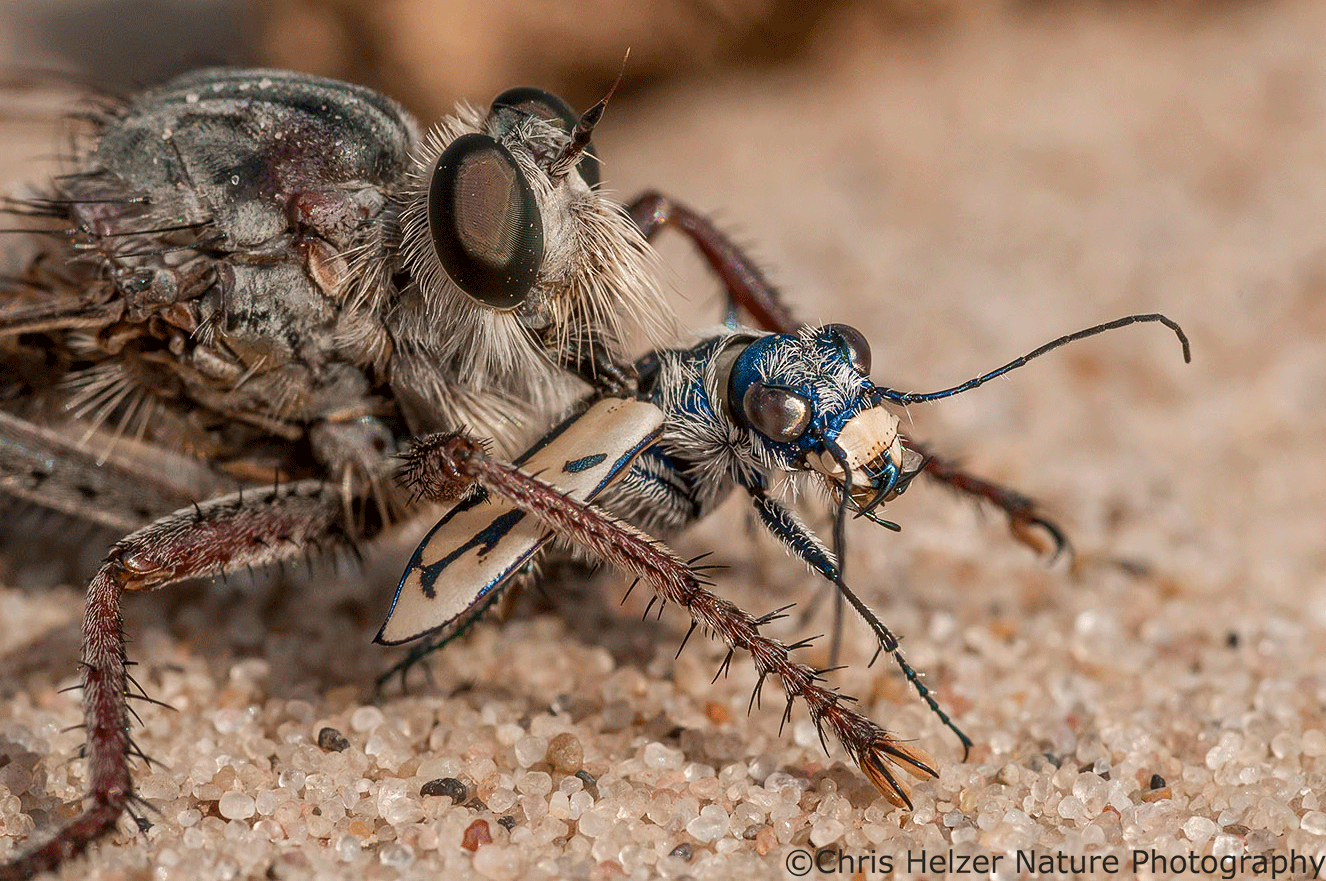
If you know anything about flies as predators, it’s likely you’re familiar with robber flies. That’s a good start, though there are others we’ll get to presently. Robber flies include more than 7,500 species worldwide, according to bugguide.net. They are impressive aerial predators. The ones I know tend to hunt from perches, zipping into the air as another insect flies by. They streak toward their prey and intercept them violently – sometimes knocking them out of the air altogether.
Once they have their target, robber flies insert their sharp mouthpart and inject digestive chemicals into their prey’s body. Once their prey is sufficiently liquefied, robber flies suck out the good stuff and discard the husk. This is the basic strategy used by many of our coolest invertebrate predators, by the way, including spiders, assassin bugs, and others.
To clarify, it’s the liquefying process that’s used by many others. Spiders and assassin bugs don’t launch themselves through the air like missiles at airborne prey. That would be amazing, though, wouldn’t it? Can you imagine how people would feel about spiders if that was true? Its not that much more crazy than what people already think spiders can do, I guess. That’s another topic for another day, though.
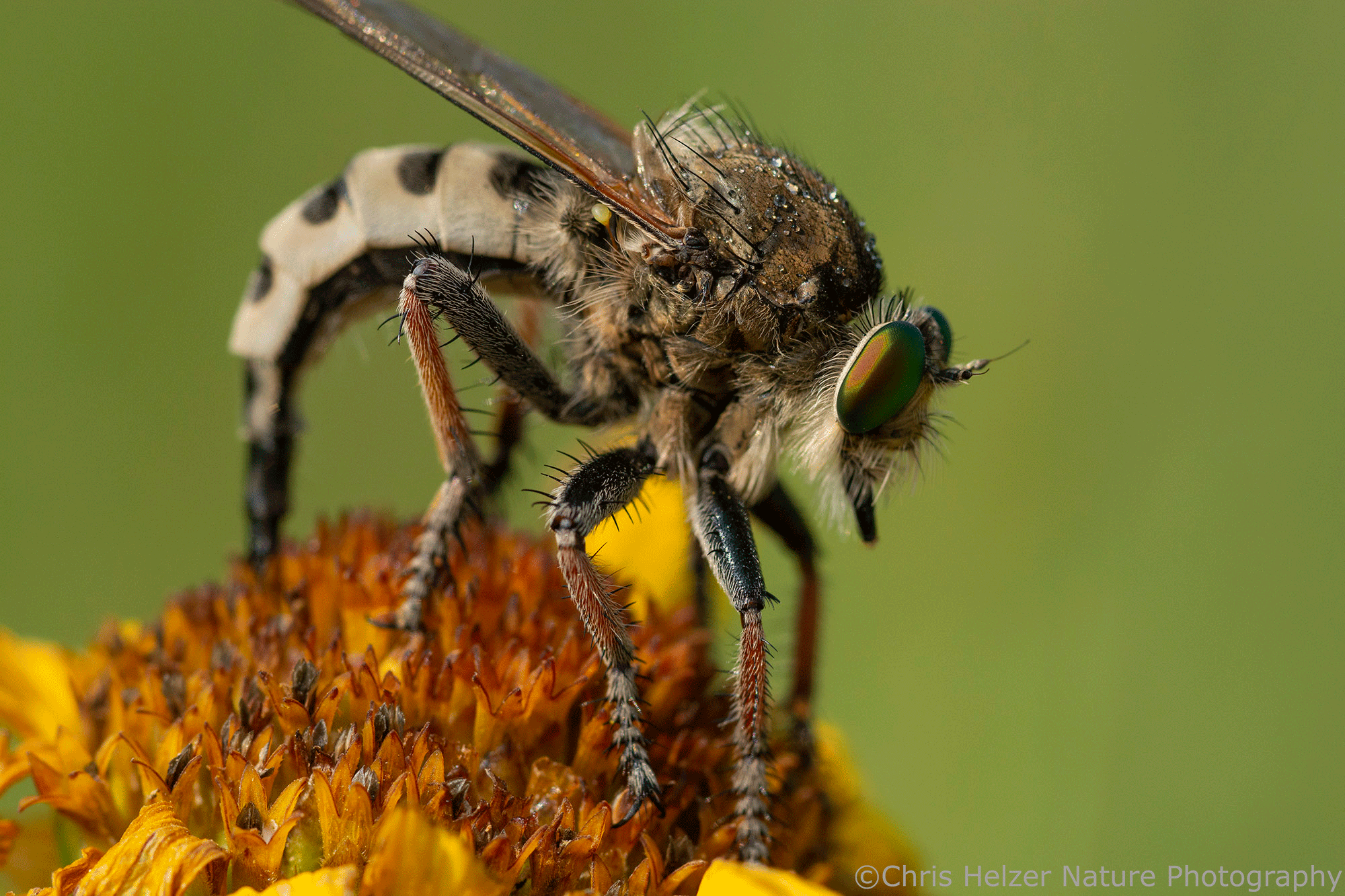
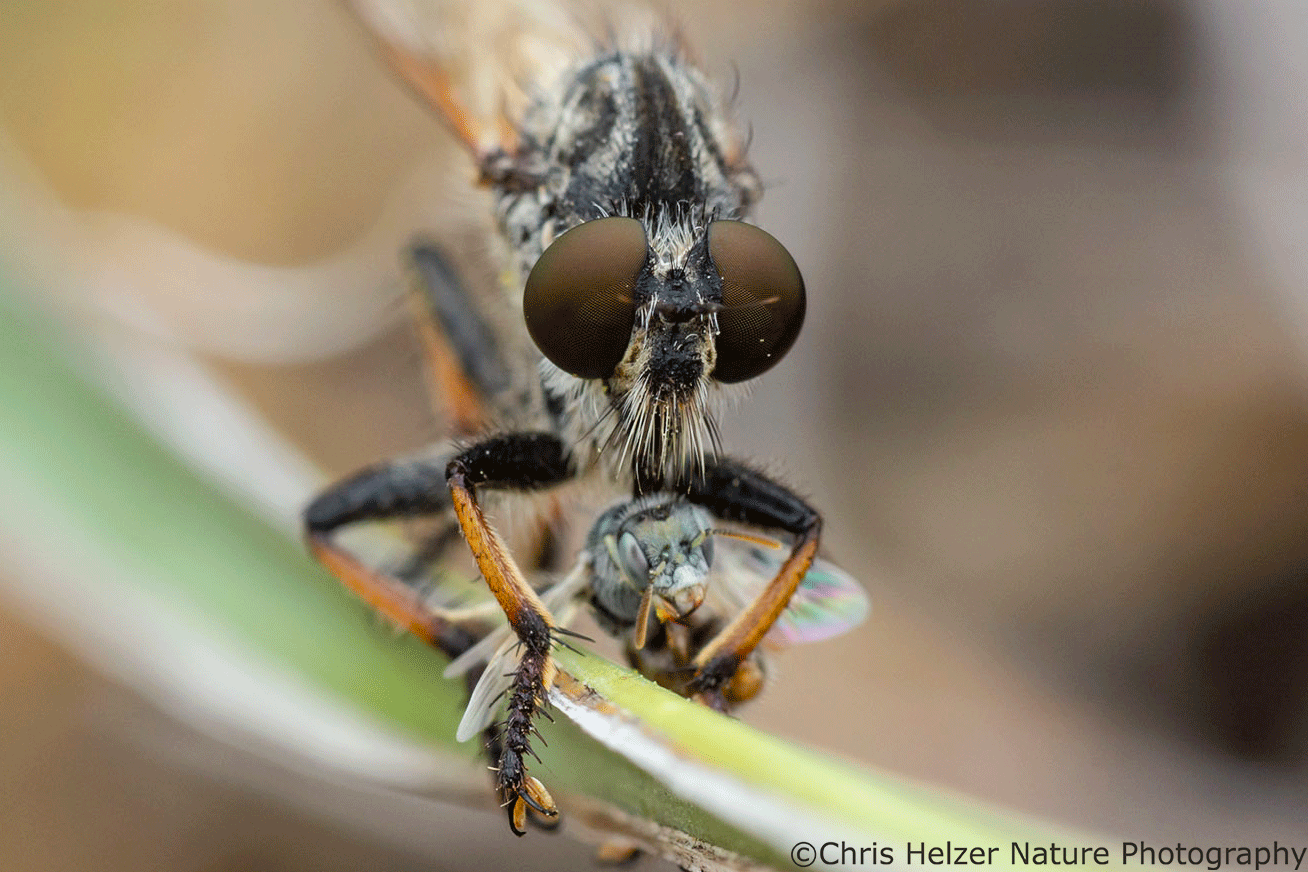
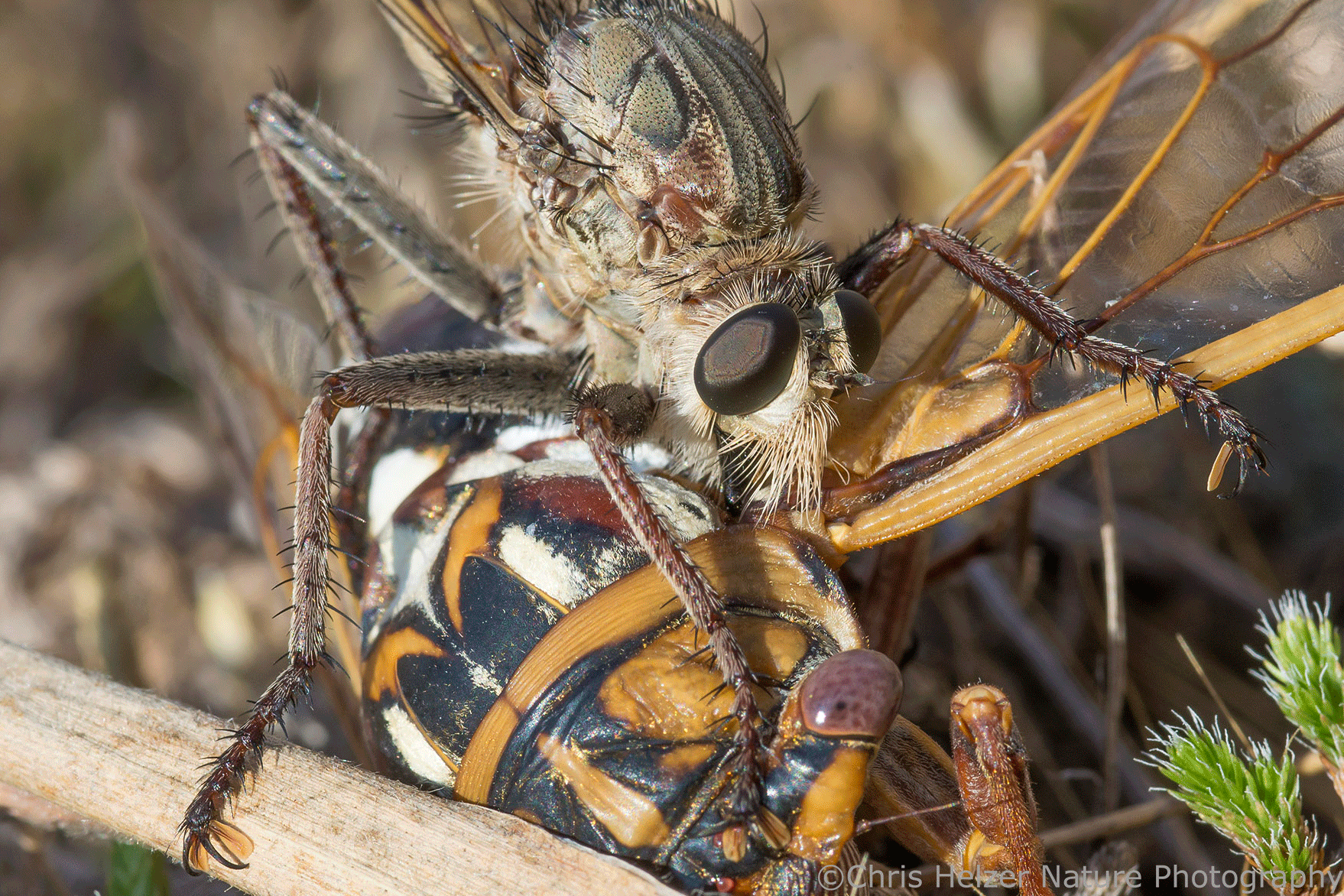
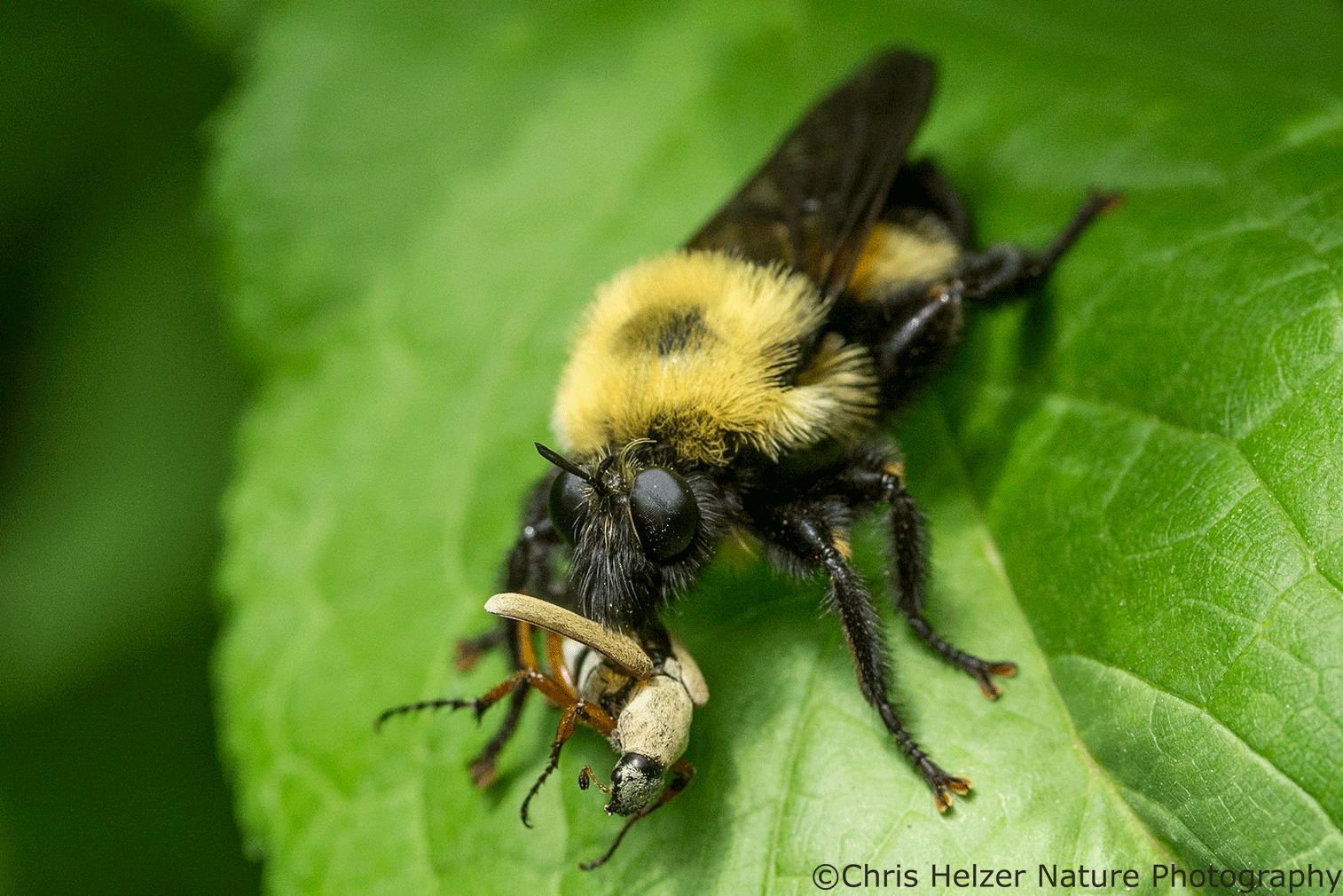
Anyway, robber flies are incredible. While they tend to have long bodies, huge eyes, and a glorious beard (technically called a “mystax”), robber flies can vary quite a bit in their appearance. Famously, some of them are excellent mimics of bees, which is surely a huge advantage when hunting pollinators. Maybe it also deters predators as well, though I’m not sure a bee is any more intimidating than a bearded, bug-eyed surface-to-air missile with chemical weapons.
As I continue to learn about flies, though, I keep finding out about other predator groups. The first were the longlegged flies. I’d known about, and photographed longlegged flies for years before I discovered that those exquisite, shiny little creatures were eating other insects. I became aware of their predation when I photographed one carrying around part of a tiny ant (or some other small creature – I couldn’t tell for sure) in its mouth. When I rushed to the internet to learn more, I found out they are, indeed, predatory. I also learned there are thousands of species of them (because of course there are).
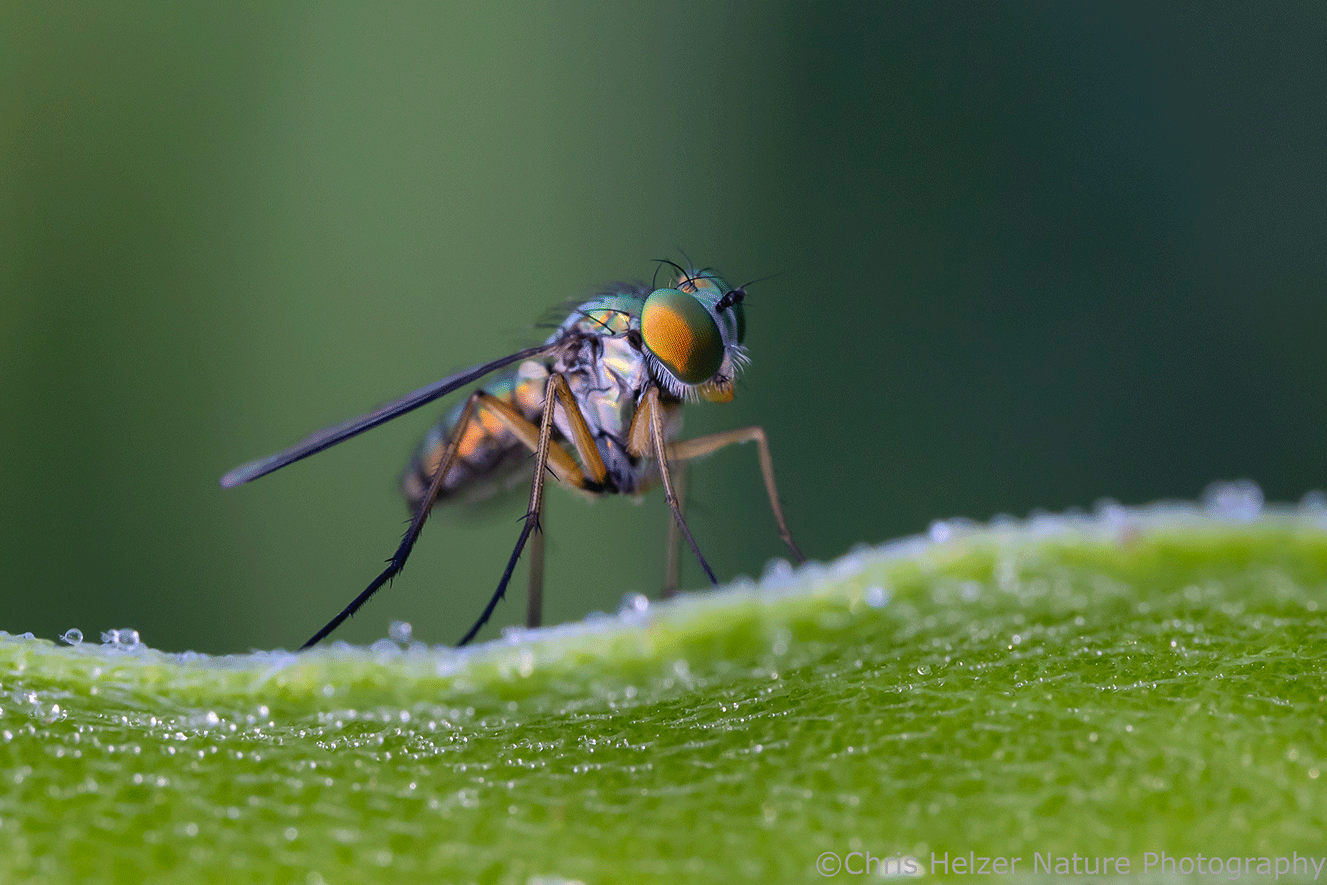
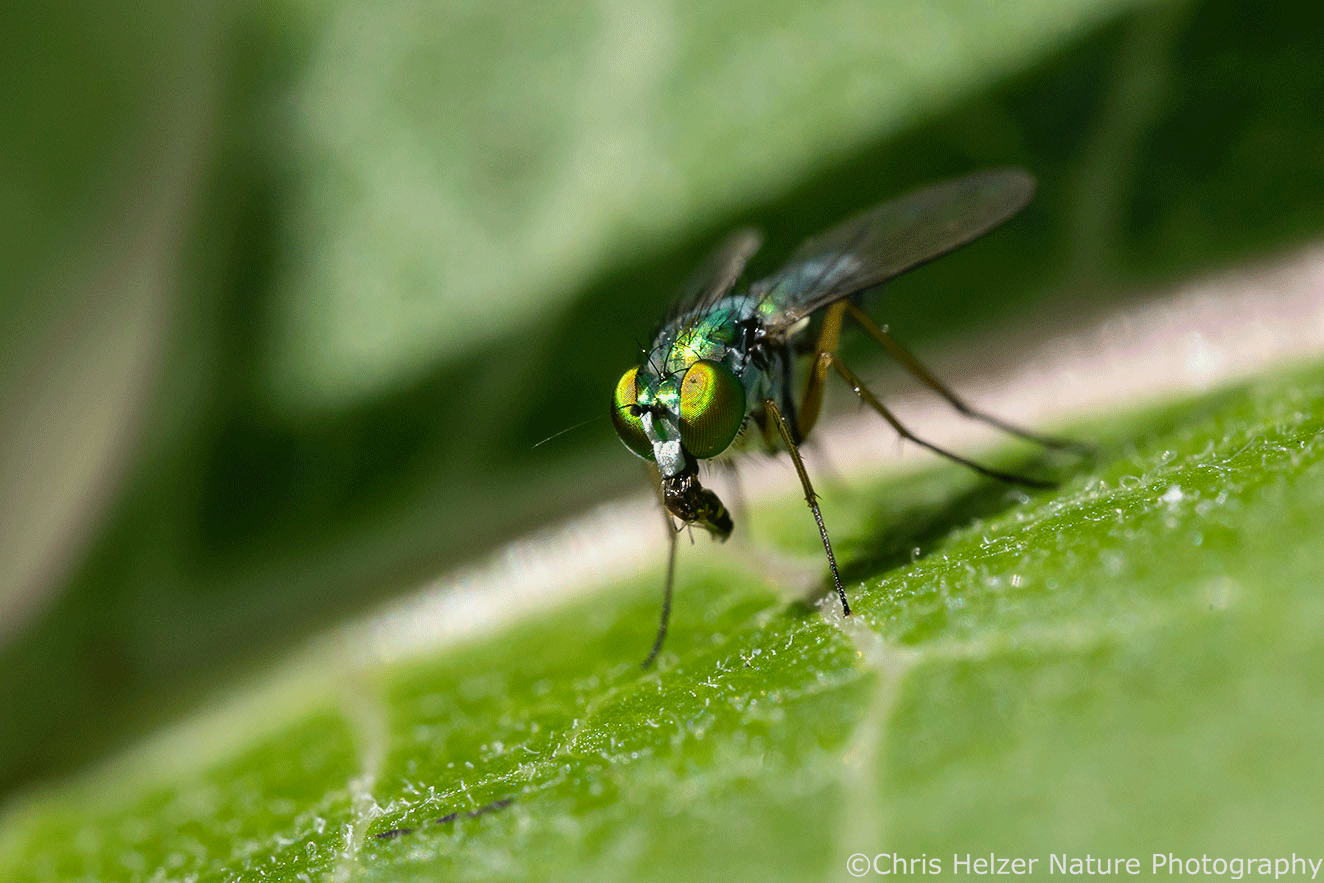
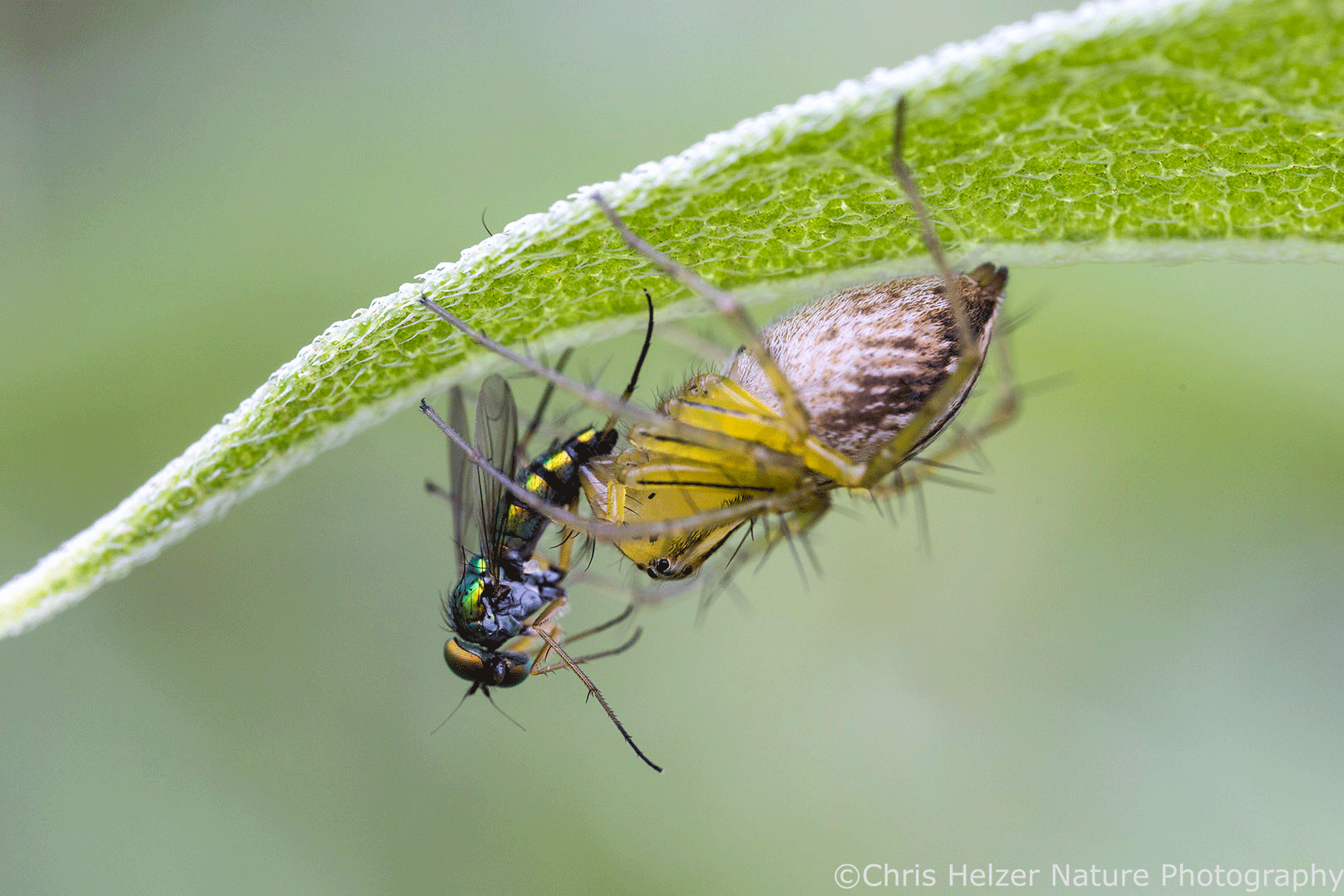
I see longlegged flies frequently when I’m in the prairie, especially when I have a camera in my hands and my brain is switched to photographer mode. Usually, they’re hanging out on leaves of plants, maybe a foot or so below flowers. At least, that’s where I find them. They often move around pretty quickly, both by leg and wing, as they search (I assume) for itsy bitsy creatures to eat. I wonder if their prey is as surprised as I was that longlegged flies are predators? If so, at least they learn something before they die, I guess.
My most recent discovery of a fly predator was during this year’s square meter photography project. The discovery process was the same as with longlegged flies. I focused in on a fly and realized I was photographing two species at the same time – the fly and a leafhopper that it was sucking the life out of. Bugguide told me it was a tiger fly and that it’s taxonomic family, Coenosiinae, includes a couple thousand species of predatory flies. How is this not more widely known?
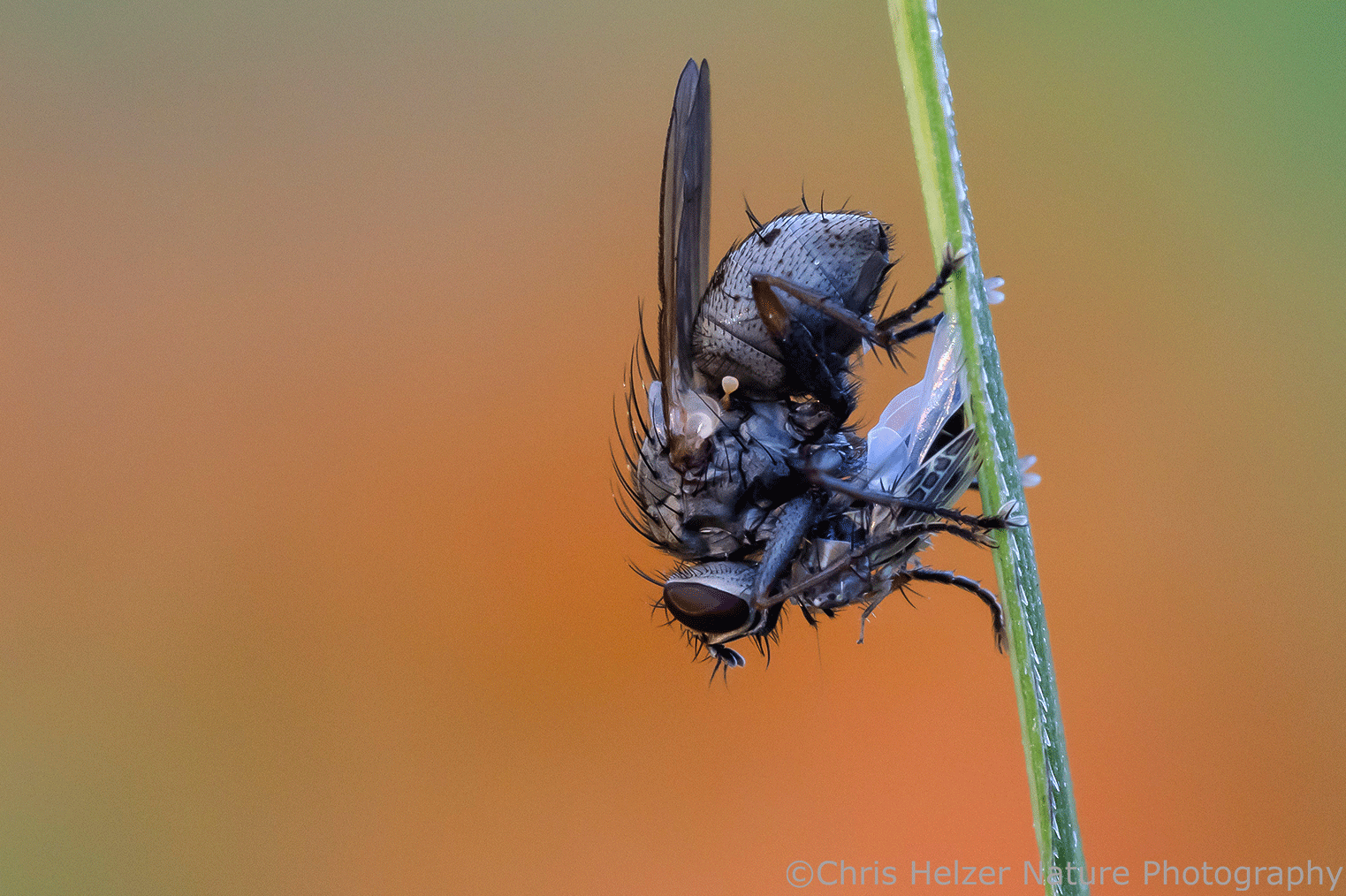
Once I knew what to look for, I started seeing both tiger flies and longlegged flies more often, with and without prey. It makes me wonder what other predatory flies are out there that I’m not yet aware of, let alone all the other amazing stories I’m ignorant of. That’s one of the reasons I’ve loved my square meter photography work. By focusing my attention more narrowly, I’ve made discoveries that have really broadened my understanding of how prairies work. Weird, huh?
I’d love to hear from anyone who knows of other predatory flies out there. One group I am aware of is the syrphid flies (aka flower flies and/or hover flies), which have predatory larvae. That’s pretty great, though I’ve yet to see and photograph one of those larvae eating aphids or other little creatures. I did photograph some syrphid larvae this summer, but they were feeding on pollen, not other animals.
While they’re technically categorized as parasitoids, not predators, the larvae of other fly species also feed on animals. Tachinid flies are a good example, and I see them around quite a bit. Parasitoids are the kind of creatures horror movies are inspired by. They lay their eggs on or in other creatures and their larvae hatch out and eat the victim’s insides while it’s still alive. They’re extraordinarily important, ecologically, but also creepy. And cool.
What other predator flies should I be on the lookout for? I know about bot flies, but, again, they’re parasites and it’s the larvae that are feeding on animals. Any other adult flies that capture and eat other creatures?
It’s an amazing world out there, huh?
 The Prairie Ecologist
Thanks for the very interesting report on your adventures and what you found out about so many flies. You explain it in terms that are easy to relate to and understand for non-experts like me.
Thank you for the detailed photos, and the interesting stories. I learn so much from these!
Thank you so much for your informative and interesting insights. I do have a question. Is the caption for the 1st (top) picture correct? A very cool picture, especially if the critter on the left is a fly! >
Thanks! Yes, it’s a photo of a robber fly (the bigger fuzzier one on the left) that had just captured a tiger beetle and was feeding on it. I actually watched the attack happen because I’d been trying to photograph the tiger beetle. It flew away from me and when it got into the air, it was immediately struck down by a robber fly I hadn’t seen that must have been sitting nearby.
LOVE this post! Now I want to learn more about predatory flies. Robber flies I’ve seen plenty, and long legged – though I didn’t know long legged flies ate other bugs! While I enjoy taking photos of flowers and insects in my garden, I hadn’t thought about a square meter project. Every summer I leave a patch of yard to go wild… and I walk through and catalog plants and insects. This year I’m marking off a square meter and capturing images. Thanks for the inspiration!
Thanks for this great post and the photos! I am currently reading The Secret Life of Flies by Erica McAlister; a fascinating book for those interested in more on flies and their varied lives and roles in our world.
I so enjoy your emails, keep up the awesome work. so many of the tiny creatures are critical to a healthy “everything” soil, plants, balance of other “species” all across our vast food web-holistic. I feel blessed in my chosen career path of conservation.-
We are committed to service excellence.
Visit our survey at http://dnr.wi.gov/customersurvey to evaluate how I did.
Mary C. Anderson
608-220-2935
maryc2.anderson@wisconsin.govmaryc2.anderson@wisconsin.gov
Chris, Thank you so much for your excellent blog (always, and especially the flies-as-predator one today). I have been trying to pay attention to predatory behavior in insects and spiders. So much goes on under our noses without our knowledge! I love my macro lens.
Anyway, I will attach a few pictures I’ve taken. Not because they are great photos especially, but because they share some information. They are
Like you, I am hugely indebted to bugguide. What a treasure.
Kathy Henning Middleton, Wisconsin
Now that entomologists have determined that dipteran species likely outnumber coleopterans, it’s not too surprising that the flies have evolved to fill predatory niches. I guess what may be more surprising is that more predatory species haven’t evolved.
What a great post! I’ve photographed a lot of syrphid flies in my garden (they’re big, beautiful, and love rudbeckias) but never seen the larvae. Could you point me to your photos of those? Thanks Chris!
Sure – check out this post https://prairieecologist.com/2024/09/09/another-set-of-photos-from-the-same-square-meter-of-prairie/
I’ve been planting tons of native plants and adding so many ecosystem enhancements for more habitat. I’ve seen the insect diversity increase from this. I also photograph and document things now. I created an iNaturalist project for my property. Very cool system they have. I have seen some robber flies here. I had Green tiger beetles for the first time every last summer. I had no idea they were eaten by robber flies. Your photos are excellent. I have a small gallery I add my natives to.
https://nativeplantecosystems.com/gallery
I remember the first robber fly I ever saw. It was sitting on a wire garden support, happily consuming a green bottle fly. Looks like the Hell’s Angel of flies, big, leathery, hairy, tough. Didn’t know about the long legged flies. I have photographed them in my garden and love the jewel like appearance – will have to look closer for prey!
Pingback: LINK FEST: 28 JANUARY 2025 – A Moveable Garden