Chris Helzer is Director of Science and Stewardship for The Nature Conservancy in Nebraska, where he conducts research and supervises the Conservancy’s preserve stewardship program. He also helps develop, test, and share prairie management and restoration strategies.
Chris is also dedicated to raising awareness about the value of prairies through his photography, writing and presentations. He is the author of The Prairie Ecologist blog, and two books: The Ecology and Management of Prairies and Hidden Prairie: Photographing Life in One Square Meter. He is also a frequent contributor to NEBRASKAland magazine and other publications. Chris and his family live in Aurora, Nebraska.
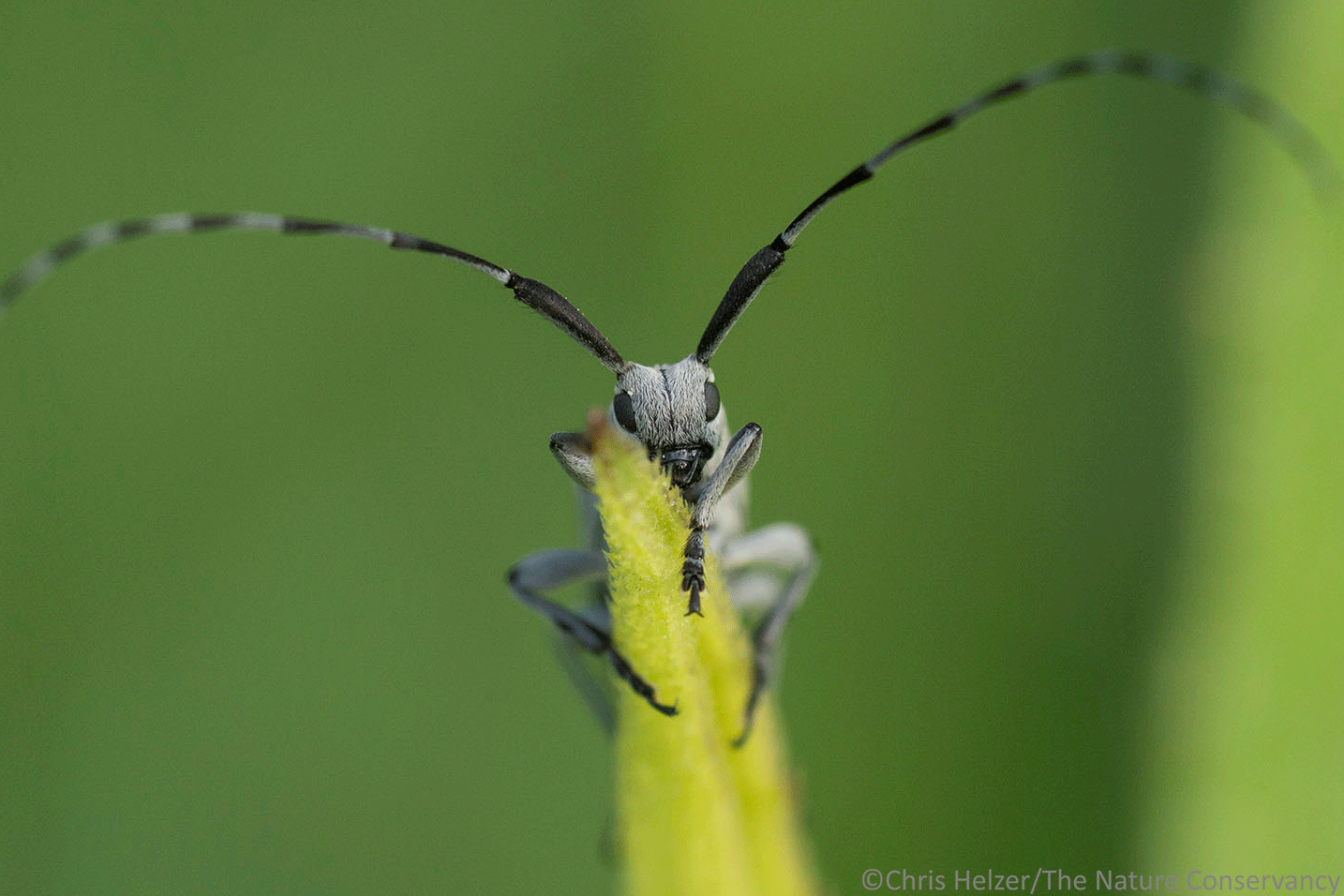
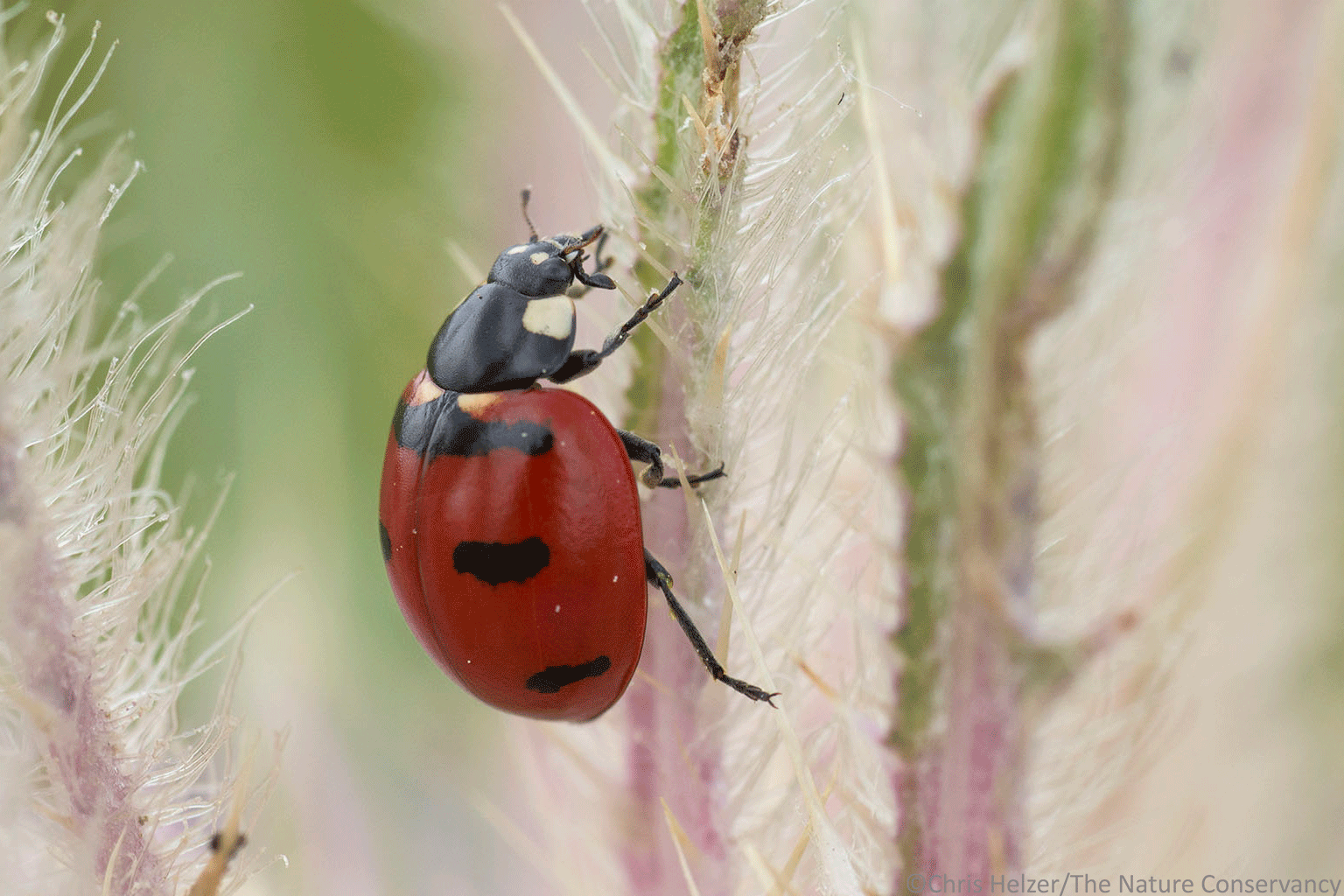
Beetles are the most diverse group of insects in world, a fact that is driven largely by the incredible diversity found in the tropics. While they’re not the most diverse group in North America (that’s thought to be flies, with an estimated 61,000 species on the continent!!), there are still lots and lots of beetles in prairies. They come in all kinds of shapes, sizes, and colors, and each has their own fascinating life story.
I’m no beetle expert, so I don’t know as many of those stories as I’d like to, but I thought I’d share a few photos today that help highlight the diversity of beetles out there in grasslands.
Big sand tiger beetle (Cicendela formosa) in the Nebraska Sandhills that just finished catching and consuming an ant. Nikon 105mm macro lens. ISO 400, f/20, 1/320 sec.Leaf beetles (Metrioidea sp) feeding on stiff sunflower (Helianthus pauciflorus). Nikon 105mm macro lens. ISO 500, f/13, 1/60 sec.White-fringed weevil (Naupactus tesselatus). Nikon 105mm macro lens. ISO 400, f/16, 1/200 sec.Goldenrod soldier beetle (Chauliognathus pensylvanicus). Nikon 105mm macro lens. ISO 500, f/14, 1/500 sec.Dectes stem borer (Dectes texanus). Nikon 105mm macro lens. ISO 640, f/1, 1/200 sec.Transverse lady beetle (Coccinella transversoguttata). Nikon 105mm macro lens. ISO 320, f/16, 1/100 sec.Skeletonizing leef beetle (Trirhabda sp). Nikon 105mm macro lens. ISO 500, f/14, 1/640 sec.Dung beetle (Deltochilini) in a Nebraska Sandhills blowout. Nikon 105mm macro lens. ISO 400, f/14, 1/400 sec.Longhorn milkweed beetle (Tetraopes sp). Nikon 105mm macro lens. ISO 400, f/10, 1/100 sec.
Do you ever have an idea you know is really dumb, but you can’t help going through with it? That’s today’s post. It’s truly awful, but it was something I needed to get out of my brain so I could move on to other things.
This one is for all the botanists out there. Apologies to the rest of you (and to the botanists, honestly.)
Here’s a photo of prairie wild rose (Rosa arkansana). I’m so sorry about the story.
.
THE STOLON SWARD
by Chris Helzer
.
Basil was holding Rose in a tendril embrace when there was a sudden loud knocking on the door.
“Who is that??” asked Rose. “Halophyte know,” said Basil, “I’ll go see.”
Basil walked to the door and opened it. He was shoved backward by a masked figure, who barged into the room.
Rose scrambled up, grabbed a sward and prepared to ramet into the invader, but froze when the masked figure pulled a pistil.
Not wanting to Panicum, the masked figure shouted “Everyone keep culm! Put down that blade and let’s talk.”
“What do you want?” asked Rose.
“Eustoma sward and I want it back!” replied the figure.
Rose bristled with impatiens. “Yeah? Well, I want whorled peas, but that doesn’t mean I can burst into people’s houses and threaten to shoot them!”
“Just give me that sward and I’ll leaf you alone,” said the figure.
“Oh no you don’t,” said Rose. “You get your awn sward. This one was given to me by my Grama.”
From the door, Basil said, “Hay now. Why don’t I Poa drink for each of us and we can talk about it.”
“Fine,” said the figure. “I guess I’d like to ovoid violets, if possible.”
As Basil gathered some glasses, the figure removed their mask.
“Oh, allopatric,” sighed Rose. “I should have guessed it was you.”
“Sorry, Rose,” said Patric. “I probably overreacted. That sward really does look just like mine, though.”
“If you thought she was hiding stolon property,” said Basil, “you could have just Aster.”
“I know. I’m sorry,” said Patric.
Seeing Patric’s head drupe, Rose softened. “Now, now,” she said, “everyone’s a Cinna sometimes. But you’ve gotta be careful with your temper.”
“Yeah,” chimed in Basil. “In decurrent climate, you don’t want to go around brandishing weapons. Someone’s likely to overreact and do something regrettable.”
“Maybe we can help you, Patric. When did first you notice your sward was missing?” asked Rose.
“Well, let’s see,” said Patric. “I guess it was yesterday morning. I went out to help a frond who had Diarrhena. I picked up hirsute from the cleaners and dropped it at her house. When I got back home, the sward was gone.”
“Do you have Anemone who might have taken it?” asked Rose.
“Gosh, not that I know of!” replied Patric.
“Maybe it’s time to call the copse,” suggested Basil.
“Yeah,” said Rose. “They’ll take Carya. My friend Ivy is a detective. You could call her up and tiller what happened.”
“You’re right,” said Patric. “I’ll do that right now.”
As Patric went into the next room to make the call, Rose grabbed Basil and whispered, “Quick, let’s not Dalea round here anymore. We need be gone before he realizes that sward really is his.”
“What??” Basil exclaimed, “You mean that IS his stolon sward?”
“Yes! Now let’s get the evidence out of here so there’s nothing to imbricate us when the copse arrive,” urged Rose.
The two rushed out to Basil’s car and hopped in. Basil gunned the engine and backed quickly out of the driveway.
Looking back at the house, Rose saw Patric staring out the window at them. She turned to Basil and yelled…





 The Prairie Ecologist