
Unknown's avatar

About Chris Helzer

Chris Helzer is Director of Science and Stewardship for The Nature Conservancy in Nebraska, where he conducts research and supervises the Conservancy’s preserve stewardship program. He also helps develop, test, and share prairie management and restoration strategies. Chris is also dedicated to raising awareness about the value of prairies through his photography, writing and presentations. He is the author of The Prairie Ecologist blog, and two books: The Ecology and Management of Prairies and Hidden Prairie: Photographing Life in One Square Meter. He is also a frequent contributor to NEBRASKAland magazine and other publications. Chris and his family live in Aurora, Nebraska.

Photos of the Week – February 11, 2022

About two weeks ago, I was feeling a little stir crazy and needed to get some fresh air. This winter hasn’t provided very well for my favorite winter photography opportunities. We’ve had almost no snow, no ice storms, and only intermittent periods that freeze streams and wetlands and provide ice bubbles and other patterns. I looked outside and the light was reasonably good, so I pushed away from my desk, grabbed my gear, and headed over to Lincoln Creek.

I was planning to walk the prairie in search of interesting seeds or anything else that caught my eye. As I walked past the creek itself, however, I noticed with some surprise that it appeared to be still frozen. I guess the high banks and trees kept it shaded enough that even with recent warm weather, it hadn’t yet thawed. I gingerly tested the ice depth and found it sufficient to hold my weight. The surface of the ice was littered with leaves and seeds (as well as some less attractive litter like cans, plastic bags, etc.). I started walking slowly with my eyes down, scanning for anything interesting.

Maple leaf in a galaxy of ice bubbles. Nikon 105mm macro lens. ISO 400, f/14, 1/60 sec.
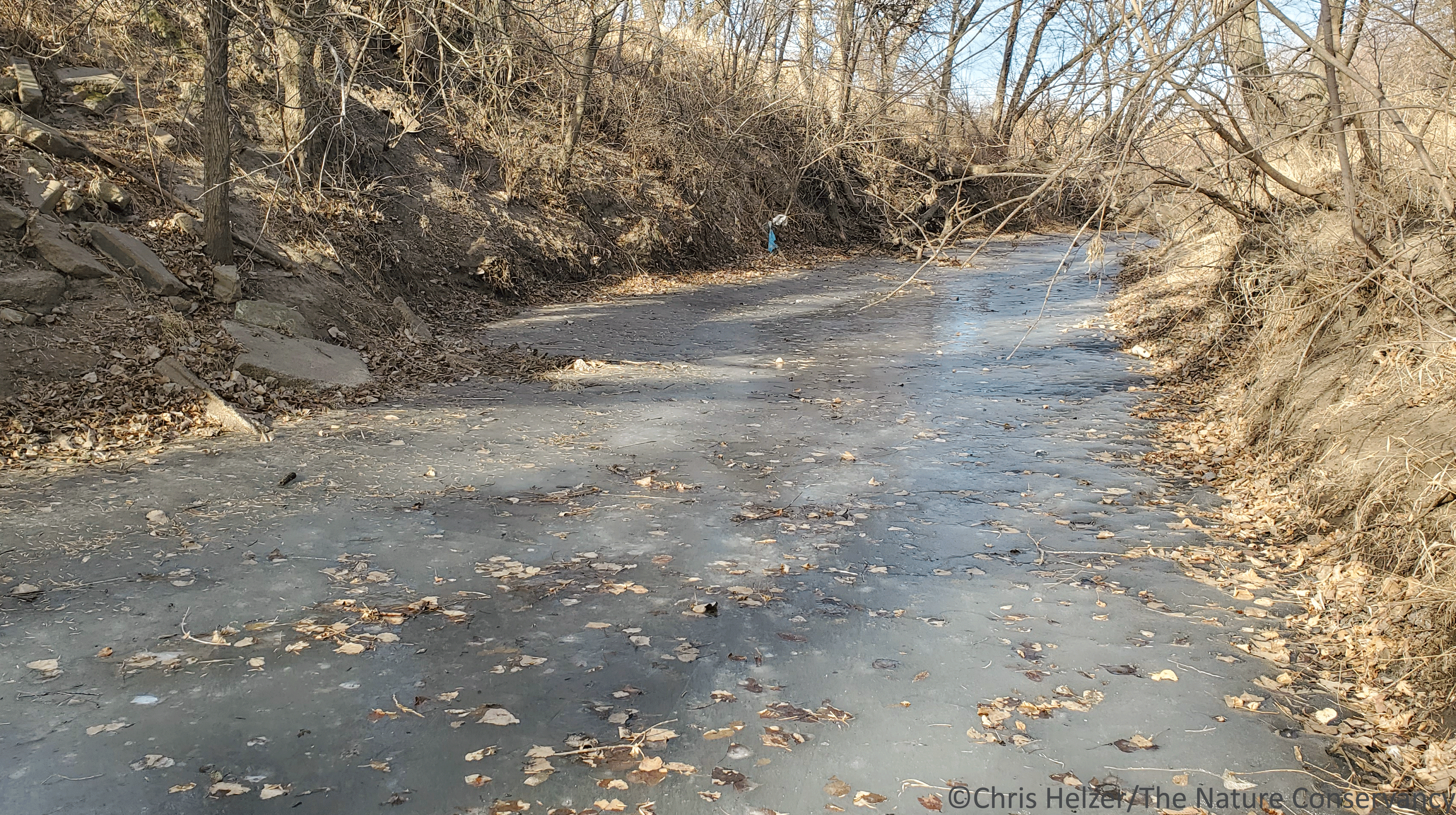
Lincoln Creek; frozen and with leaves and seeds. It doesn’t look like much from a distance, but up close, there were some fun photo opportunities. Cell phone photo.
A partially submerged leaf and frozen bubbles. Nikon 105mm macro lens. ISO 400, f/18, 1/60 sec.
Leaves and seeds. Nikon 105mm macro lens. ISO 200, f/13, 1/60 sec.

The dappled light through the tree branches was both interesting and challenging. A few times, I found a leaf or seed I liked the look of, but it was in the shade instead of the light. Sometimes, I photographed it anyway, but more often, I marked the spot and returned a few minutes later when the sun’s movement had shifted the shadows away from my target.
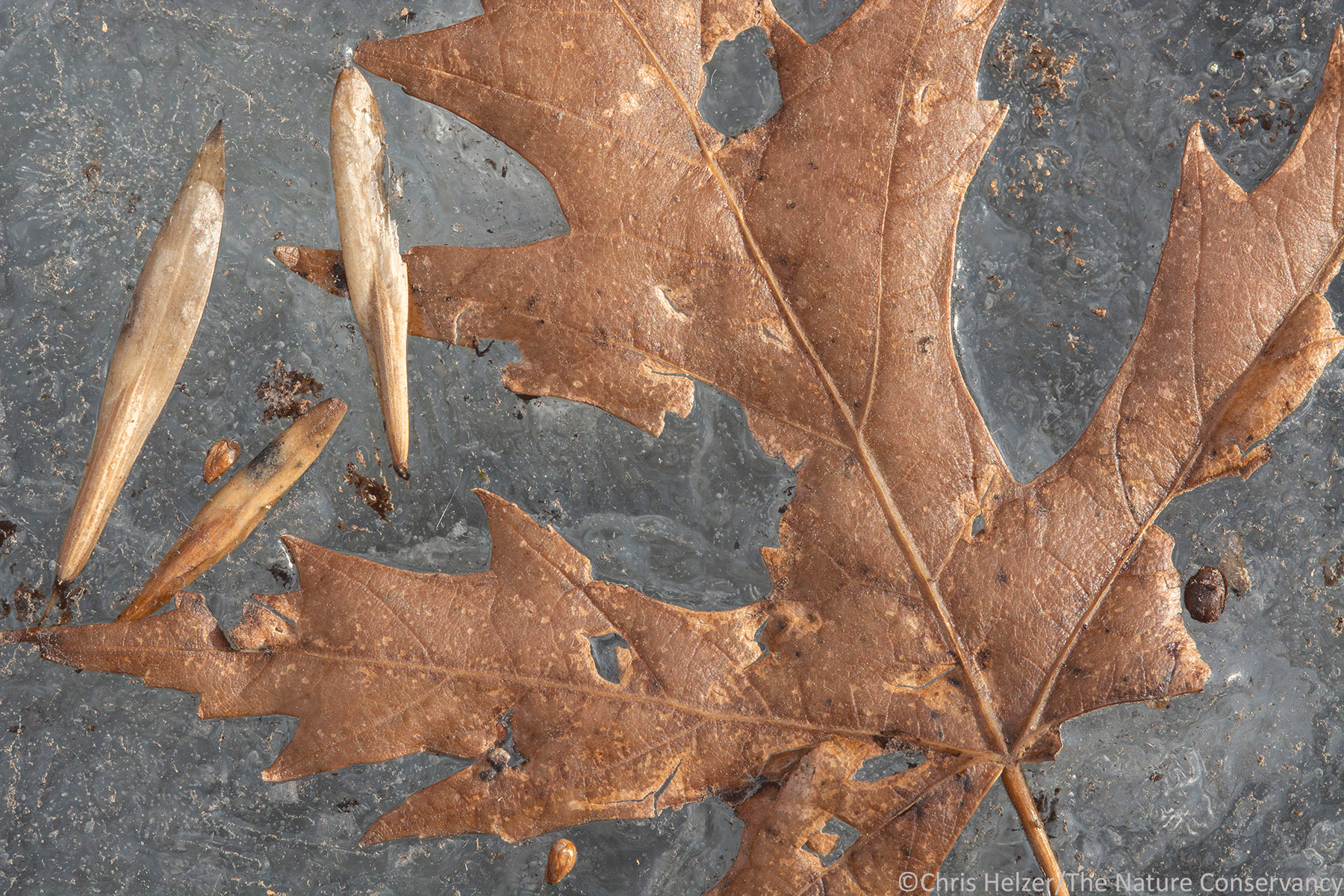
Maple leaf and ash seeds. Nikon 105mm macro lens. ISO 400, f/14, 1/80 sec.

After about 45 minutes or so, I crawled back up the eroded banks and headed back to the truck. As often happens, the photos I came away with weren’t anything like what I’d envisioned before arriving, but that wasn’t a bad thing. I guess it’s yet more evidence that it’s always worth getting out to explore. You never know what you’ll find – even on an eroded. litter-filled creek on the edge of town.
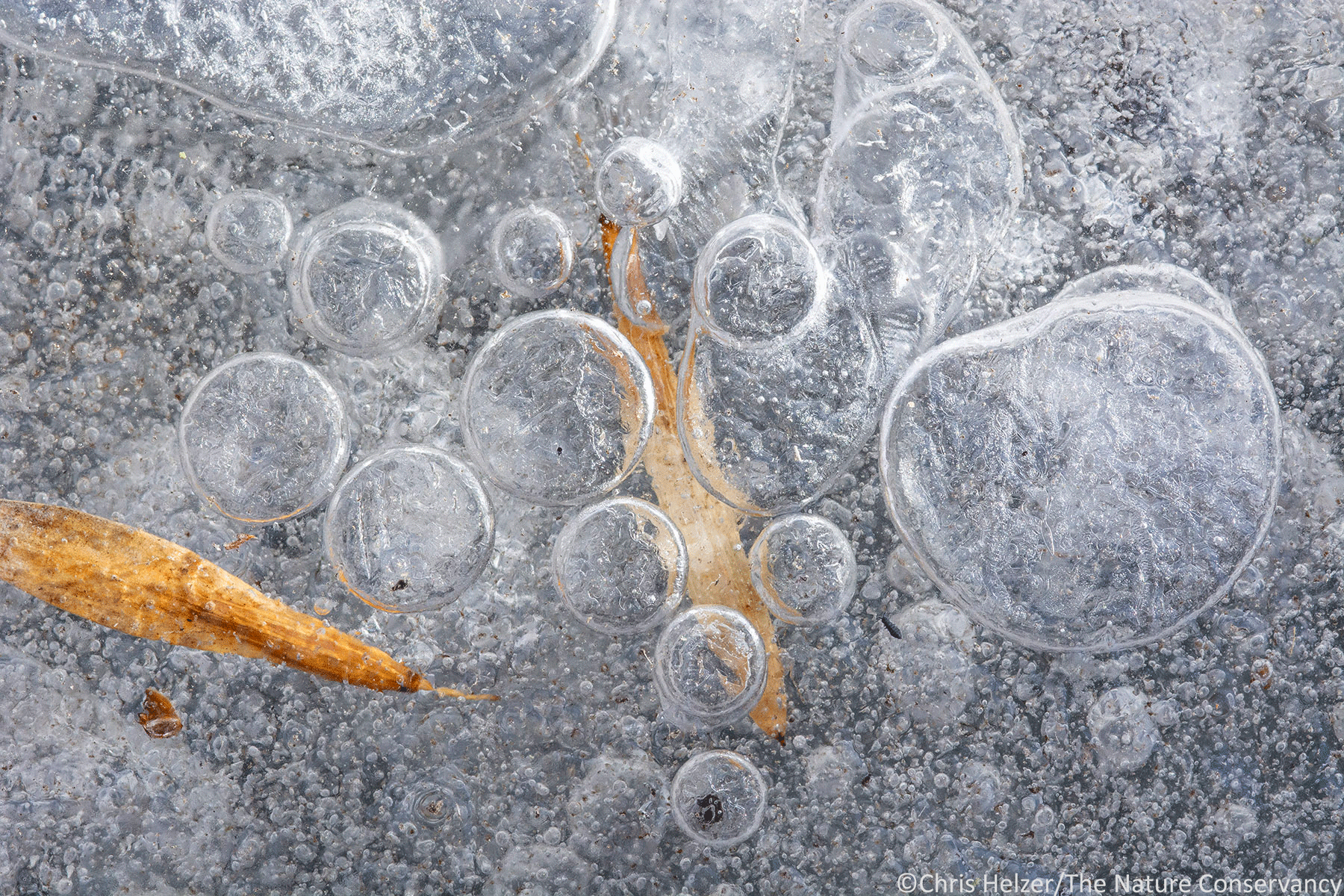
Ice bubbles and ash seeds. Nikon 105mm macro lens. ISO 400, f/14, 1/60 sec.
A honey locust pod, red cedar leaves and a gnawed-on locus seed. Nikon 105mm macro lens. ISO 400, f/18, 1/100 sec.

Hubbard Fellowship Blog – Sarah and the Sunflowers

Sunflowers have to be one of the most recognizable flowers in North America. When you were a kid and someone asked you draw a flower, I bet the result looked something like a sunflower. In addition to the iconic nature of the flowers, we like sunflower seeds so much, we’ve worked with the plant to make bigger and better seeds for us to eat (and also to share with birds).

Sarah Lueder just completed her year with us as Hubbard Fellow and has traveled to California for her next gig. As part of her independent project as a Fellow, she created an entertaining and informative video about sunflowers. It’s a celebration of a charismatic species, its evolution, and its ecological relationships. At the same time, her video highlights the interconnections between sunflowers and people that are far deeper and more complex than I had been aware of.

I hope you enjoy the video. If the embedded video below doesn’t work for you, you can try clicking on this link instead. https://www.youtube.com/watch?v=wzwK6FDHBxo