Unknown's avatar

About Chris Helzer

Chris Helzer is Director of Science and Stewardship for The Nature Conservancy in Nebraska, where he conducts research and supervises the Conservancy’s preserve stewardship program. He also helps develop, test, and share prairie management and restoration strategies. Chris is also dedicated to raising awareness about the value of prairies through his photography, writing and presentations. He is the author of The Prairie Ecologist blog, and two books: The Ecology and Management of Prairies and Hidden Prairie: Photographing Life in One Square Meter. He is also a frequent contributor to NEBRASKAland magazine and other publications. Chris and his family live in Aurora, Nebraska.

Photos of the Week – January 7, 2022

Those of you who have been around this blog for a while probably know about my obsession with photographing ice bubbles. I don’t understand all the intricacies of how those bubbles are created, but I think there are at least two forces in play. One is the release of methane and other gases as decomposition occurs underwater. More importantly, I think, those gases are forced out of water as it freezes and have to accumulate someplace. Since ice forms from the water’s surface downward, that gas can’t escape upward, so it is forced into spaces within the water itself – forming bubbles.

Regardless of how they’re formed, I can spend hours exploring a frozen wetland or other water body searching for those gorgeous and entrancing bubbles!
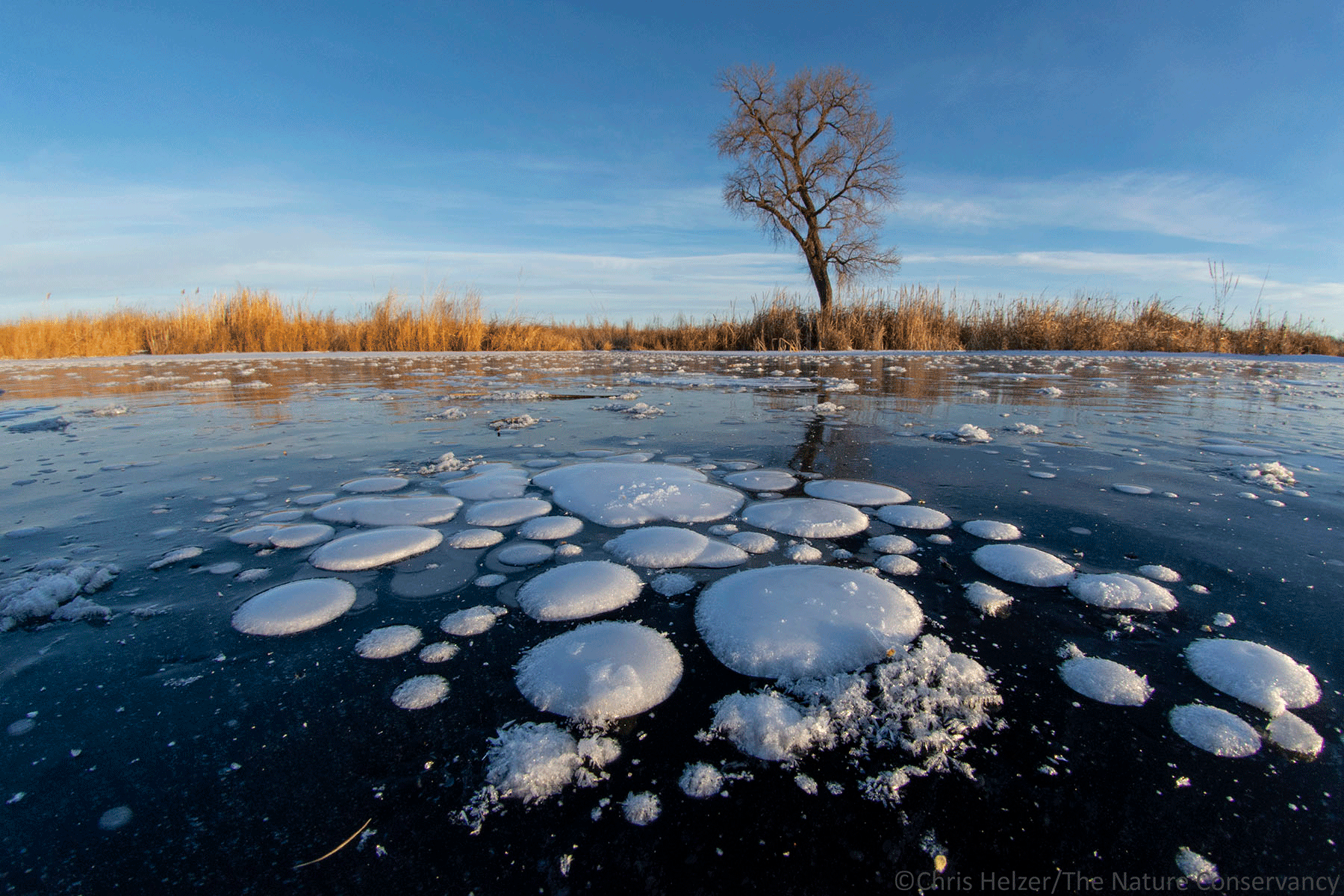
These bubbles were on the surface of the ice and had even gathered some frost overnight. There are others below them, but they’re hard to see in this shot. Nikon 10.5mm fisheye lens. ISO 400 f/20, 1/100 sec.

On Monday morning of this week, I went to my favorite restored wetland at the Platte River Prairies, hoping to find some fun ice patterns to photograph. It had gotten very cool very quickly, and that often creates some of the best conditions for ice bubbles. What I found was far better than I’d expected. Not only were there the kind of small bubbles I’m used to (dime and quarter-sized and smaller), there were also much bigger bubbles – up to a foot or more in diameter. I’m assuming that was linked to how quickly the water froze, but that’s just a guess. Either way, it was spectacular!
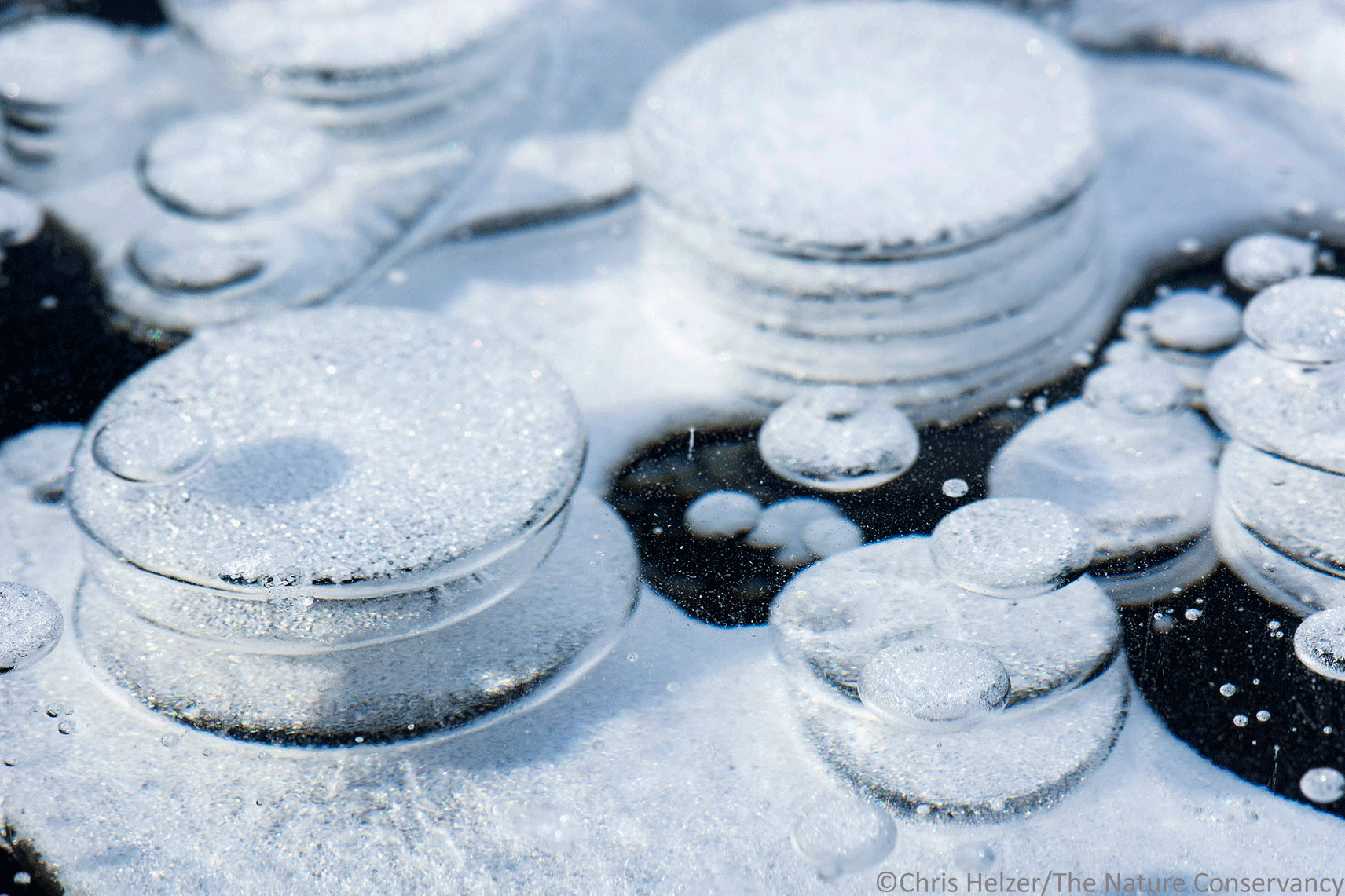
Here’s a close-up of some smaller bubbles, in the dime to nickel size category. Nikon 105mm macro lens. ISO 400, f/16, 1/125 sec.

I spent a couple hours wandering around about half an acre of wetland trying to figure out how to capture what I was seeing and share it. Wide angle lenses seemed to work best, and my fisheye did the best job of showing the depth and layering of the bubbles. What you can’t see in these photos, though, is how clear the water was. As I walked around, I could see the bottom of the wetland below me (about a foot deep or less in most places) and I even chased a small fish around for a short time.
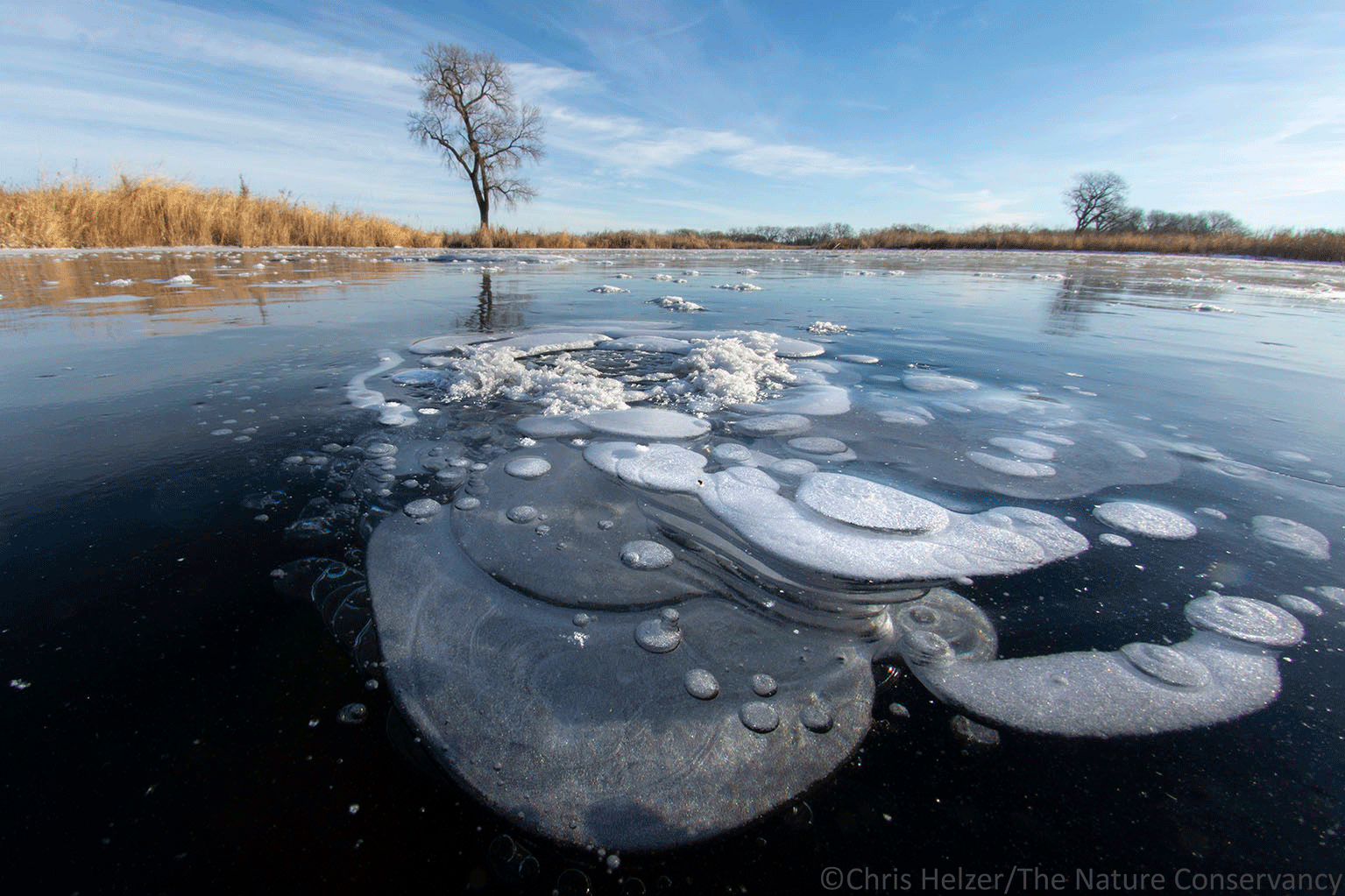
Here’s a fisheye lens photo that shows some of the depth of the ice bubbles in the clear water. These photos are best viewed on a big screen. Either way, be sure to click on the photo to get a better, more detailed look. Nikon 10.5mm fisheye lens. ISO 400 f/20, 1/80 sec.
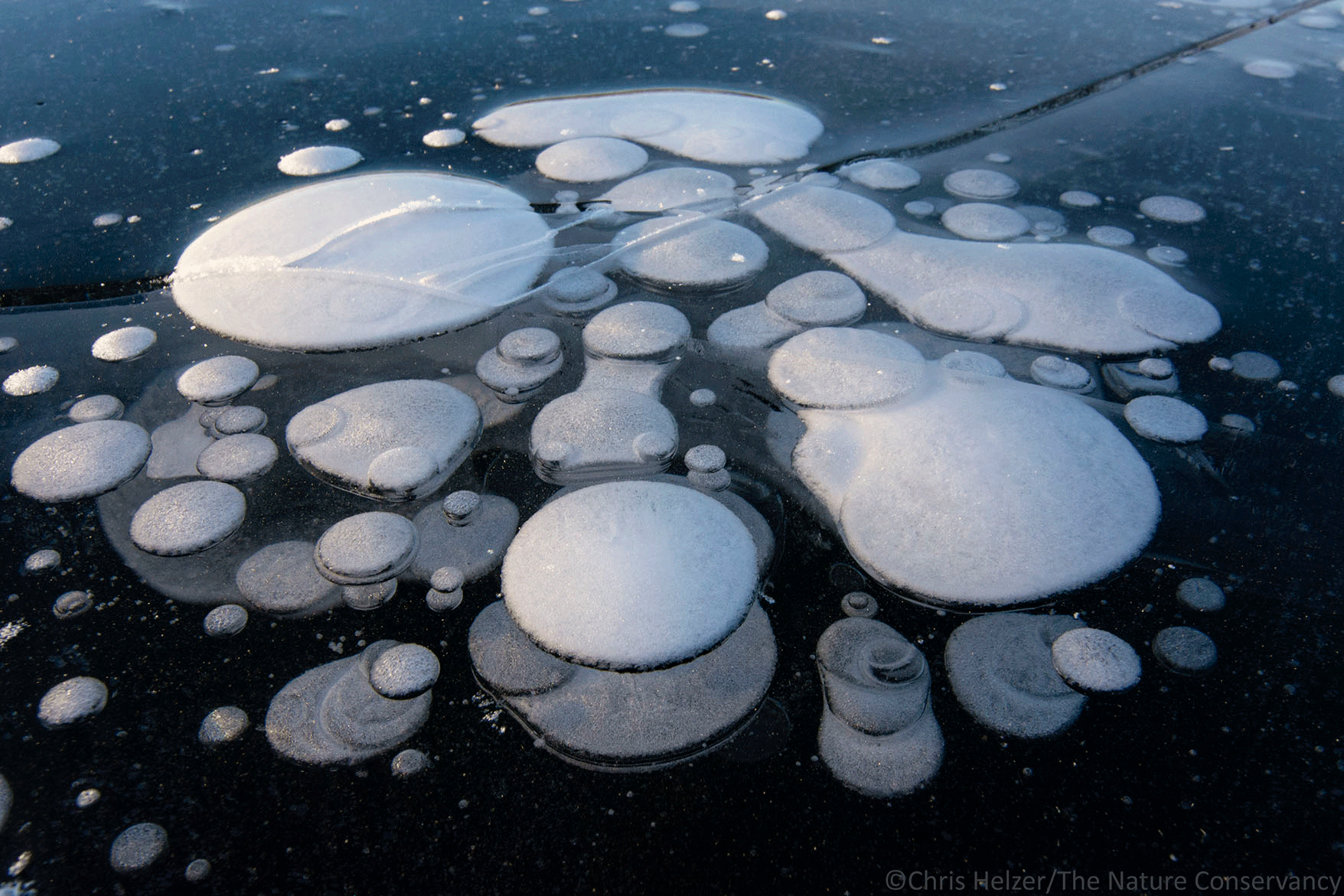
Here’s a variety of sizes and depths of bubbles. Tokina 11-20mm lens @20mm. ISO 400 f/20, 1/80 sec.

I went out to the same wetland spot yesterday afternoon and shot a few thousand more photos. I’m still working those up but will certainly have more to share next week (or before). The ice had changed some between Monday and Thursday, and the big bubbles were less distinct, but there was still plenty to keep me engaged. Both on Monday and Thursday, ice bubbles were only one component of the frozen beauty of the site.

It’s supposed to warm up this weekend, so I might have to wait a while before I can shoot more ice bubbles. That’s probably ok. I have plenty of photos from this week to keep me busy for a while…

I’d love to know why the bubbles cluster together in certain places. There were big spaces with none, or with lots of very tiny bubbles, and then spots with these giant groupings of them. Tokina 11-20mm lens @11mm. ISO 400 f/22, 1/125 sec.
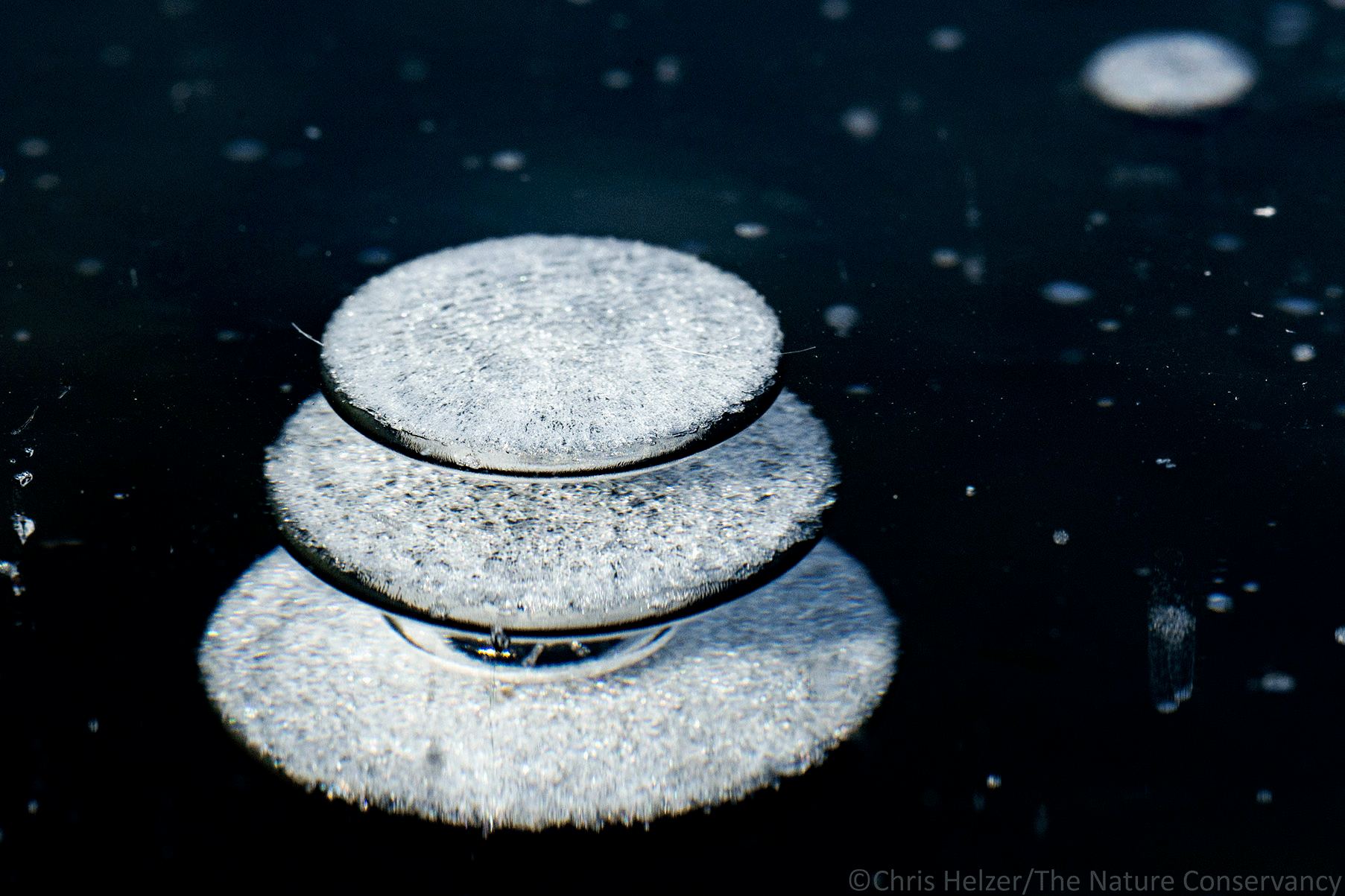
Here’s one of the last shots I took on Monday as the light was getting brighter, which deepened the contrast between bubbles and the dark water, but also made lighting a little trickier. These are three stacked bubbles that were about the same size as a quarter, nickel, and dime, respectively. Nikon 105mm macro lens. ISO 400, f/18, 1/320 sec.

More Favorite Images of 2021

I’ve been mostly (and blissfully) disconnected from work over the last couple weeks. I have a number of topics I’m looking forward to exploring with you during the upcoming year. I’ve also managed to do a little winter photography during my break and have some photos to share soon. However, coming out of my break, I want to start by wrapping up 2021. Today’s post is pretty simple – I’m just posting the rest of my favorite photos from last year. I shared some others earlier, which covered the first several months of 2021. This batch covers the rest of the year. I hope the images bring you some joy and, potentially, inspiration as we start 2022 together.

Also, I want to once again share my gratitude for the community of people involved with this blog. A blog already feels like an outdated medium in a lot of ways, but the format still works well for what I’m specifically trying to accomplish here. I want this to be a platform that provides resources and ideas that help others appreciate and conserve prairies. Writing posts forces me to learn and reflect, and to adapt my thinking about prairie ecology, management, restoration, and communication, all of which helps me stay energized and inspired. In some cases, I’m sharing facts, but often, I’m just hoping my thoughts will help spark others to think differently about their own engagement with prairies and conservation.

In that respect, I really appreciate all the comments you provide, including those that are simply expressing thanks or admiring images, but also those that challenge my statements, correct errors, and express contrary or supplementary ideas. With very rare exception, the comments on this blog are polite, thoughtful, and productive. I can’t say thank you enough for that. All of my thoughts and ideas are fluid and your input helps frame those better for the larger group. They also help me continue to evolve and adapt my own thinking. Thank you.

Ok, enough of that. Here are some of my favorite prairie photos from last year. Happy New Year, everyone. Be well.

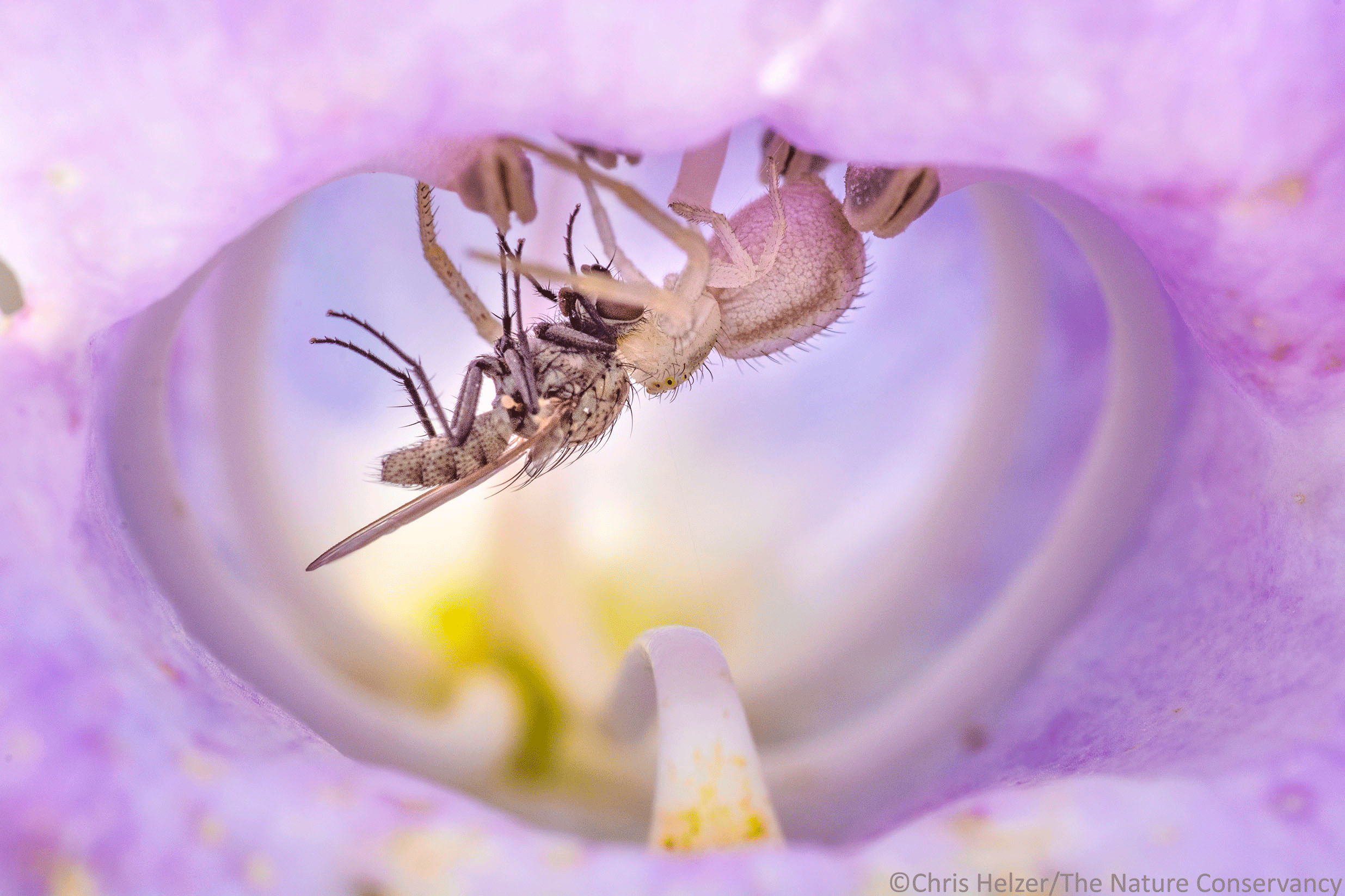
Crab spider and captured fly inside shell leaf penstemon (Penstemon grandiflorus). Platte River Prairies. Nikon 105mm macro lens. ISO 400, f/18, 1/100 sec.
Seeds of goatsbeard, aka salsify (Tragopogon dubius). Platte River Prairies. Nikon 105mm macro lens. ISO 400, f/20, 1/50 sec.
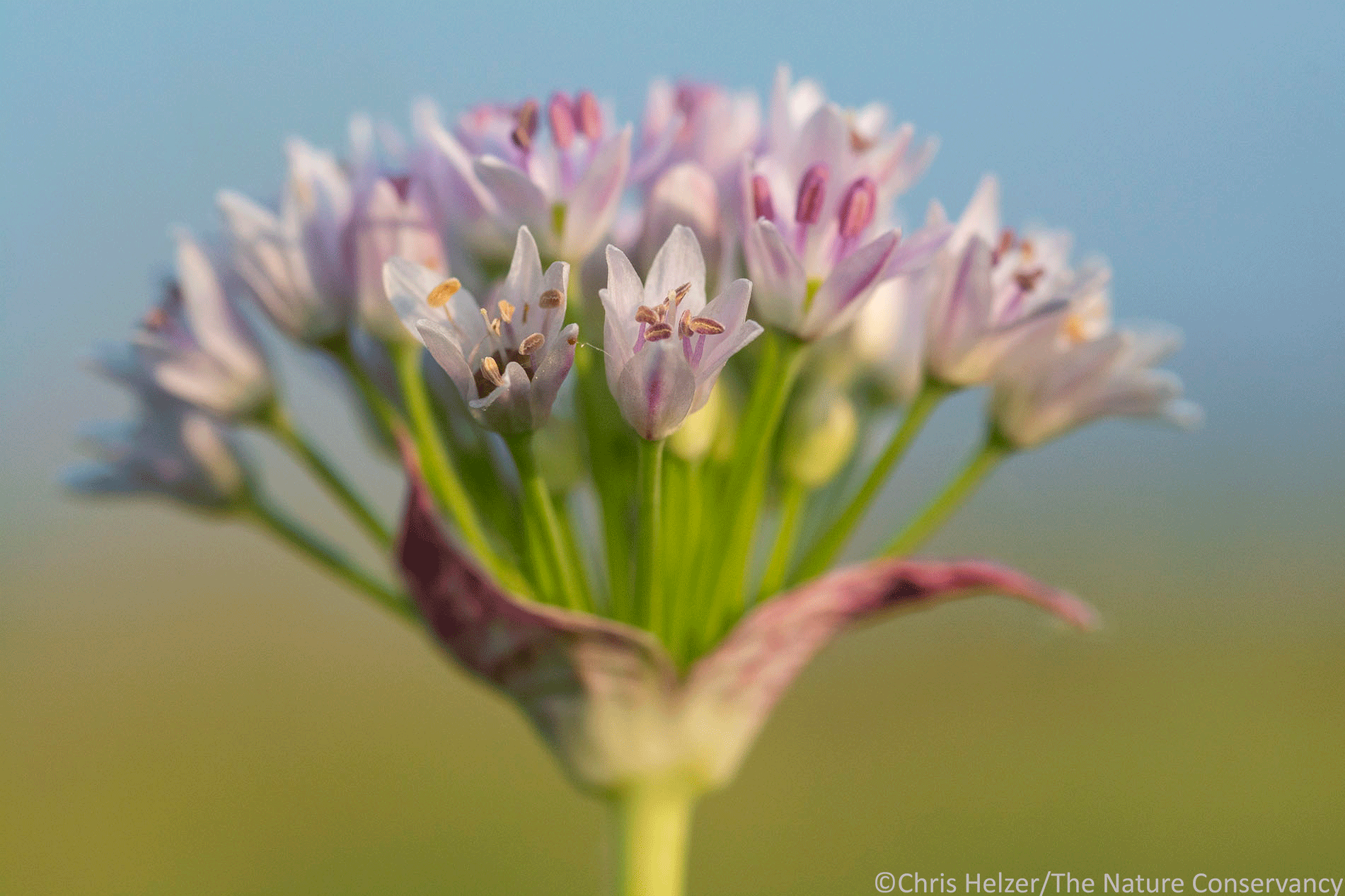
Wild garlic (Allium canadense). Platte River Prairies. Nikon 105mm macro lens. ISO 400, f/10, 1/800 sec.
Green lacewing. Helzer family prairie. Nikon 105mm macro lens. ISO 640, f/14, 1/250 sec.
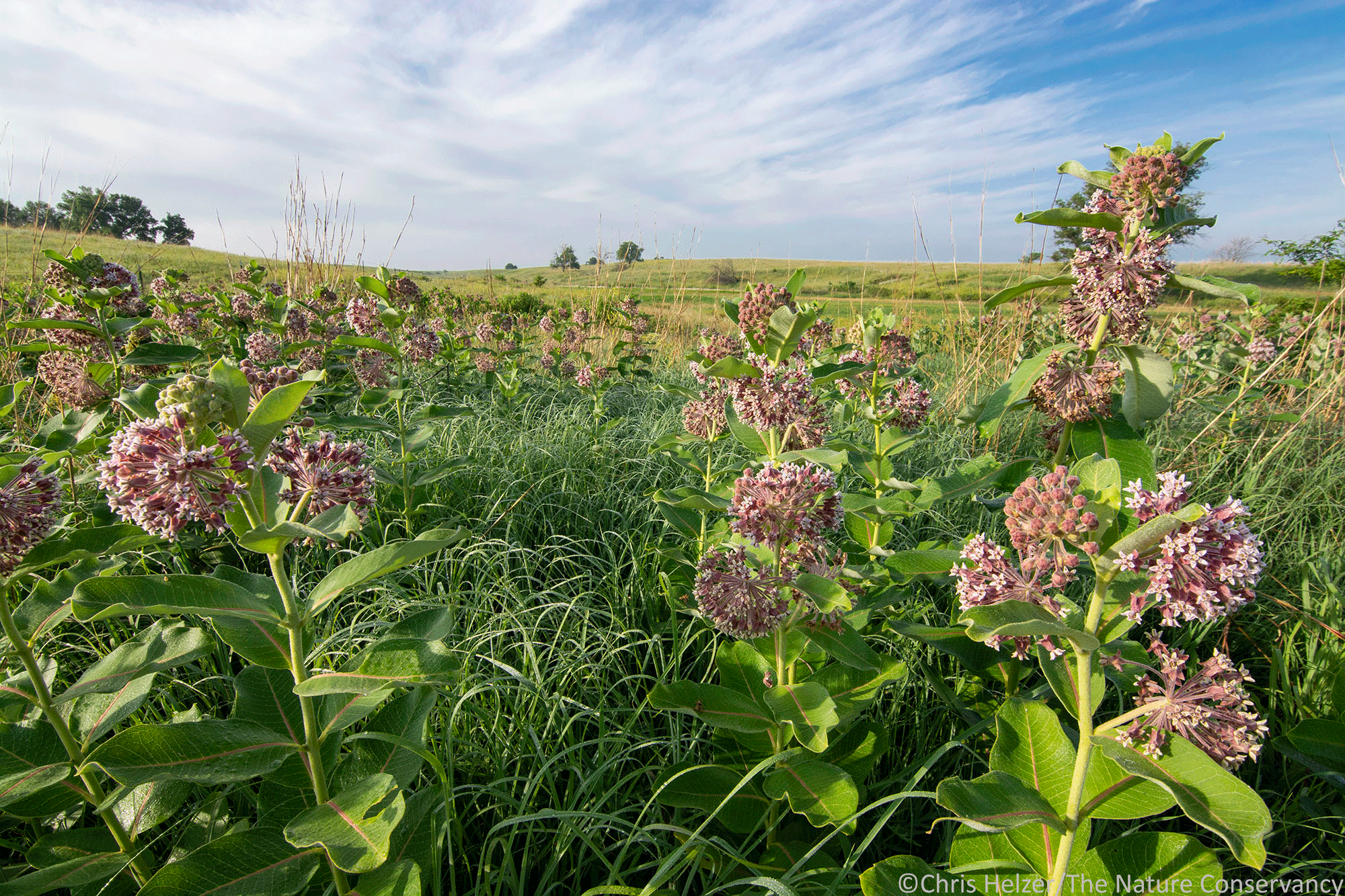
Common milkweed (Asclepias syriaca). Helzer family prairie. Tokina 11-20mm lens @11mm. ISo 400, f/14, 1/160 sec.
Lynx spider. Platte River Prairies. Nikon 105mm macro lens. ISO 500, f/16, 1/250 sec.
Bush katydid. Niobrara Valley Preserve. Nikon 105mm macro lens. ISO 320, f/14, 1/125 sec.
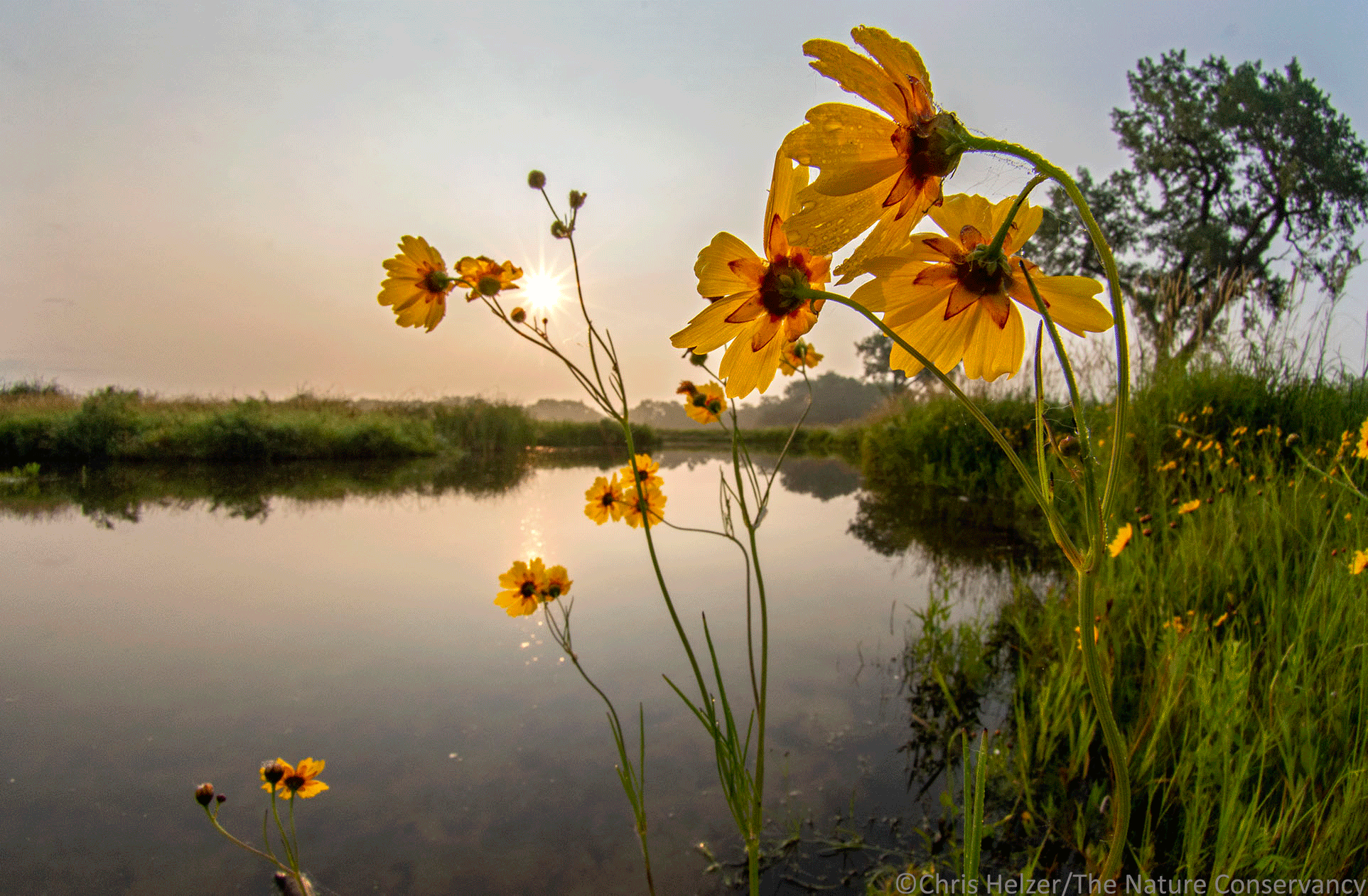
Restored wetland and sunrise. Platte River Prairies. Nikon 10.5mm fisheye lens. ISO 400, f/22, 1/125 sec.
Camouflaged looper (Synchlora aerata). Niobrara Valley Preserve. Nikon 105mm macro lens. ISO 500, f/13, 1/500 sec.
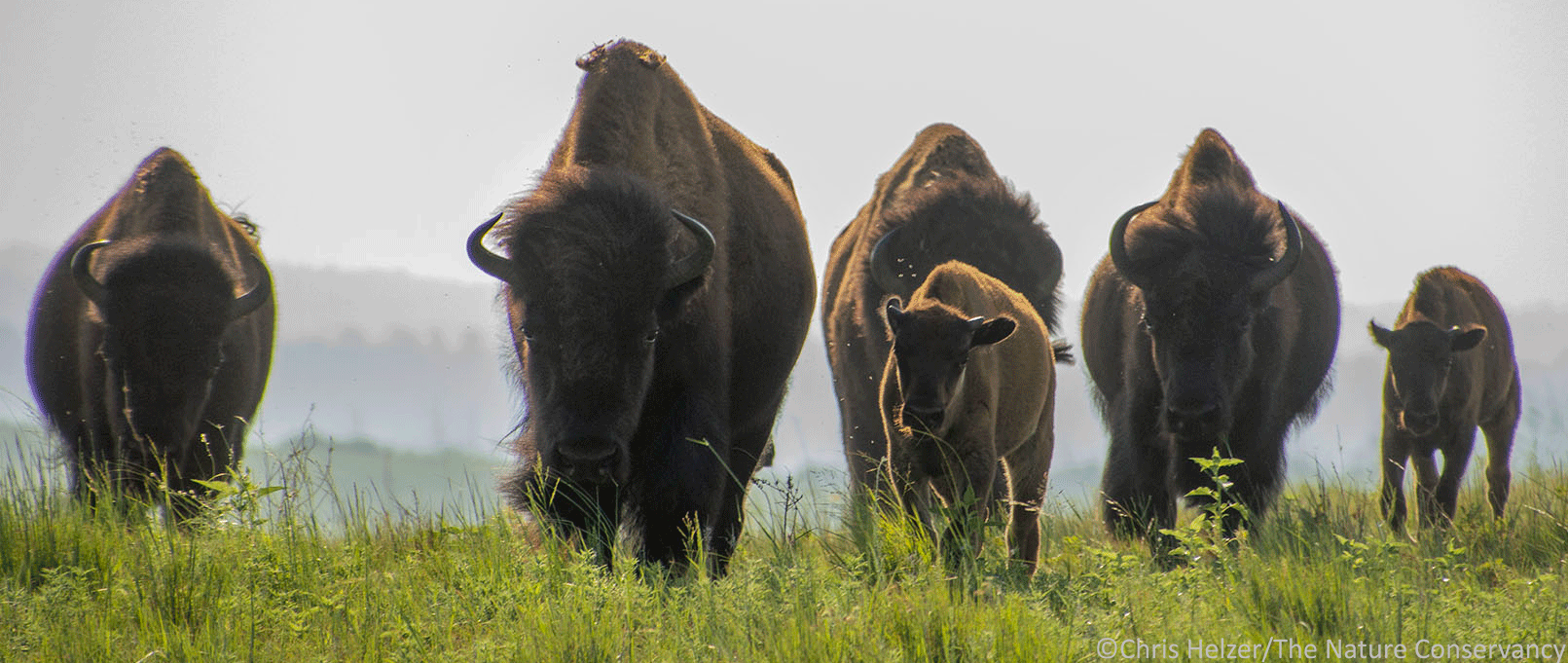
Bison at The Niobrara Valley Preserve. Nikon 105mm macro lens. ISO 500, f/8, 1/640 sec.
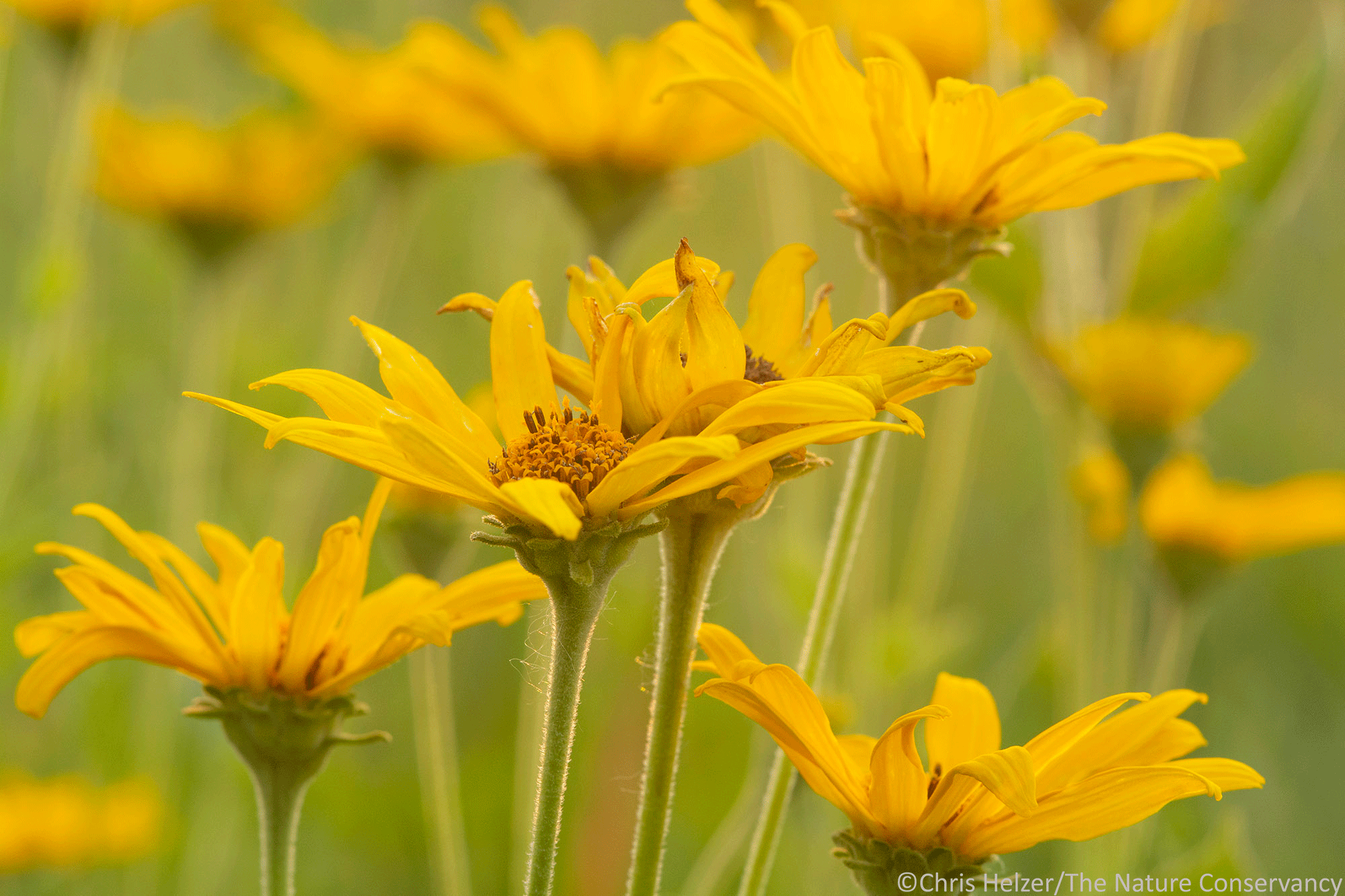
False sunflower (Heliopsis helianthoides). Lincoln Creek Prairie. Nikon 105mm macro lens. ISO 500, f/13, 1/80 sec.
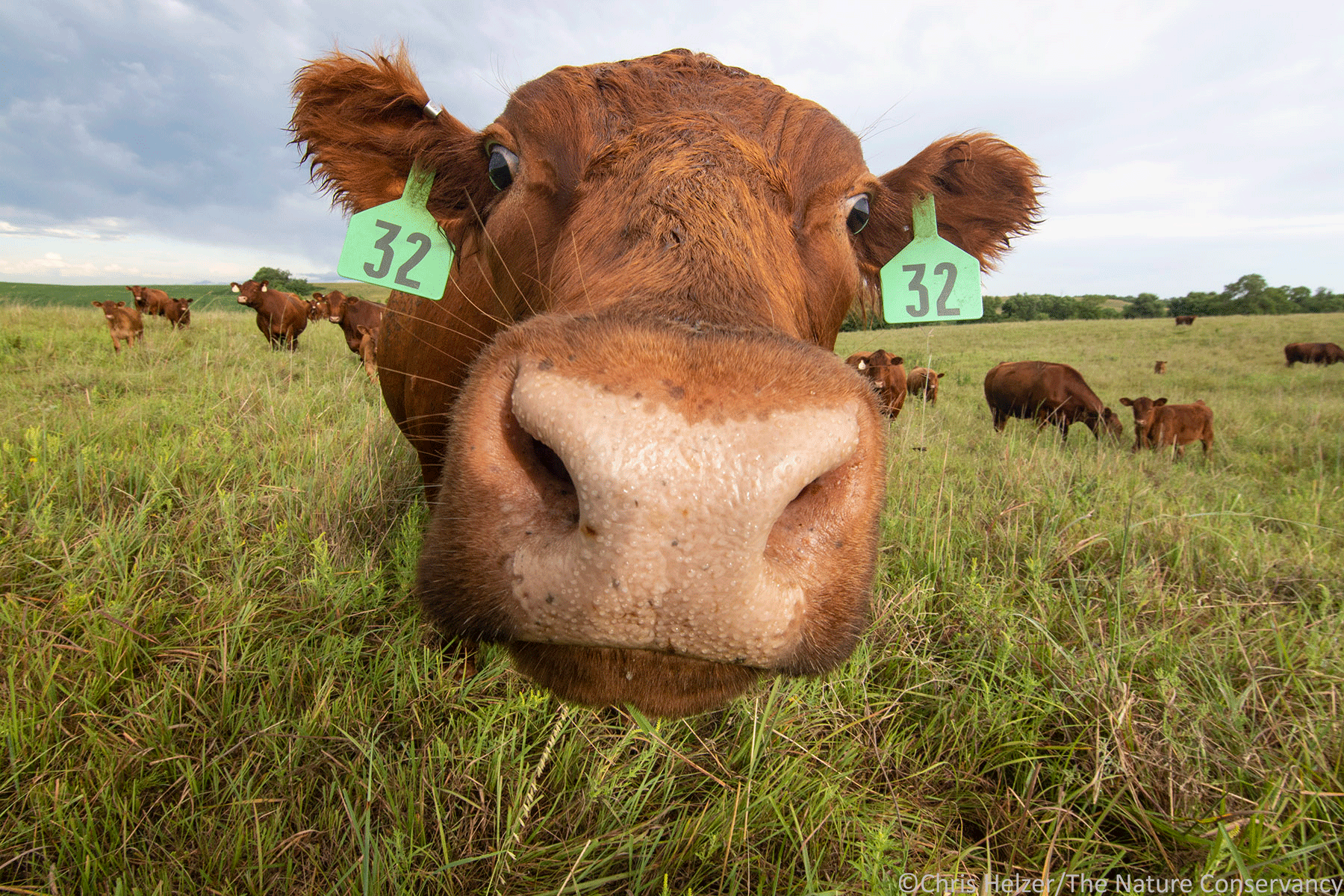
Cow. Helzer family prairie. Tokina 11-20mm lens @11mm. ISO 320, f/14, 1/160 sec.
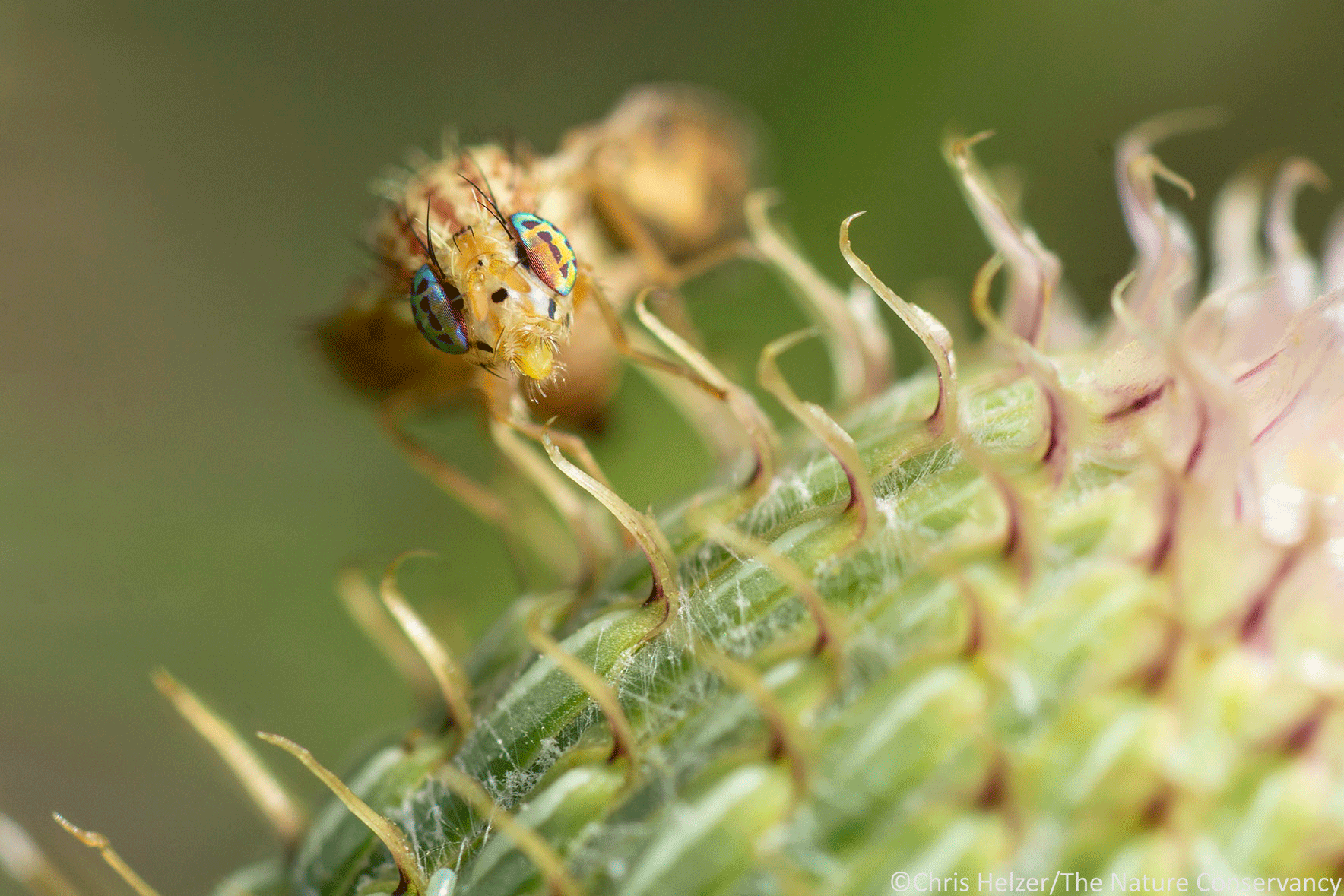
Fruit fly (Paracantha gentilis). Lincoln Creek Prairie. Nikon 105mm macro lens. ISO 200, f/11, 1/200 sec.
Variegated meadowhawk dragonfly at sunrise. Platte River Prairies. Nikon 10.5mm fisheye lens. ISO 800, f/22, 1/400 sec.