Chris Helzer is Director of Science and Stewardship for The Nature Conservancy in Nebraska, where he conducts research and supervises the Conservancy’s preserve stewardship program. He also helps develop, test, and share prairie management and restoration strategies.
Chris is also dedicated to raising awareness about the value of prairies through his photography, writing and presentations. He is the author of The Prairie Ecologist blog, and two books: The Ecology and Management of Prairies and Hidden Prairie: Photographing Life in One Square Meter. He is also a frequent contributor to NEBRASKAland magazine and other publications. Chris and his family live in Aurora, Nebraska.
Over the weekend, I went out to our family prairie to see if the high winds from the previous week had caused any damage. Everything looked fine from that standpoint, so I wandered down to the pond to see if there was any fun ice to photograph. The main pond had a thin skin of ice across it, but not much for patterns. Along the edges, though, there were some small pockets of ice that had some interesting lines and texture so I explored those for a little while.
Ice pattern near the pond edge. Nikon 105mm macro lens. ISO 800, f/16, 1/200 sec.Ice pattern near the pond edge. Nikon 105mm macro lens. ISO 800, f/20, 1/125 sec.Ice pattern near the pond edge. Nikon 105mm macro lens. ISO 800, f/20, 1/125 sec.
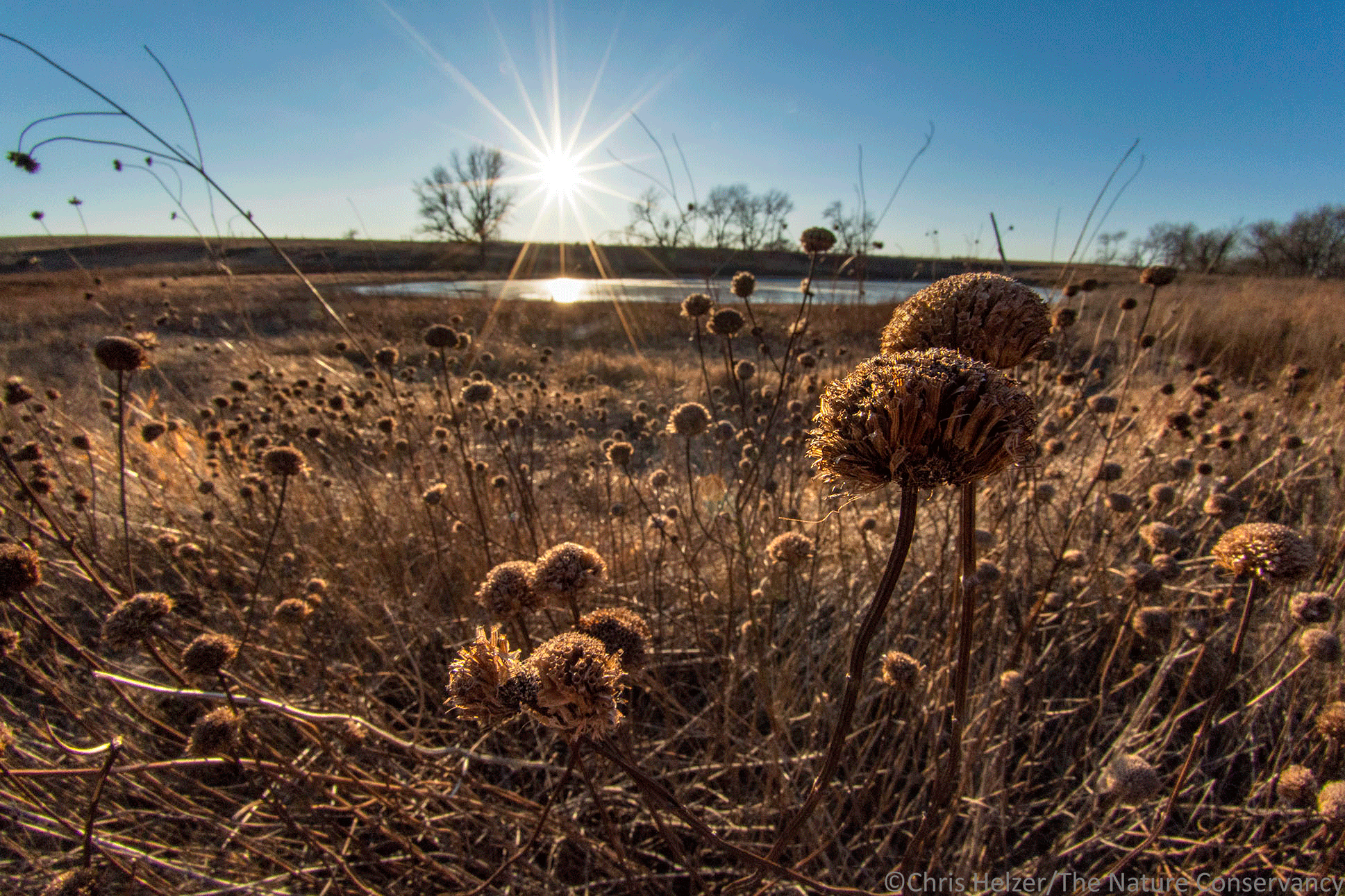
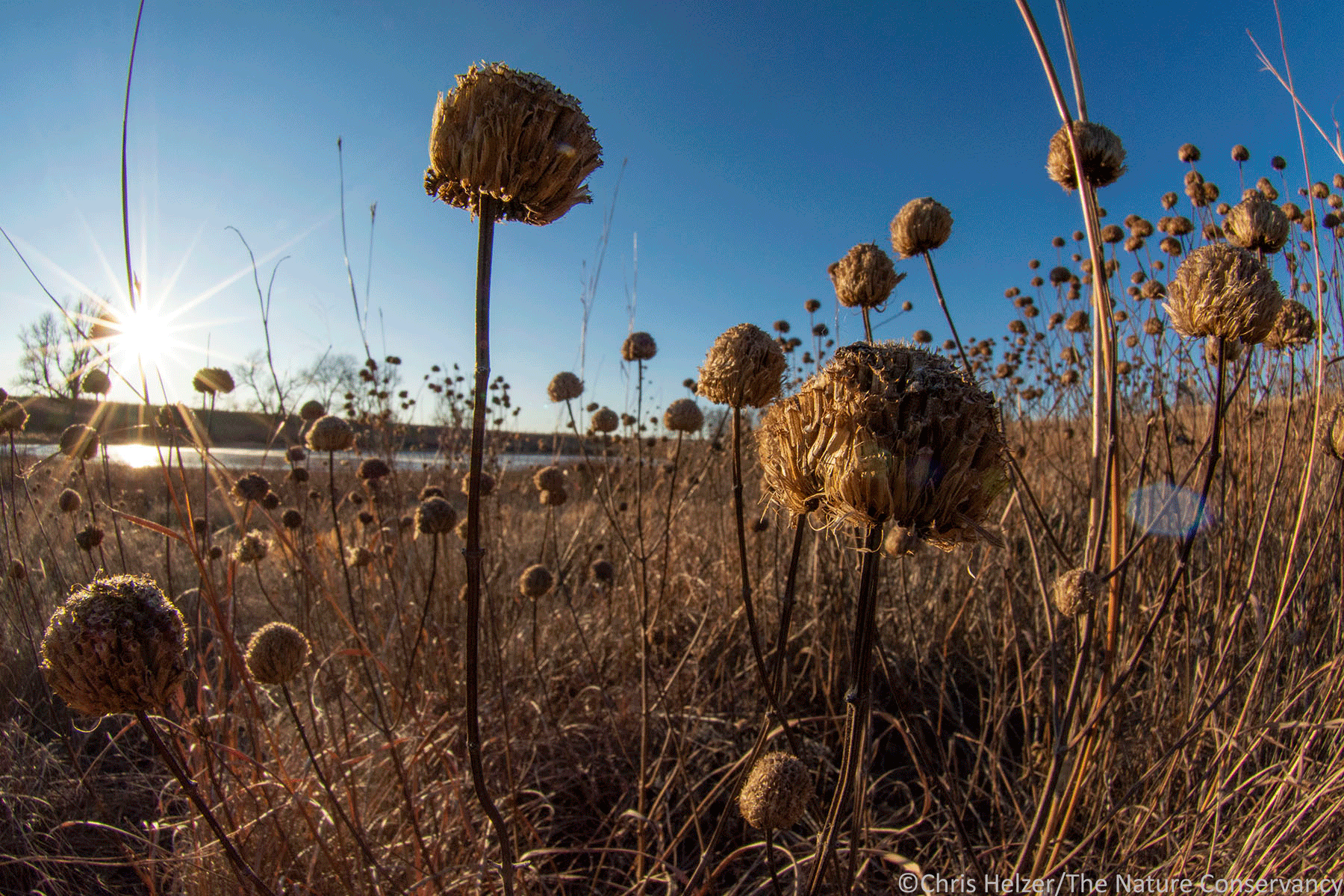
After I checked out all the ice possibilities, I decided to play with the texture of wild bergamot (Monarda fistulosa) and the late day sun. To be honest, I was challenging myself to find beauty in the winter prairie. I recently wrote a magazine article about winter hiking aimed at convincing people to venture out in the cold. Despite that, I’ve been pretty bad about getting outside myself over the last couple weeks. I felt like I needed to follow my own advice.
Wild bergamot seed heads at the Helzer Prairie. Nikon 10.5mm fisheye lens. ISO 800, f/22, 1/400 sec.Wild bergamot seed heads at the Helzer Prairie. Nikon 10.5mm fisheye lens. ISO 800, f/22, 1/250 sec.
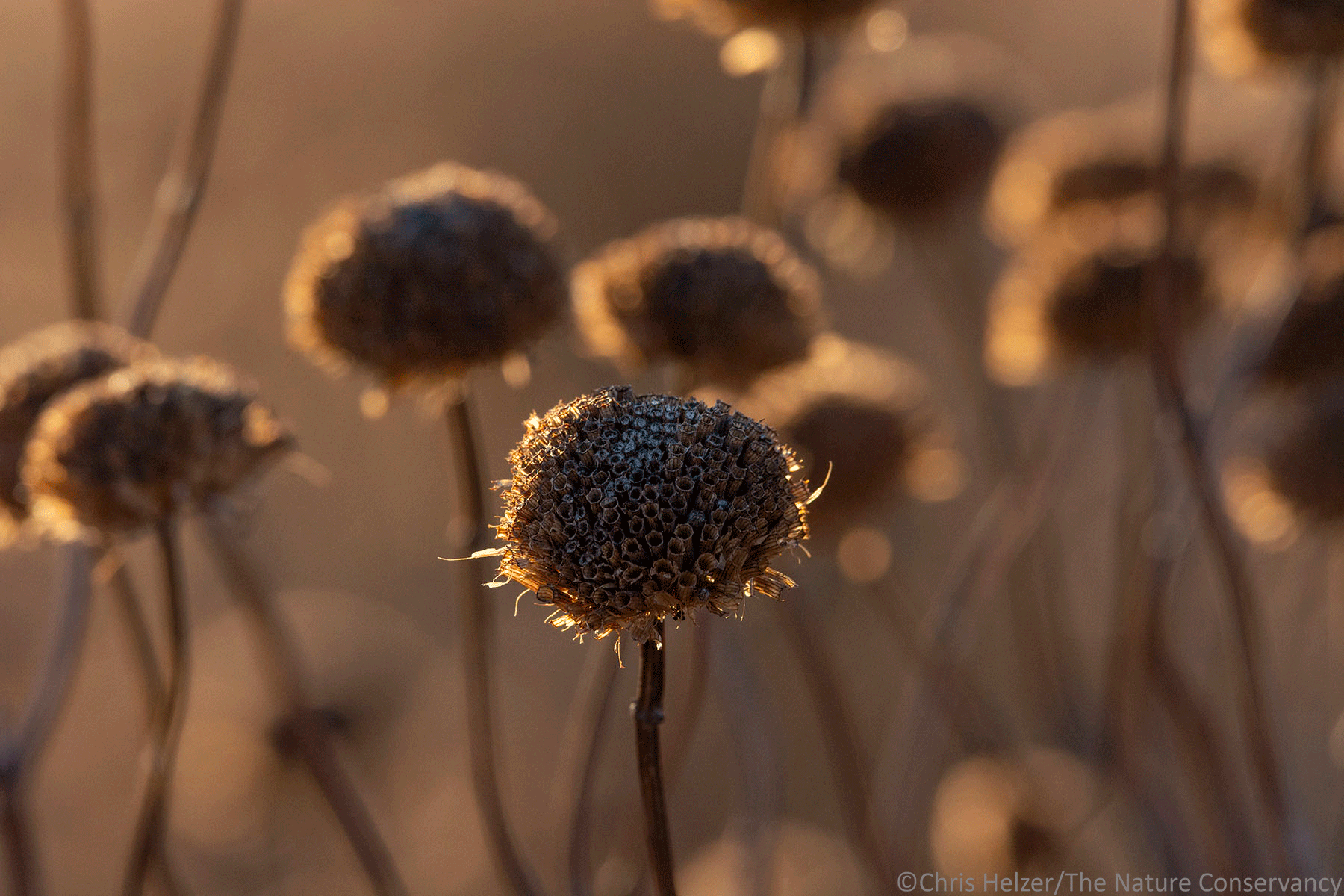
I’ve always found bergamot seed heads fascinating and worthy of photographing. The numerous tubes packed together make for beautiful abstracts up close. On this particular day, though, the light and wind made it seem more sensible to eschew the macro lens and try some other perspectives. I started with a fisheye lens, with which I stuck my lens within an inch of the closest seedhead and tried to deal with the sun right in my face. After that, I backed up and used a long telephoto to condense the heads together. Both were fun to play with as I tried to capture the golden highlights framing each of the seed heads.
Wild bergamot seed heads at the Helzer Prairie. Tamron 100-400mm @400mm. ISO 800, f/22, 1/160 sec.Wild bergamot seed heads at the Helzer Prairie. Tamron 100-400mm @400mm. ISO 800, f/10, 1/500 sec.
Once I flipped the switch and started really looking at was around me, I found plenty to enjoy. In addition to what I photographed, I followed tracks of several different animals, watched a gaggle of tree sparrows bounce from shrub to shrub, and looked (fruitlessly this time) for frogs beneath the thin ice. And, of course, I enjoyed the fresh air and stretched my legs. The temperature was below freezing, but my spirits were high by the time I headed home.
This post is written by Sarah Lueder, one of our Hubbard Fellows. In this essay, she imagines how prairies might think about people. She illustrates the post beautifully with three video clips she made earlier this year.
The following is a statement from the proceedings of the Association of Central North American Prairies (ACNAP) convention: the only meeting to be run by prairies, for prairies. This message constitutes an integral part of the Human Ethic, the very real code by which prairies consider humans.
After a few rounds of lively debate and negotiation, ACNAP agreed upon a statement that expresses our commitment to human conservation: a declaration of our interdependence. We thought it necessary to express our views on the subject given the amount of controversy the species has been causing. There have been murmurs of feeling underappreciated and misunderstood by humans, and it isn’t hard to see why when you look at our current state.
In our prime, we were grand, spanning the vast heart of the continent. Species movements were dictated by their ecology, not according to the number of roads and corn fields separating us. Competition for space arose from trees, not from airfields and agriculture.
A group of goldenrods (Solidago spp.) reminisce about central North America being full of expansive, intact prairie.
It may be easy to look at where we stand now, relatively fragmented and degraded, and feel only hostility for this happening at the hand of humanity. But we make the case to forgive their shortsighted nature and move forward together: reflecting on our interwoven history, the good of the present, and the potential for a better future.
Prior to the late Wisconsinan (15-12,000 BP), the land where we are now looked vastly different. Areas that weren’t covered with ice were covered with spruce and jack pine forest. In the following millennia, the glaciers retreated. There were droughts, lightning-caused fires, and large, browsing animals that cleared the way for grass. But trees persisted still, and the area did not yet resemble great plains.
A tree cricket and a sawtooth sunflower (Helianthus grosseserratus) confer about what the landscape was like during the Ice Age
For us to flourish, we needed something previously absent from the landscape: intention. The ability to modify of an ecosystem with specific outcomes in mind. Something that could evolve with us, relatively quickly. Enter Homo sapiens, who arrived some 20,000 years ago and adapted the landscape for reasons plentiful and varied. An instrumental part of our formation was their use of fire. Indigenous peoples eliminated relict stands of woodland across the region, setting more fires than caused by lightning, particularly in our eastern portions. This brought more grazers to the landscape (a desired effect for them), which compounded tree clearing effects of burning (a desired effect for us). Although most of the species we contain have been around for a million or more years, the landscape might not have supported them if it weren’t for the millennia of fire and grazing maintaining our diversity.
As we write this, the knowledge that we do not predate the arrival of humans remains at the forefront of our minds. We have been developing alongside one another for thousands of years.
The domination of us and Indigenous peoples by European settlers has left a scar, this much is evident, but still the fact remains: as long as there have been prairies here it has been because of people. Today, those of us that are here exist largely because of the intentional efforts of the species. A healthy remnant is no accident, nor is a restoration.
We know they have the potential to facilitate a functional, thriving prairie community. We see examples of it every day. They assist in spreading our seeds, bring fire to the landscape, remove invasive species, and manage grazing. Moreover, among prairie species they are unique in their ability to express love and appreciation. They spend time with us, listen to and share our stories, and voice their thanks for the peace and solace they find in us.
The prospect of losing humans today echoes that of the past: trees would encroach upon us, diversity would fall, and no one would be around to extend their gratitude.
Indiangrass (Sorghastrum nutans), red-winged blackbirds (Agelaius phoeniceus), and cows gather at sunrise to express their support for the conservation of humans
Recognizing that we have never been without them, nor do we want to be, ACNAP confirms that we are committed to the conservation of humans and that we will continue to embrace them as a part of the ecosystem. Knowing their extraordinary potential, we hope they (continue to) work to consider themselves a part of it as well.
Information for this post came from the following sources:
Anderson, Roger C. “Evolution and Origin of the Central Grassland of North America: Climate, Fire, and Mammalian Grazers1.” The Journal of the Torrey Botanical Society 133, no. 4 (2006): 626–47.
Axelrod, Daniel I. “Rise of the Grassland Biome, Central North America.” Botanical Review 51, no. 2 (1985): 163–201.
Bennett, Matthew R., David Bustos, Jeffrey S. Pigati, Kathleen B. Springer, Thomas M. Urban, Vance T. Holliday, Sally C. Reynolds, et al. “Evidence of Humans in North America during the Last Glacial Maximum.” Science 373, no. 6562 (September 24, 2021): 1528–31. https://doi.org/10.1126/science.abg7586.




 The Prairie Ecologist