Unknown's avatar

About Chris Helzer

Chris Helzer is Director of Science and Stewardship for The Nature Conservancy in Nebraska, where he conducts research and supervises the Conservancy’s preserve stewardship program. He also helps develop, test, and share prairie management and restoration strategies. Chris is also dedicated to raising awareness about the value of prairies through his photography, writing and presentations. He is the author of The Prairie Ecologist blog, and two books: The Ecology and Management of Prairies and Hidden Prairie: Photographing Life in One Square Meter. He is also a frequent contributor to NEBRASKAland magazine and other publications. Chris and his family live in Aurora, Nebraska.

Photos of the Week – November 12, 2021

I think damselflies are an underappreciated group of insects. They’re often described (including by me, if I’m being honest) as weaker-flying versions of dragonflies, which seems unfair and not very nice. Sure they’re related to dragonflies, but damselflies should be judged on their own merits. Maybe dragonflies should be described as bigger and bulkier versions of damselflies!

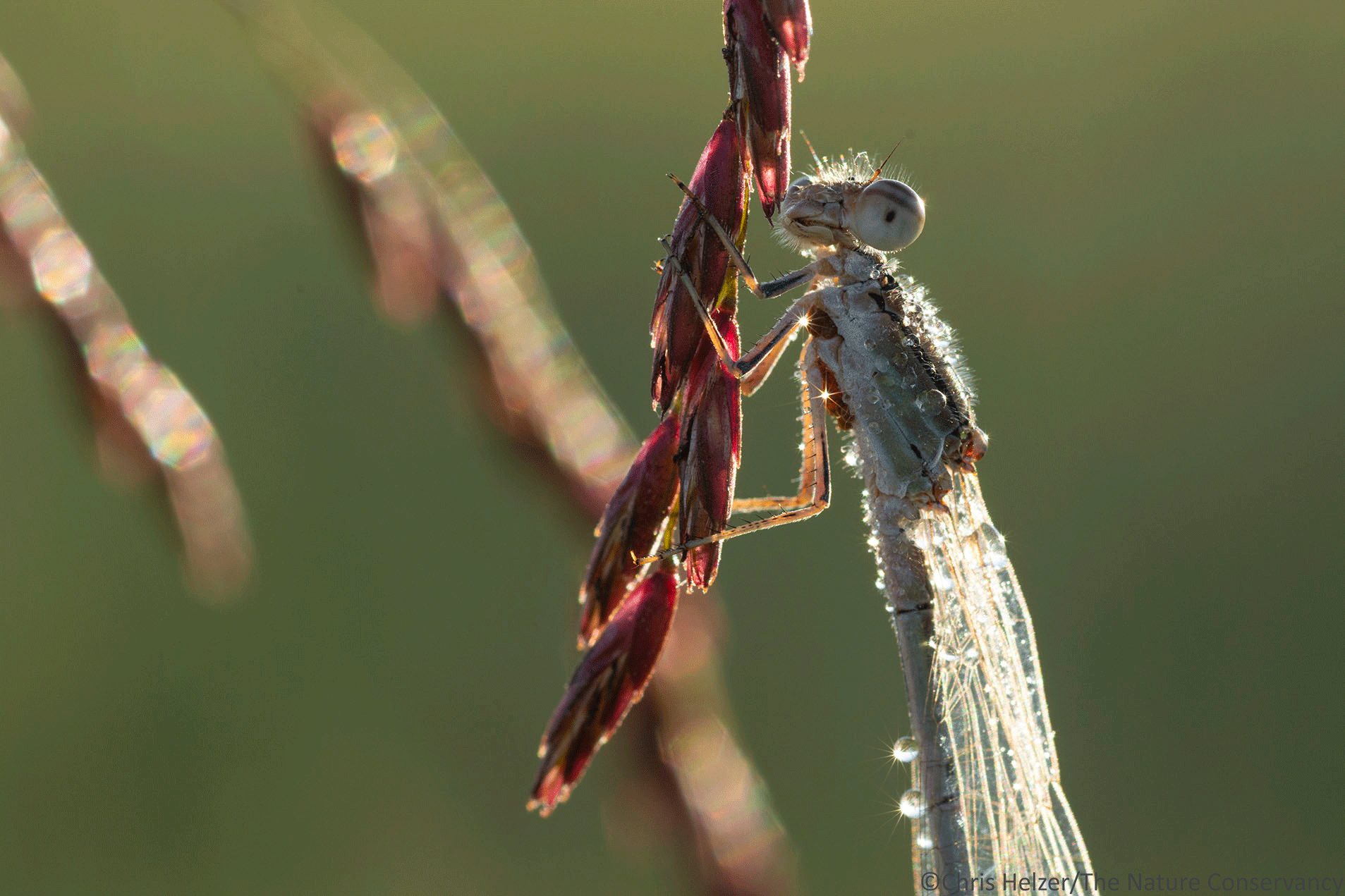
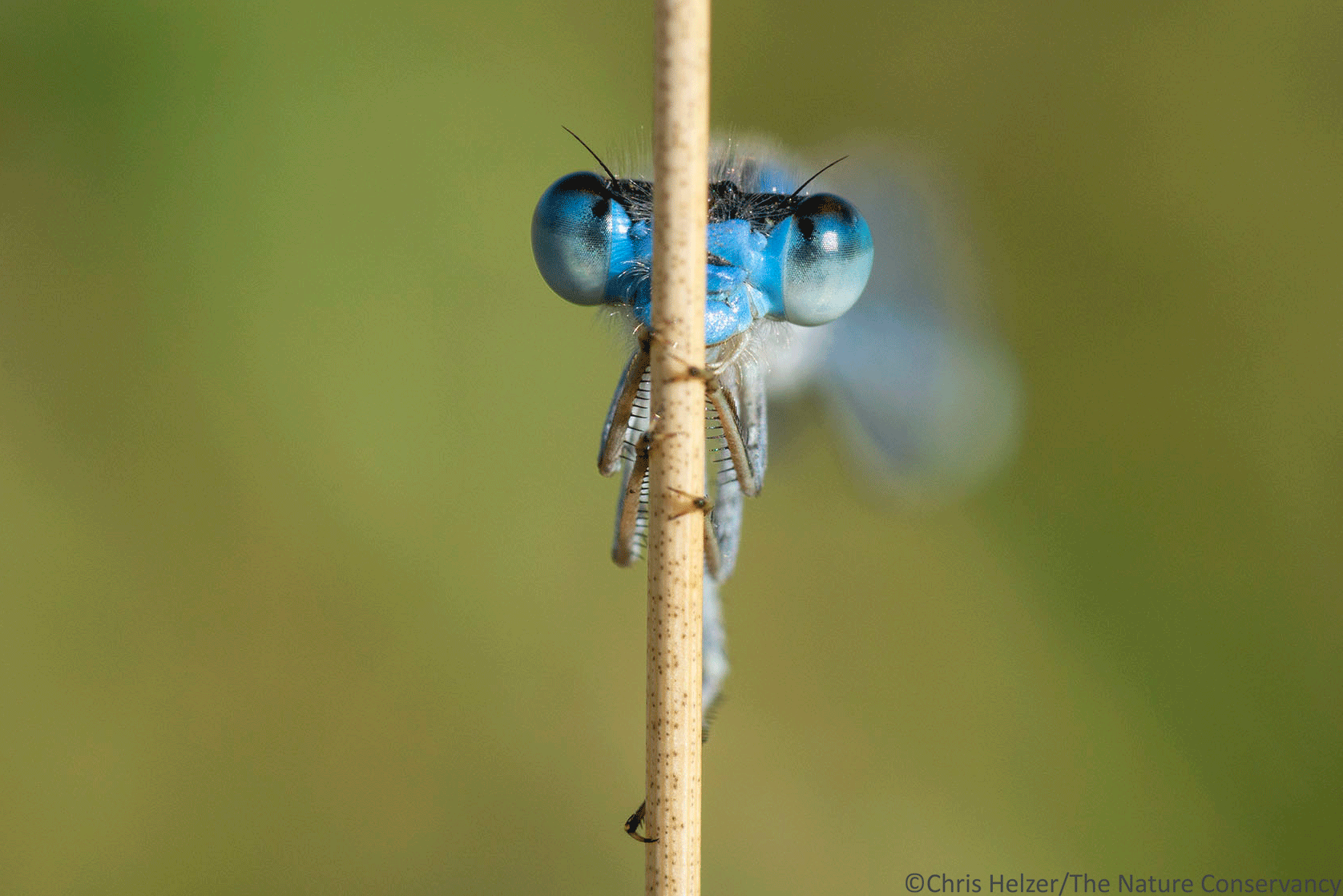
Anatomically speaking, there are two ways I can separate most damselflies from most dragonflies. First, damselflies have eyes that are more widely spaced (almost like hammerhead sharks) and smaller, relative to their head, than those of dragonflies. Second, they usually fold their wings behind them at rest, whereas dragonflies keep their wings out to side like an airplane.
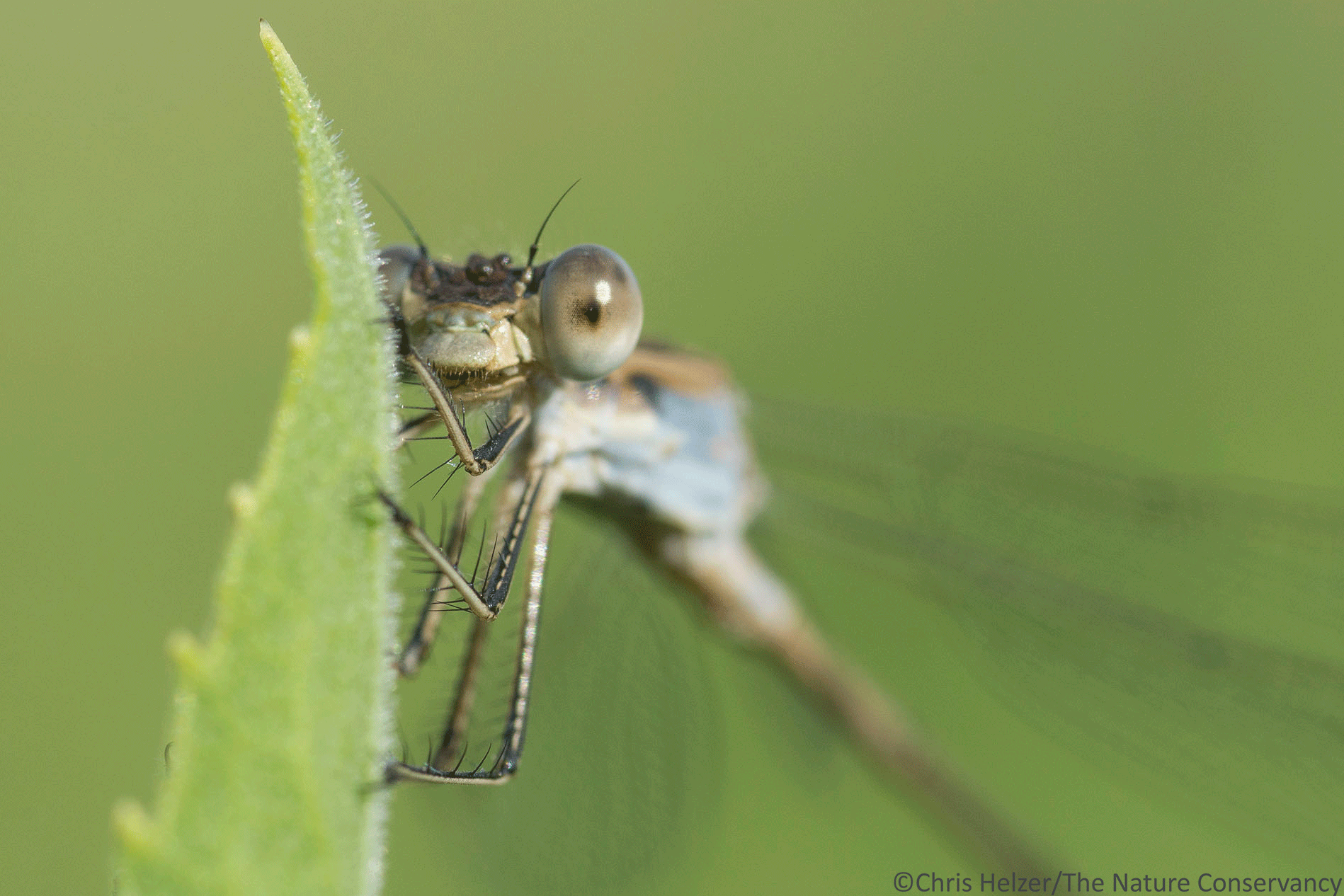
Nikon 105mm macro lens. ISO 500, f/14, 1/250 sec.

Damselflies might be weaker fliers than dragonflies, but they’re still very effective aerial predators. Earlier this year, I was walking along the pond at our family prairie and watching thousands of small white moths that had recently emerged. As I was walking, I saw a hovering damselfly dart quickly to the side and grab one of the moths out of the air (see photo below). I was impressed with the quickness employed by the damselfly – pretty good for a ‘weak flyer’.
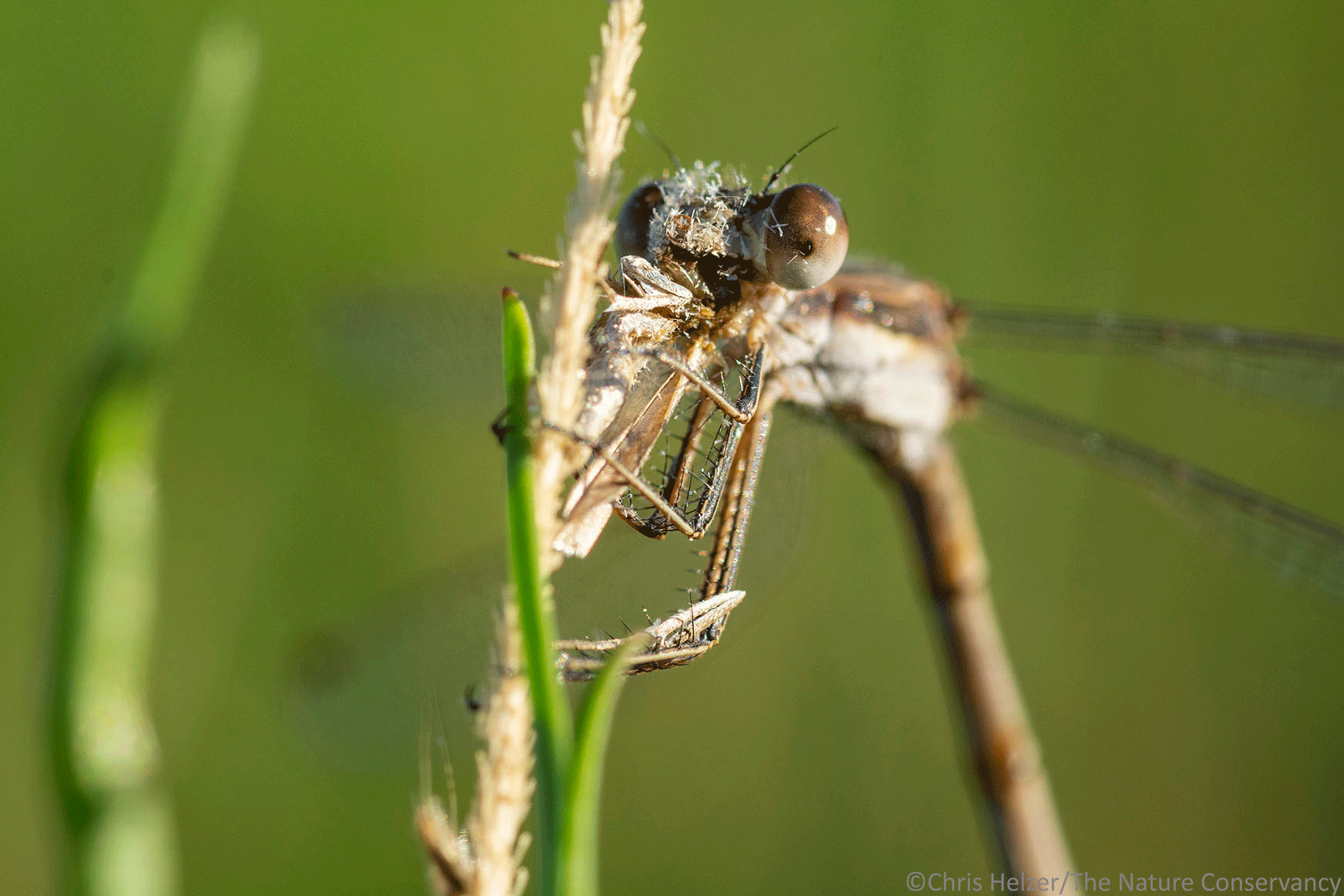
Damselfly eating a moth. Nikon 105mm macro lens. ISO 500, f/13, 1/320 sec.

Of course, the fact that damselflies tend to fly less fast and far is helpful for me as a photographer. Dragonflies can be really difficult to creep close to unless they’re cold and covered in dew. Sometimes, I can get lucky and find one that’s defending a territory strongly enough that I can post up near a perch and wait for it to circle back around after I flush it. Otherwise, dragonflies don’t usually want me close to them, and if they fly, they can go a long way very quickly.

Damselflies are a little easier to stalk. They often fly away upon my initial approach (that’s often how I notice them in the first place) but if I’m slow and careful on my next approach, I can often get close enough to photograph them. Even if they fly several times, they don’t tend to fly very far, so I can stay on my knees and kind of waddle through the grass to where they landed. Every year, I manage to get new photographs of damselflies, always trying to find new angles or perspectives to use.
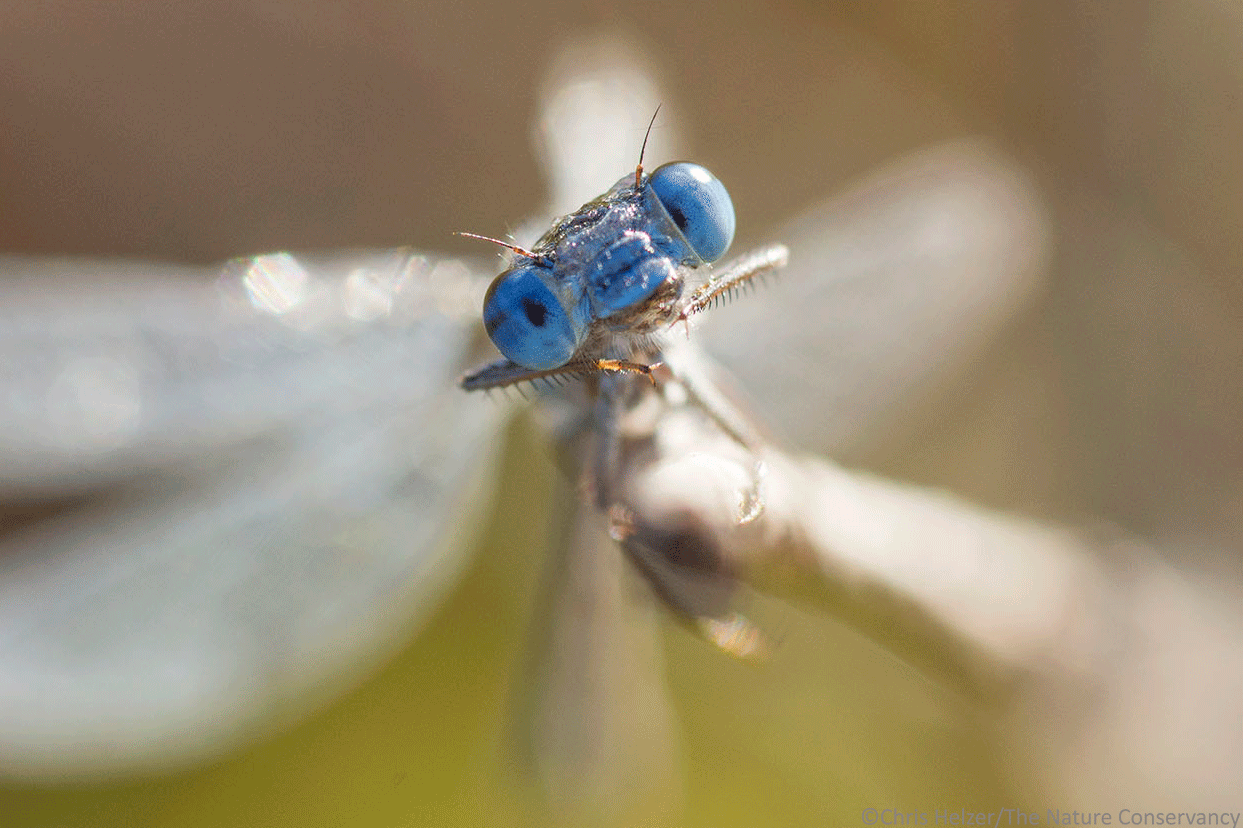
Nikon 105mm macro lens. ISO 640, f/10, 1/320 sec.

Male damselflies try to entice females to mate by performing courtship rituals that usually involve him hovering in front of her and trying to show off his best physical traits (sound familiar?). If the damselflies do mate, they use what’s often called a ‘wheel’ position, in which the male attaches the tip of his abdomen right behind the head of the female with special appendages. The female, in turn, brings the tip of her abdomen up to a spot just behind the male’s thorax where he previously deposited a packet of sperm. If disturbed while mating, they can fly off while maintaining that same joined position, which – again – seems pretty impressive. After mating, the male often stays connected to the female while she lays eggs. That helps him ensure that no other males fertilize her eggs.
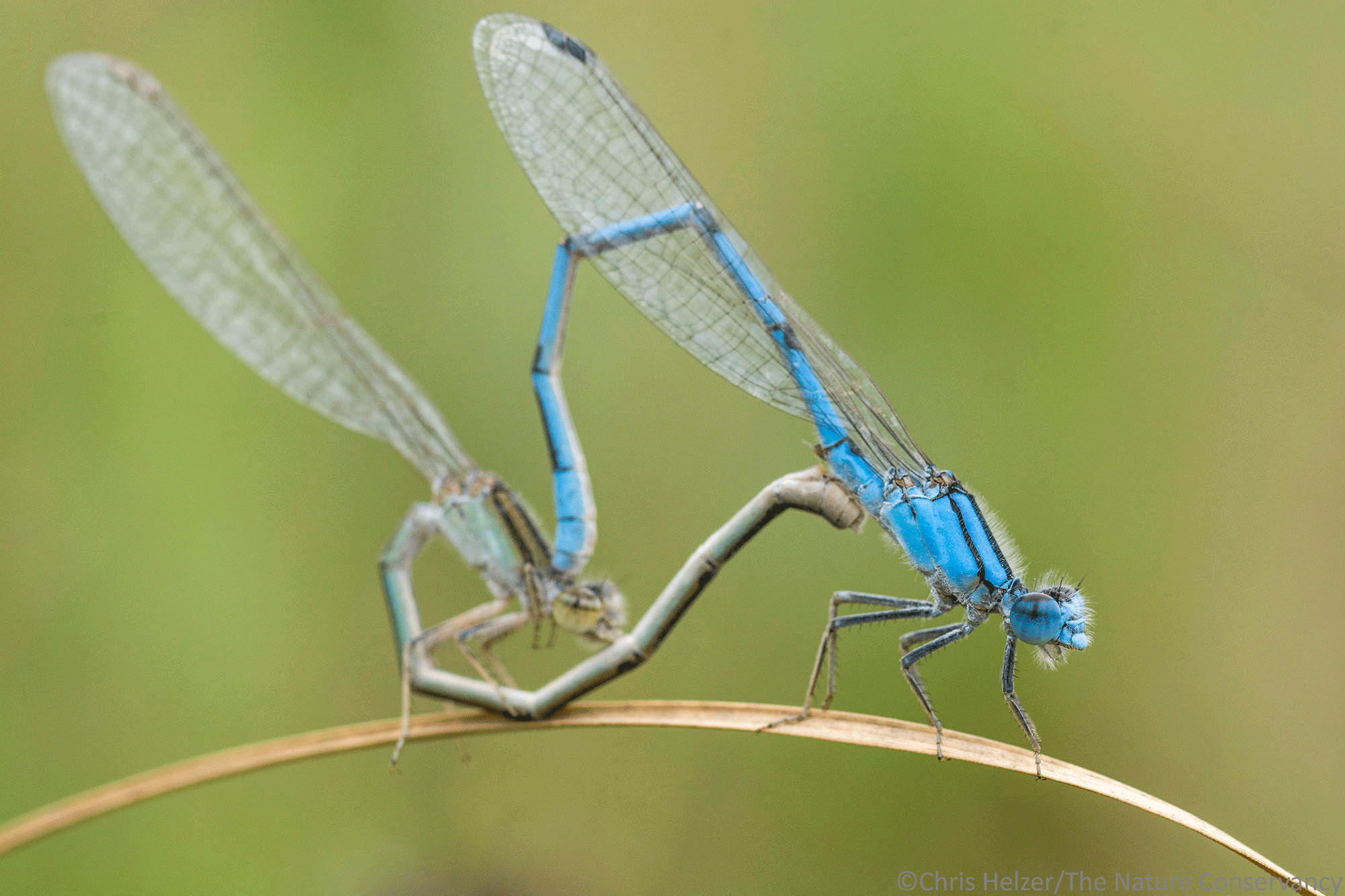
Mating damselflies with the male (right) as the more colorful of the two. Nikon 105mm macro lens. ISO 640, f/11, 1/640 sec.

Like dragonflies, damselfly nymphs are aquatic predators. They feed on mosquito larvae and other small creatures they find underwater. Damselfly nymphs have three gill appendages on the tip of their abdomen, through which they breathe underwater. Anyone who has done any dip-netting in ponds or wetlands has probably seen lots of those ‘three-tailed’ little nymphs.

A damselfly nymph preparing to molt into its adult form. Nikon 105mm macro lens. ISO 400, f/14, 1/200 sec.
Nikon 105mm macro lens. ISO 400, f/18, 1/250 sec.
Nikon 105mm macro lens. ISO 320, f/16, 1/125 sec.
Nikon 105mm macro lens. ISO 320, f/9, 1/160 sec.

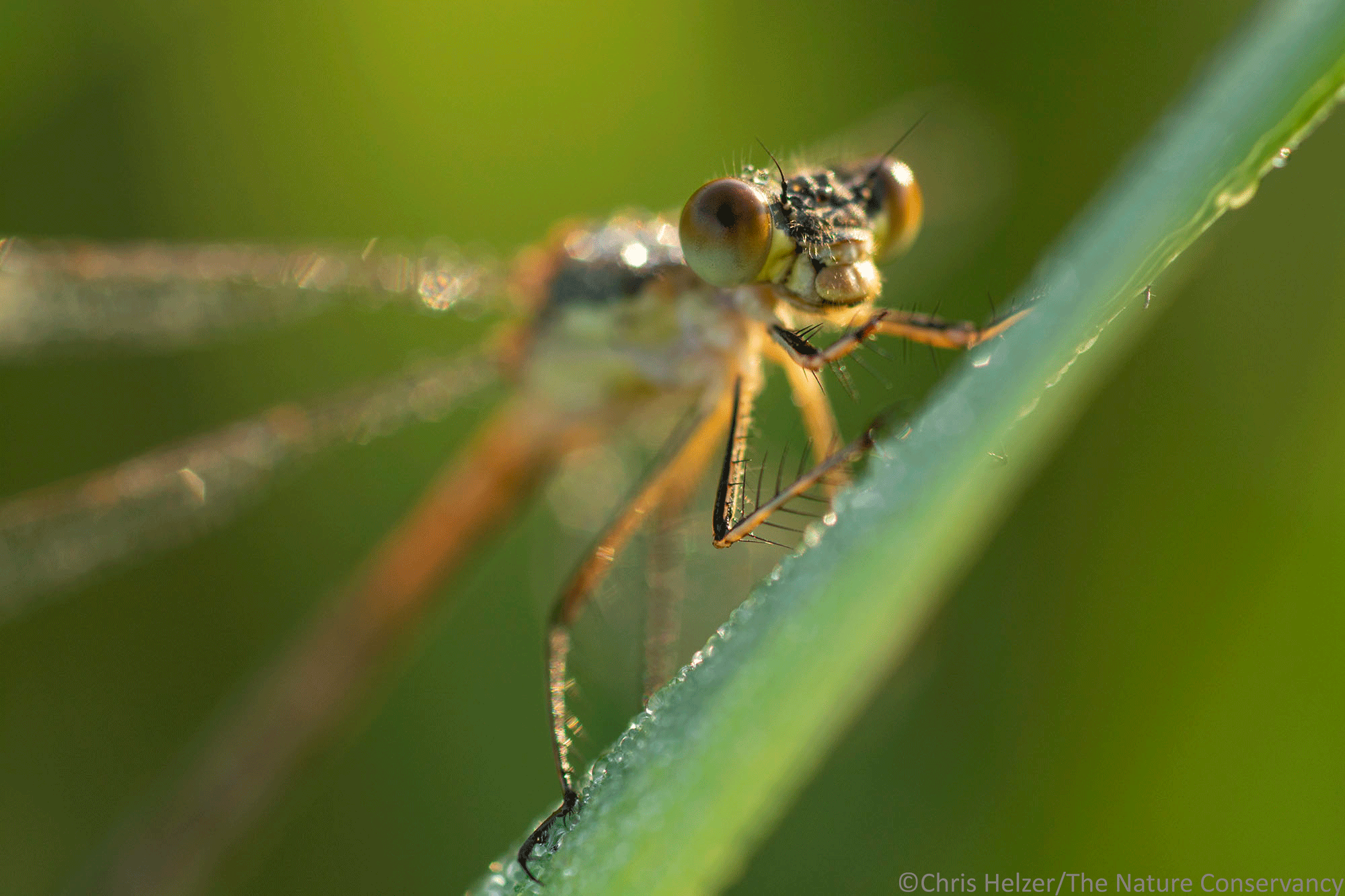
There’s just something about a damselfly face that’s hard to resist. I often take photos of damselflies from the side so I can capture the patterns on their wings and body for identification purposes. But if I find one that’s accommodating, I usually try to carefully swing around to the front and get a face-to-face perspective. Knowing that I have to wait until spring to see my next damselfly makes the impending winter months seem just that much longer…

Noisy Boys of the Prairie

Last week, I wrote a post about some bad science communication around bison and bobolinks. Later, I remembered I’d written about bobolinks for another project that never came together, so I thought I’d repurpose the essay here. Try not to think of it as leftovers – think of it as a response to your requests for more natural history information when you took the blog survey! Yeah, that’s what it is!

Birds that nest in grasslands tend to rely upon a ‘needle-in-a-haystack’ approach for success.  Most build a simple nest, either on the ground, or suspended not far from the ground in a clump of grass or wildflowers.  They then rely upon the camouflage of both their nests and themselves to escape predation by a range of animals or the sneaky brood parasitism of brown-headed cowbirds hoping to dump their own eggs in someone else’s nest. 

Bobolinks adhere to the first of those principles by building simple nests on or near the ground.  The females are also well-camouflaged; brown and stripy, which blends perfectly with the leaves and stems of last year’s prairie plants.  Male bobolinks, however, are among the most flamboyant of grassland nesting birds, both in appearance and behavior.  They’re no bird of paradise, but they are spectacular in their own right.

Male bobolink – The Nature Conservancy’s Platte River Prairies.
Female bobolink. The Nature Conservancy’s Platte River Prairies.

Every spring, I look forward to hearing the first bobolinks show up in lowland prairies in Nebraska’s Platte River valley, as well as other similar habitats.  Their arrival is impossible to miss.  The relative quiet of winter prairies is broken by the long, rambling song of R2D2 from Star Wars.  Or at least a reasonable facsimile.  If you’ve never heard the song, I promise it’s worth your time to look it up online.

That song is delivered by a smallish black and white bird as it flies through the air or perches prominently on one of last year’s wildflower stems.  If I walk closer, the bobolink will usually circle around me, incessantly repeating its jumble of computerish beeps, chirps, and whistles, and giving me an even better look at it.  For first time viewers of bobolinks, one of the slightly disturbing features of males is that the pale buff patch on the back of its head almost makes it look like the rear portion of the skull (or brain) is exposed.  That buff-colored patch also seems to me to clash a little with the otherwise stark black and white feathers elsewhere – though no one should ever take fashion advice from me.

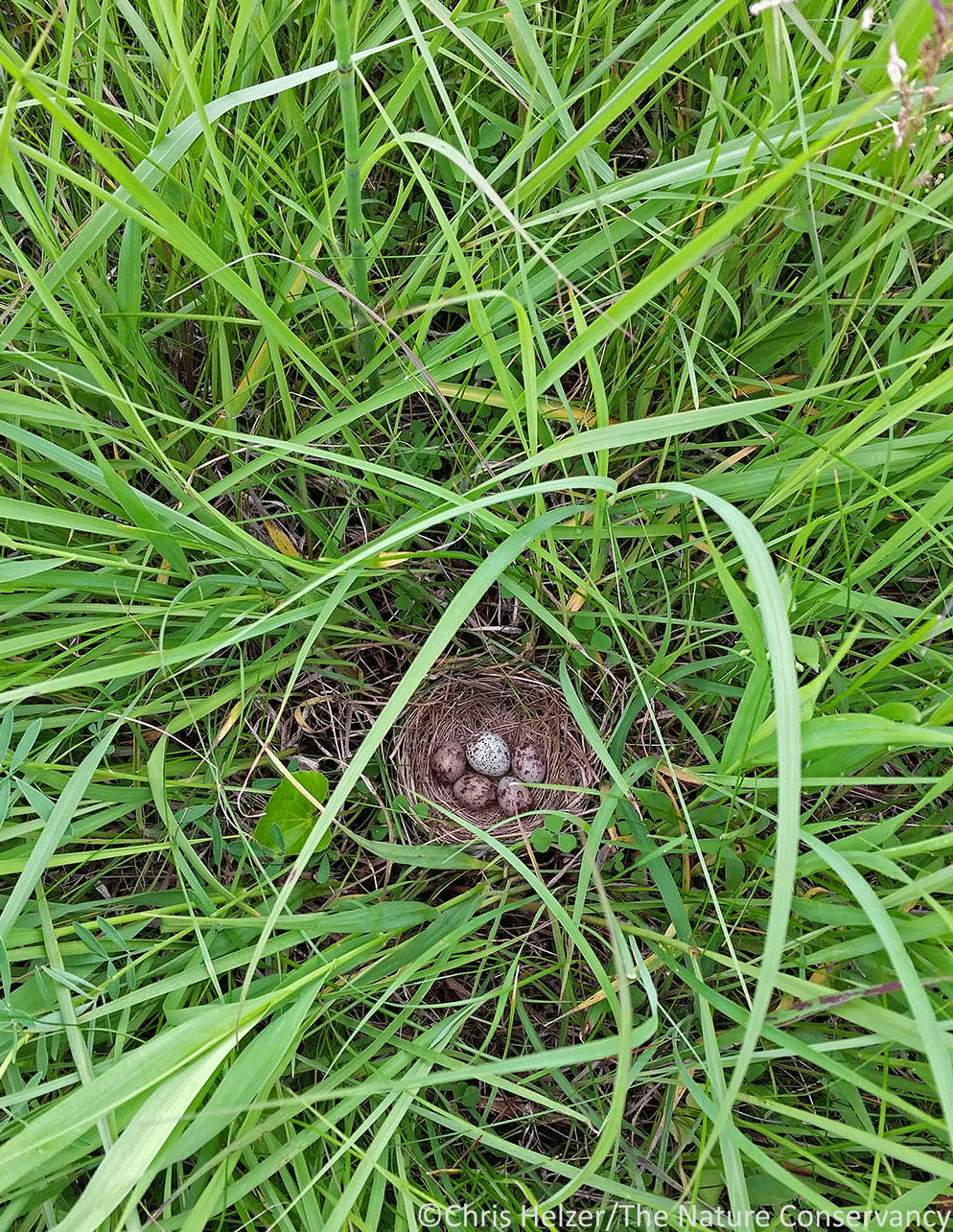
Bobolink nest hidden in the grass.
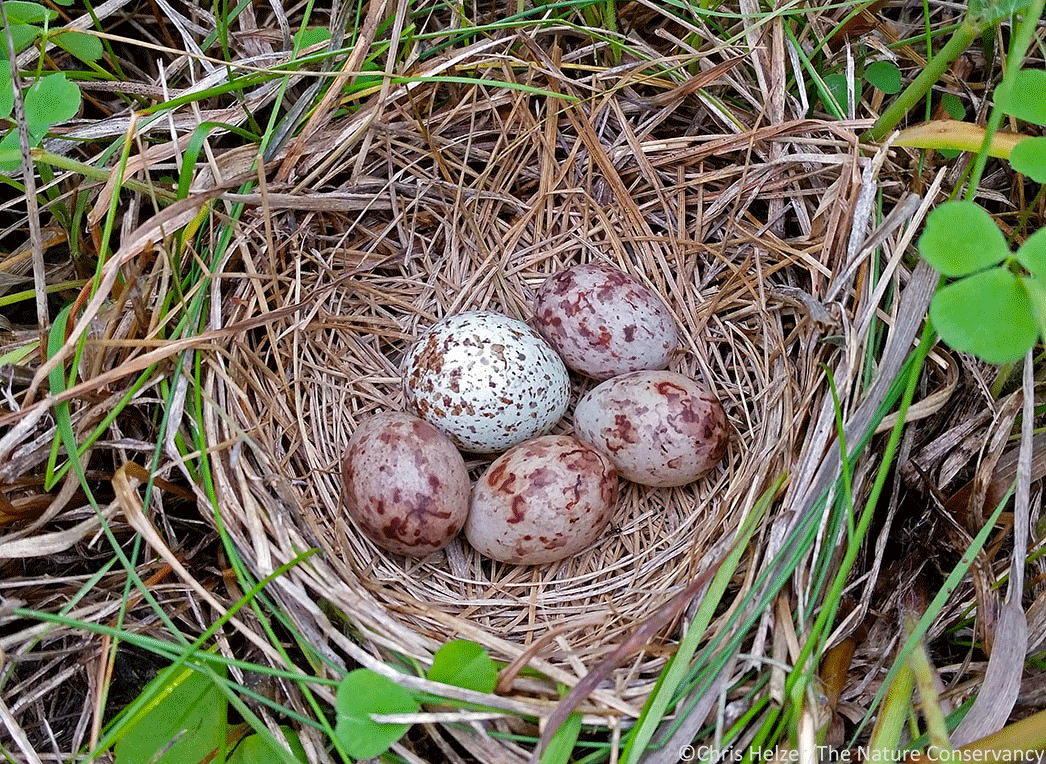
Four bobolink eggs and a brown-headed cowbird egg in a ground nest.

Like most other grassland birds, bobolink males establish and defend clear territories in the prairie.  To clarify, the territory boundaries are clear to them, though not necessarily immediately obvious to us.  If you flush a bobolink several times, though, and watch where it lands and where it doesn’t, you can get a pretty good idea of where its domain lies.  You can also figure it out by waiting until a female bobolink emerges from the vegetation and flies into the air. 

Male bobolink singing at me while I took his picture.

As soon as a female bobolink pops out, any male in the vicinity is right on her tail, chasing her like fighter pilots in a dog fight.  I usually see at least two males join the chase, but sometimes a third one enters the fray too.  Territory boundaries don’t prevent those males from following that female wherever she goes, but, at least in my experience, once she lands, only the male who owns the territory of her chosen landing place is entitled to land with her.  The interlopers fly back to their respective territories and wait for another opportunity.  There, they fly from perch to perch around the edges of their area of control, singing as if pausing to take a breath might give someone else the brief opportunity they need to interrupt.  I love them so much.