Unknown's avatar

About Chris Helzer

Chris Helzer is Director of Science and Stewardship for The Nature Conservancy in Nebraska, where he conducts research and supervises the Conservancy’s preserve stewardship program. He also helps develop, test, and share prairie management and restoration strategies. Chris is also dedicated to raising awareness about the value of prairies through his photography, writing and presentations. He is the author of The Prairie Ecologist blog, and two books: The Ecology and Management of Prairies and Hidden Prairie: Photographing Life in One Square Meter. He is also a frequent contributor to NEBRASKAland magazine and other publications. Chris and his family live in Aurora, Nebraska.

Ticking Off All The Reasons to Hang Around Dead Animals

Warning: This post includes photos of a dead deer, along with invertebrates feeding on and around it. I know that’s not everyone’s bag of chips, so to speak, so this is your chance to wander elsewhere.

Yesterday’s weather was far too pleasant to just watch through the window, so I headed down to our family prairie to see what was happening there. Temperatures were in the 60’s (Fahrenheit) and there were some thin clouds overhead, making it a nice day for close-up photography. I hoped I’d find some insects and take advantage of that.

There were definitely insects moving around. Most were flies and sawflies (non-stinging relatives of wasps) and they weren’t very cooperative photo subjects. The breeze wasn’t helpful either.
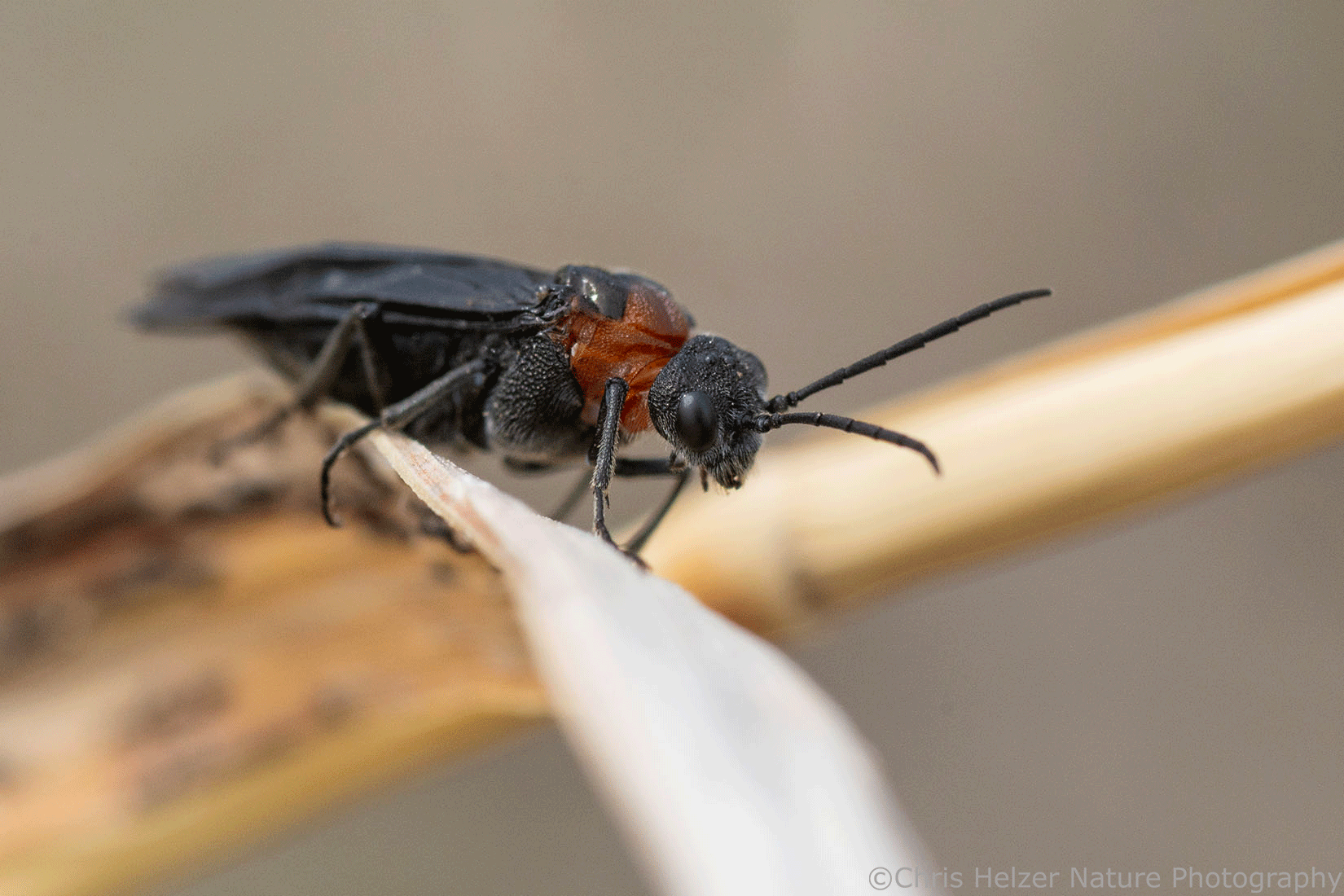
A saw fly that briefly perched on a grass stem and let me photograph it.

I did, eventually, manage to catch one sawfly sitting still long enough to get a decent photo of it. There was another one nearby that looked similar, but without any red on its thorax, which made me wonder if I was seeing two species or males and females of one species. Given the little I know about sawflies, I’m guessing maybe these had overwintered as pupae and had just emerged to mate. No wonder they didn’t want anything to do with me – they had much more important things on their minds!

The most interesting thing I found was a deer carcass behind the dam of our old pond. It had been there long enough that it had been mostly stripped down to bones, but there was some hair left on the skull and legs. Before I found the full skeleton, I came across its lower jaw bones, which I stopped to photograph mainly because I needed something that wasn’t either blowing in the wind or flying away from me.
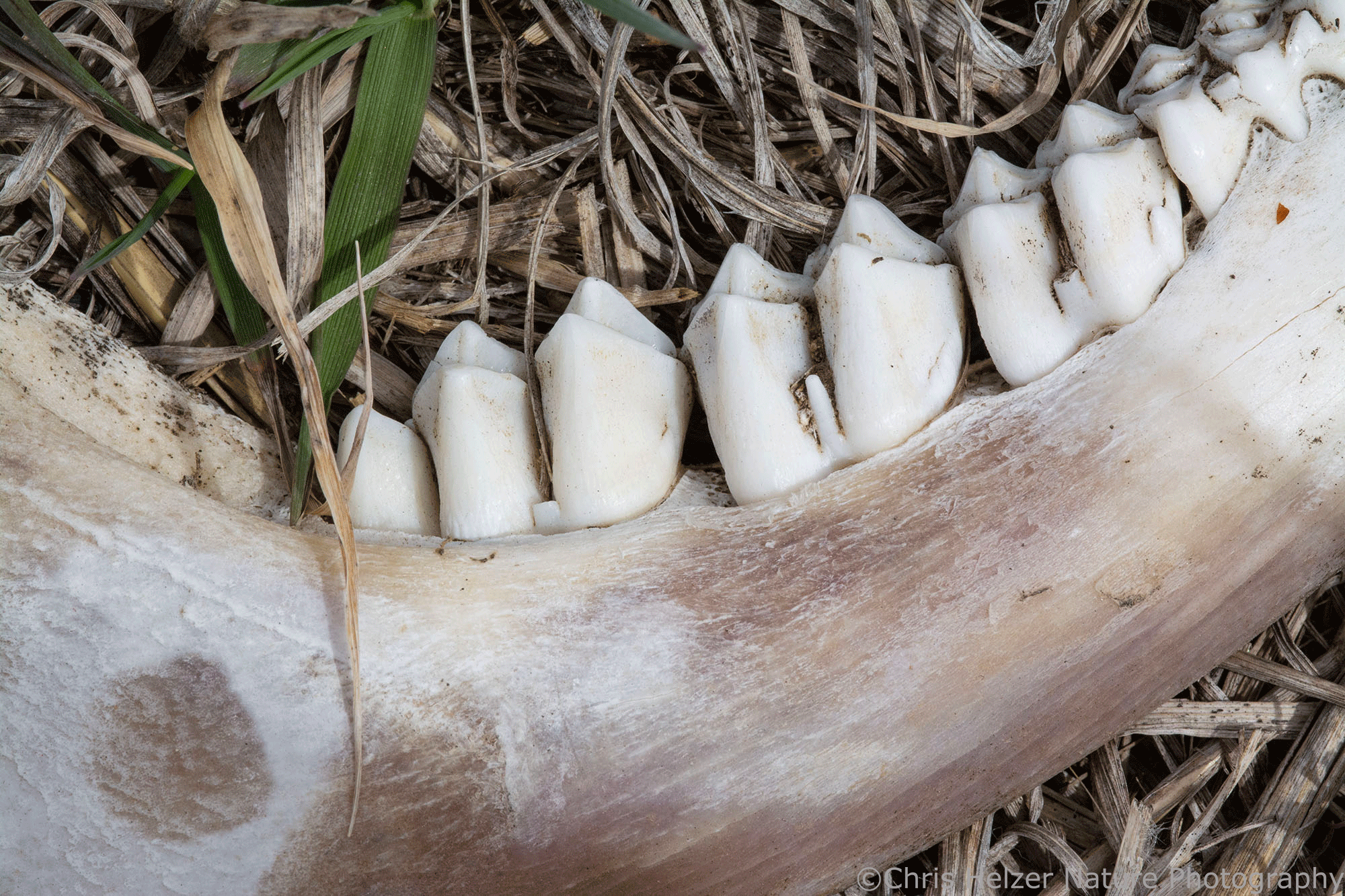
Jaw bone.

As I inspected the carcass (because that’s what ecologists do, right?), I spotted a few little creatures crawling around on it and started trying to photograph them. The wind wasn’t a factor, which was nice, but the little buggers didn’t hold still very well, which wasn’t. More experienced carrion-inspectors would surely be able to age the carcass based on the species and life stage of the insects I found, but that’s not my expertise. I was just curious and enjoyed seeing what was there.

Here’s the carcass itself. It had been a pretty big buck.
There were several of these Dermestes beetles doing their work.
Another look at a Dermestes beetle.
Bugguide.net says this is a Cosmopolitan Blue Bone Beetle (Necrobia violacea), which is a terrific name for a carrion feeder.

My curiosity was piqued further when I started noticing dog ticks (Dermacentor variabilis) in the grass around the carcass. When I saw the first one, I didn’t think much of it, other than to recognize it as another sign of the coming spring. After spotting the fourth one, though, I realized maybe there was something going on. A couple were on the carcass itself, but most were perched on plants within a foot or two of it. There were at least half a dozen. All but one of the ticks were males, but I’m not sure if that’s relevant.

Here’s the first dog tick I found.

Why would parasites be hanging around the carcass of a deer? There’d be no food value for them, especially this long after death. Maybe it was just chance, and I noticed them because I had paused to pay close attention to a small area. I don’t think so, though, because I didn’t see a single tick around the rest of the prairie, including while lying on my belly trying to photograph flies and sawflies.
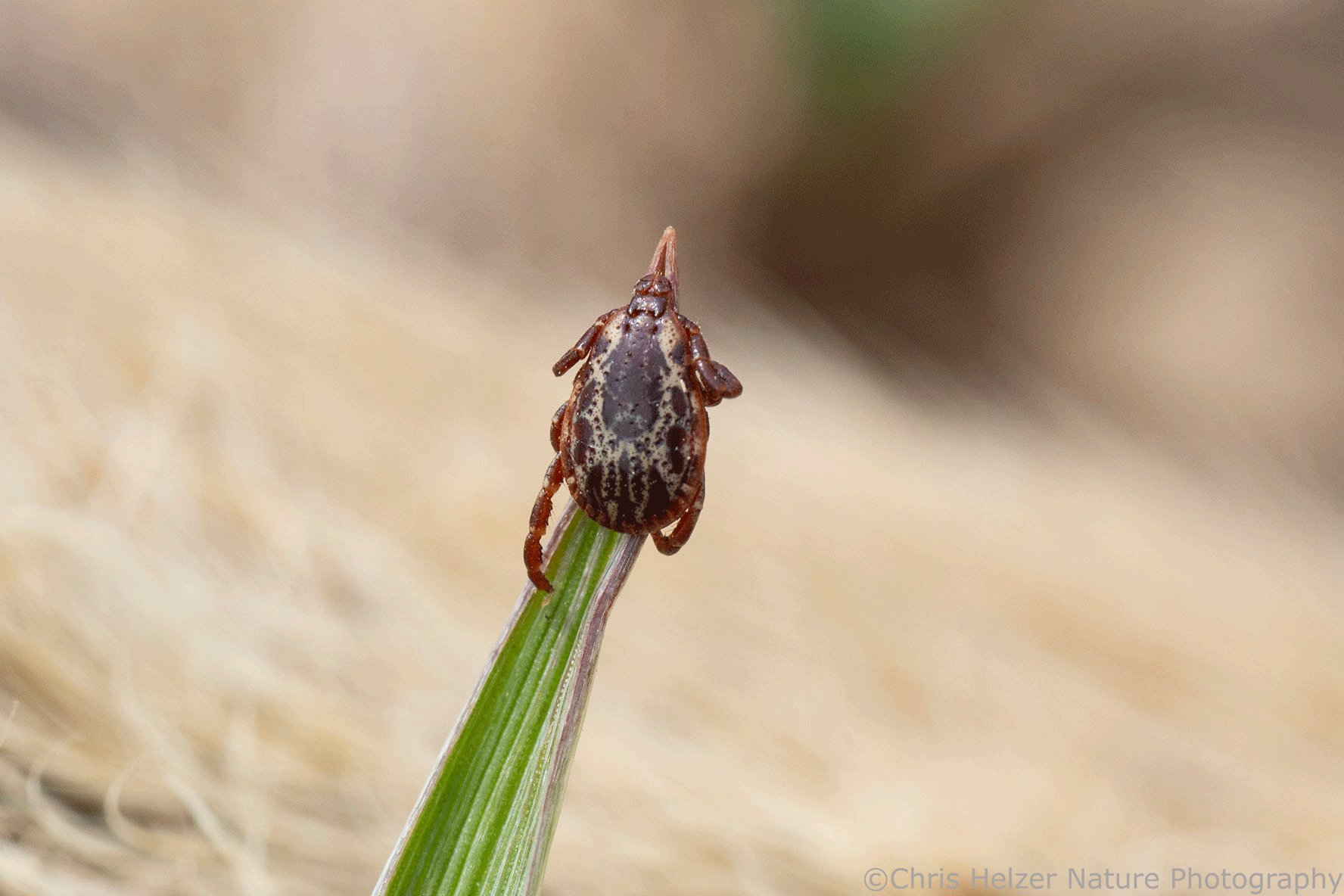
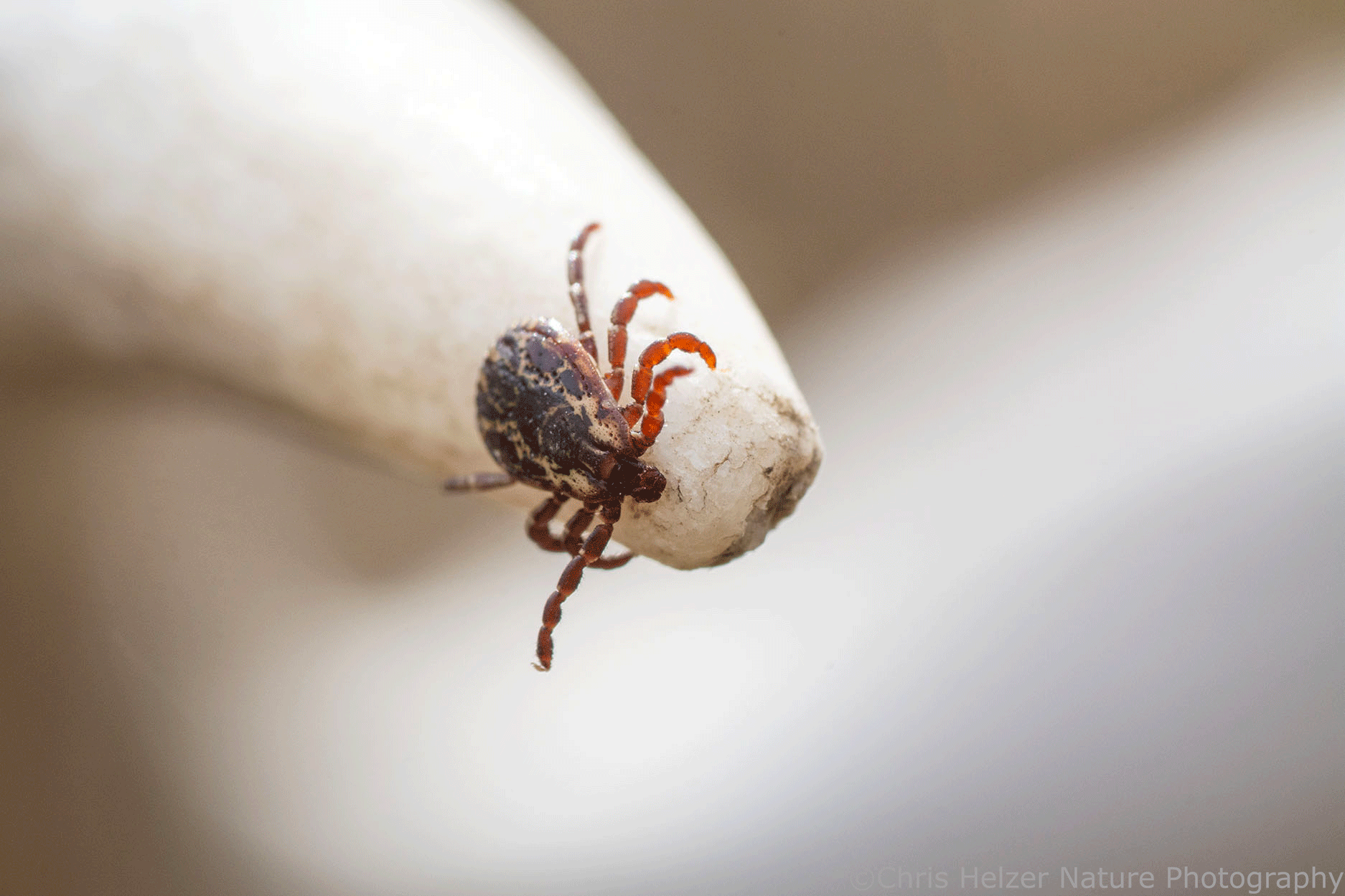
Here’s another tick, perched on a grass blade right next to the carcass (seen in the background).
This one was hanging out on the antlers.
This one was on the carcass itself, but seemed to be travelling, so maybe it was just re-positioning itself.

As I pondered the question, I tried to think from a tick’s perspective. What if they recognized the value of the dead deer as bait for the kinds of creatures ticks like to feed on? That would be a pretty brilliant strategy. The life of a tick in the middle of a prairie has to be pretty frustrating – just sitting there, perched on a plant, hoping an animal will come close enough to grab onto. If a tick could predict where those animals were going to be, that would be of tremendous benefit.

After returning home, I went to the internet to see if there were records of this phenomenon. Sure enough, I found this study, and this one, which both reported finding ticks near carrion (mice and a porcupine, respectively) and the second paper cited an additional researcher who had found ticks around a white-tailed deer carcass. None of them had definitive answers for why the ticks seemed to be attracted to carrion, but my hypothesis matched some of theirs, which was nice to see.

I know ticks aren’t most people’s favorite creature and that’s perfectly understandable. On the other hand, they’re fascinating little invertebrates that have developed their own effective strategy for surviving in a complex and challenging world. If ticks have evolved the tendency to cluster around dead animals as a way to increase their likelihood of encountering the live animals they need to feed on, I think that’s pretty amazing.

If you’re in Nebraska, there’s a great community science project you can help with, aimed at building better understanding of what tick species are in Nebraska, and where. https://ticktaggo.unl.edu/

Photos of the Week – March 30, 2023

My camera gear has been getting stale lately. It’s late winter, we haven’t had much snow or ice to draw me out, and I’ve had a really busy several weeks. This week, though, I had a couple opportunities and tried to make the best of them. I nearly failed on the first one.

We had snow over the weekend and on Sunday morning I drove out to the Platte River Prairies, hoping overcast skies would lighten enough that I could photograph some snowy prairies. When I arrived, I reached back behind me to grab my camera bag, opened it up, and realized I’d pulled out all my favorite gear the previous day and put it in a different bag (took a family trip to our prairie). Then, I’d forgotten to put everything back in my main camera bag.

All was not lost – I did have a camera body (whew!) and two lenses: a fisheye lens and a long telephoto. That’s an odd combination of lenses, but since I’d driven more than half an hour in less-than-ideal road conditions, I wasn’t just going to pack it in and head home. I grabbed the fisheye lens and headed toward some trees near the river where the driven snow had created some aesthetically-pleasing lines.

A snowy woodland area near the edge of the Platte River. Nikon 10.5mm fisheye lens. ISO 320, f/13, 1/320 sec.
An alternate view of the same wooded site. Nikon 10.5mm fisheye lens. ISO 320, f/13, 1/320 sec.

I carefully checked the river to see if any sandhill cranes were hanging around. I thought I could probably crawl into a nearby viewing blind and take advantage of my long lens. No luck. All the cranes had left the river for the day. On the way back to the truck, I played around with a few prairie scenes, but eventually decided to head back to town.

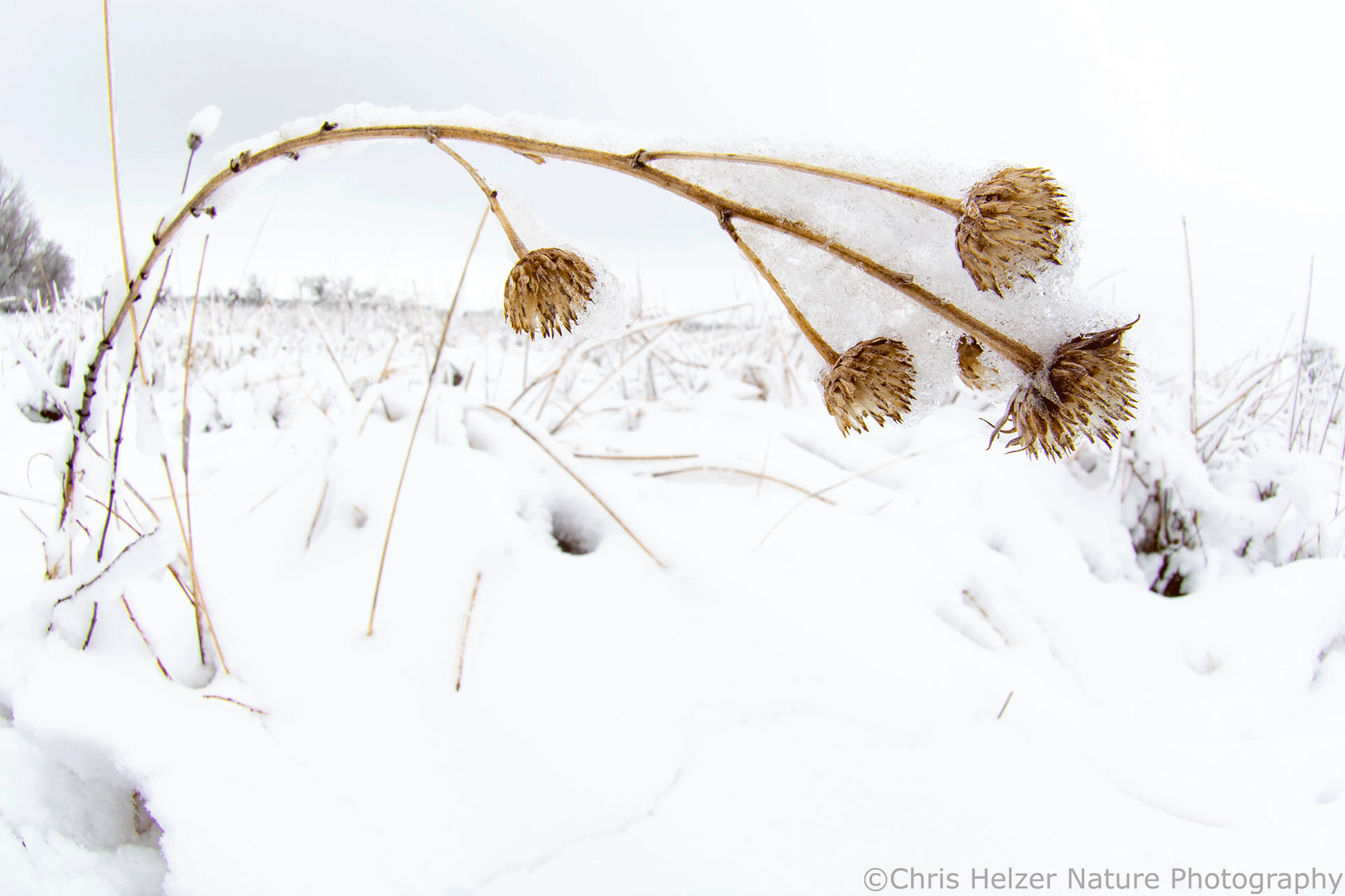
Maximilian sunflower in restored prairie near the Platte River. Nikon 10.5mm fisheye lens. ISO 320, f/18,1/200 sec.

I got home and grabbed an early lunch. As I was eating, the sky outside started to brighten a little, so I grabbed ALL my camera gear, and drove across town to Lincoln Creek Prairie and wandered around there. The brighter sky didn’t last long, but I managed to get a few shots and had a pleasant walkabout, regardless of photo results.

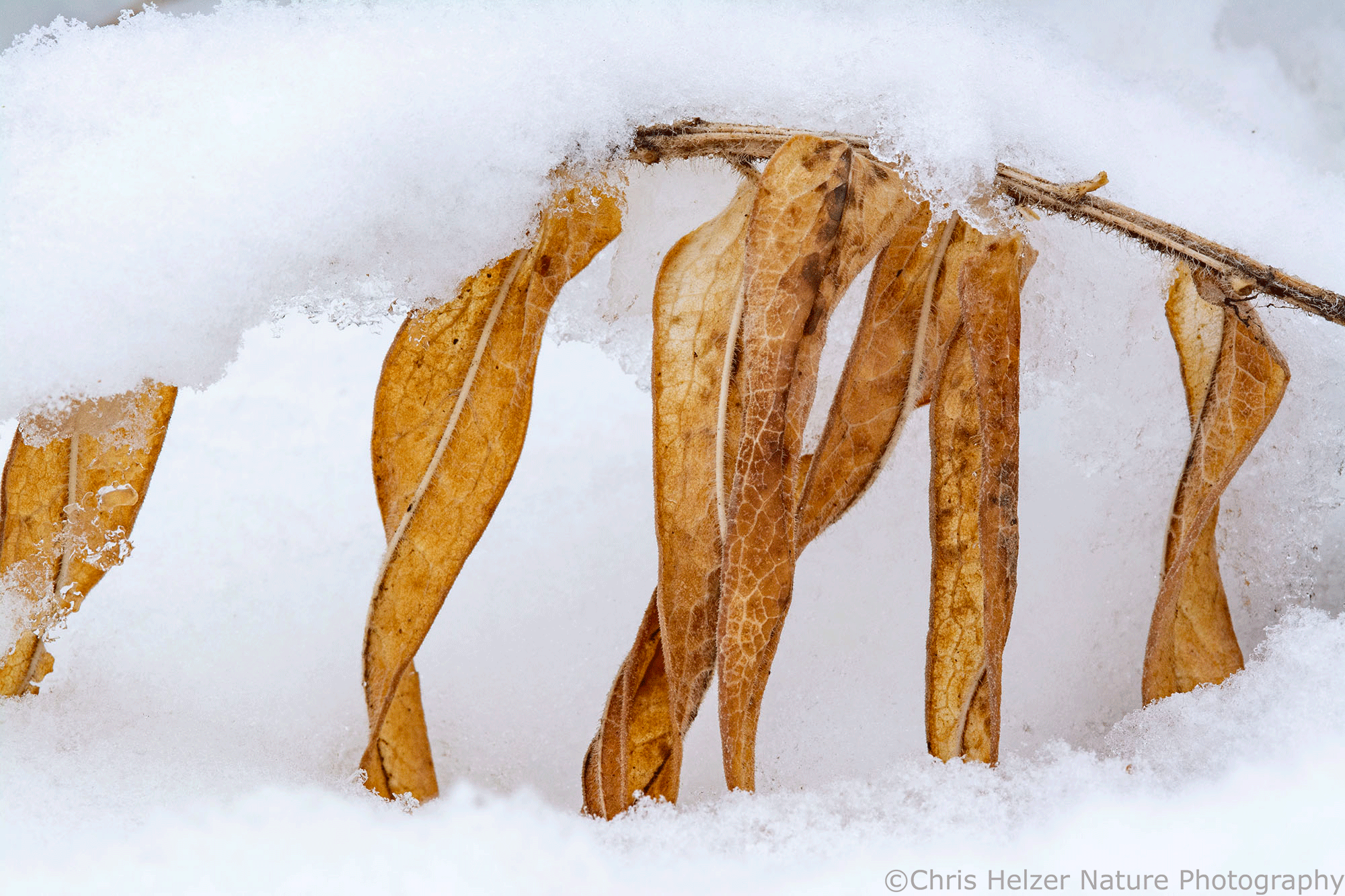
Butterfly milkweed leaves and snow. Lincoln Creek Prairie. Nikon 105mm macro lens. ISO 250, f/16,1/640 sec.

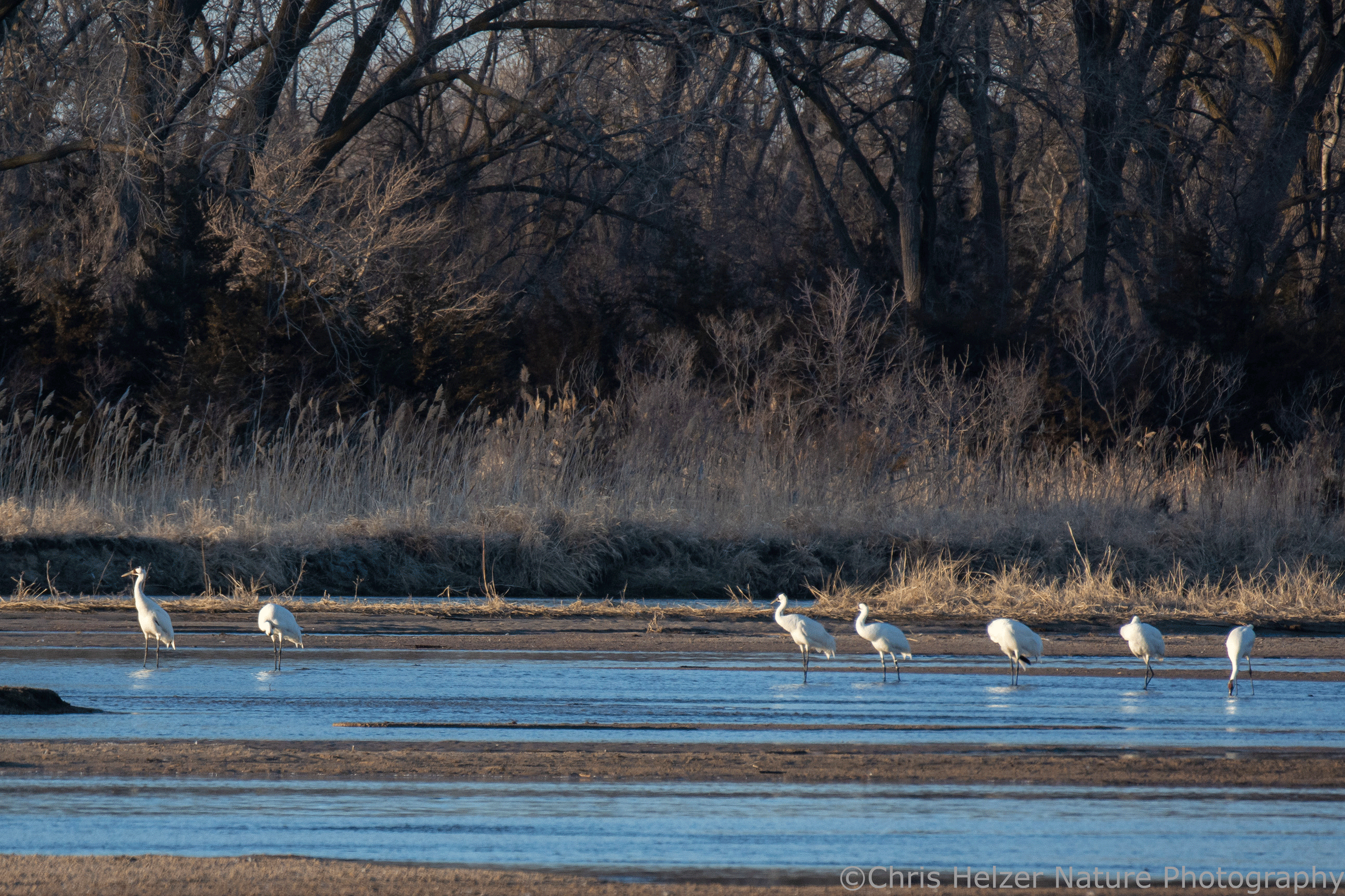
Tuesday night, I had the chance to take some supporters of The Nature Conservancy into a viewing blind to watch sandhill cranes come in to roost on the Platte River. We’re very fortunate to have a front row seat to the annual migration of sandhill cranes and their staging along the Central Platte River. Nearly 1,000,000 of them spend a good portion of March in the Platte Valley each year. It was a beautiful night, made even more spectacular by the seven whooping cranes waiting for us when we arrived at the blind. They were too far away for terrific photos, but it was really nice to see them!

Seven whooping cranes across the river from our viewing blind Tuesday night. Tamron 100-400mm lens @400mm. ISO 500, f/6.3,1/1000 sec.

As the sun set, sandhill cranes started pouring in upstream of us, dropping out of the sky against a nice orange glow near the horizon. I didn’t have my tripod with me (limited space in the blind) and I had other responsibilities (tour guide) but I did manage to squeeze off a few photos of the cranes and crane viewers.

Sandhill cranes dropping into the river. Tamron 100-400mm lens @100mm. ISO 800, f/4.5,1/1250 sec.
Flyover of sandhill cranes. Tamron 100-400mm lens @400mm. ISO 800, f/6.3,1/800 sec.
More sandhills falling out of the sky. Tamron 100-400mm lens @270mm. ISO 1250, f/6,1/800 sec.
And more. Tamron 100-400mm lens @400mm. ISO 1250, f/6.3,1/800 sec.
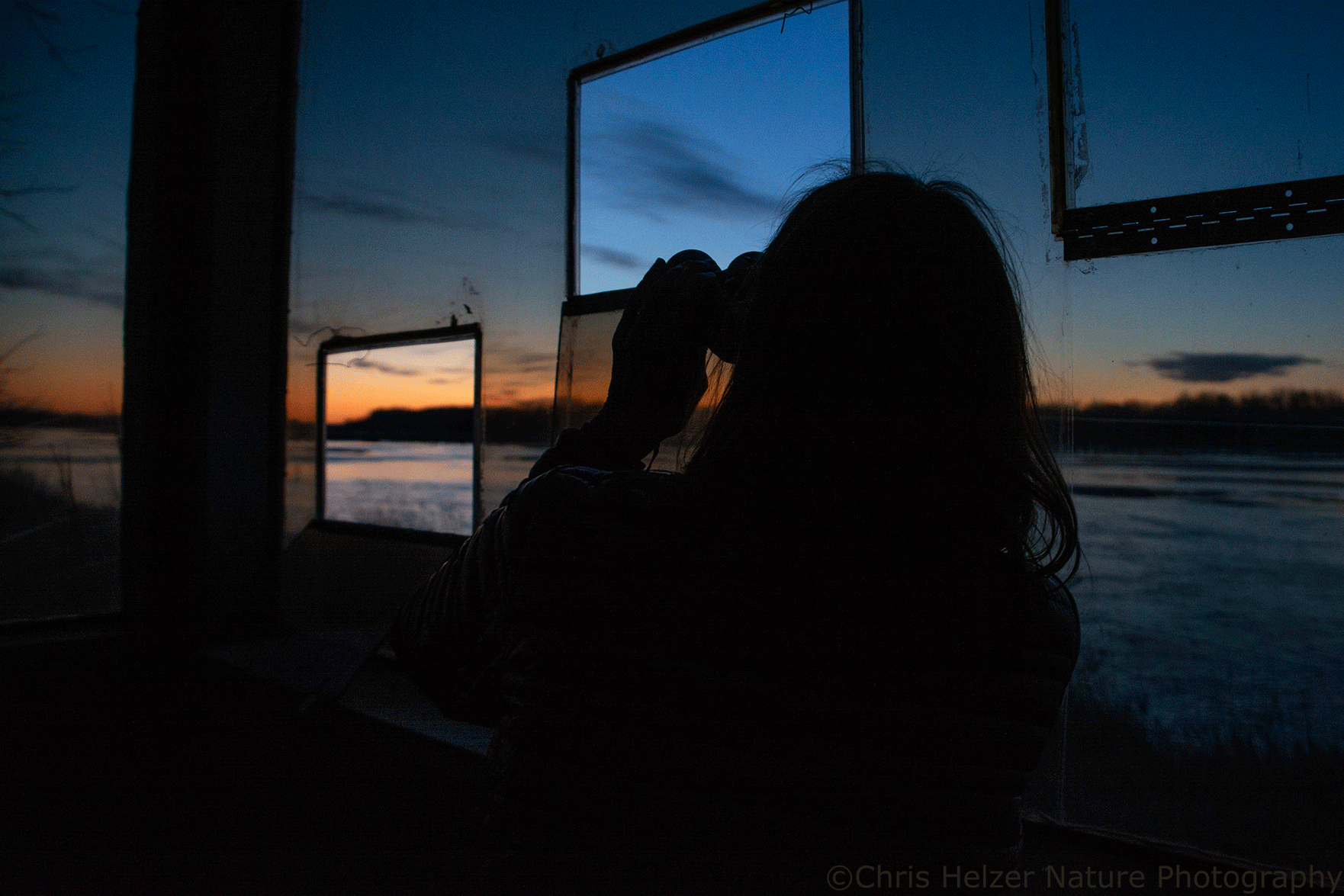
One of our guests enjoying the view. Tokina 11-20mm lens. ISO 500, f/4, 1/60 sec.
One of many groups of sandhill cranes arriving at the roost as the light faded. Tokina 11-20mm lens. ISO 500, f/9, 1/200 sec.

I’m hoping to build on this week’s momentum and find some more time for photography in the coming weeks. I’ve been seeing a few more insects moving around, early (non-native) flowers are starting to bloom in our garden, and my in-laws spotted a garter snake the other day. Spring is coming!