
A Trip to Konza Prairie Biological Station, Part 1

Last week, several of us from the Platte River Prairies traveled south to visit the Konza Prairie Biological Station near Manhattan Kansas.  Konza Prairie includes about 8,600 acres of prairie, jointly owned by Kansas State University and The Nature Conservancy.  The prairie is managed and used as a biological station by Kansas State University’s Division of Biology, but hosts research projects from scientists around the world.  The biological station has a three-fold mission: long-term ecological research, education, and prairie conservation.

Research results from Konza Prairie have been very influential for grassland managers across the world, but particularly in western tallgrass and mixed grass prairies of North America.  Over the next couple of weeks, I’m going to report on several topics we discussed with researchers at Konza during our trip.  Today, I’ll just give you an overview of the site and our visit.
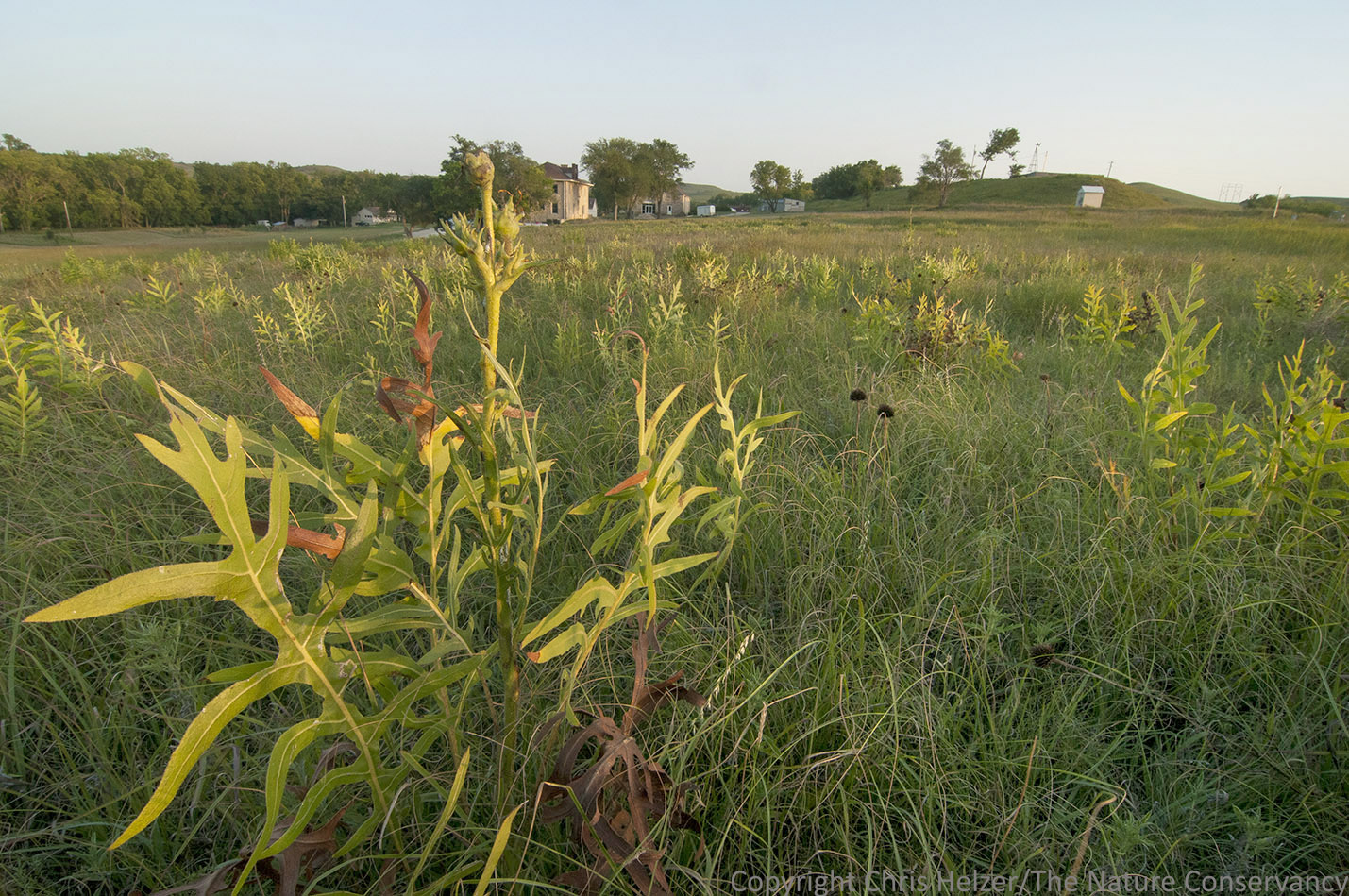
Annually-burned prairie near the headquarters of Konza Prairie near Manhattan, Kansas.  It has been very dry there since early summer, so much of the vegetation - including compass plant - is shorter than usual.

Annually-burned prairie near the headquarters of Konza Prairie near Manhattan, Kansas. It has been very dry there since early summer, so much of the vegetation – including compass plant – is shorter than usual.

We had two main reasons for our trip to Konza.  First, our two Hubbard Fellows, Jasmine and Dillon, are designing research projects on small mammals and grasshoppers, respectively, and wanted to learn from Kansas State researchers on those topics.  Second, researchers from Konza Prairie have produced some of the most important grassland science there is, and we wanted to learn as much as we could by touring the site with some of those researchers.
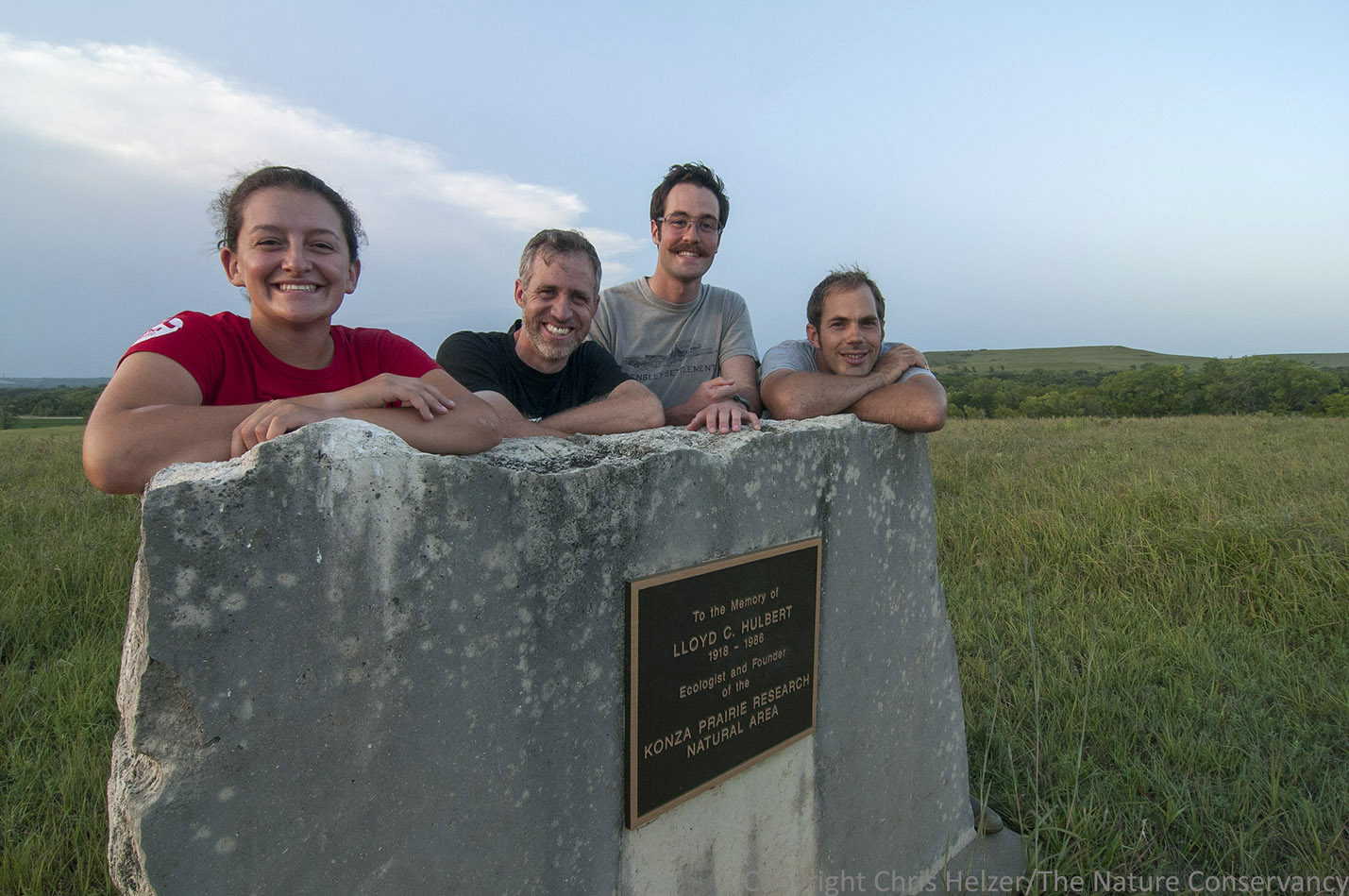
Our Nebraska crew in Kansas.  From left: Jasmine Cutter, Chris Helzer, Dillon Blankenship, and Nelson Winkel.

Our Nebraska crew in Kansas. From left: Jasmine Cutter, Chris Helzer, Dillon Blankenship, and Nelson Winkel.

Thursday evening, we arrived just in time to take a short hike near the headquarters as the sun was going down.  Then we went to bed early so we could get up before the sun Friday morning and accompany researcher Drew Ricketts as he checked his small mammal trap line.  Drew is comparing the small mammal communities between patch-burn grazed prairie (with cattle), annually burned/grazed prairie, and ungrazed prairie burned every four years.  Jasmine wanted to see his trapping and handling techniques and get some tips on identifying some of the species.
Checking small mammal traps at sunrise.
Checking small mammal traps at sunrise.

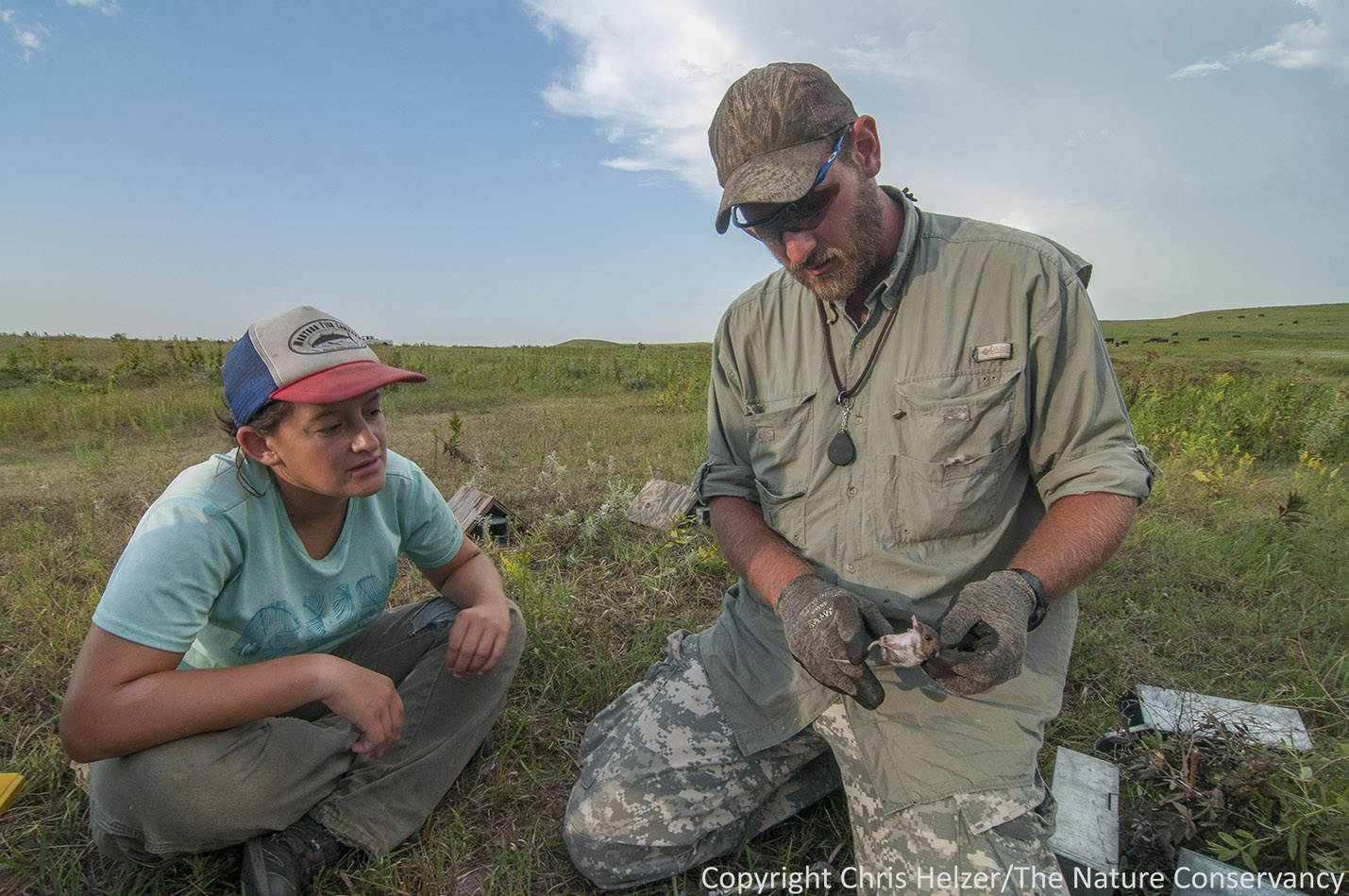
Jasmine (left) watches as Drew Ricketts explains how to identify a white-footed mouse.
Jasmine (left) watches as Drew Ricketts explains how to identify a white-footed mouse.

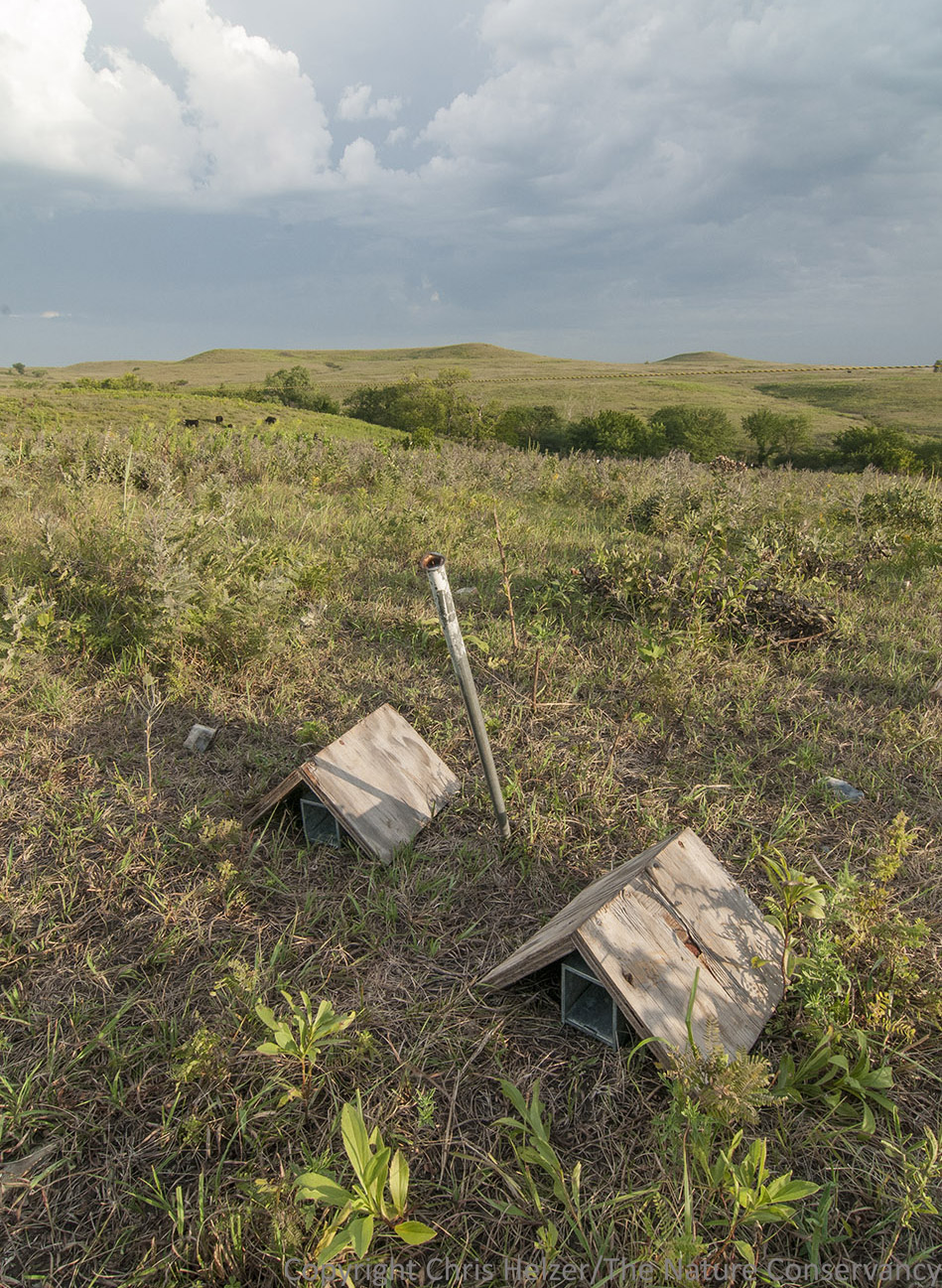
Sherman live traps laid out in a grazed portion of the prairie.
Sherman live traps laid out in a grazed portion of the prairie.

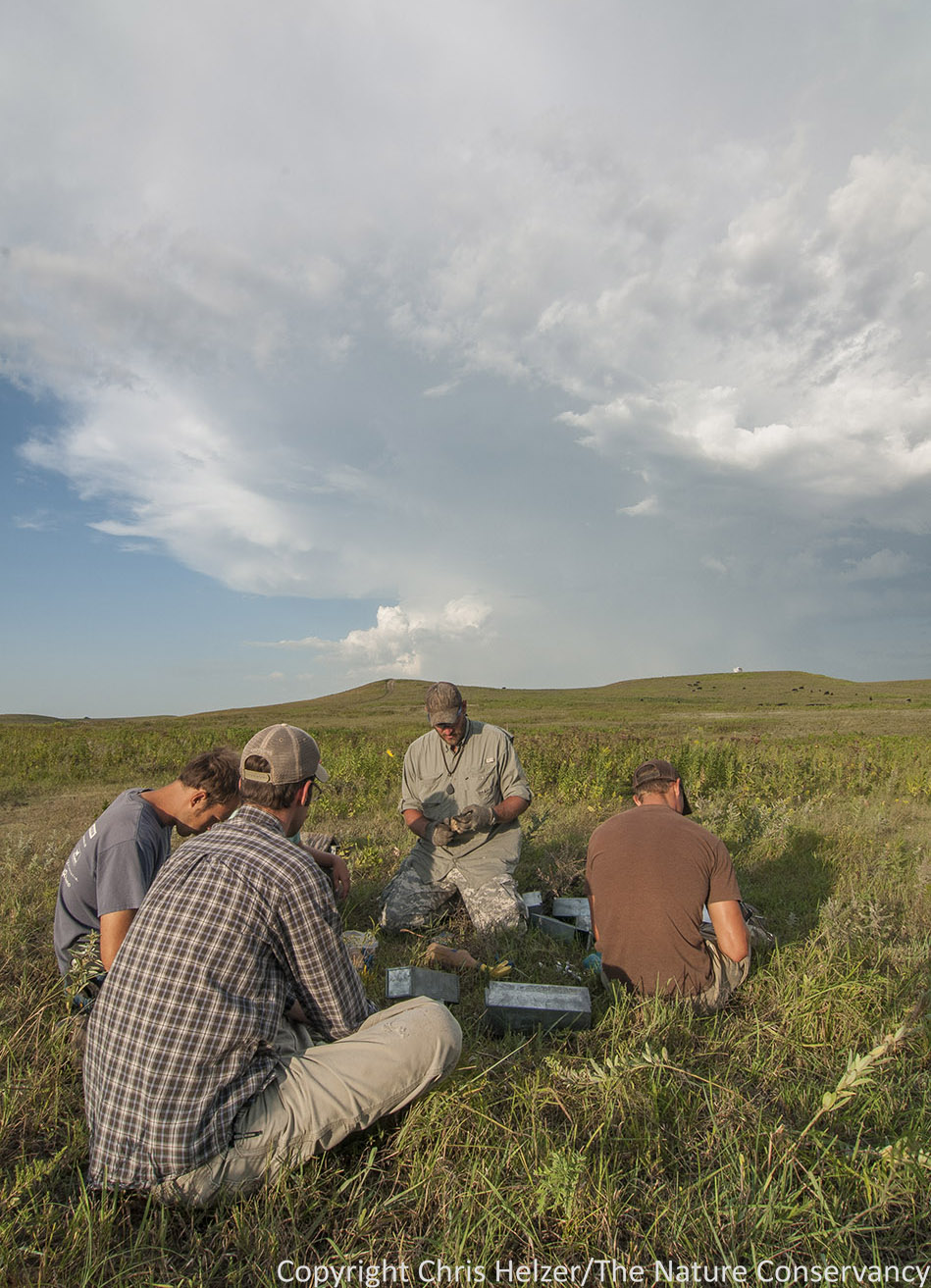
The crew watches Drew and his assistant, Kyle (right) examine and record data from captured small mammals.

The crew watches Drew and his assistant, Kyle (right) examine and record data from captured small mammals.

After we spent a couple hours with Drew, we met up with Kansas State professors Tony Joern, John Blair, and Jesse Nippert and started a four hour tour of the site that was so full of information and ideas my head is still spinning.  We looked at the portion of the site grazed by a herd of 400 bison and talked about the impacts of bison vs. cattle grazing, the role of bison in keeping cedar trees out of prairie (they’re good at it), and several other related topics.  Next, we drove through the ungrazed watersheds of Konza that have been burned on frequencies of 1, 2, 4, 10, and 20 years since as far back as 1978.  The plant composition and habitat qualities of those areas have diverged in very interesting ways through time.  We finished by looking at a (fairly) new restoration project and some small plots treated with various fire regimes and fertilizer treatments.  Along the way, we talked about myriad other topics as well…
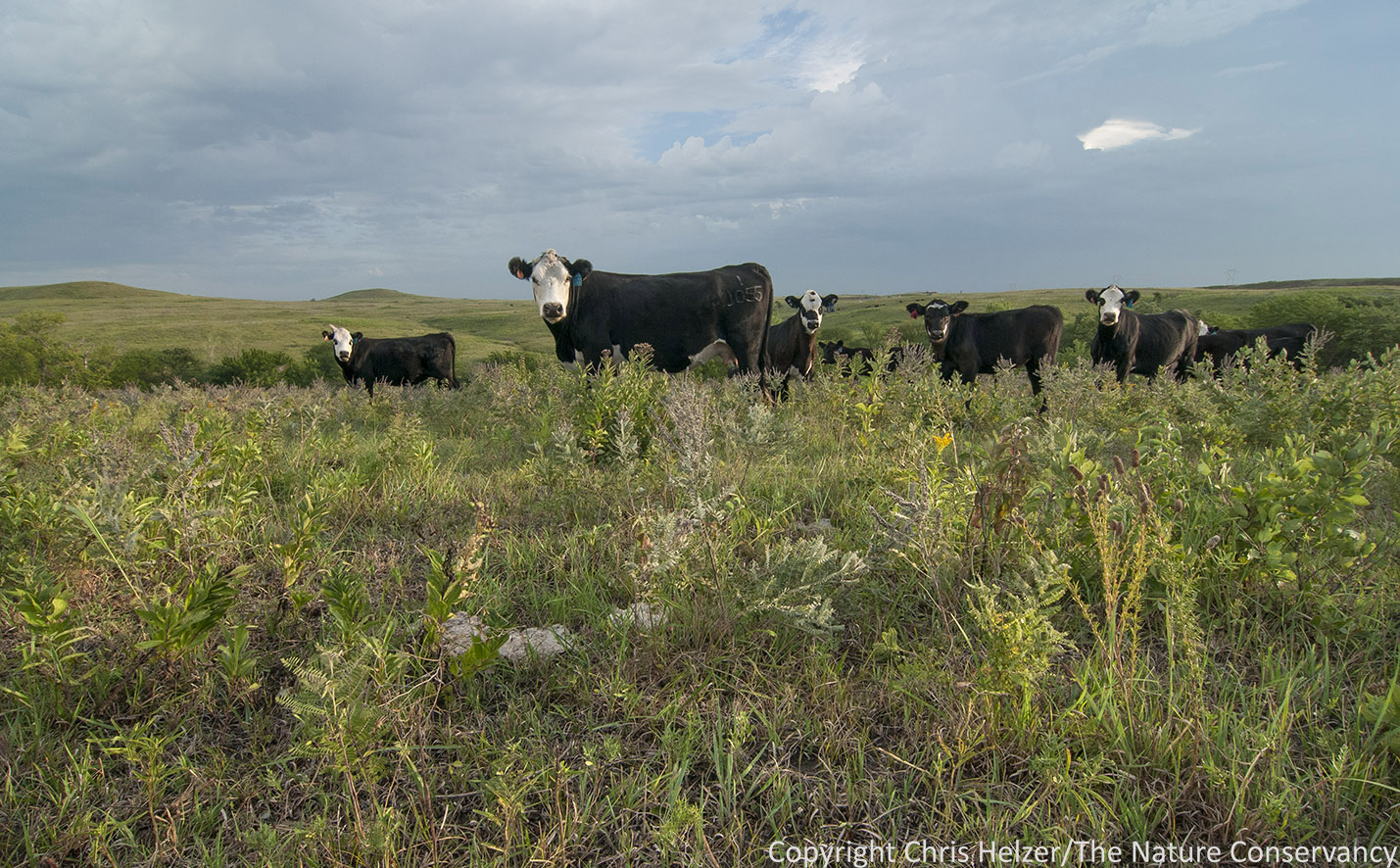
Patch-burn grazing was being used in a portion of Konza prairie.  These cattle were grazing in the most recently burned patch, creating habitat of short grass and tall forbs (wildflowers).  Ungrazed forbs in this photo includes leadplant and purple prairie clover.

Patch-burn grazing was being used in a portion of Konza prairie. These cattle were grazing in the most recently burned patch, creating habitat of short grass and tall forbs (wildflowers). Ungrazed forbs in this photo includes leadplant and purple prairie clover.  Research has shown higher diversity of many invertebrate and other animal groups in this kind of habitat than in more uniformly short or tall grassland habitat.
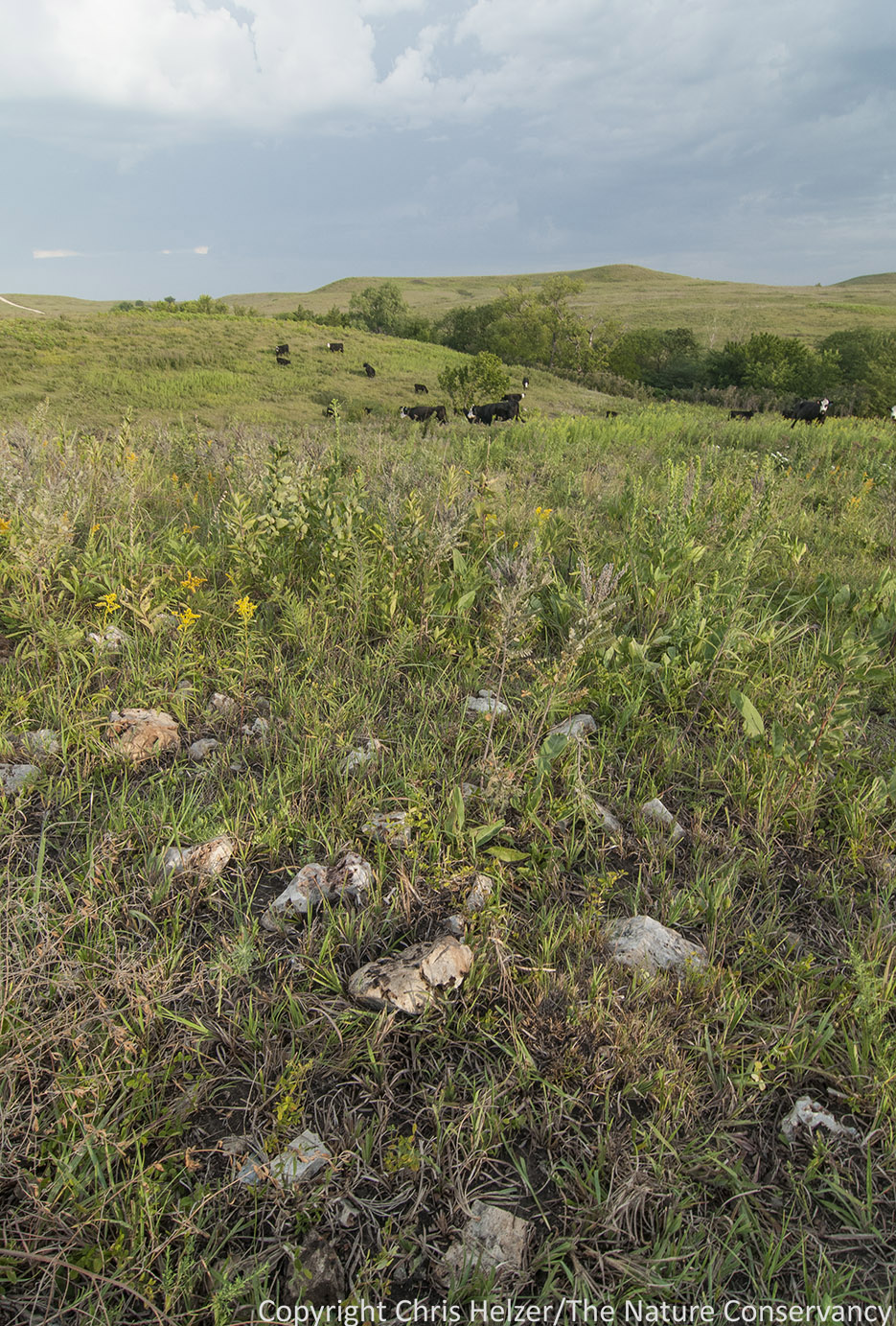
The Flint Hills prairie in Kansas is named for the shallow layers of bedrock beneath the surface.  There are also many scattered rocks in the prairie that are easier to find after a fire or grazing event opens up the vegetation.

The Flint Hills prairie in Kansas is named for the shallow layers of bedrock beneath the surface. There are also many scattered rocks in the prairie that are easy to see after a fire or grazing event opens up the vegetation.
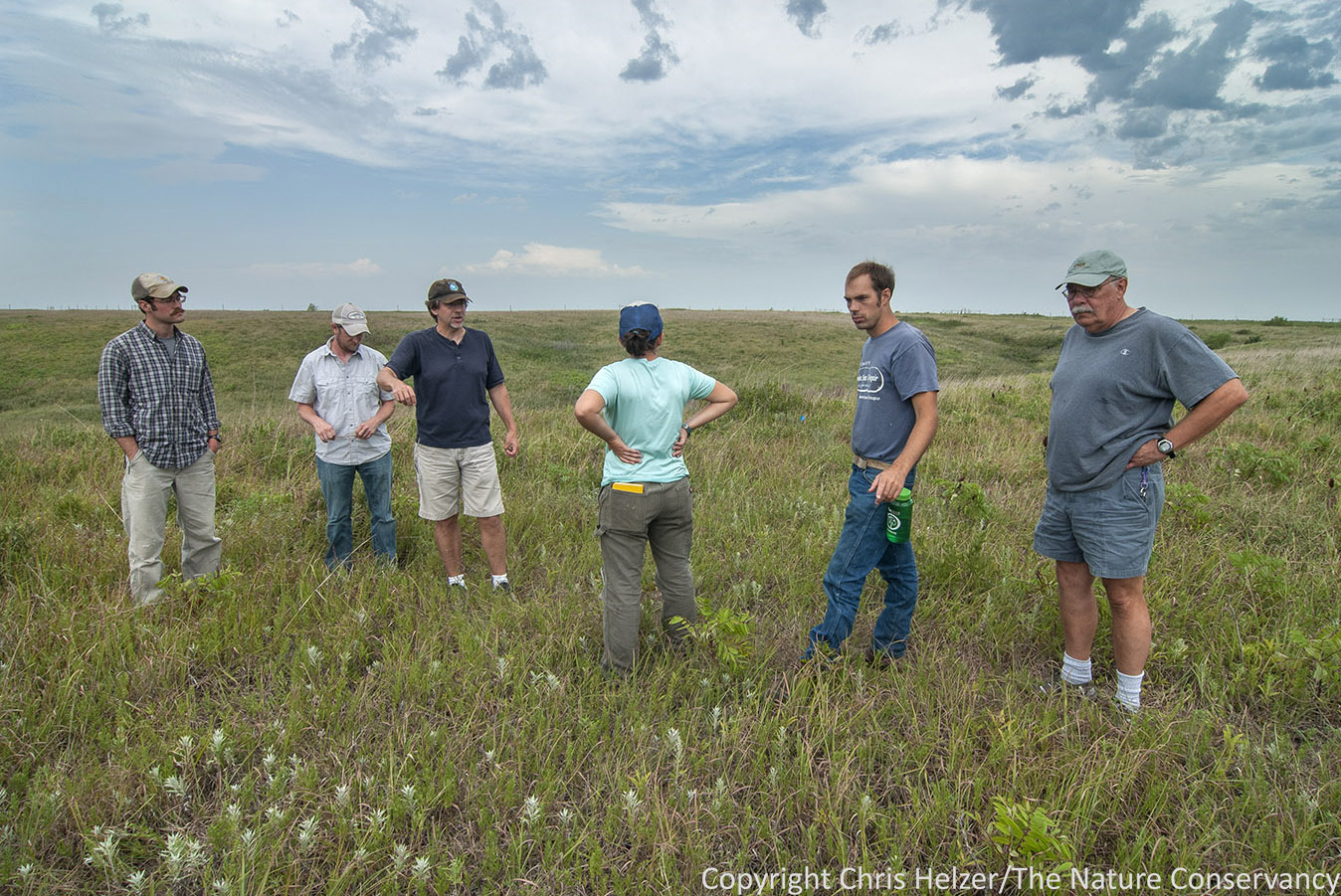
The tour group included (from left)

The tour group included (from left) Dillon Blankenship, Jesse Nippert (KSU), John Blair (KSU), Jasmine Cutter, Nelson Winkel, and Tony Joern (KSU).

By the time Tony, John, and Jesse headed back to campus, we were ready to head home – not because it was hot (it was) or because we were hungry (we were), but because we didn’t feel like we could cram any more new information into our heads.  As I said at the beginning of this post, I’ll try to synthesize some of that information for you over the next couple of weeks, but I’ll also try to put it into small manageable doses.

Stay tuned!
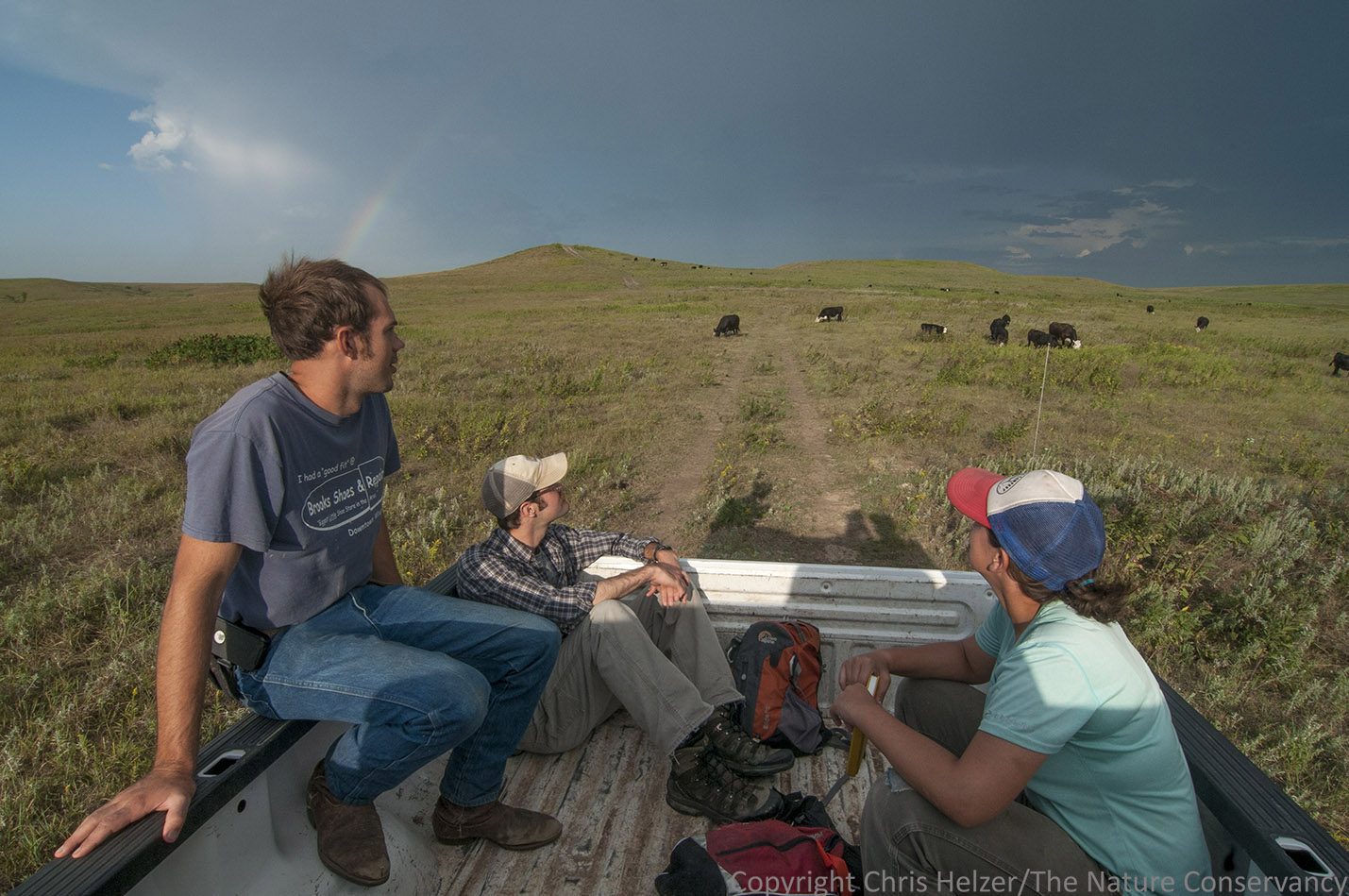
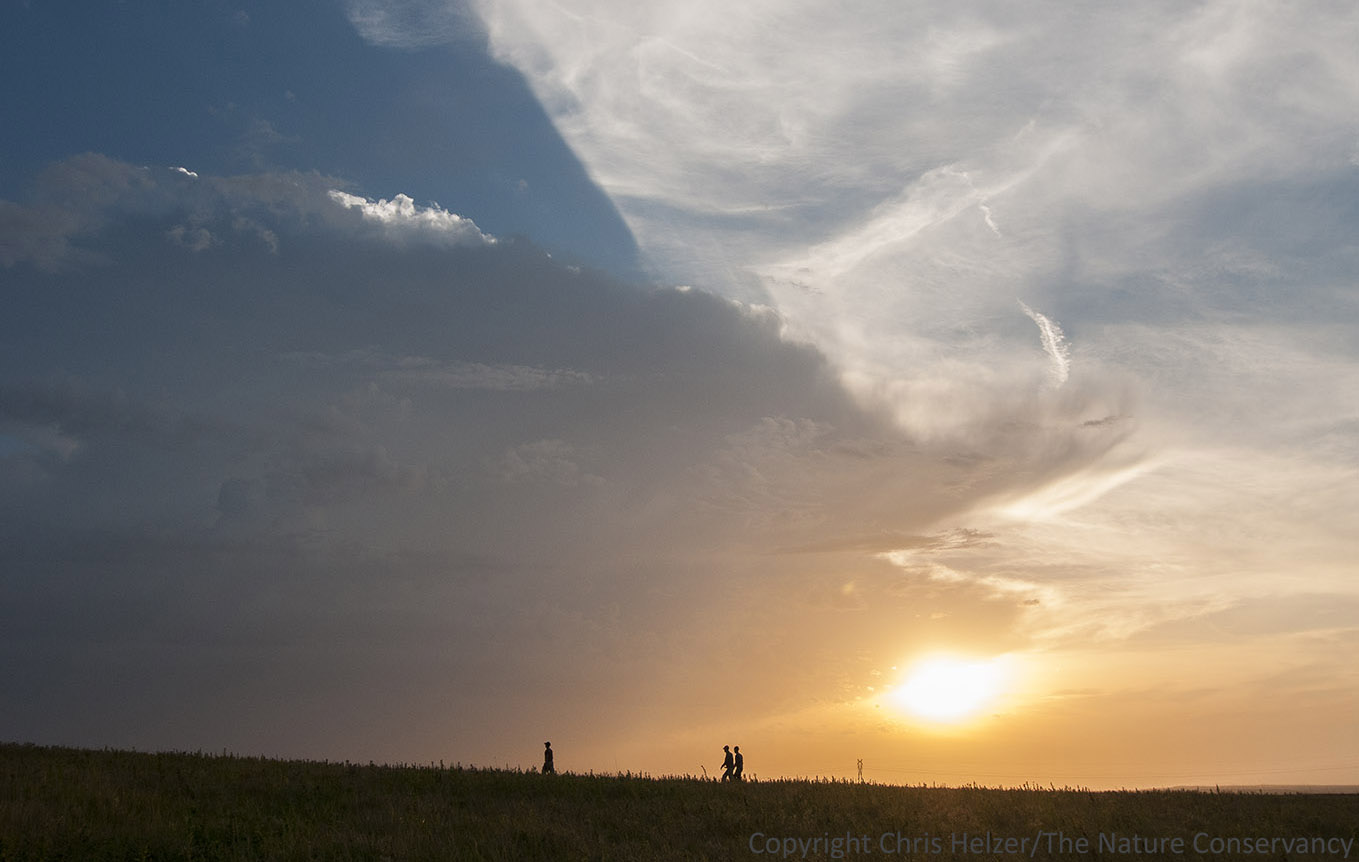
Nelson and the Hubbard Fellows enjoy a rainbow over the prairie.
Nelson and the Hubbard Fellows enjoy a rainbow over the prairie.


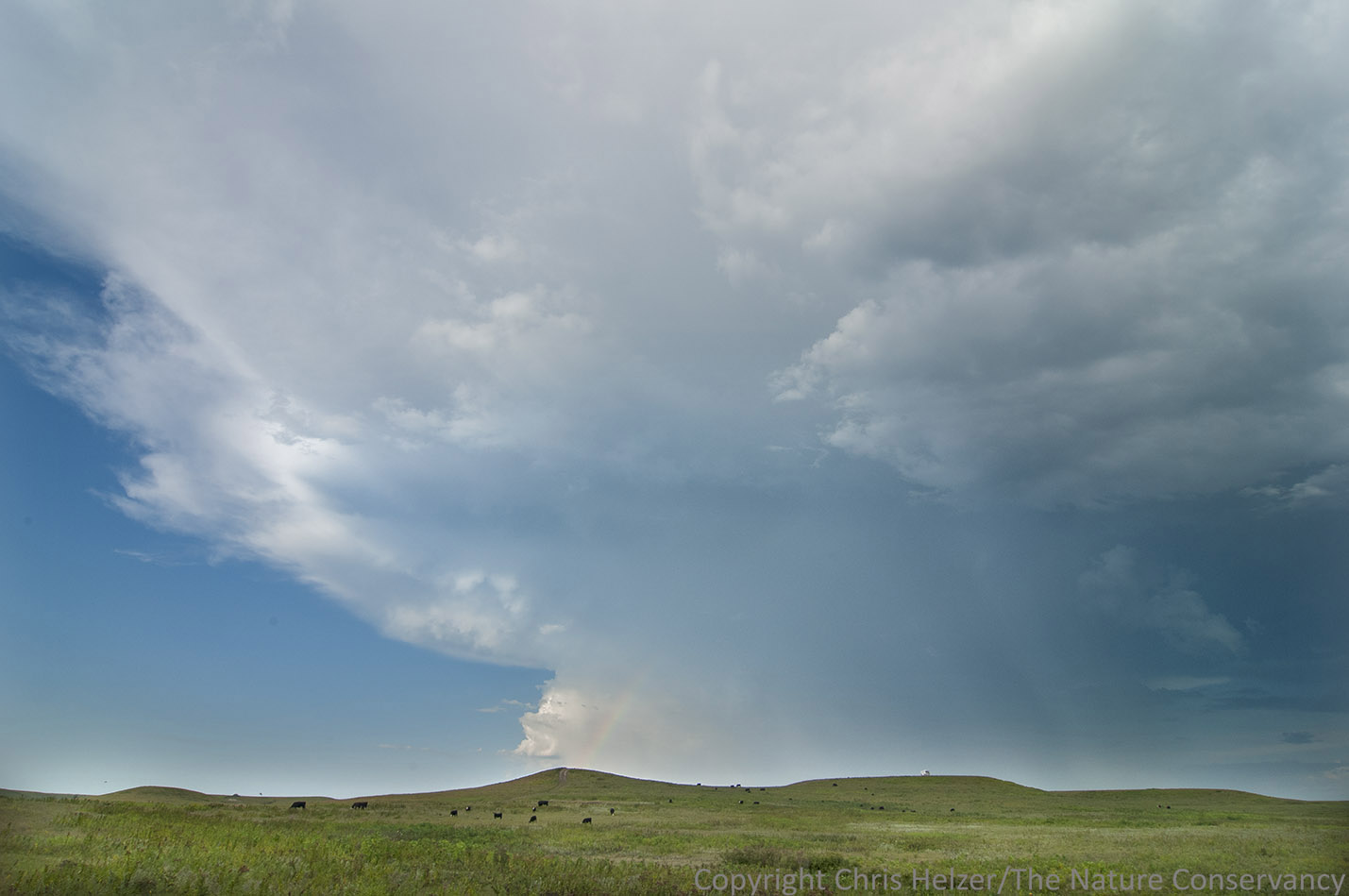
Earth, sky, and grass at Konza Prairie.

Earth, sky, plants, and grazers at Konza Prairie.

Next Field Day – August 27, 2014

We put together a draft agenda for our next Platte River Prairies Field Day, which will take place on Wednesday August 27 at our site south of Wood River, Nebraska.  The agenda is a draft only because we may add additional sessions and topics between now and then.  I hope to see you there!

You can download a PDF of this agenda here.

DRAFT AGENDA

9am – 9:15am

Introduction of the day’s sessions and orientation to the site.


 9:15am – 10:30 Sessions

Seed harvesting techniques – Bill Whitney

Tree killing techniques – Nelson Winkel and Dillon Blankenship

Small mammal ecology – Jasmine Cutter

Reading the prairie – Chris Helzer


10:45am-Noon

Invertebrate predators and other little critters – Julie Peterson

Seed harvesting techniques – Bill Whitney

Plants for pollinators – Jennifer Hopwood and/or Pete Berthelsen


12pm – 12:45pm – Lunch (bring your own)


12:45-2pm

Tree killing techniques – Nelson Winkel and Dillon Blankenship

Plants for Pollinators – Jennifer Hopwood and/or Pete Berthelsen

Reading the prairie – Chris Helzer


2:15-3:30

Seed storage and cleaning – Nelson Winkel

Reading the prairie – Chris Helzer

Invertebrate predators and other little critters – Julie Peterson


Session Descriptions

Seed harvesting techniques.  Bill Whitney, co-founder and director of Prairie Plains Resource Institute will provide demonstrations of how to harvest seed for prairie restoration, including how to identify when seed is ripe enough to harvest, how to hand-harvest efficiently, and other tips from his more than 30 years of prairie restoration experience.

Tree killing techniques.  Nelson Winkel and Dillon Blankenship of The Nature Conservancy will share tips on and do live demonstrations of three methods of deciduous tree control: basal bark treatment, cut stump treatment, and hack-and-squirt.

Small mammal ecology.  Jasmine Cutter of The Nature Conservancy is live trapping small mammals in the area and will talk about her results (and hopefully have live mammals to look at).

Reading the prairie.  Chris Helzer of The Nature Conservancy will talk about how to evaluate the management needs of a prairie.  Questions addressed will include: What plants are most important to pay attention to?  What do they tell you?  What are the important types of habitat structure to look for and how much do you need of each?  Which invasive species are important and how do you know when/how to attack them?  How do you know whether an area could benefit from fire and/or grazing?  This hike/session will be in a different prairie each time, so can attend multiple sessions if you like.

Invertebrate predators and other little critters.  Julie Peterson, UNL Assistant Professor of Entomology and Extension Specialist will lead a hike to find, identify, and discuss the ecology of invertebrates of all kinds, but with a particular focus on predators.

Seed storage and cleaning.  Nelson Winkel of The Nature Conservancy will lead a tour of TNC’s seed barn and talk about/demonstrate how to dry and process seed after harvest and how to store it until it’s time to plant.

Plants for pollinators.  Jennifer Hopwood of the Xerces Society (tentative) and Pete Berthelsen of Pheasants Forever will talk about which plant species are most important to pollinators.


OTHER INFORMATION

The Derr House is located 2 miles south of the Wood River exit off of Interstate 80 (Exit 300).  Turn south immediately after the highway curves to the east and you’ll be there.

For more directions to the site, go to: http://www.nature.org/ourinitiatives/regions/northamerica/unitedstates/nebraska/placesweprotect/eastern-nebraska-platte-river-native-prairie-nature-trail.xml

Some snacks and cold drinks will be provided, but please bring your own lunch, sunscreen, bug spray, drinking water, and whatever else you need for a day in the field.

You are welcome to come for part or all of the day as your schedule allows.