A Day of Bush Katydids

I was at our family prairie for a while last weekend, checking on grazing progress and generally catching up on what’s been happening.  There were several highlights of the trip, but one big one was that I saw LOTS of bush katydids.  Apparently, they had gone through their final molt to adulthood recently because they were flying all around the prairie (nymphs don’t have functional wings).  They were flushing away from my feet as I walked, which was nice because then I could watch where they landed.  That was about the only way I could spot them because of their impressive camouflage.  During a couple hours on site, I was able to track and re-find enough katydids to get quite a few photographs (all the photos in this post were from the same evening).

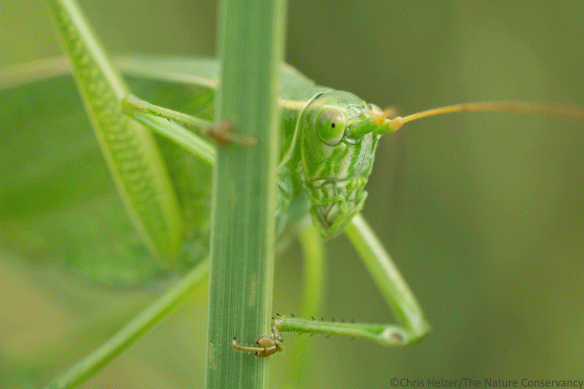
Bush katydids are exquisitely beautiful.

Katydids are similar to grasshoppers, but are in different suborders (meaning they split off fairly high on the taxonomic tree).  If you’re of a certain age, or read older natural history books, you may have first learned to call them “long-horned grasshoppers”, but that’s a fairly outdated term nowadays.  Katydids are pretty easy to distinguish from grasshoppers by their antennae length.  Grasshoppers have short antennae, while katydids have very long threadlike antennae – usually longer than their bodies.

Bush katydids (Genus Scudderia) are one of several groups of katydids, and tend to have a very green leaf-like appearance.  They are so leaf-like, in fact, most of us probably walk past many more of them than we notice, despite the fact they are pretty big insects (often over 2 inches in length).

Males of these and other katydids make courtship “songs” by rubbing their wings together.  While we hear those sounds through the ears on our head, katydids hear sounds through tympanum located on their legs.
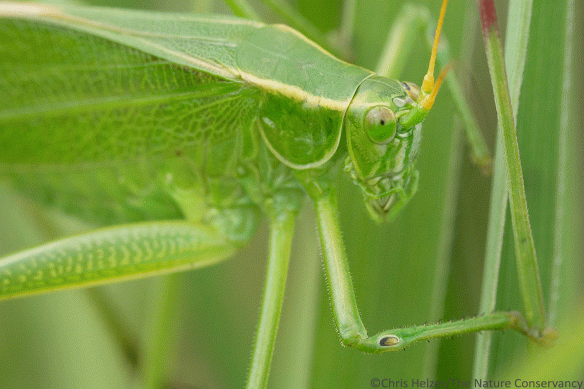
The dark oval on the leg of this bush katydid is the tympanum, or ear.

Here are more photos of bush katydids from last weekend.  I saw a lot more of them than I photographed…these are just the ones that sat still long enough for me to get within range (some of them flew a couple times before giving up and letting me take their picture).

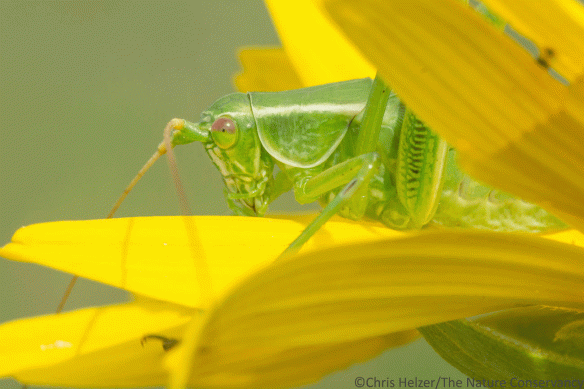
Crickets and katydids, including bush katydids, provide much of the evening sound in prairies.  There are many websites that feature those sounds, but here is one that is set up pretty well to help you distinguish between the various species.  If you can’t find them by sight, maybe you can at least find them by ear!

Photo of the Week – July 13, 2018

You know how you can look at something for years and still not see every aspect of it?  I was walking through Lincoln Creek Prairie this week, stretching my legs after photographing for my square meter project, when I came upon a couple big patches of Illinois tick clover (Desmodium illinoense).  There weren’t any active flowers on the plants, and I was about ready to move on after just a quick glance when I spotted something white along one of the stems.  Upon a closer look, I could see it was a moth, and it seemed to be plastered up against the plant.

This white moth seemed to be stuck on the stem of this Illinois tick clover plant.

As I inspected the moth more closely, it was clearly dead, and appeared to be essentially glued to the stem.

Here is the same moth, photographed from a different angle. Here you can see the abdomen stuck to the stem, and the mess it apparently made as it struggled to escape.

Now, I’ve known that tick clover plants (and especially their seeds) can be sticky, but I always ascribed that to the tiny stiff (and sometimes hooked) hairs covering them.  I sure wouldn’t have thought those hairs could catch and hold an insect.  However, as I looked more closely at the hairs on this plant, there were little tiny droplets of clear sticky fluid at the tip of each hair.  How can I have spent 25 years or more looking at prairie plants and not noticed that?  I looked online and in my copy of the Flora of Nebraska book and didn’t find any reference to those droplets in either place, but surely other people know of this.  I’ll have to look harder.  In the meantime…

…as I looked at nearby plants, I saw lots more dead or dying insects glued to them.  The most common of those were lightning bugs, followed by Japanese beetles.

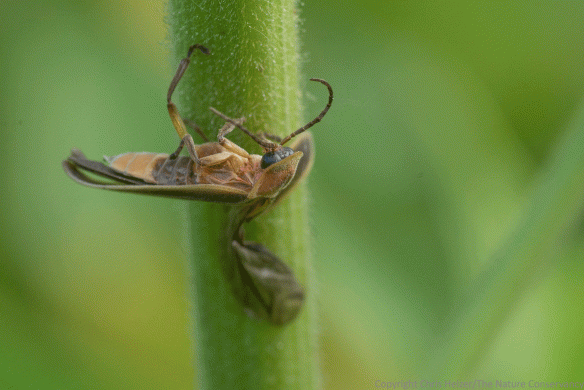
Lightning bugs were the most abundant of the insects I found stuck to tick clover stems. I must have seen at least 20 within a few minutes.

Japanese beetles (invasive species) were also a common victim of the sticky tick clover plants. This one appeared to have become stuck on a leaf, so I guess it’s not just the stems that have adhesive qualities.

I’ve written before about insects getting stuck to the bracts beneath thistle flowers and discussed the possibility that the sticky bracts helped keep ants and other non-flying nectar thieves from stealing floral resources.  Do tick clovers do the same thing?  If so, why haven’t I noticed?

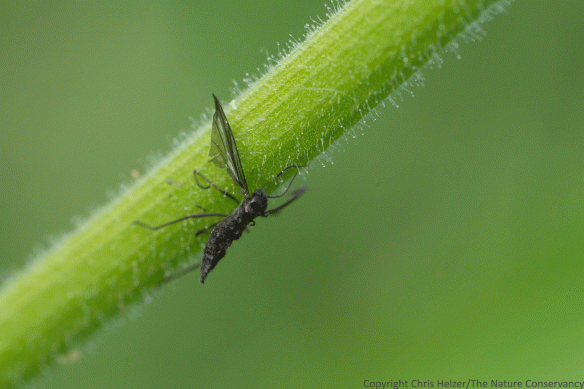
This little gnat (midge? something else? I can’t see the antennae) was the smallest insect victim I found.  If you click on this photo you can zoom in and see the droplets on the tips of the hairs.

This mosquito lost its life when it apparently tried to take a rest break on this tick clover plant.

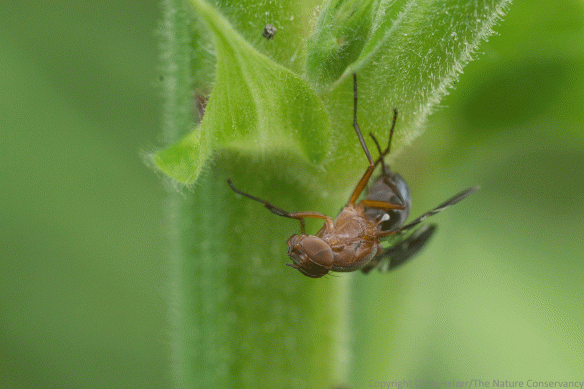
This picture-winged fly was still struggling when I found it.

I’m really curious to know if others have noticed insects losing their lives to tick clover plants, and whether or not it happens with other Desmodium species.  Does the plant produce the sticky droplets of liquid throughout its growth period, or just when it is flowering?  WHAT IS GOING ON HERE?

Thanks for any help.