Pondering Winter Wildlife Cover From My Comfy Couch

It’s a good ol’ fashioned blizzard here today.  As I’m sitting snugly in my warm house, I’m feeling a little badly for some of wildlife out there in the snow and wind.  The boys went outside to play in the snow for a little while, and both of them spent most of their time building shelters from the weather.  Many wildlife species, of course, migrate to warmer places or find/build themselves underground burrows to overwinter in, but there are some animals out there in the prairie right now, and this has to be a bad day for them.
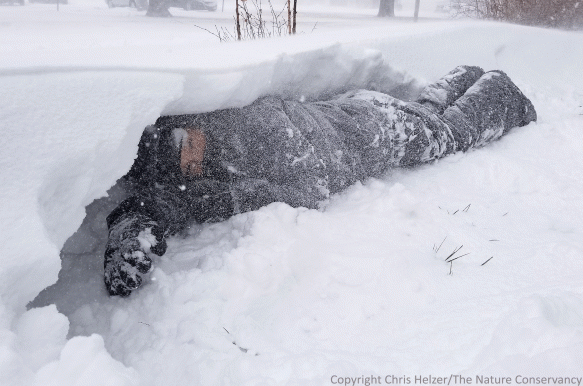
Calvin was able to dig out a little shelter in a drift. He was still pretty glad to come in and get some hot chocolate a few minutes later…

Sitting here on my comfortable couch, I’ve been thinking about the prairies I manage or help with, trying to remember what kind of cover is out there.  Overall, I feel pretty good about the situation.  Our shifting habitat mosaic approach involves providing a wide range of vegetation structure types in each of our prairies, including everything from short sparse vegetation to the kind of thick dense cover wildlife are probably seeking out today.  Nelson  (our Platte River Prairies land manager) and I have periodic conversations in which we try to envision ourselves as creatures that prefer various habitat types.  How far would we have to travel to find cover?  If we burn one patch of dense cover, where is the next closest patch of similar cover, and what would animals have to travel through to get to it?  We have a lot of factors to consider and balance as we discuss management plans each year, so it’s always helpful to see the world through the eyes of the various species that will have to live with (literally) the decisions we make.

To be completely honest, I probably don’t think enough about winter cover as I’m trying to consider the perspective of various creatures.  I’m more often thinking about nesting habitat for birds, breeding cover for small mammals, or sunning areas for invertebrates and reptiles that need to thermoregulate during the growing season.  Days like today are a great reminder that while all those considerations are important, at least some species will probably live or die based on what kind of shelter they can find during winter storms like the one roaring outside right now.
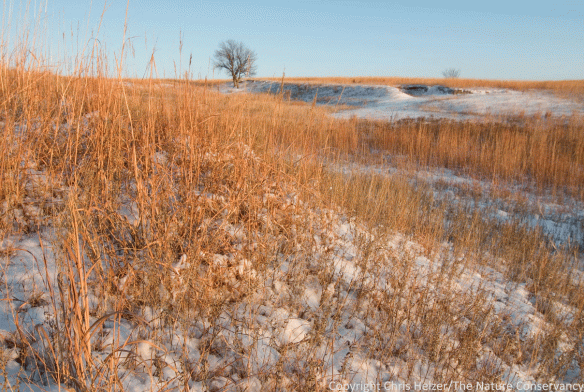
Many parts of our family prairie have pretty short vegetation structure during the winter, but we always try to leave some patches of taller grass as well.  This is kind of in-between.  It’s not really dense enough to provide great cover from the wind, but has places for small animals to hide while they’re out feeding.

I’m thinking today about meadowlarks, for example.  As I’ve walked our prairies during the last month or two, I’ve seen a lot of meadowlarks flying around in small groups.  My understanding is that meadowlarks that breed around here head south to Kansas or Oklahoma, and the ones we see during the winter come from up in the Dakotas.  In other words, meadowlarks don’t migrate en masse to one general destination.  Instead, each bird just goes a little southward from where they spent the summer.  I wonder if they each wait until they start seeing birds from the north show up and then head south to get away from the crowd…

Regardless, birds like western meadowlarks need some kind of shelter out in the prairie on days like this.  We know a lot less about the winter habitats used by grassland birds than we do about summer habitat use, and as far as I know, no intrepid biologist has yet gone out to see where meadowlarks or other birds are hanging out during blizzards.  (If you’re an intrepid biologist who HAS done this, please let me know!)  I think it’s fair to assume that most birds (and any other wildlife who aren’t underground) try to get out of the wind during this kind of storm.  It’d be interesting to know whether they stay in open grassland and look for tall dense vegetation or venture into brushy or wooded areas where they might not normally go.
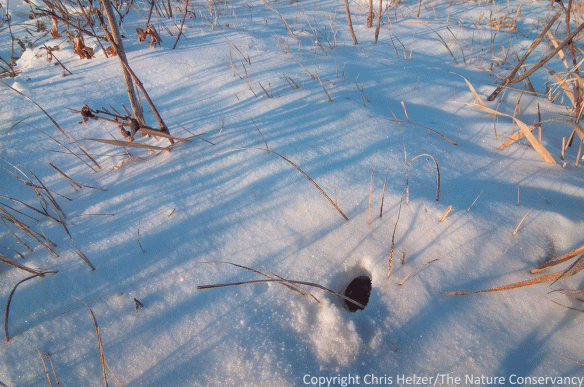
Somebody is apparently sheltering in place under the snow here.  Probably not a meadowlark…

Not knowing much about individual wildlife species and how they each choose to shelter from winter storms, I guess the best strategy is to provide as many habitat types as possible so they can all find what they need.  That way, meadowlarks can forage in short or “weedy” areas during pleasant sunny days, but move to a nearby patch of dense grass (or whatever other cover they like) when they need to nestle in thatchy vegetation and get out of the wind.

Here in our comfy house, we’ve been talking about trying to fix the drafty corner of our kitchen, where one of our walls needs a little better insulation.  Our poor little feet get cold when we’re making toast on windy winter mornings!  It’d be really nice to get that fixed.  On the other hand, it’s just the kind of hardship that helps me understand what meadowlarks are going through on days like this.  I bet their feet were cold at breakfast time too…
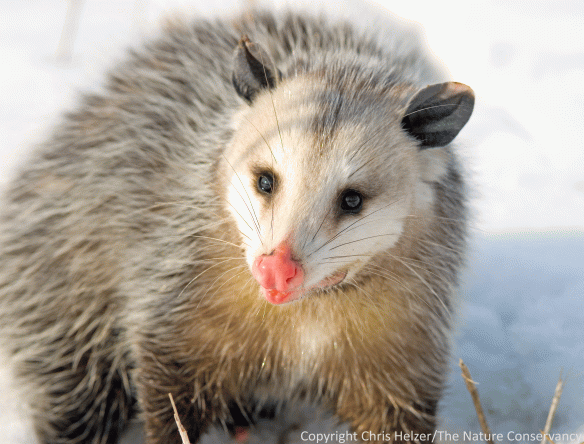
 

Meadowlarks could learn from opossums, who either take over abandoned burrows from other mammals or find a nice wood pile to shelter in during cold weather and blizzards.

The Diversity, Beauty, and Secret Lives of Grasshoppers

I know I say this about a lot of different insects, but grasshoppers are truly amazing creatures.  Grasshoppers have a reputation as voracious consumers of crops and forage grasses, and that reputation is well-earned.  However, the pest tag is far too often and broadly applied.  There are something like 400 species of grasshoppers in the western United States, and only about 20 species are categorized pests.  In Nebraska, we have 108 grasshopper species, with only a handful that ever cause economic damage, and that damage occurs sporadically – mainly in years when those species have population booms.

The differential grasshopper is one of only a few grasshopper species that can cause economic damage to farmers, ranchers, and gardeners. It’s a native species that has adapted very well to the way we’ve altered its world.

Unfortunately, the “Grasshoppers Destroy Crops” headline tends to swamp the many and much more interesting grasshoppers stories we should be talking about.  Let’s start with the numbers I’ve already presented.  THERE ARE 400 SPECIES OF GRASSHOPPERS IN THE WESTERN UNITED STATES AND 108 SPECIES IN NEBRASKA ALONE!  That doesn’t include katydids or crickets, by the way, just grasshoppers.  I’m guessing most of you had no idea there were that many kinds of grasshoppers.  Am I right?

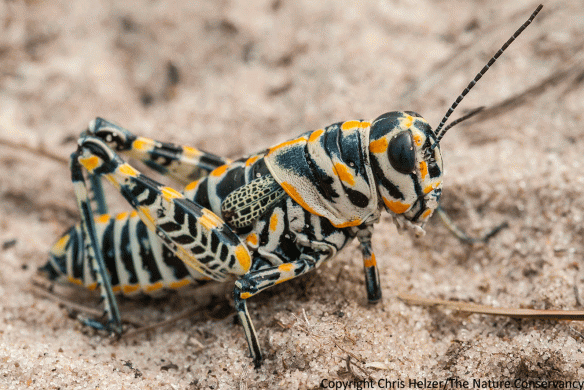
I’m including a half dozen grasshopper photos in this post to show off just a taste of the beauty and diversity of grasshoppers in prairies.  If you want to read more about this, you can read an article I wrote for the August/September issue of NEBRASKAland Magazine.  While you could be forgiven for thinking there are two kinds of grasshoppers in the world – green and brown – you would be very wrong.  There are grasshoppers with much more color and pattern variation than many species of birds, but nobody makes movies about people circling the globe to see more grasshopper species than anyone else, do they?  Many band-winged grasshoppers show off gorgeous red or yellow wings as they fly, wings that rival those of butterflies, but you don’t hear about historically-prominent British Prime Ministers collecting grasshoppers, do you?

The painted grasshopper (Dactylotum bicolor) rivals any bird for beauty in color and pattern.

Now let’s discuss grasshoppers’ diet, which can include far more than just grasses.  Some grasshopper species feed high up in the canopy of prairie vegetation, while others stay on the ground.  Many have a very wide diet, including both grasses and wildflowers, but others are much more specialized, including grasshoppers that feed almost completely on one or a few wildflower species.  Grasshoppers are often seen feeding on the pollen of flowers, especially sunflowers, providing further evidence that they are much more than just grass eaters.  Most grasshopper species prefer the newest, most tender leaves of plants, but some – especially those that live mostly on the ground – make their living off of older leaves, including some dropped by their brethren living above them.  Regardless of what they like to eat, grasshoppers have very sensitive organs on the tips of their antennae that help them determine the forage quality of a leaf before they eat it.

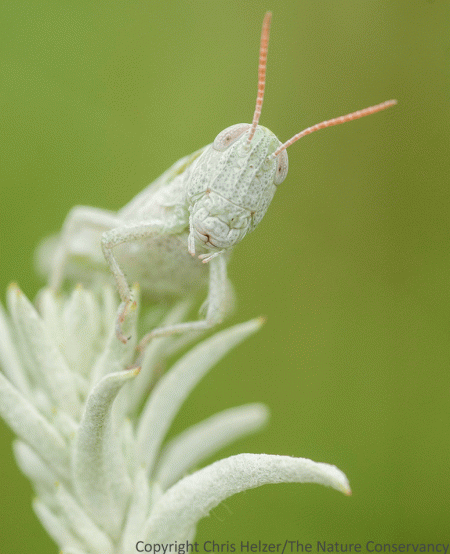
The cudweed grasshopper (Hypochlora alba) is named for its favorite food plant – cudweed sagewort, aka white sage (Ambrosia ludoviciana), on which it is supremely well camouflaged.

When you think about animals that have sophisticated communication systems, you probably think about creatures like apes, whales, and even prairie dogs, right?  You might be surprised to learn that grasshoppers have their own complex methods of communication as well.  Every grasshopper species produces its own unique set of sounds, most of them created by rubbing their hind legs against their abdomen.  In addition, some employ what’s called “crepitation” – a loud clacking sound made by snapping their hind wings while flying.

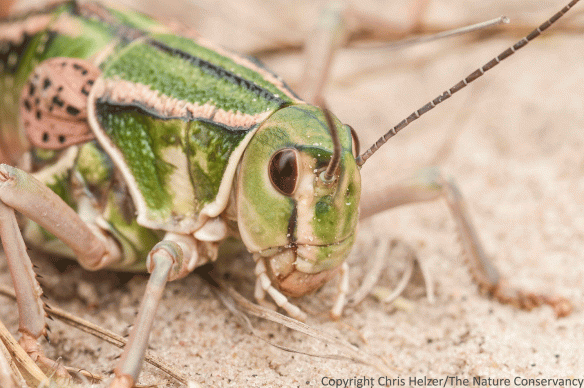
The huge and flightless plains lubber (Brachystola magna) is as gorgeous as it is large.

Grasshoppers can also communicate visually.  They can do this by rubbing their legs against their wings, flashing their wings, and making a variety of motions with their legs.  Those visual signals can help them attract mates, defend breeding territories and feeding areas, and ward off unwanted suitors.  I’m not saying we should make documentaries about people trying to teach grasshoppers how to communicate with American Sign Language, but I’m not NOT saying it either…

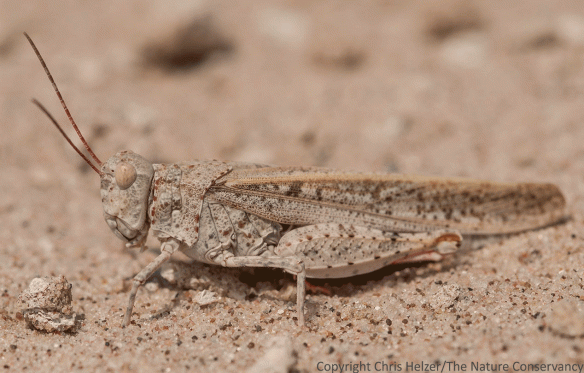
This bandwing grasshopper (Oedepodinae) is about as well camouflaged as you could hope for against its sandy background.  When it flies, though, it displays very colorful wings (color and pattern varies by species).

If you’re someone who doesn’t care about the beauty, diversity, or communication abilities of grasshoppers, maybe their utilitarian value will make an impression.  As a major consumer of vegetation in prairies, grasshoppers play a huge role in nutrient cycling, a role that becomes even more important in prairies without large vertebrate grazers.  Perhaps most importantly, though, grasshoppers are a crucial food source for many other animals, including birds and other wildlife species you (hopefully?) enjoy having around.  They are large and packed with nutrients, as well as abundant and fairly easy to catch.  In addition, while they aren’t a particularly popular food item among people here in North America, grasshoppers are an important source of protein for humans in other parts of the globe.

When grasshoppers start to emerge next spring, please take a little extra time to notice and appreciate them.  See how many different colors and shapes of grasshoppers you can find in your neighborhood prairies (remembering that if their antennae are as long as their body or more, they are katydids, not grasshoppers.)  Look for the grasshoppers with big colorful wings as they clatter noisily away from your feet.  And if you’re a person of financial means, and are interested in making a movie about grasshopper watchers or people trying to teach grasshoppers how to talk to humans, call me.  I know people who know people.

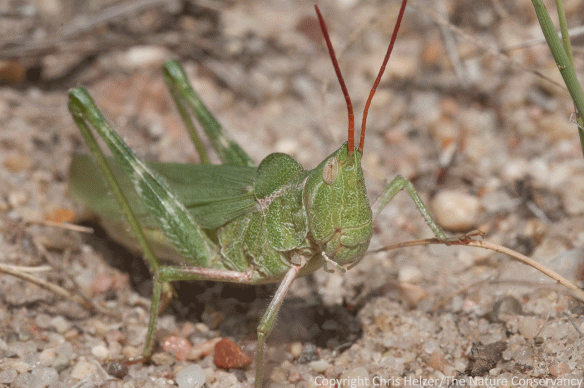
How can you not like and admire the green fool grasshopper (Acrolophitus hertipes), with its raised back ridge, bright red antennae and charming face?