Child Care Can Be a Burden

I’m up at the Niobrara Valley Preserve this week.  While collecting data today, we spotted a brood of sharp-tailed grouse, a couple other baby birds, and a whole bunch of cute red bison calves.  I got photos of all of those except the grouse (they’re really fast!).  I might post some of those cute baby photos later.  Tonight, though, I have just enough time to post a photo of the other babies I saw today.

Female wolf spiders are known for carrying their brood around on them until they’re big enough to go off on their own.  I watched this family for quite a while this evening.  It looked to me like mama was about done with this whole child care thing.  She mostly just stood still while her babies clung to her, or periodically scurried around, looking for a better place to hold on.  The only moving she did was to periodically wipe a few spiderlings off her face.  Her immobility made photography easier, but I felt pretty bad for her.

I’m guessing the spiderlings will be leaving soon.  In fact, a few of them made it up onto my camera while I was watching their mom.  I wish them success, but I also hope their mom gets to take a nice vacation, or at least enjoy a good grasshopper dinner after they leave.  It looks like she deserves it.

Photo of the Week – June 8, 2017

In several of our prairies right now, poppy mallows are among the most prolific flowers.  Purple poppy mallow (Callirhoe involucrata) and pale pink poppy mallow (Callirhoe alcoides) are not only great tongue twisters, but also pretty flowers and important food sources for pollinators.  Earlier this week, I watched a monarch moving from flower to flower in a big patch of pale pink poppy mallow, but I didn’t manage to get a picture of it.  Yesterday, I paused to photograph a poppy mallow blossom and noticed something funny about the underside of the flower…

Those of you who have followed the blog for a while know of my affinity for crab spiders.  They’re just so stinking cute, and once you start looking for them, they are everywhere, especially on flowers.

This particular long-legged friend and his relatives were on several kinds of flowers in our prairies this week, including pale pink poppy mallow (above) and yarrow (below).

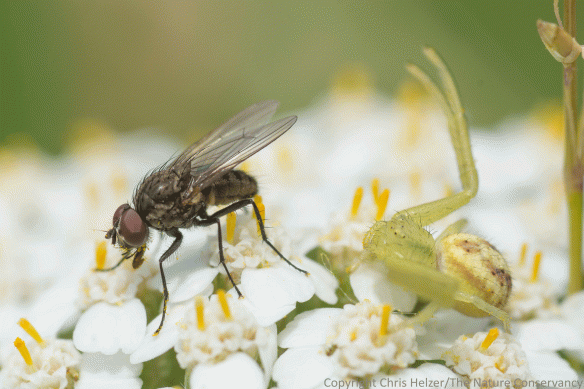
At our family prairie, I found a different crab spider (below) hanging out on yarrow with its long front legs cocked and ready to spring shut on unsuspecting prey.

As I photographed the spider, a fly landed on the flower and started feeding on pollen and moving about the flower.

It got closer and closer to the spider, so I just kept shooting.  A few moments later, it turned its back on the spider…

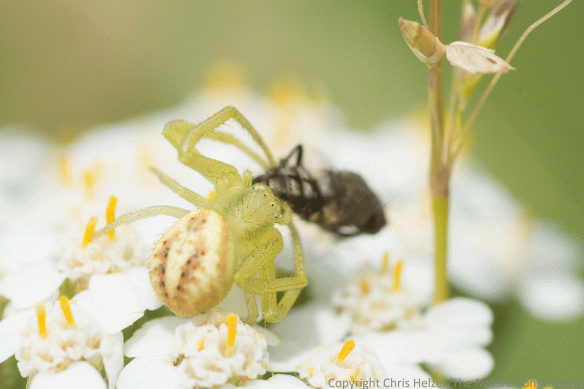
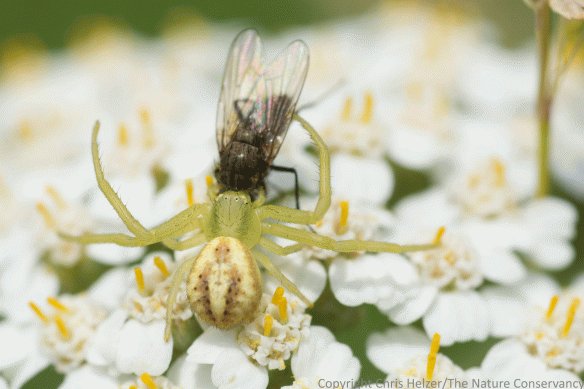
…and the spider GRABBED it.  The fly buzzed loudly and drug the spider around a little, but was no match for the strong grip and venomous bite.

For a few seconds, the spider stood vertically, holding tight to the fly.  Then as the fly’s struggles subsided, the crab spider repositioned itself to start feeding.

Apparently, the spot right behind the head is the best place to puncture a fly if you want to suck out its liquefied insides.  A little tip for all you fly sucker wannabes out there…

Seeing the number of flowers with crab spiders, and the ease with which this crab spider caught its prey is a reminder of how dangerous it is to be a pollinator.  Every flower is a potential source of nutritious food, but a fair number of them also host lurking crab spiders, waiting to snag careless insects.  As someone who spends a lot of time trying to photograph pollinators, I’m keenly aware of how quickly they move from flower to flower.  Of course they do – the longer they stick around each flower, the better chance something will catch and eat them!