
I was at our family prairie for a while last weekend, checking on grazing progress and generally catching up on what’s been happening. There were several highlights of the trip, but one big one was that I saw LOTS of bush katydids. Apparently, they had gone through their final molt to adulthood recently because they were flying all around the prairie (nymphs don’t have functional wings). They were flushing away from my feet as I walked, which was nice because then I could watch where they landed. That was about the only way I could spot them because of their impressive camouflage. During a couple hours on site, I was able to track and re-find enough katydids to get quite a few photographs (all the photos in this post were from the same evening).

Bush katydids are exquisitely beautiful.
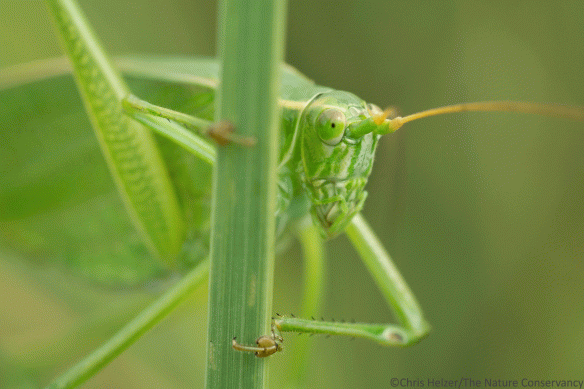
Katydids are similar to grasshoppers, but are in different suborders (meaning they split off fairly high on the taxonomic tree). If you’re of a certain age, or read older natural history books, you may have first learned to call them “long-horned grasshoppers”, but that’s a fairly outdated term nowadays. Katydids are pretty easy to distinguish from grasshoppers by their antennae length. Grasshoppers have short antennae, while katydids have very long threadlike antennae – usually longer than their bodies.
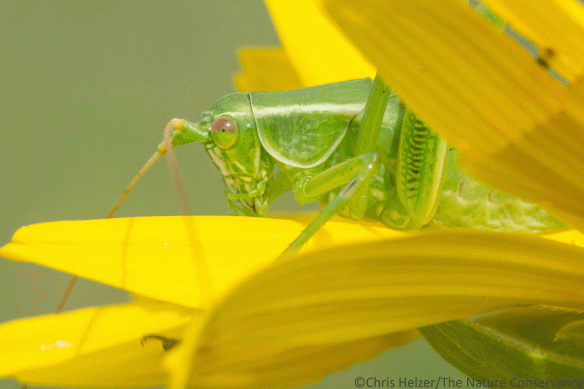
Bush katydids (Genus Scudderia) are one of several groups of katydids, and tend to have a very green leaf-like appearance. They are so leaf-like, in fact, most of us probably walk past many more of them than we notice, despite the fact they are pretty big insects (often over 2 inches in length).
Males of these and other katydids make courtship “songs” by rubbing their wings together. While we hear those sounds through the ears on our head, katydids hear sounds through tympanum located on their legs.
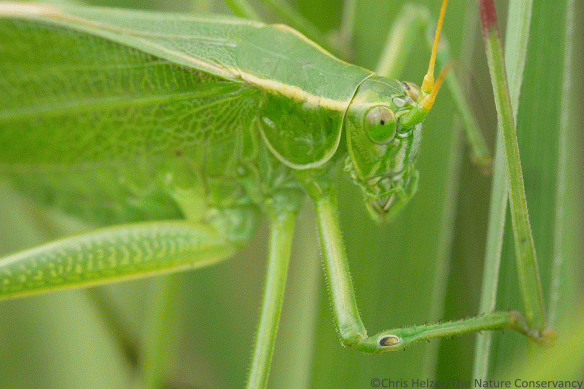
The dark oval on the leg of this bush katydid is the tympanum, or ear.
Here are more photos of bush katydids from last weekend. I saw a lot more of them than I photographed…these are just the ones that sat still long enough for me to get within range (some of them flew a couple times before giving up and letting me take their picture).


Crickets and katydids, including bush katydids, provide much of the evening sound in prairies. There are many websites that feature those sounds, but here is one that is set up pretty well to help you distinguish between the various species. If you can’t find them by sight, maybe you can at least find them by ear!
 The Prairie Ecologist