
My favorite photos tend to be those I’ve taken most recently. I imagine that’s true of most everyone who does any kind of creative work. I have a tab at the top of the home page for this blog called “Prairie Photos” where you can see some of my favorite photos. The other day, I looked through them and realized it had been way too long since I’d updated that page, so I remedied that. Now you can click on that tab (or just click here) and see a batch of some of the photos I’m most proud of. Here are a few examples…
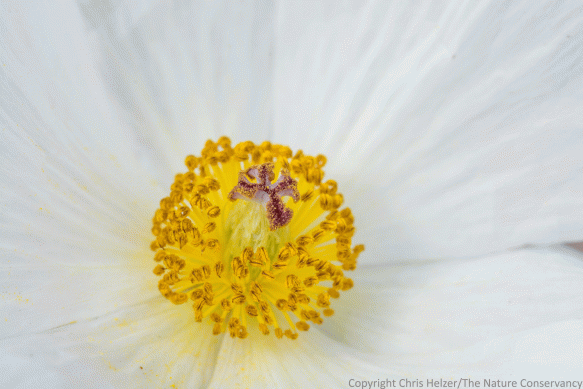
This photo of prickly poppy (Argemone polyanthemos) was taken this summer. I think I mainly like it for its simplicity.
Most of the photos included in that collection were taken within the last couple of years, but there are a few older ones that I still like. Often, those older photos captured a particular moment of serendipity that still evokes strong emotions for me. Other times, they were the the final result of a lot of trial and error, and my pride in the image comes as much from that effort as from the quality of the photo.
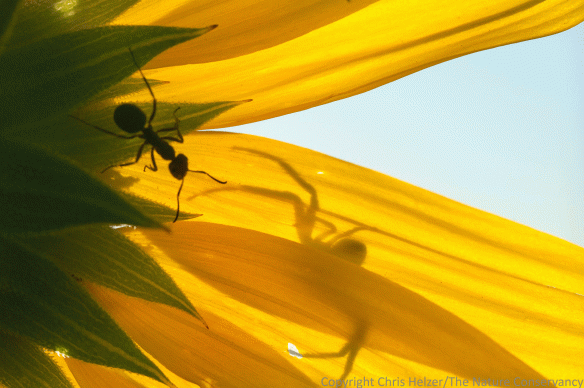
This image of a crab spider and ant was taken back in 2013. I was photographing the spider when the ant unexpectedly appeared.

This 2015 photo of stiff sunflowers in restored prairie along the Platte River still evokes a strong memory of the morning itself.

I honestly don’t know when this photo was taken. It’s a scan of an old slide. While I don’t remember the date (I could look it up) I definitely remember the moment because I’d been trying for years to find a vantage point from which I could capture the landscape diversity of the Niobrara Valley Preserve and this was the first time I felt successful. Most of the cedar trees shown in the photo are gone now…
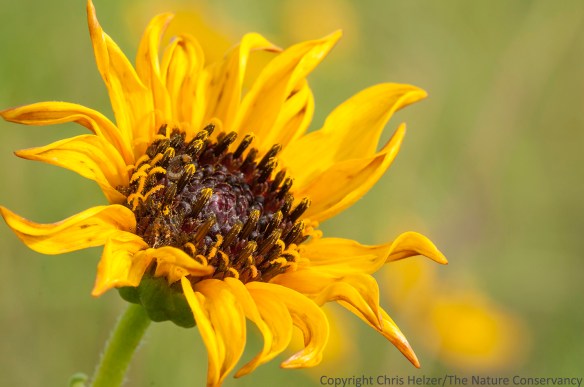
I have countless photos of stiff sunfllower (Helianthus pauciflorus), but this 2015 image is my current favorite. I like the color and composition, but also the fact that the petals are only partially elongated, giving it a different look than more mature flowers.
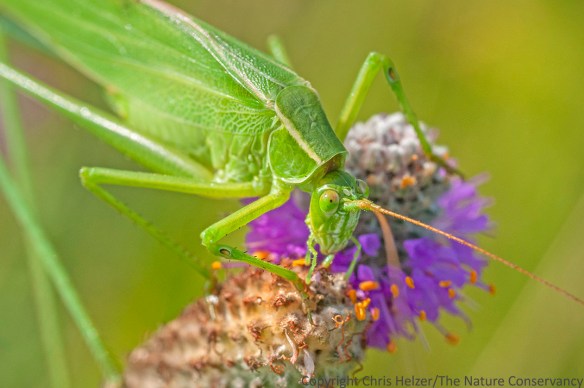
This katydid photo from 2014 is still one of my favorites because of the color and composition, but also because I can see its “ears” so clearly on its front elbows. I use it often to talk about that fascinating anatomical tidbit about katydids.
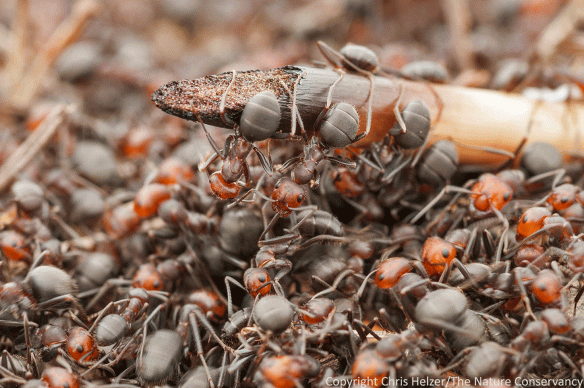
When I see this 2015 photo, I can still smell the smoke of the prairie fire that scorched the vegetation on and around the big ant mound. I was monitoring the aftermath of our prescribed burn when I found these ants, and was able to capture the heightened activity of the colony as they scrambled to assess their newly exposed condition after the fire.

I have plenty of early morning photos with dew drops in them, but this one (from June 2016) is my current favorite.
One of my biggest aspirations for my photography is to help people see the beauty of prairies. If you have friends or colleagues who aren’t yet aware of that beauty, maybe you can send them the link to these photos to show them a few examples.
Do it quick, though, before I get tired of these photos and replace them with newer ones!


 The Prairie Ecologist