
One of the best perks of my job is simply that I get to be outside enough to see a lot of interesting ecological phenomena. Today, I thought I’d share a few vignettes from the last couple weeks.

Monarch caterpillar (finally) on common milkweed.
Last year, we set out to count monarch caterpillars on our sites, hoping to compare numbers between various management treatments. We were stymied by the fact that there were almost no caterpillars to be found anywhere, let alone enough to make comparisons. This year, I assumed the numbers would be better, but since finding eggs and caterpillars in May from the early migrants from Mexico that arrived this spring, I haven’t seen any caterpillars until this week. And I only found one this week. Whoopee.

Dodder flowers on Maximilian sunflower. Platte River Prairies.
Dodder is a fascinating parasitic plant that wraps its plastic twine-looking self around prairie plants like sunflowers and goldenrods and more. Later in the season, the orange twine dries up and disappears, leaving only the fuzzy spirals of flower/seed heads on the stems of its host plants. If you didn’t see both of them together, you might never guess the twine and fuzzy spirals were from the same plant. This week, dodder is in transition, with both flowers and twine at the same time.
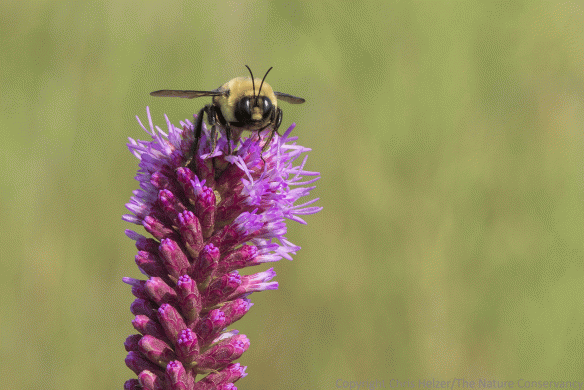
A male brown-belted bumblebee (Bombus griseocollis) perches high in the prairie, hoping to find and mate with an emerging queen of its species.
A few years ago, I found out about a fun behavior by male brown-belted bumblebees. As colonies start producing queens for the next year, males spread out across the prairie and wait for those queens to enter the world. The males sit on tall perches for hours, scanning for big females. Once they see one, they (and all the other males who spot her) race to be the first to mate with her. This week, they were at it again. I’m really glad to have been clued into this really cool phenomenon. Otherwise, I’d probably just see the bees and assume they were resting.
Finally, I’d like to thank those who helped with and attended our field day last Saturday. The forecast didn’t look promising but the rain cleared out right before the event started and we ended up having fantastic weather. The attendance was lower than hoped because of the forecast, but we still had people from at least 7 states and U.S. territories and we all learned a lot about prairie ecology and invertebrates. Big thanks to presenters Julie Peterson of University of Nebraska Extension, Rae Powers of Xerces Society, and Sarah Bailey of Prairie Plains Resource Institute, along with Kayla Mollet and Katie Lamke from the University of Nebraska-Lincoln.

Hey Ed, your mom caught a toad.

Julie Peterson (pink shirt, blue hat) shows attendees an insect.


 The Prairie Ecologist