On the horizon

I take a lot of photos of flowers and small invertebrates.  This will come as no surprise to those of you who frequent this blog.  I try to throw in a bison or landscape photo just often enough to keep you hooked, but quickly revert to my fixation on photographs of bees, grasshoppers, flowers, and – of course – crab spiders.  I try to justify my obsession by explaining how important all those little organisms are to the functioning of prairie ecosystems (and they are), but the truth is that I just like close-up photography better than wildlife and landscape photography.  Today, I’m not even trying to hide that from you.  This would be a great time to click away to something else if you don’t want to read a lot of words about photographing little things in nature.

When I first entered the world of close-up (or macro) photography, I remember both reading and hearing about “distracting horizon lines” and being cautioned to avoid including the horizon in the background of close-up photos.  It’s true that concentrating too much on a subject and ignoring what’s behind it is a major issue for macro photographers.  It’s also true that including a bright stripe of sky on top of a darker stripe below can pull the viewer’s eye away from the intended subject of a photo.  However, as with most photography rules, making exceptions can sometimes lead to more interesting images.

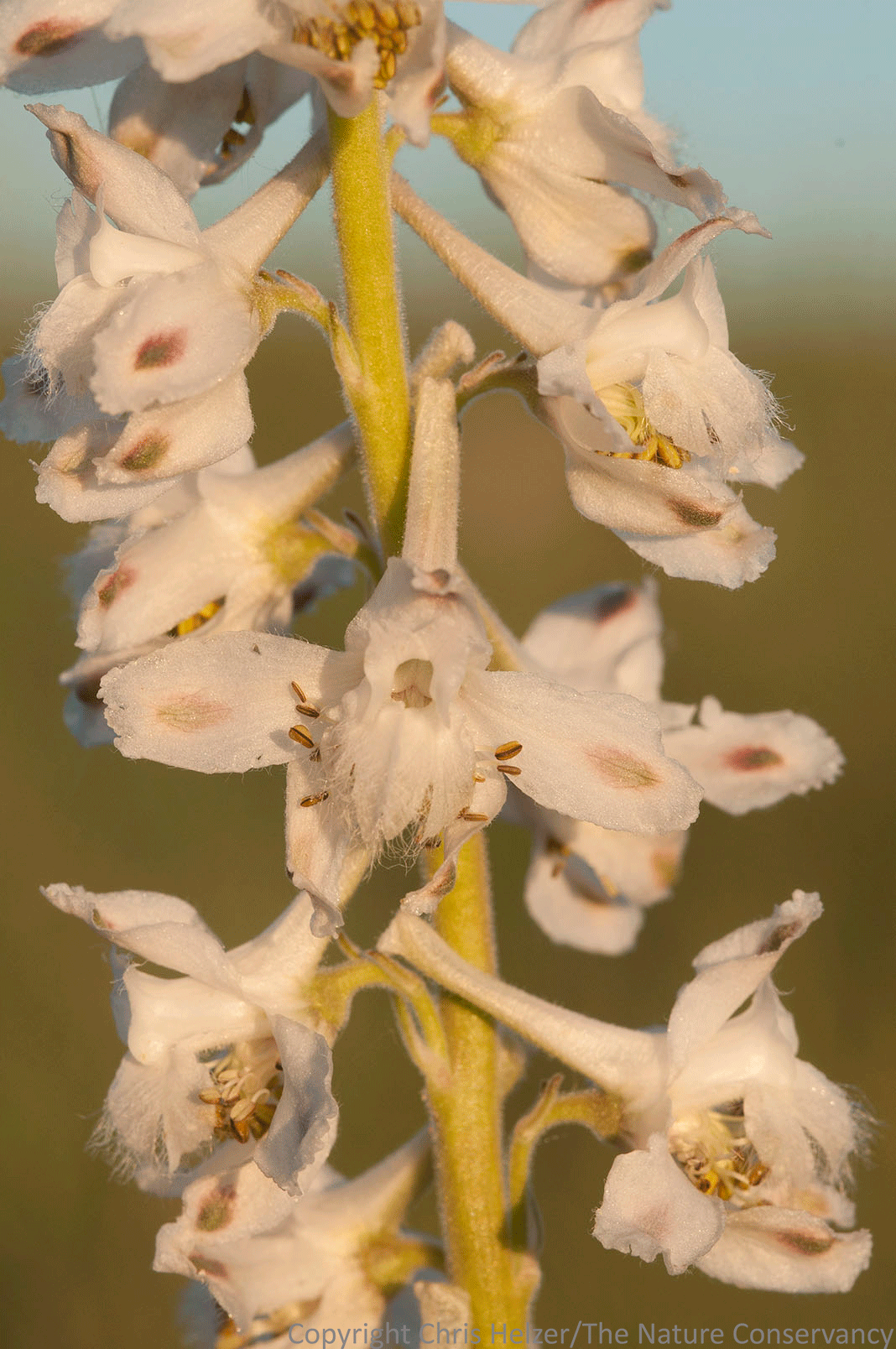
Here’s a very nice photo of prairie larkspur (Delphinium carolinianum) in the Nebraska Sandhills.  It was taken in beautiful early morning light and has a nice clean background.
Here’s the same larkspur plant, photographed from a slightly lower perspective so that the horizon shows toward the top of the image.  Now, the image is no longer just a photo of larkspur – it’s a photo of larkspur in a prairie.

Over the last several years, I’ve more often found myself playing around with horizon lines behind my close-up photo subjects.  What I’ve found is that contrast and definition matter a lot.  If the boundary between land and sky is out of focus and very gradual, it can become a pleasing addition to a photo – one that adds depth and context, as well as visual interest.  That’s very different from the starkly contrasting bright/dark line that we’re often warned about including behind close-up subjects.

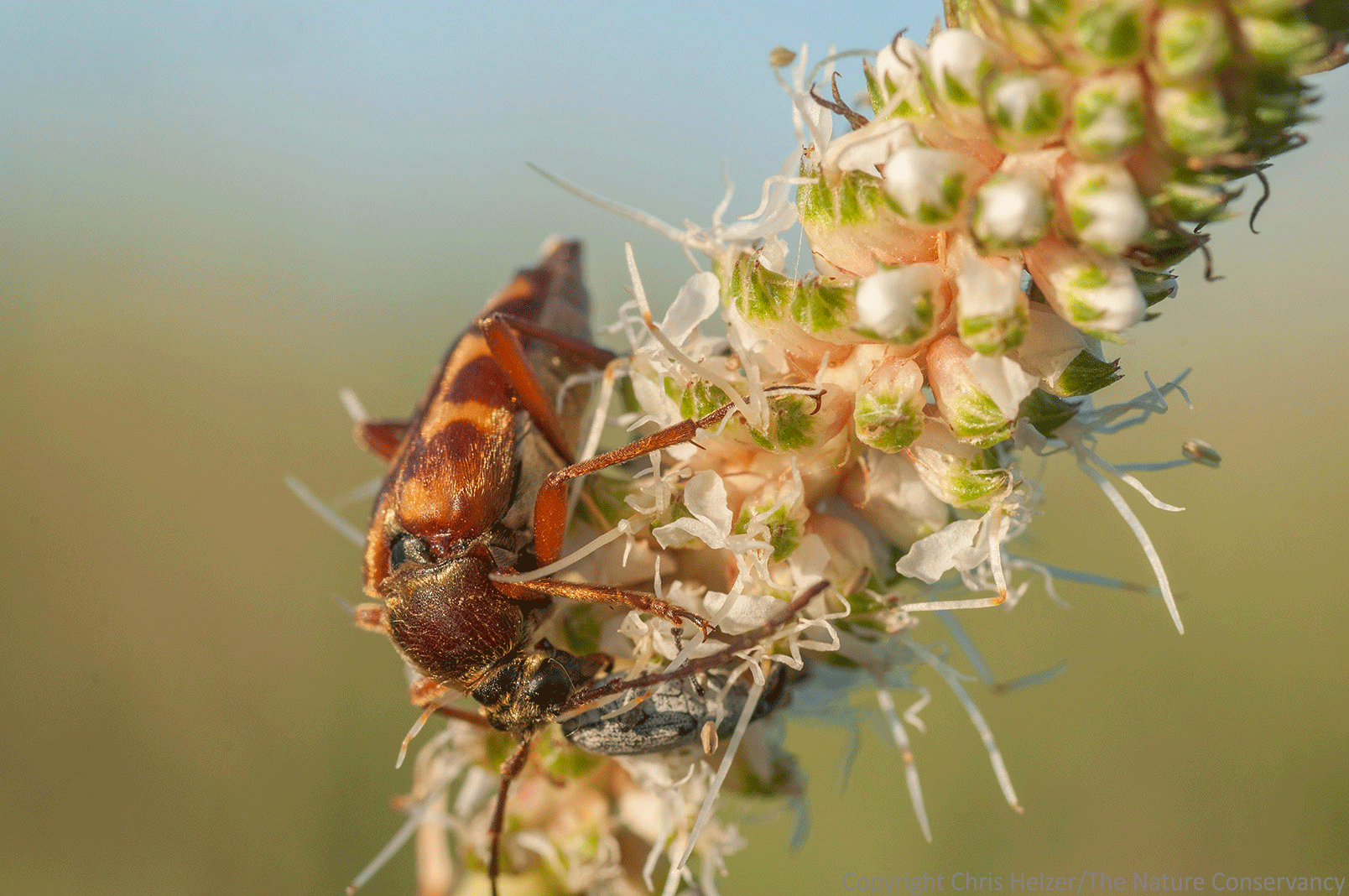
Adding a fuzzy horizon behind close-up photo subjects is often just a matter of lowering the camera an inch or two.  It’s not always a smart choice, but I’ve been trying to at least consider it as an option when I’m in the field.  If I’ve got a subject that isn’t flying or crawling away from me, I’ll usually start by following the rules to get a safe, traditional image.  Then I’ll lower the tripod slightly and see how that looks.  More and more, I end up liking the second choice better.  It’s a good thing I’ve learned not to follow the rules this bozo espoused in a macro photography guide published on this very blog.  What a dope.
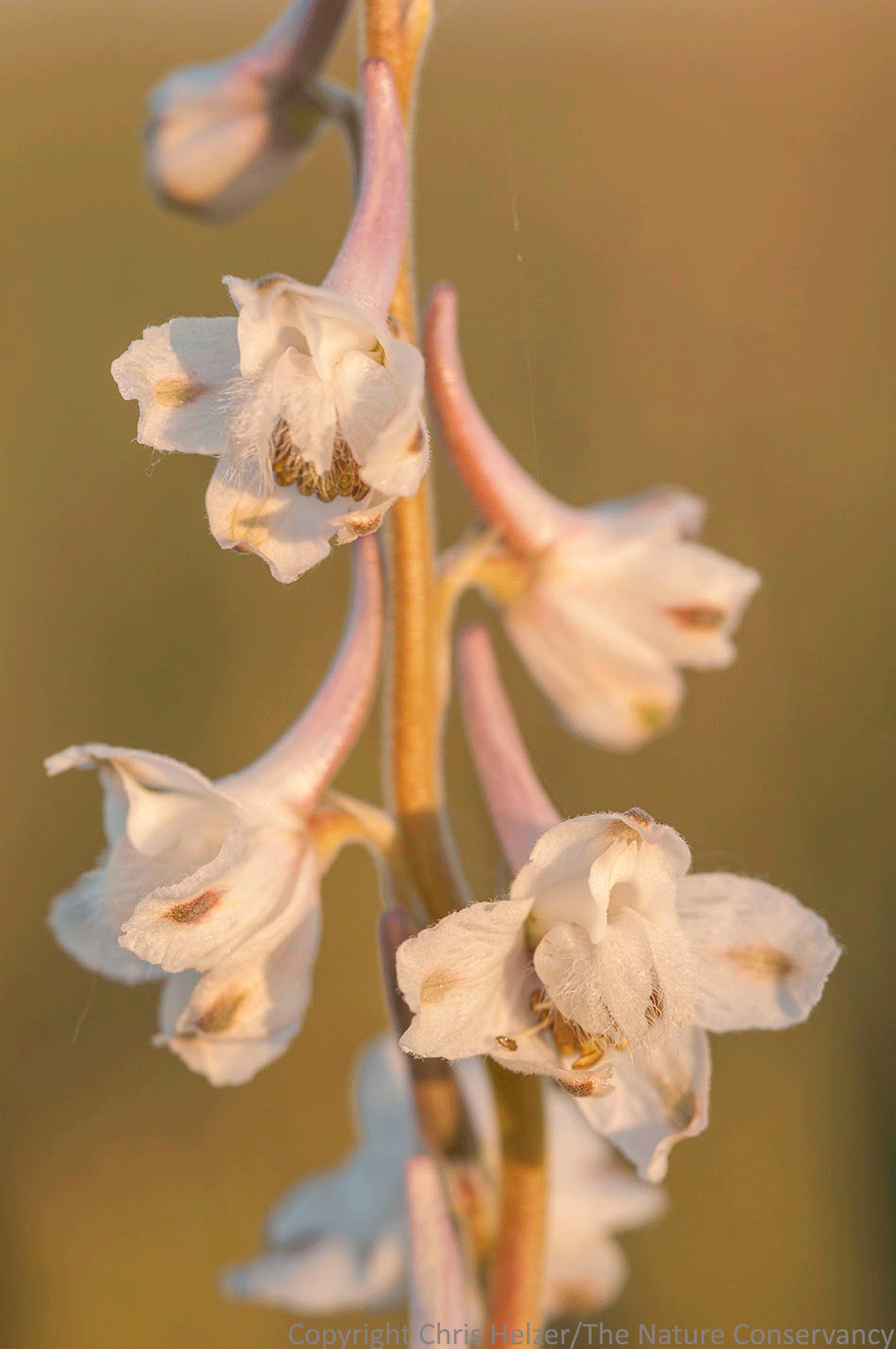
This larkspur photo was taken just a few feet away from the one above.  I think it’s my second favorite larkspur photo. 
This is my favorite larkspur photo.  Not only was the light sublime, the intricate blossoms lent themselves beautifully for this composition.  I also love the way the background transitions gently to sky, providing context for the image.  It was well worth an extra moment or two to shorten the tripod legs and aim the camera a little more upward.

So, go break some rules.  Have fun, take chances, experiment!  Unless any of my kids is reading this.  In that case, follow the rules.  And go clean your room.  As long as you’re living under my roof, young man…
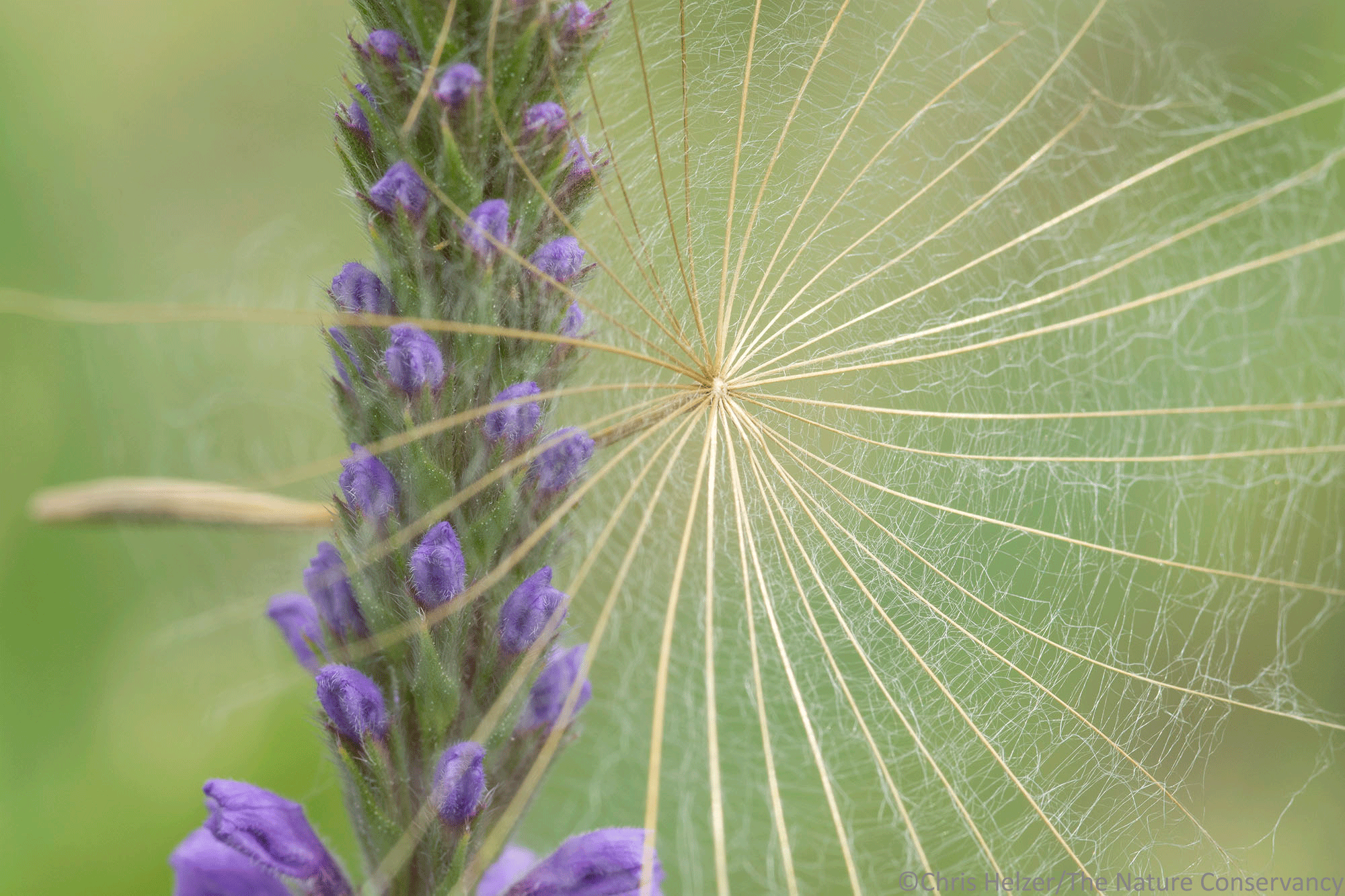
Photo of the Week – November 10, 2018

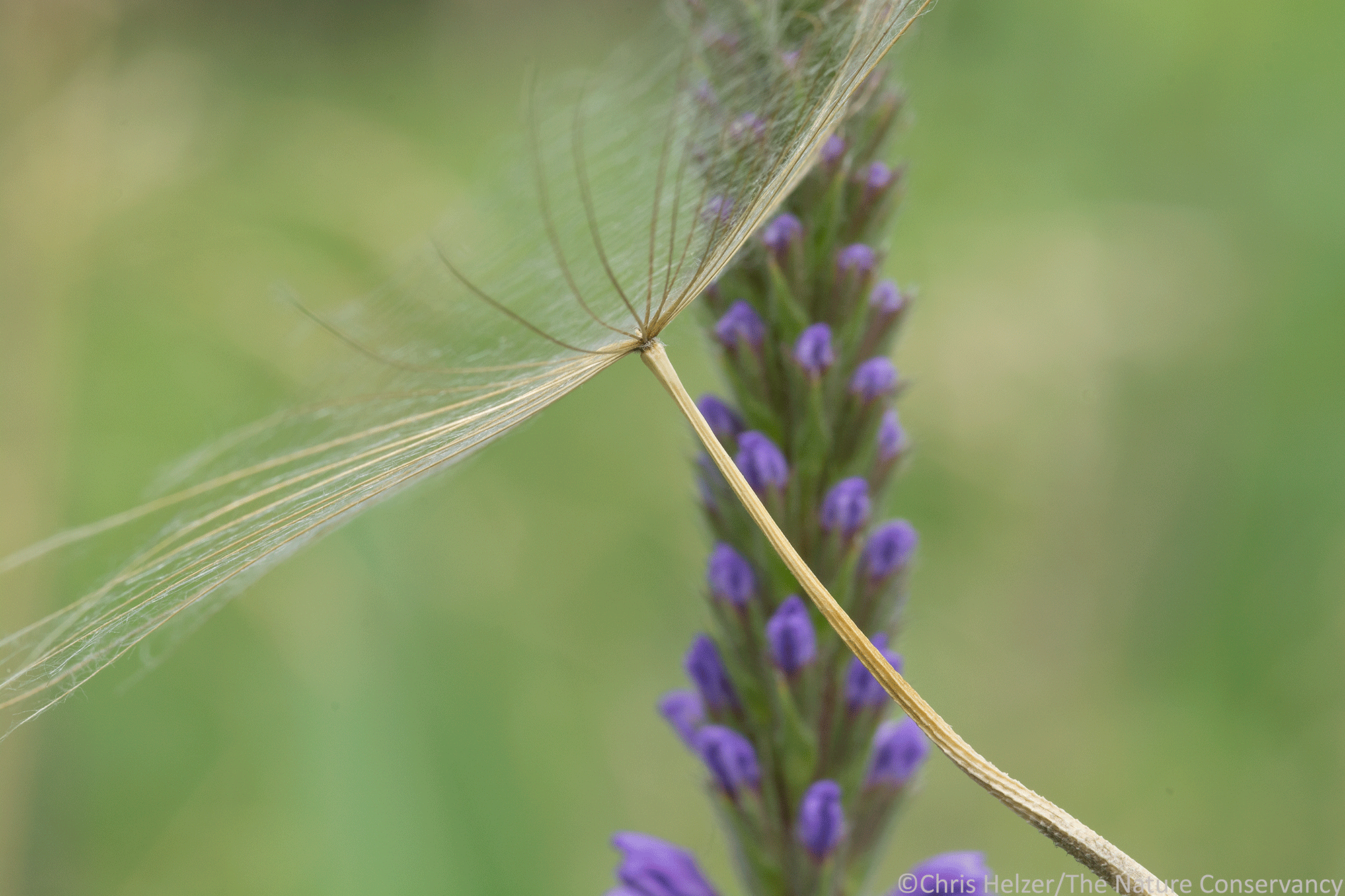
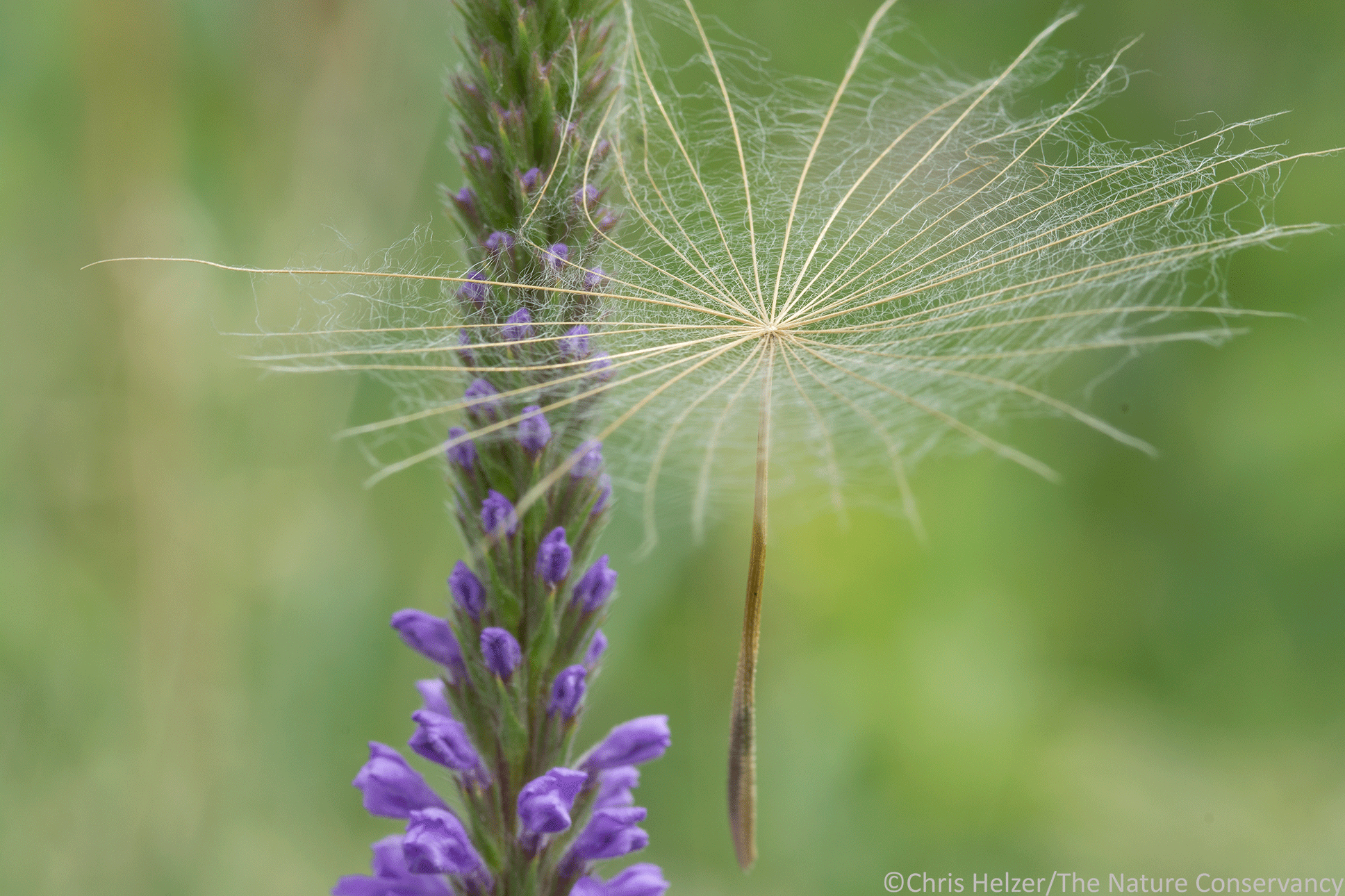
A goatsbeard (Tragopogon dubius) seed hanging on the flower stalk of hoary vervain (Verbena stricta).  Lincoln Creek Prairie, Aurora, Nebraska.

Despite being a little slow to fully embrace it a dozen years or so ago, I’ve become very grateful for the world of digital photography.  One of the best perks, of course, is that it costs nothing but sorting time and storage space to take lots and lots of photos.  When I was shooting slide film, I was very selective about how many photos I took because I knew it cost me about 33 cents each time I clicked the shutter.  As a result, I didn’t take as many chances as I would have liked, and often didn’t take enough images of a particular subject to get what I really wanted.  

Today, I don’t mind taking way more photos of something than I think I’ll need to make sure I’m happy with the final result.  A great example of the benefits of this strategy occurred back in June of this year.  I had finished spending some time at my square meter photo plot, and was doing a quick meander through the rest of the nearby prairie when I spotted a goatsbeard seed that had gotten caught on the flowers of a hoary vervain plant.  I liked the color and texture the seed/flower combination, so I stopped to photograph it.

The seed was barely attached to the flower in one place, and a gentle breeze caused the seed to slowly rotate around on that fulcrum.  In my head, I had only a vague concept of the image I was trying to capture.  There was something about the fuzzy, webby texture of the seed and the strong vertical arrangement of the flower stalk, but…  As the seed shifted around, I just snapped away – kind of like trying to refine an idea by just talking it out.

Just when I was starting to get frustrated by not getting what I wanted, the breeze picked up just for a second and blew the seed into a new position, where it hung for a few moments.  That was it!  I slid my tripod a few inches closer and got exactly the shot I had been searching for the whole time.  It’s become one of my favorite photos from this year, both because of its simple beauty and because I had to wait for it to happen.

This is definitely the image that captured the essence of what attracted me to the tiny scene in the first place.