Back in January, I wrote about a photography project I’m embarking upon this year. I am trying to photograph all the beauty and diversity I can within a single square meter of prairie. I chose a little parcel of prairie right here in town so I have easy access to it. Even on crutches, I can lug my camera gear out to that little square of prairie whenever the light is nice.

Lead plant (Amorphs canescens) leaves were just starting to emerge from buds back in early May.

At the end of May, lead plant leaves were nearly all opened.
My initial idea for the project was to help illustrate how much life happens in prairies, even at a small scale, and to show how dynamic prairies are over time. I’m still excited about those aspects of the project, but I’ve also been pleasantly surprised at how much I’m enjoying the artistic challenge of finding compelling photographic opportunities within a tiny area.
My typical approach to photography is to venture out when lighting conditions are good and wander around widely, looking for something that catches my eye. When I see a flower or bee that interests me, I’ll stop and photograph it for a while. Often, I’ll see something else nearby and I might spend 5 or 10 minutes in one spot, photographing a series of subjects. But that “spot” might be the size of a big living room or so, and I get nervous staying in the same place too long because I’m afraid of missing a better opportunity elsewhere. Because good photography light is fleeting, I usually keep moving, roaming around and looking for the next great shot.
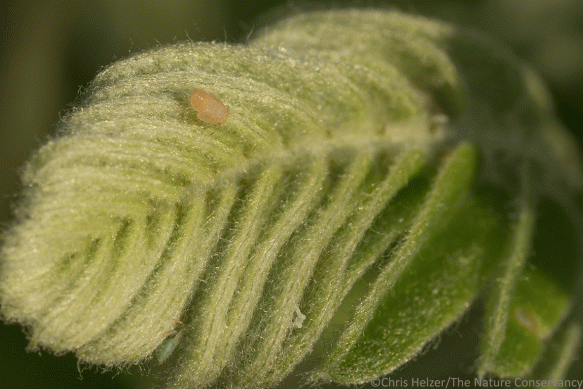
This tiny insect might be the nymph of a hopper of some kind? It appeared to be feeding on the lead plant leaf.
For this square meter project, I’m forcing myself to go to a single tiny place, stay put, and find multiple subjects to photograph. I usually arrive and stare down into the space between my four yellow flags, wondering what I’ve gotten myself into – trying not to think about all the great photo opportunities I’m missing while I’m peering into this little square. No wildflowers have bloomed within my plot yet this spring (there are others nearby), partly because it wasn’t burned this year and there is a thick layer of thatch covering the ground. What the heck am I supposed to take pictures of?
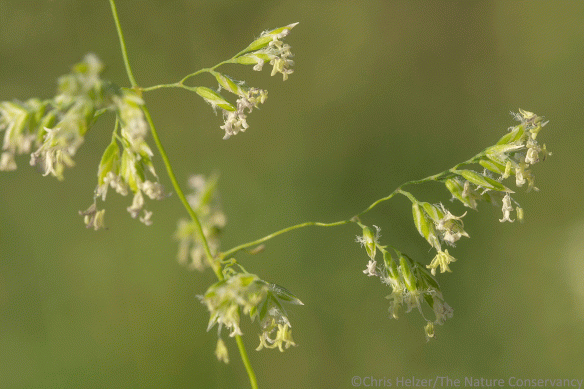
Kentucky bluegrass (Poa pratensis) was in full bloom this last weekend.
Magically, however, as I kneel in the grass and concentrate, I start to see more and more. A lacewing or fly will pop in for a quick visit (usually quicker than I can capture with my camera). Miniscule ants patrol the area, often following a fairly predictable pattern. Patterns of light and texture start to pop out of the background, and as I move around the square, looking at it from different angles, I start to really enjoy the challenge of using what is in front of me. It’s a little like being given a small box of rsndom objects and being told to create a sculpture. You just work with what you have and try to find beauty. I’m starting to love it.

A tiny ant explores a Maximilian sunflower (Helianthus maximiliani) leaf. This ant and its colleague were moving up and down the stems and leaves of this plant for several minutes. I was able to set up my tripod on this backlit section of leaf and just wait for the ant to move into the frame.

Flies have been common within the square meter, but difficult to photograph. This one landed on one of the flags I’m using to mark the plot corners.
I’m shocked that no one has ever written about the value of sitting quietly in nature… (I’m kidding, of course). Regardless, while it can be a tired cliche, there’s a reason many people have espoused the practice, and it’s been great for me to force myself back into it. I’m probably more in tune with my natural surroundings than most of my peers, but that doesn’t mean I can’t dig in even more.
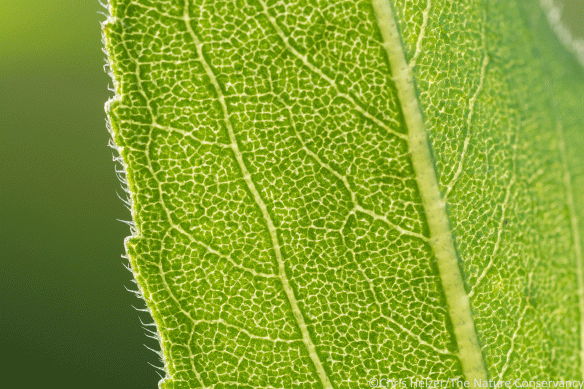
This stiff sunflower (Helianthus pauciflorus) leaf was beautifully backlit last weekend.
During my most recent trip to the square, I spent a lot of time appreciating the way light passed through various leaves and made them glow. It wasn’t the first time I’d noticed or photographed backlit leaves, but I spent much more time enjoying the effect than I usually do. The pattern of veins and the glowing translucent hairs on the leaf margins were mesmerizing when viewed through my macro lens. I spent a solid 15 minutes photographing two leaves from different angles and distances.
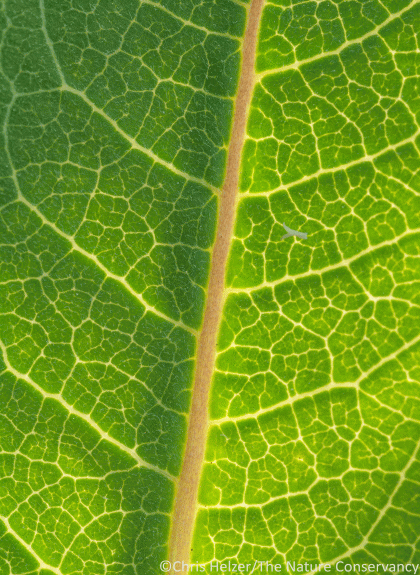
I’ve always thought common milkweed leaves (Asclepias syriaca) are particularly beautiful when backlit. This one was no exception.
Now, as I crutch myself down the trail to my little square, I’ve stopped worrying about whether or not I’ll find something interesting to photograph. Instead, I’ve started getting excited about the chance to sit quietly and search for beauty I would have otherwise missed. While I’ve found some great photo opportunities along the trail to and from the plot, the vast majority of images – and most of my favorites – from those trips have come from within my four yellow flags.



 The Prairie Ecologist