Photo of the Week – August 18, 2016

There is an unmistakable look to late summer prairies, and that look is YELLOW.  Sunflowers, goldenrods, and Silphiums (compass plant, cup plant, rosinweed) are all front and center this time of year.  The visual dominance of yellow flowers is obvious as I look back through some of my favorite prairie photos from this week.
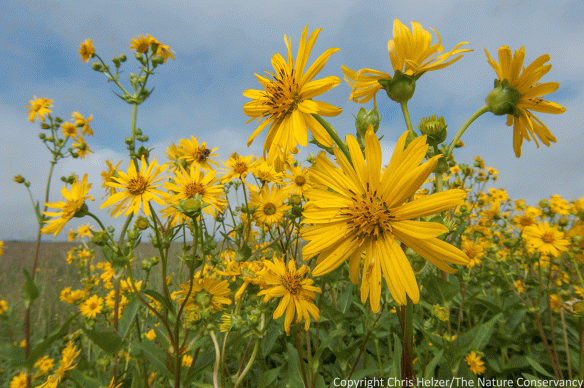
Cup plant in restored tallgrass prairie at Deep Well Wildlife Management Area west of Aurora, Nebraska.

Cup plant (Silphium perfoliatum) in restored tallgrass prairie at Deep Well Wildlife Management Area west of Aurora, Nebraska.
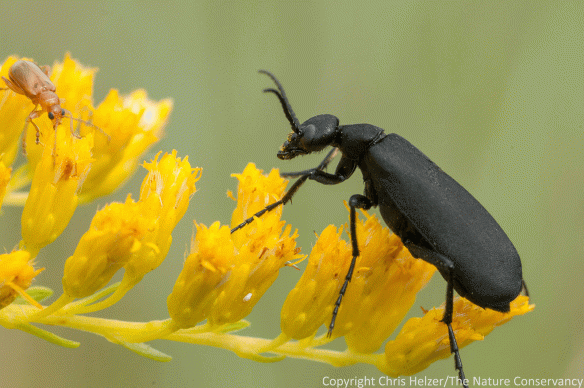
A black blister beetle and another small beetle feed on the same Missouri goldenrod flower head.
A black blister beetle and another small beetle feed on the same Missouri goldenrod flower head.

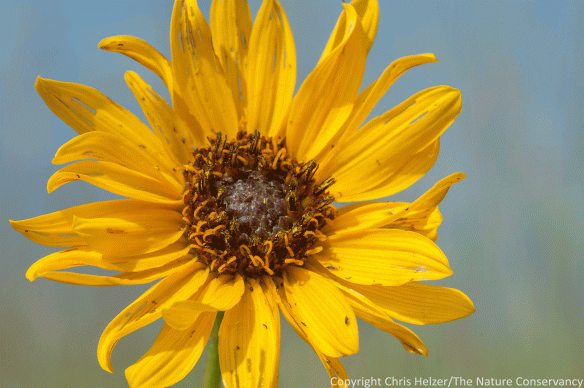
Stiff sunflower (Helianthus pauciflorus).
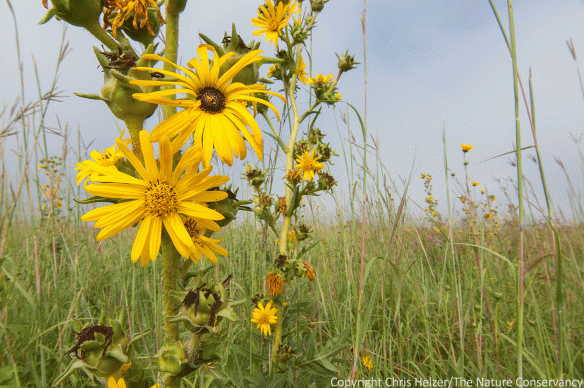
Stiff sunflower (Helianthus pauciflorus).

Compass plant.

Compass plant (Silphium laciniatum).
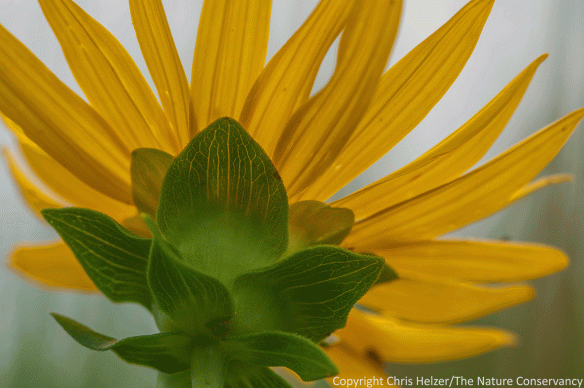
Rosinweed (Silphium integrifolium).
Rosinweed (Silphium integrifolium).

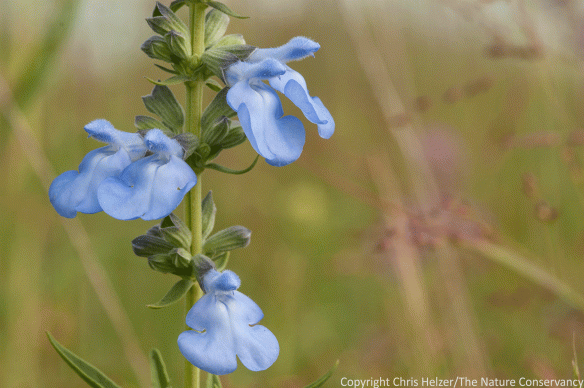
During yellow season, anything that's not yellow really stands out - especially when it's tall and BLUE. Pitcher sage (Salvia azurea).

During yellow season, anything that’s not yellow really stands out – especially when it’s tall and BLUE. Pitcher sage (Salvia azurea).

I wonder if anyone has gone through all the prairie flower species to see which color is most common (I’ll be someone has).  It has to be yellow, doesn’t it?  Purple, pink, and white are in the running, but I bet yellow wins pretty easily.

No complaints here.
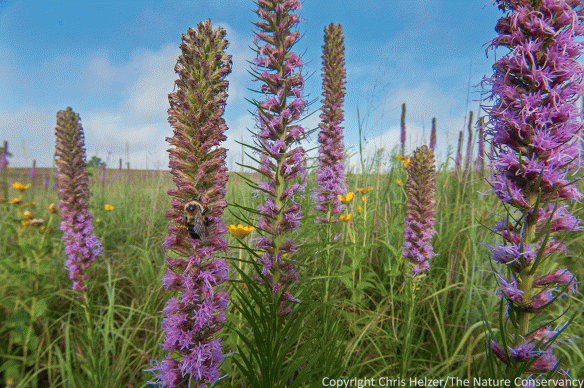
Photo of the Week – August 4, 2016

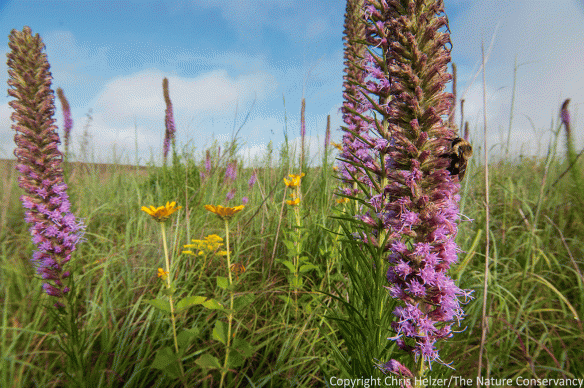
This Wednesday, I arrived at Spring Creek Prairie Audubon Center southwest of Lincoln, Nebraska just as a heavy morning fog was beginning to dissipate.  I had about 10 minutes before a meeting, so I grabbed my camera, threw on some rain pants and waded into the wet grass.  Lanceleaf blazing star (Liatris lancifolia) was blooming in large patches in the restored prairie near the parking lot, so I wandered over to take a look.  A wet bumblebee was sitting on one of the flowering stems, waiting for the sun to dry it off.  Using a wide angle lens, I took several photographs of the bee and surrounding flowers, trying out some different angles and compositions.

Here’s the problem: I can’t decide which composition I like best.  So, as I’ve done many times before, I’m presenting them to you.  To be honest, this crowd sourcing method hasn’t been particularly helpful to me in the past, since there is rarely a strong majority among voters.  Being an eternal optimist, however, I’m going to keep trying. Plus, many of you seem to enjoy voting.

SO – tell me which of these you like best.  Please?  Thank you.

Bumblebee on blazing star. Photo #1.

Bumblebee on blazing star. Photo #1.

Bee and blazing star #2.

Bee and blazing star #2.

Bee on blazing star #3

Bee on blazing star #3

Bee on blazing star #4. (Vertical - just to complicate things)

Bee on blazing star #4. (Vertical – just to complicate things)