
I recently appeared on a podcast (The Prairie Farm Podcast) and had a great discussion about prairies and conservation that spanned a wide range of topics. One of those topics was the way we evaluate sites where we’ve planted prairie vegetation in former crop fields. This is a topic I think about a lot and it has come up in conversations several times just during the last week or so. I’ve written about it before, including some examples from our sites, but it’s worth hitting again.
If you don’t want to read this whole post, here’s my main point: I think it’s important to judge the success of a prairie planting in the context of how it affects the surrounding landscape. Too often, we fret about which plant species did or didn’t show up from the seed mix or how the soil organic matter compares to nearby prairies. Those factors are interesting, and sometimes important, but can often be distractions from the larger value of restored prairie.
As we strive to save/sustain the prairie ecosystem within fragmented landscapes, our long-term success relies on reducing the extent and impacts of habitat fragmentation. We can do that by planting prairie next to and between remnant prairie patches to increase their size and connectivity. The alternative is to keep pumping time and resources into tiny, isolated prairie parcels. That’s almost surely doomed to fail as they become overrun with tree and invasive species and/or suffer gradual and irreversible losses of native species.
Assuming that’s the goal, then, it’s important to evaluate our planted prairies through that lens of landscape restoration. Too many times, we focus on a new planting in isolation. We look at variables such as plant diversity, the relative abundance of particular plants, or – much less commonly – how the site is being used by animals like pollinators or birds. Most frustratingly to me, we also tend to compare the planting to what we think the prairie in that location used to be like prior to European settlement or to ‘reference sites’ nearby.

What’s more crucial to focus on is the impact of a planting on the surrounding landscape. Does the new prairie function as connective tissue between other patches of prairie? Does it increase the effective population size of the plants and animals living in that area? Can species travel through it as they attempt to adapt to short-term and long-term changes in habitat conditions? Rather than focusing within the borders of a planting, let’s look up and see how the planting has affected the neighborhood around it.

I’ve written before about two competing metaphors for prairie restoration. One is the restoration of an historic building, in which the final product is well-defined and success relies upon getting the building back to its original condition. The second, which fits our ecological objectives better, is the restoration of a city after a disaster. In that case, what matters is function. The goal is to re-establish services like communication, transportation, and law-enforcement. People need access to food, water and shelter, and to be able to get back to work. The city doesn’t have to look exactly as it did before for that to happen.
When we are trying to restore function to a fragmented prairie landscape, we should assess that function, rather than focusing solely on structure. Does a new planting add floral resources to the landscape and provide more choices and space for pollinators to forage? Can small mammal or insect populations in formerly-isolated prairies now interact with each other by traveling through the new habitat? Do we have more and better stewardship options because the combined restored/remnant habitat complex is now bigger?

As a group, and especially scientists, we have spent a lot of time comparing restored habitats to remnants. Doesn’t it feel like we’ve learned most of what we need to from those comparisons? Those discussions seem a little outdated now.
“See here, the soil organic matter in this restored prairie is going to take many decades to match that of remnants, if it ever does. Alas!”
“I say, old chums, did you notice how different the plant community looks in this planting compared to the remnant next to it? Forsooth, several species appear to be missing altogether!”
I don’t mean to dismiss this kind of work altogether. Those kinds of comparisons can be helpful when we make the case to others that plowing up prairies causes irreversible harm. But in terms of evaluating the success of restoration projects, they can sometimes distract us from more crucial efforts to judge our progress. If nothing else, they can be bad for morale. If we’re trying to recreate history or match a nearby reference site, we’re already doomed to fail. If we’re not trying to do that, why are we evaluating success as if we are?
For those of us doing the restoration work, let’s focus on what we’re really trying to achieve. Unless you’re planting prairie habitat purely for aesthetics or educational purposes, the success of your efforts should be based largely on the new habitat’s contributions to the landscape around it, right? Is the prairie ecosystem better off because of your work?
Quantifying the contributions of a planting to the function of an ecosystem can be difficult, of course. It’s a lot easier to count and compare plants between two sites than to assess changes in the genetic fitness of the plant population or the movement patterns of pollinators between those sites. That’s fine – we can still do our best to design and carry out data collection efforts that give us helpful information. We’ll get better at it over time.
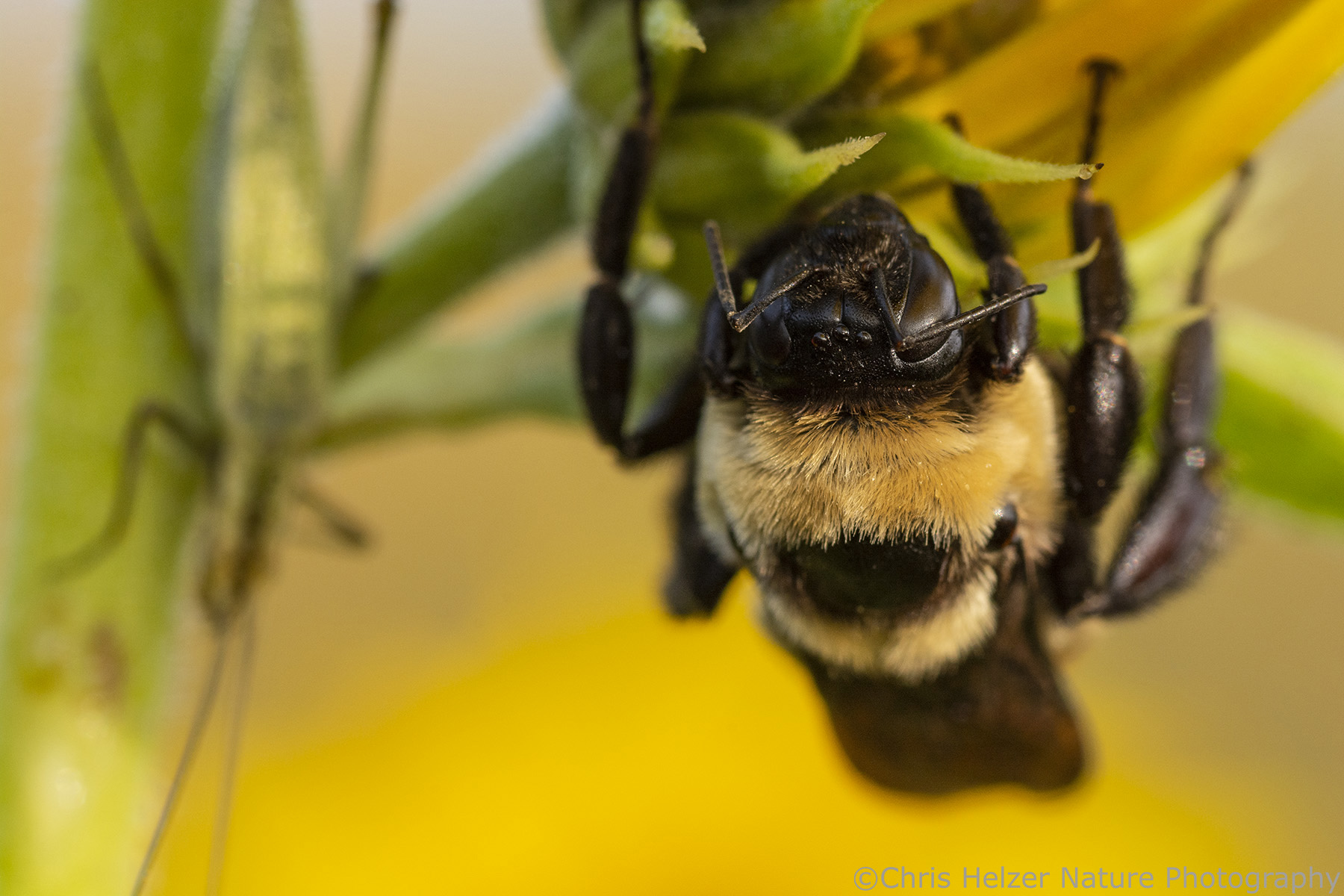
In the meantime, we can also focus on shifting our mindset so our more casual observations are pointed in the right direction. Are we seeing bumble bees and butterflies from adjacent remnant prairies use our new habitat? Has the neighborhood coyote family incorporated the new planting into its daily hunting pattern? Do we see new grassland bird species showing up that might have avoided the area previously because of the limited prairie size?
Prairie restoration is challenging. It’s also awfully important. The biggest reason it’s important, though, is that – at least in fragmented landscapes – it’s really the only hope we have for conserving prairies and the species that rely on them. We don’t have to convert the whole landscape back to prairie, we just have to create habitat patches large and connected enough to be resilient and support viable populations of most species.
As we chip away at the problem, let’s make sure we’re learning as much as we can along the way. We’ve spent a lot of time comparing our planted prairies to remnants. Now let’s concentrate a little more on comparing prairie landscapes before and after we’ve added prairie plantings to them. After all, that’s the information we need to improve and adapt our restoration methods going forward.

 The Prairie Ecologist