Land Stewardship, Objectively Speaking

Anyone who has spent much time around me can probably sense when I’m about to ask my question. Asking the question might be the most irritating thing I do. (Ok, that’s not true – but it can be pretty irritating.) I do it anyway. Over and over and over. Someone will be talking about exciting work they’re planning or conducting and I’ll clear my throat and inquire (say it with me, friends and colleagues!):

“So, what’s your objective?”

I really don’t ask the question to be a pest, though I’m sure it sometimes comes off that way. I ask it because it’s a question we should all be able to answer with regard to any ecological stewardship project we’re working on. As land managers, we should all be able to clearly articulate what we are trying to accomplish. What are our desired outcomes? How will we know if we’re succeeding, or at least making progress?

Are you responsible for the stewardship of a site? If so, can you, in a sentence or two, describe what success looks like and how you could measure progress toward that? Saying you want to make a site to look better than it was or is doesn’t count. What do you mean by ‘better’? What species, ecological communities, people, or other variables will be positively affected and how will you know if/when that is happening?

Seed harvesting and other restoration and management work is time intensive. How do we know that time is being well spent?

I feel very strongly about this and I’m about to rant about it for the remainder of this (long) post. It’s not the most titillating writing I’ve done, but I tried to make it palatable. If you decide to stop reading now, I won’t blame you. I also won’t know you stopped reading, so there’s very little risk to either of us.

Still here? Ok, let’s look at a specific example to illustrate why objectives matter so much. Imagine a 50 acre prairie in a suburban context. The prairie is surrounded by houses on all sides but has maintained a decent diversity of plants, including several species that are only found in a handful of prairies across the state. The prairie even has populations of two rare insect species hanging on. Because it’s easier to refer to the prairie by a name, we’ll call it Kasen Point Prairie.

As you might expect, while it has a lot going for it, Kasen Point Prairie also faces a number of challenges. For one thing, deciduous shrubs have taken over about 17 acres of the southeastern corner and occur in scattered smaller patches throughout the rest of the site. Those shrubs have greatly expanded their footprint over the last 15 years, during which there has been little management of the site and no prescribed burning.

In addition to the shrub problem, populations of several non-native forbs have increased dramatically over the last two decades. Perhaps most importantly, Kasen Point Prairie is isolated from any other prairie habitat by at least several miles of housing developments in every direction. It’s a really neat site with lots of issues.

If you were suddenly put in charge of the stewardship of Kasen Point Prairie, you might very reasonably do the following:

  • Institute annual prescribed burning of the prairie to knock back the shrubs.
  • Recruit an energetic corps of volunteers to help pull, chop, and carefully apply herbicide to the non-native forbs in an effort to reverse their invasion.

Let’s say that after five years of this work, you are seeing the following:

  • The height and density of the shrubs have decreased and some of the smaller patches seem to have disappeared.
  • There has been a marked decrease in those non-native forb populations. One of the species seems to be completely gone and the other two are about half as abundant as they were.
  • Two of the three species of rare plants have increased their population size and the other seems to be doing about the same as it was before.
  • Three pairs of a grassland sparrow nested in the prairie last year – the first time that’s happened in at least 20 years.

Nice! That’s great progress, right?

Ok, but how do you know that’s progress? Progress toward what? What are you aiming for?

What if, in addition to the aforementioned changes, the following also occurred during those five years:

  • One of the two rare insect species has seemingly disappeared. A local college professor who was studying the insect blames the frequent use of fire and lack of unburned refuges for eradicating the species.
  • A group of neighbors living near the prairie have complained about the smoke from the annual fires and are asking the city council to ban prescribed fire from within city limits.

Well, shoot. Now it sounds like you’ve lost ground.

Have you? Based on what?

Without clear goals and objectives for Kasen Point Prairie’s stewardship, it’s really hard to know whether progress is being made. Shrub abundance has decreased, but has it decreased enough? Enough for what? What’s more important – the rare insect species or the grassland sparrow? Are gains in plant diversity or rare plant abundance more important than positive perception of the prairie by neighbors and city officials?

Shrub encroachment is a huge issue in prairies. How much shrub cover is ok? How do you decide? (Spoiler – it helps to have defined goals and objectives)

It would really help to have some desired outcomes or broad goals for the site. Otherwise, it’s too easy to look at individual results in isolation. (“Hurray! We have fewer shrubs. We must be doing the right thing.”) It’s human nature to look for anything that justifies the effort we’ve put into something. Unfortunately, retroactively justifying what we’ve already done is much less effective than proactively and thoughtfully prioritizing what we will do. This is where goals and objectives become helpful.

Here are some possible examples of desired outcomes or goals for Kasen Point Prairie:

  • Support a robust and diverse pollinator community with a consistent and abundant supply of nectar and pollen through the growing season.
  • Maintain viable populations of the three rare plant species at Kasen Point Prairie and harvest seed from them to help with reintroduction efforts elsewhere.
  • Sustain populations of the two rare insect species, both of which are declining rapidly elsewhere in the region.
  • Use Kasen Point Prairie as a key seed harvest site for a 1,200 acre prairie restoration effort 10 miles west of the city.
  • Through public access and outreach efforts, use Kasen Point Prairie to positively influence the way people in the city view nature and conservation and increase support for regional prairie conservation efforts.

All those examples could easily be justified as important, but some may conflict with each other so prioritization is crucial. Managing for the specific needs of the rare plants or insects, for example, might not match up with the management needed to suppress shrubs, optimize pollinator resources, or foster high seed production across a broad suite of plant species. Especially in small sites, choosing goals that are viable and feasible can be really challenging. That makes choosing them even more important.

You might decide that the most foremost desired outcome at Kasen Point Prairie is to influence the hearts and minds of the surrounding community for the good of larger conservation efforts. That could include diverting some stewardship capacity into outreach work (leading tours, mowing trails, interpretative signage, etc.). To bring skeptical neighbors along, fire might have to be reintroduced to the site incrementally, with lots of interpretation and patience. Other brush control efforts might have to be carefully explained to a public who might wonder why you’re ‘killing the trees’ in a nature area.

Small, isolated prairies present huge stewardship challenges. Any strategy is going to favor some species over others and there’s not much room for error, literally, as we try to prevent the loss of animal or plant populations.

Regardless of which outcomes or goals become the priority, once you choose priorities you can then establish specific objectives and ways of measuring success. Depending upon chosen goals, a few examples of objectives might include:

  • By 2030, reduce deciduous shrub cover to 5% of the total prairie area to protect habitat for rare insects and balance resources for pollinators (including both early-season flowering shrubs and abundant wildflowers).
  • By 2025, establish three management units across Kasen Point Prairie, including one that includes the vast majority of rare plant individuals at the site. Complete individual management plans for each unit.
  • By 2026, complete a baseline public attitude survey of voters within the city that measures current knowledge about and attitudes toward prairies and conservation efforts. During the same period, design interpretive signage and programs to be initiated by spring of 2027.
  • By 2028, complete a three year study (using volunteers) that measures the diversity and abundance of floral resources for pollinators through the growing season. Use the results to design potential restoration or management strategies to address any periods of low resource availability.

Again, there are lots of options for objectives, depending upon the established priorities. The key is to make sure you can specify what you’re trying to accomplish, how it links to your larger priorities, and how you’ll know if you’re moving in the right direction. This applies to small suburban prairies like Kasen Point Prairie, but also to private ranches, public lands, and any other managed site.

Now, having ranted for this long about objectives and why they’re important, I’m going to make an admission. The stewardship efforts I’m involved with, both at work and at my family prairie, don’t always meet the standards I’ve laid out here in terms of specific and measurable objectives. What I’ve described is aspirational and I don’t want to give you the impression that I, or the people I work with, are where we should be on this.

That said, I do think our staff can describe the kinds of outcomes we’re shooting for and the kinds of strategies we need to employ to reach those objectives. Evaluating progress sometimes consists of data collection, but is more often based on targeted observation and discussion. Strategies, objectives, and even goals are flexible and we adapt them as we learn. Most often, any disagreements about management actions stem from the lack of a shared understanding/agreement about what we’re trying to accomplish. Stepping back to talk about broad goals and specific objectives helps bring everyone back together.

If you are a land steward, I encourage you to make sure you can clearly articulate what you’re trying to accomplish. The more specific you can be the better, but at a minimum you should be able to describe 1) what you’re aiming for, 2) how each of your strategies contributes, and 3) how you’ll know whether you’re making progress. If you can do that, you’ll not only be a more effective steward, you’ll also be ready to answer that dreaded question when it comes…

“So, what’s your objective?
Synthesizing the 2022 Conserving Fragmented Prairies Workshop Part 3 – Grazing, Invasives, and Expression

Really quick – we’re hiring a Conservation Coordinator for the Platte River Prairies. The position includes both administrative and outreach work. We need someone to help with the logistics and administration of our conservation work and to organize and assist with our many outreach efforts. If you’re interested, click here for more information. The application period closes on August 31.

Want to come work with us at the Platte River Prairies in Nebraska? Apply at the link above.

This is the final of three posts on the July 2022 Conserving Fragmented Prairies Workshop co-hosted by Prairie Plains Resource Institute and The Nature Conservancy’s Platte River Prairies. The first post focused on prairie reconstruction (restoration) – the conversion of crop land to high diversity prairie vegetation. The second post focuses mostly on issues related to the control of trees and shrubs but ends with a conversation about local ecotype seeds. This last post covers grazing and invasive plant management.

Grazing

We talked a lot about grazing during the workshop, but much of those conversations have been covered elsewhere in this blog, so I’ll try to keep the summary brief.  Cattle and bison grazing are both valuable options to consider in prairies because of the selectivity of the grazers and the ability to manage that selectivity to achieve particular objectives related to plant composition and habitat structure.  As managers, we can decide the frequency and timing of grazing events, as well as the intensity.  That’s a lot of flexibility to play with and grazing can increase habitat heterogeneity for animals and to manage the competition between plant species.

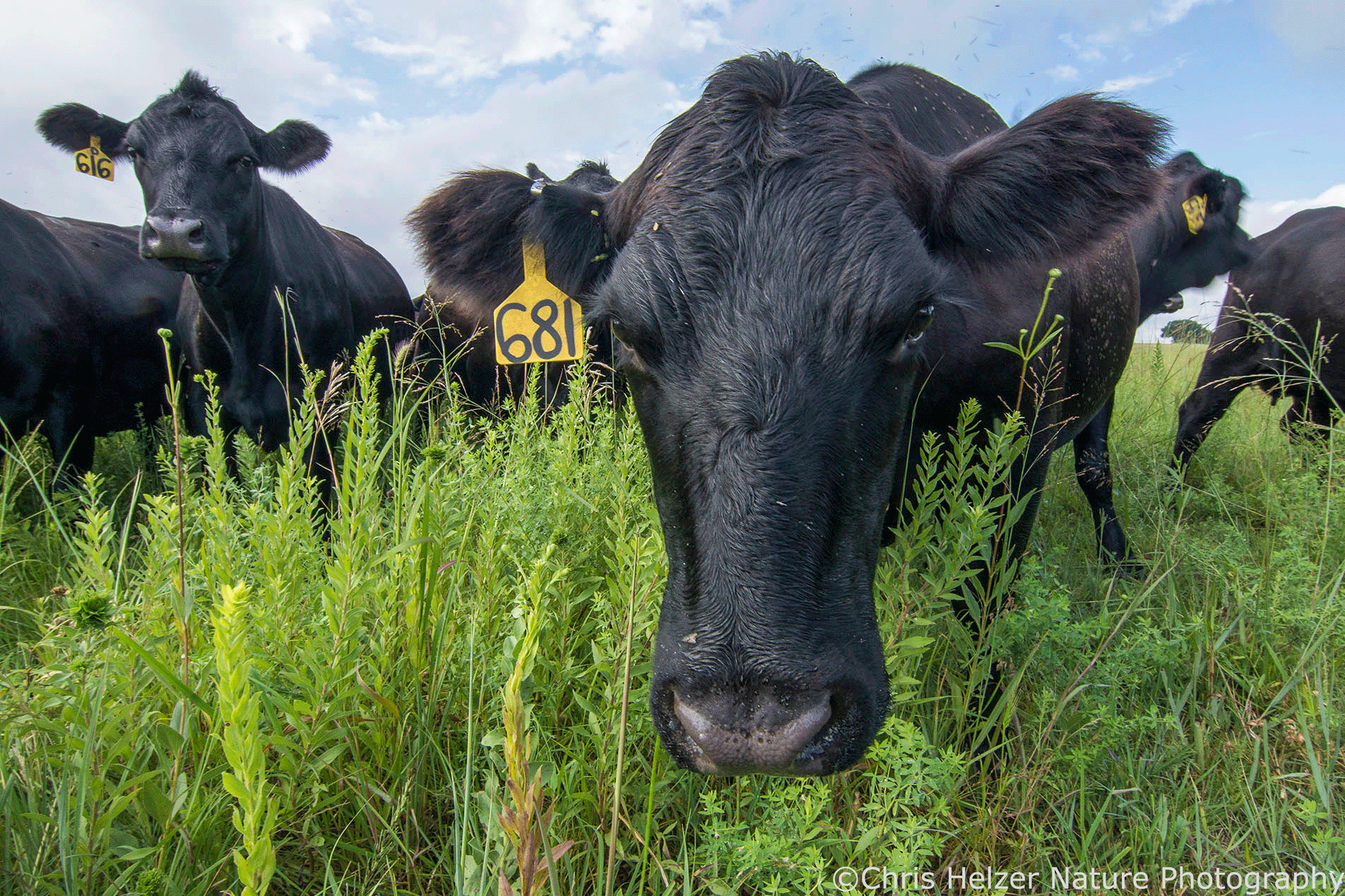
Cattle make active decisions about every bite of food they take in. As managers, we can use their selectivity to advantage and affect both the habitat structure and plant composition of prairies.
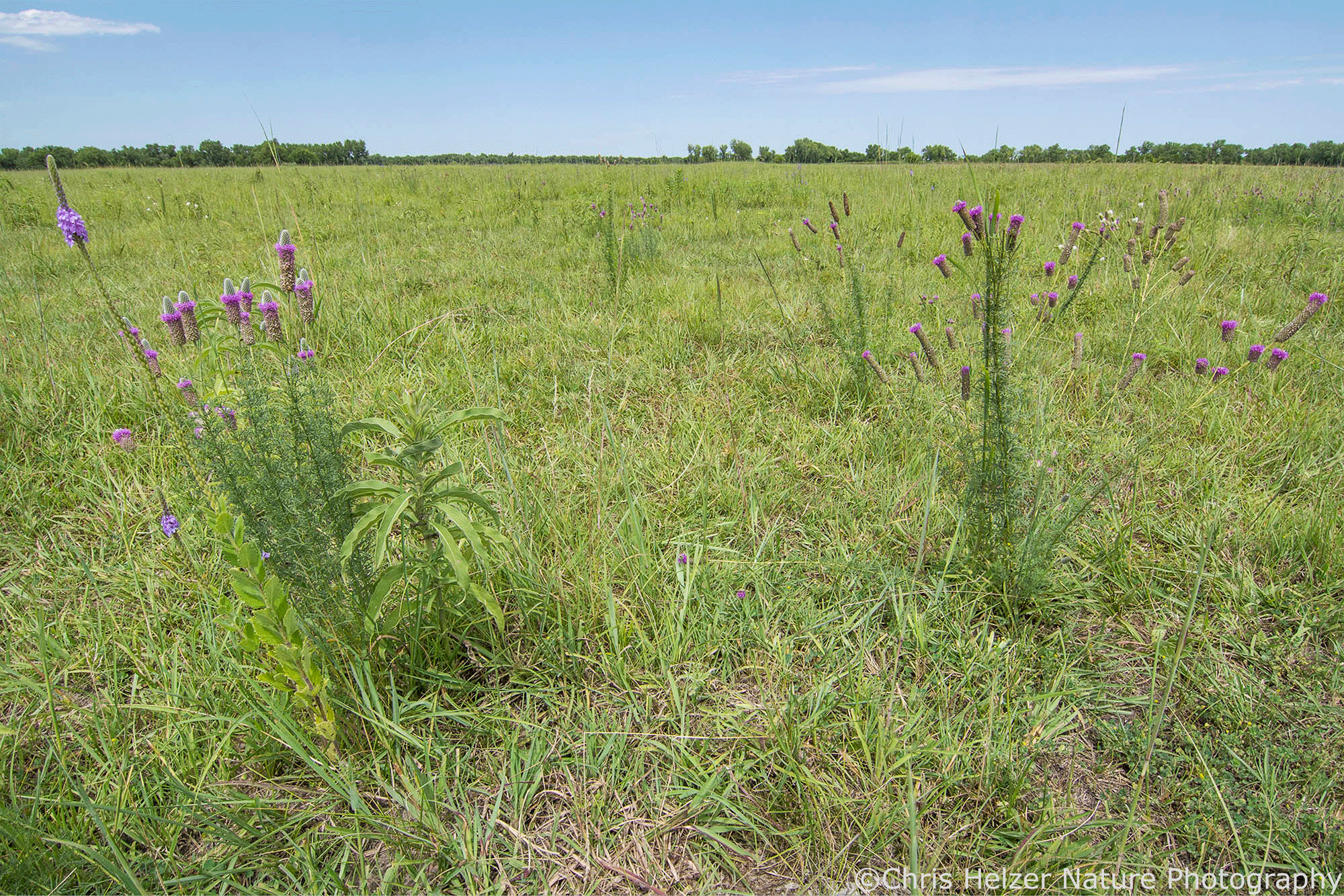
Here’s an example of the selectivity of cattle. Purple prairie clover is a highly palatable prairie wildflower but under the grazing conditions used in this prairie is being largely grazed around. Grasses were eaten right up to the edge of the plants.

That said, grazers are sentient animals and don’t always act predictably, so we talked about the flexible and tolerant mindset needed by managers who use grazing animals.  Prairies are resilient enough that if cattle or bison do something we don’t like one year, we can change plans and the prairie will recover just fine.  That unpredictability can also be helpful, though, because we can learn a lot from watching how both cattle and prairies act and respond to each other.  Over time, we can reduce the unpredictability by better understanding and predicting what happens.  

Even so, cattle and bison will still do their own thing and it might not always make sense to us.  On one end of the spectrum, cattle can be trained to eat certain plants, including things we want to see less of.  On the other, they’re both very good at maximizing their nutritional needs and will graze different plants at different times of the season to regulate their diet.  In addition, just like us, individual cows and individual herds can develop favorite plants, as well as favorite locations, and it can be tough to break those habits.

We looked at sites where grazing has facilitated the invasion of smooth brome and Kentucky bluegrass in a restored (reconstructed) prairie but also seems to be suppressing the negative impacts of those grasses. You can read more about one example in this prior blog post.  The grazed portion of the prairie has higher plant diversity than the ungrazed area, but differences in the relative abundance of individual plant species. Overall, we are satisfied with the results of the grazing because it creates much better habitat heterogeneity while maintaining high plant diversity and isn’t extirpating any plant species.  However, we will continue watching closely to see how things change over time.

While most prairie plants withstand grazing bouts just fine, one example of a plant species that’s usually found at lower abundance under grazing is common milkweed (Asclepias syriaca).  Both cattle and bison enjoy grazing milkweeds and tend to decrease their abundance in prairies.  Since milkweeds are host plants for monarch butterflies (and many other species) that is obviously notable and worth consideration.  I’ve been collaborating with Tim Dickson at the University of Nebraska-Omaha for several years on research projects related to this topic. 

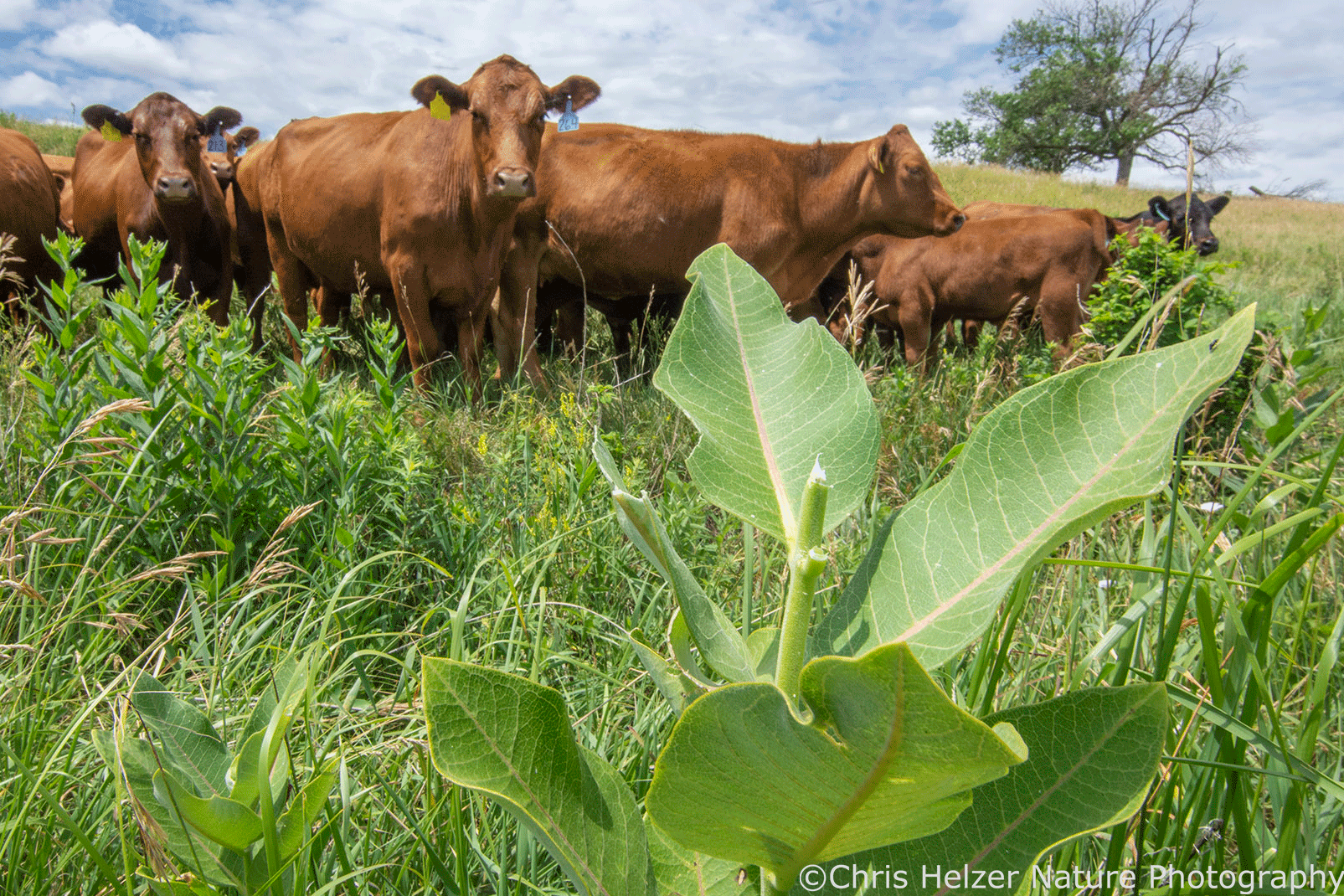
Common milkweed is a favorite food of cattle, despite the sticky white latex inside it. These cattle ate all the flowers off the plants less than a week after entering this pasture and stripped the leaves a week later.

We still have milkweed plants in our grazed prairies, but they’re definitely less abundant than in nearby ungrazed sites.  Monarchs don’t need dense patches of milkweed, but they do seem to thrive best when that milkweed is at a higher abundance than it is in most of our sites.  We’re trying to understand how cattle graze milkweed at different times of year and how long of a rest period (exclosure from grazing) milkweed plants and colonies need to thrive.  This is no small matter when it comes to monarch conservation since Nebraska has about 23 million acres of grassland, most of it grazed.  Increasing milkweed abundance in even a portion of those acres (and those in other nearby states) could have a huge impact on host plant availability for monarchs.

Invasive Plant Management

We had some great discussions about invasive plant management.  That included conversation about grass-selective herbicides like Clethodim, which many managers are using to good effect on species like reed canarygrass and other invasive grasses.  For much more on those topics, I encourage you to read the Grassland Restoration Network blog about work going on in Illinois.  Two posts in particular might be helpful.  The first talks about the Flint Creek Savanna restoration project and the second compares the effectiveness of Glyphosate to Clethodim under different circumstances.

Since I missed a lot of the invasive plant discussions from our workshop while I was leading tours on other topics, I’m going to avoid trying to summarize the specifics of those discussions.  I’d love for anyone who was in those groups to share what you picked up in the comment section below.  One big point I do want to mention has to do with evaluating the success of invasive plant control work.  I think that we sometimes focus too much on measuring the abundance, density, or cover of invasive plants and forget to focus on the reasons we’re worried about those invaders in the first place.

It’s crucial to have specific objectives for your prairie because that will tell you which invasive species are affecting those objectives and also help you evaluate whether your control work is successful.  For example, if plant diversity is the primary objective, an invasive grass is only a problem if it reduces that plant diversity.  In the case I mentioned earlier where grazing has increased the presence of smooth brome and Kentucky bluegrass, measuring the spread or frequency of occurrence of those grasses would tell us our work is failing, but measuring plant diversity tells a different story. 

At that same site, we see big peaks and valleys in sweet clover abundance from year to year, but because we don’t see any correlation with overall plant diversity, we’re not spending any time controlling sweet clover (other than with cattle, who really like to eat it).  Our objectives might not be your objectives, though, so you might read our results very differently and that’s exactly why it’s so important to have clear and specific objectives.

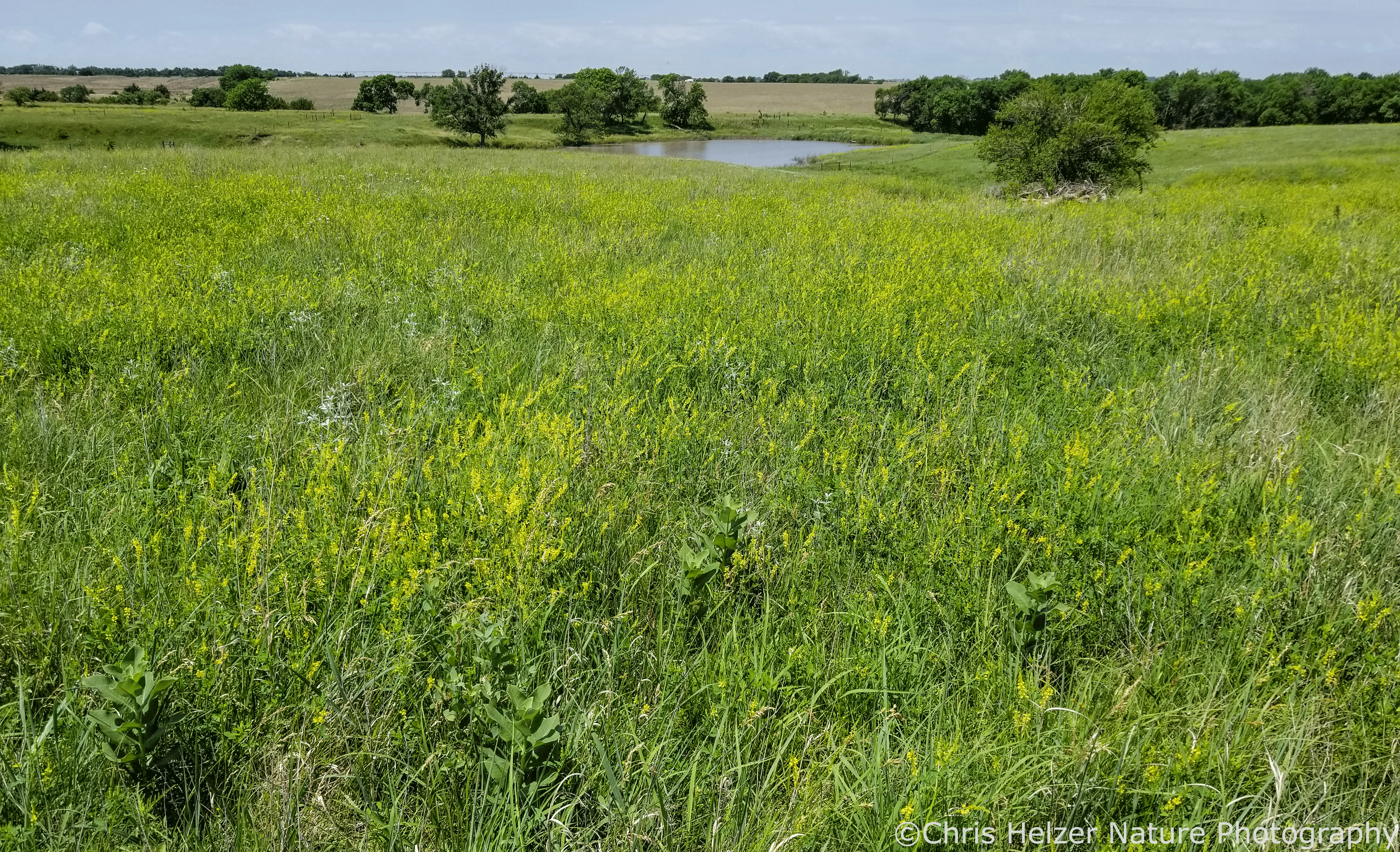
Sweet clover is visually abundant in this photo but our data consistently shows no effect of sweet clover pulses on the abundance or diversity of other plants in prairies around here. Sweet clover abundance isn’t our ultimate goal, so measuring the number of clover plants wouldn’t tell us what we really want to know.

Prairie Expression

A couple workshop participants commented on a phrase that was thrown out several times during our conversations. As we talked, we periodically talked about the variability with which plant and animal species ‘expressed themselves’ in prairie communities. That idea of species expressing themselves is certainly evocative, isn’t it? In the context we were using it, the phrase refers to the way species become more abundant or more visually-apparent in particular years or situations.

A big example is the way plant species might be absent or uncommon at a site for several (or many) years until a weather event or management treatment creates the conditions that allow it to suddenly thrive. Annual sunflowers (Helianthus sp.) appear at our Platte River Prairies in great abundance after a spring fire, and even more so when that burn is grazed afterward. Fourpoint evening primoses (Oenothera rhombipetala) and shell leaf penstemon (Penstemon grandiflorus) both put on big shows a year after a site is grazed intensively. Dotted gayfeather (Liatris punctata) doesn’t increase in abundance the year after a grazing bout, but plants significantly increase the number of flowering stems produced.

Sometimes, plants appear after years of us not noticing them because a long-term management regime changes. Well-known examples (within the community of prairie managers) include species like eastern gamagrass (Tripsacum dactyloides) and compass plant (Silphium laciniatum) appearing in abundance when grazing systems change – even after not being seen for decades. This is true even in situations where prairies are being closely monitored by people looking for those plants. Are they surviving without putting out aboveground growth? Or just putting out such little growth they go unnoticed?

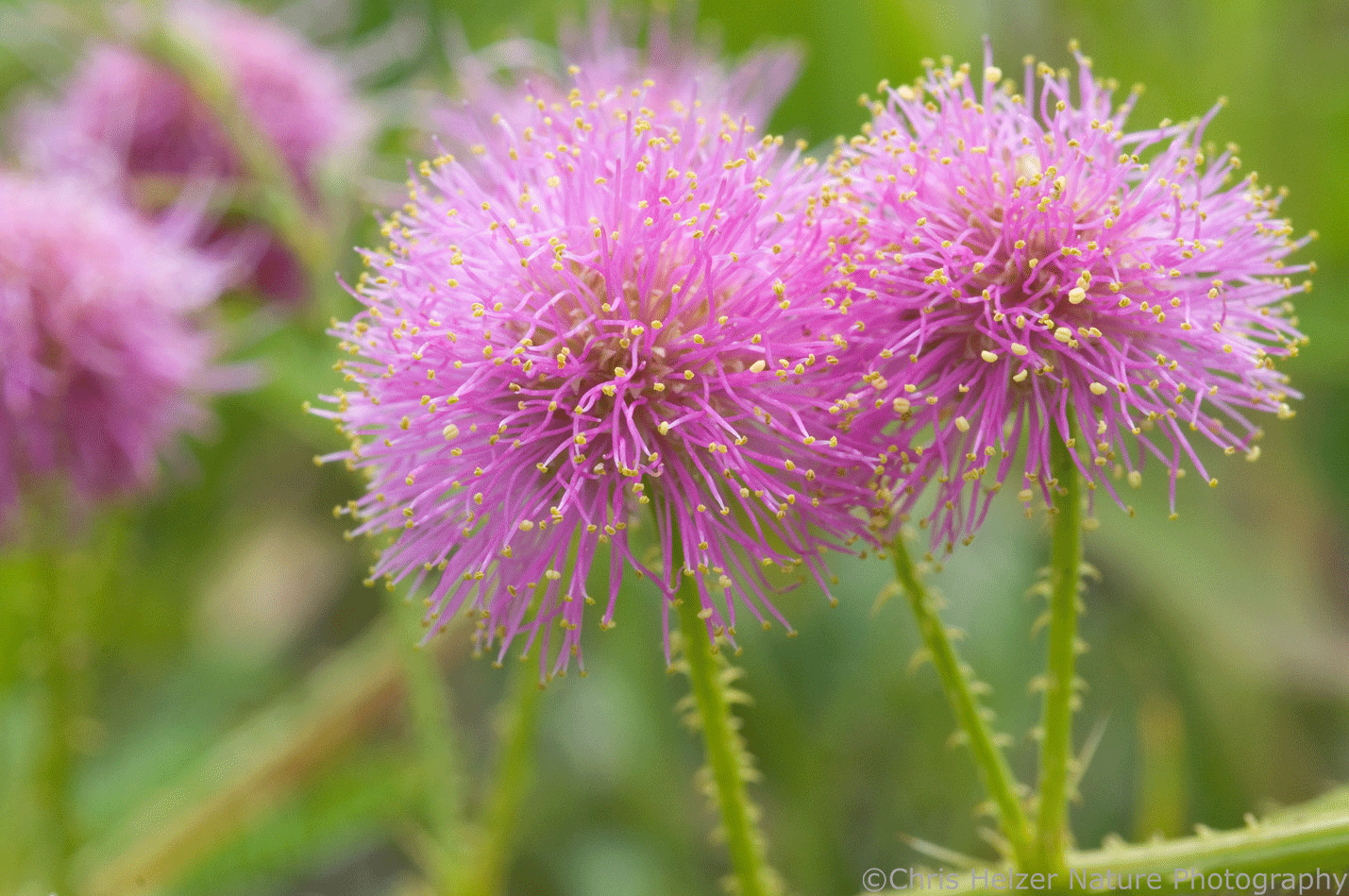
When we were growing prairie plants in nursey beds years ago, we noticed a strange phenomenon with sensitive briar (Mimosa quadrivalvus). We put out plugs of the species, which bloomed and produced lots of seed for a couple years but then completely disappeared the next. Gone. Bare ground, with no leaves or stems showing. We debated whether to replant but decided not to. The following year, the plants were back like nothing had happened. Seeing that helps me not worry about the peaks and valleys in sensitive briar abundance I see in prairies now, except that I still don’t know why it happens.

Sensitive briar is a perennial plant but seems to be much more abundant in some years than others. I don’t understand why.

Animal populations can express themselves under various conditions too. Small mammal populations famously go through boom and bust cycles, often in synchrony (or correlated with) predator numbers. Invertebrates, too, are known for those huge swings in abundance, and that annual variability makes short term studies of their responses to management nearly impossible. Lots of invertebrate species also express themselves on annual cycles, too, suddenly popping onto the scene at a particular time each year. Many spend most of the year underground or as difficult-to-see larvae or nymphs and then morph into adults all at once, giving us a big (usually brief) show.

Thinking about the various expressions of prairies can lead down lots of fun paths. There are intriguing scientific explanations of the phenomena, of course, many of which we don’t yet understand. In addition, though, there are artistic aspects to the idea of prairie expressions, and it’s tempting to ascribe emotions or other attributes to prairies and prairie communities. For example, I often refer to the ‘wildflower parties’ that happen a year after a prairie is burned and grazed. Plants that are usually suppressed by dominant grasses are released from that tyranny for a year or two and respond with great vigor. Similarly, late summer often brings a frenetic energy created by hordes of pollinators at the peak of both their abundance and the abundance of their food sources. As flower numbers dwindle in the late fall, that frenetic pollinator energy takes on a more desperate tone as those invertebrates rush to squeeze everything they can out of the tail of the season.

Anyway, we talked about prairie expressions at the workshop. We also talked about lots of other topics, not all of which made it into these three summary posts. For those of you who attended, please add your observations, questions, and comments below. If you didn’t attend, your questions and thoughts are also welcome!