In my last post, I shared photos from the trip I took to the Niobrara Valley Preserve earlier this week. Those photos showcased the drought conditions in the prairie and how they seem to be exacerbating the problem of shrub invasion. While the drought is severe and shrub invasion is a big concern, there was still a lot of beauty and inspiration to be found. I wanted to post some photos today that help illustrate that.
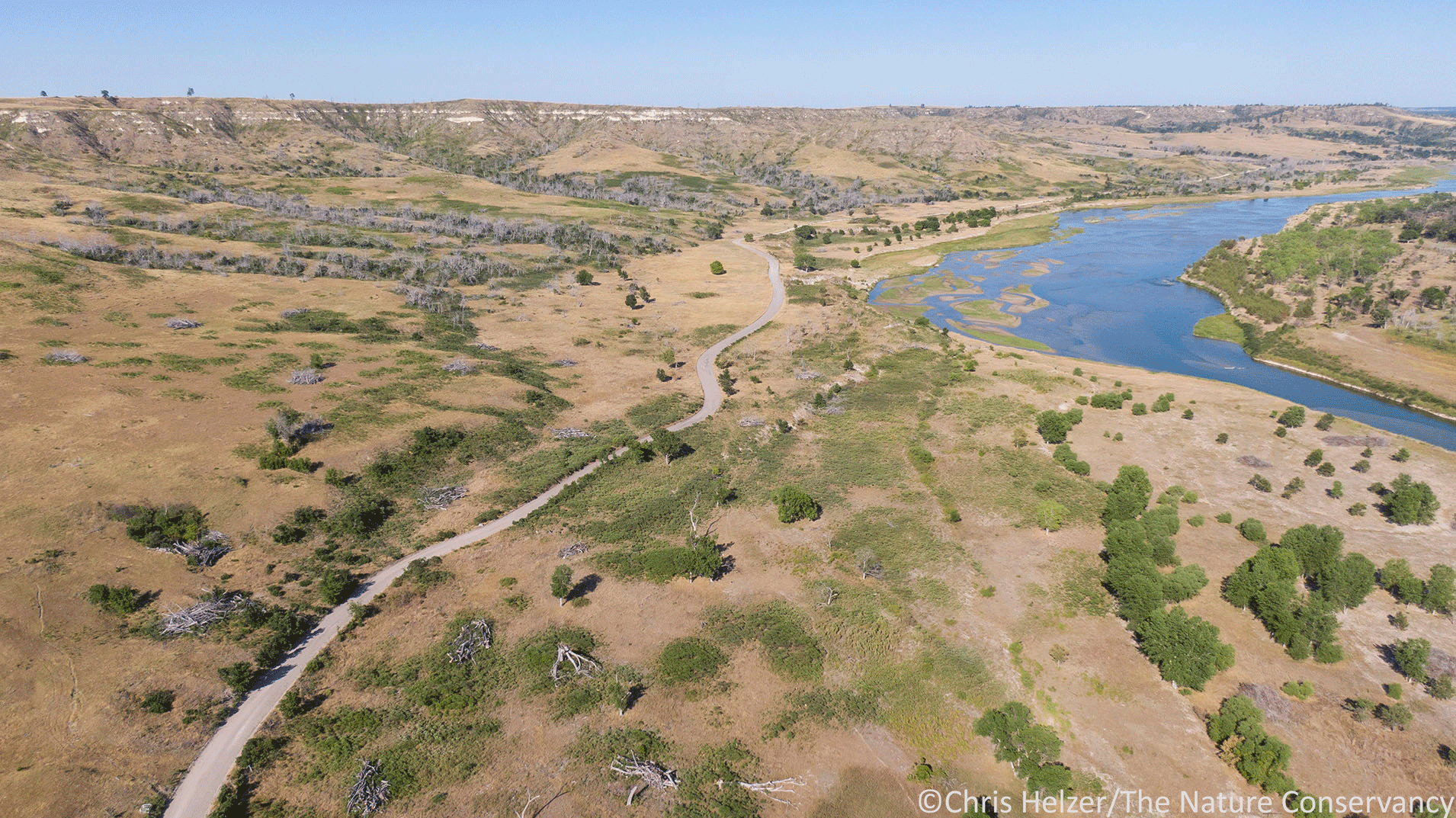
A drone photo of the Niobrara River and a very dry landscape around it.
After spending the day evaluating pasture condition and discussing grazing and weed management strategies, is was nice to spend time in the evening and the next morning just wandering aimlessly with my camera and drone. The above and below photos reinforce how dry it is at the Niobrara Valley Preserve and how much of the vegetation has gone dormant. At the same time, the bison are doing fine, there are still quite a few wildflowers blooming, and insects were abundant and very active.
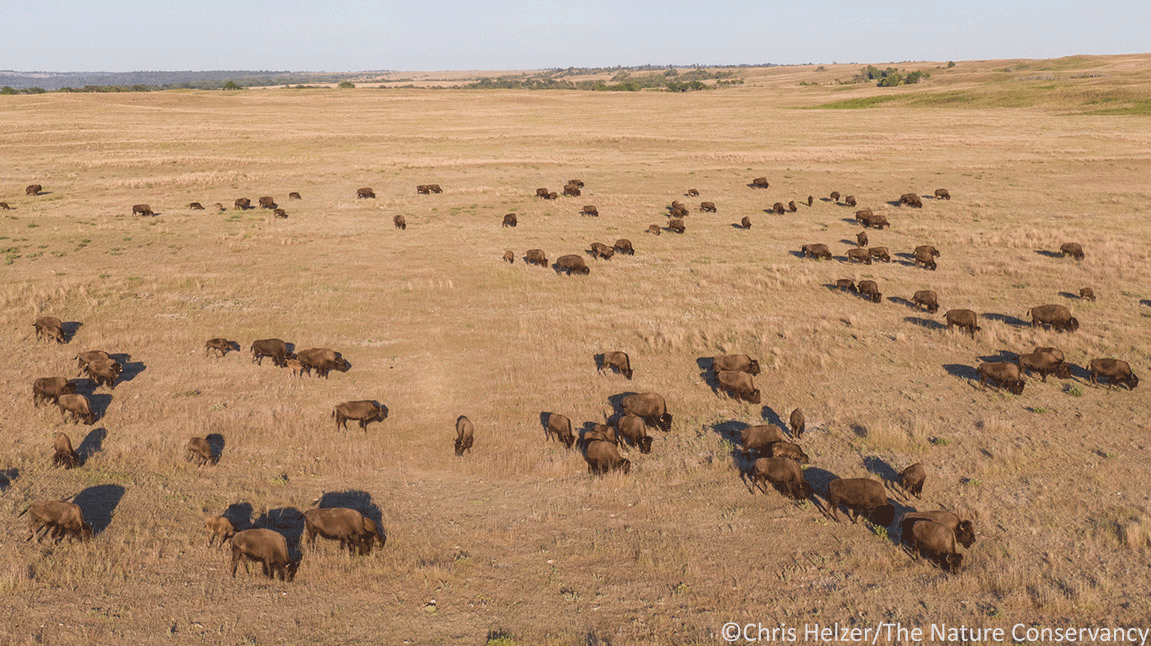
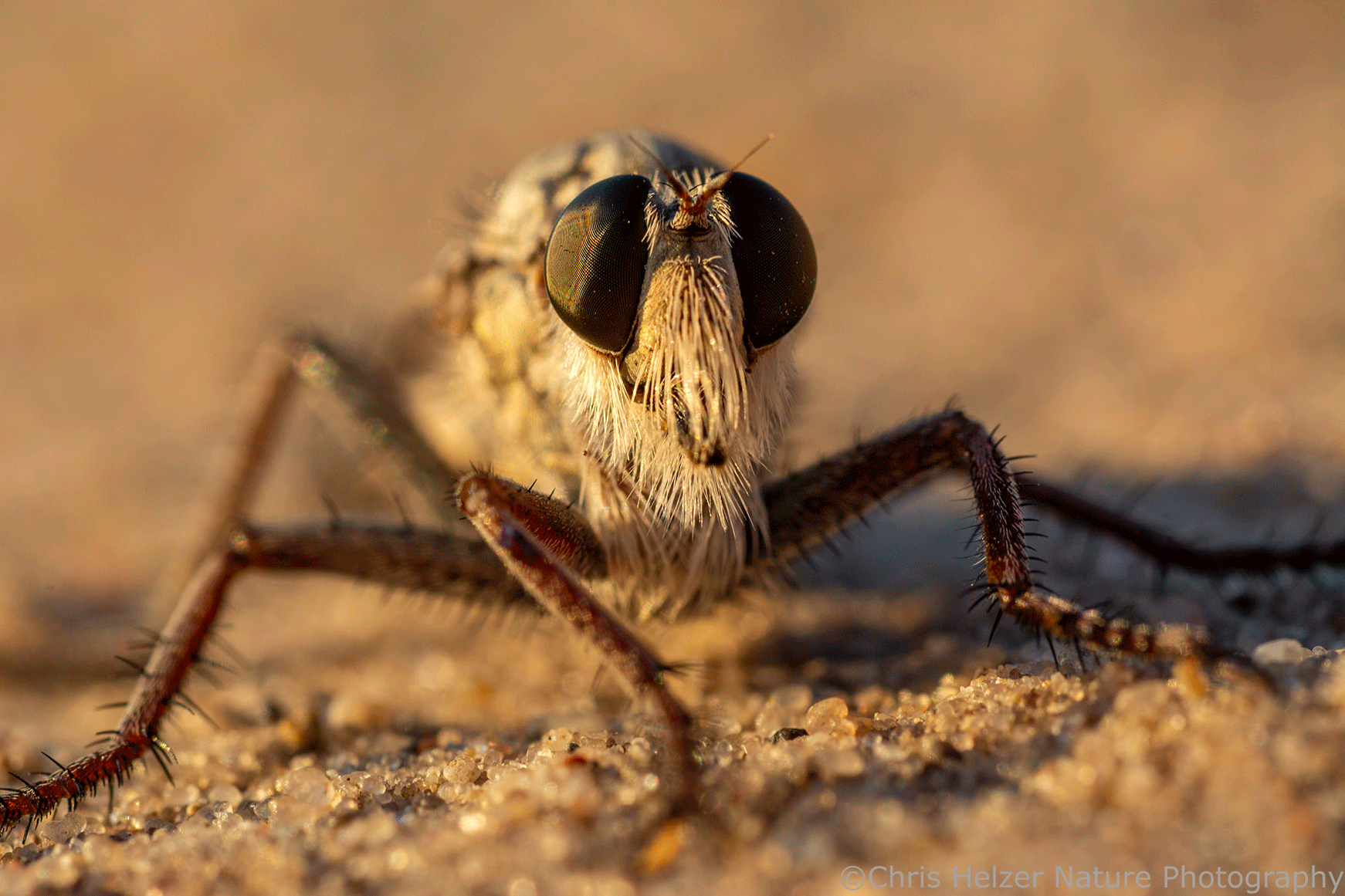
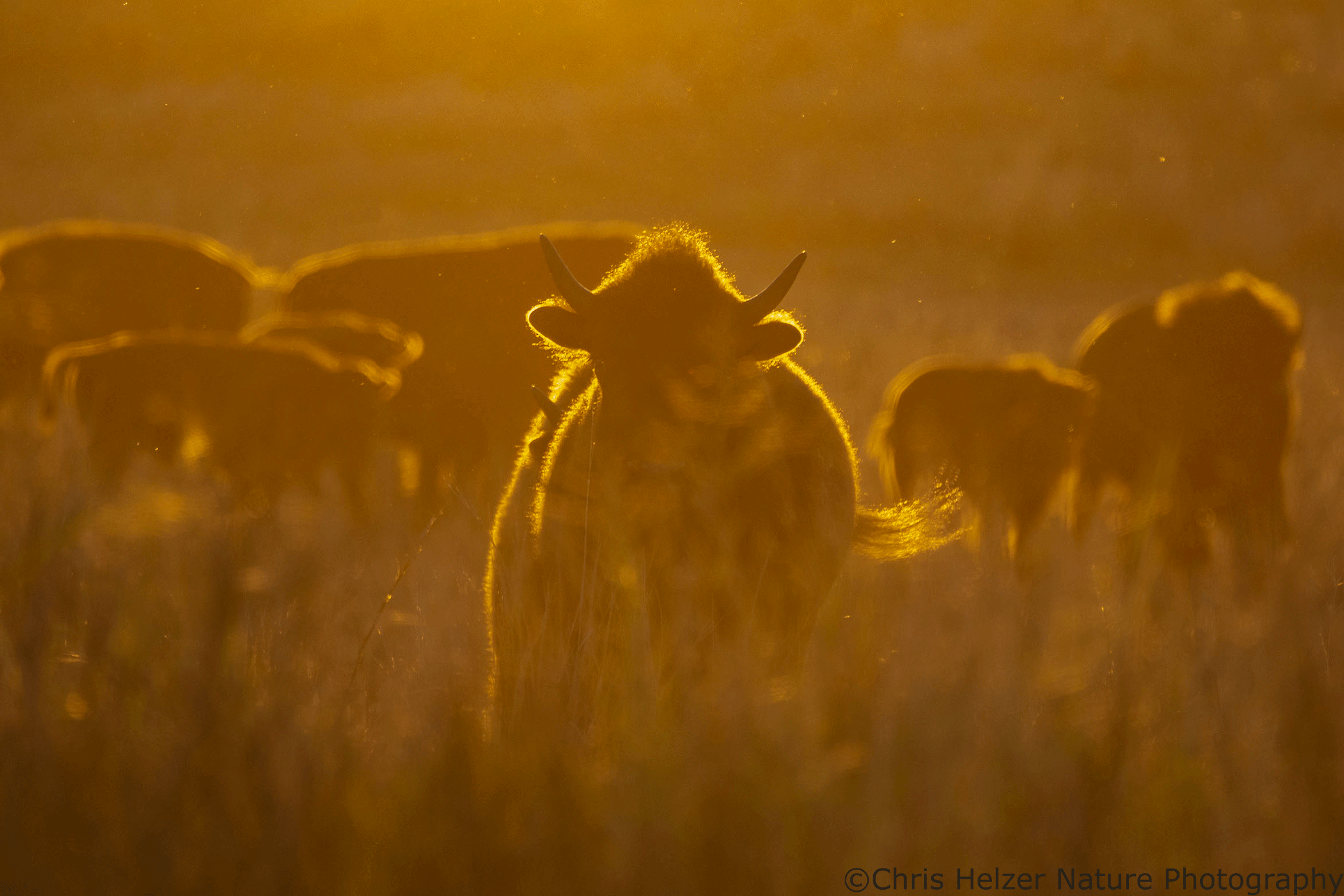
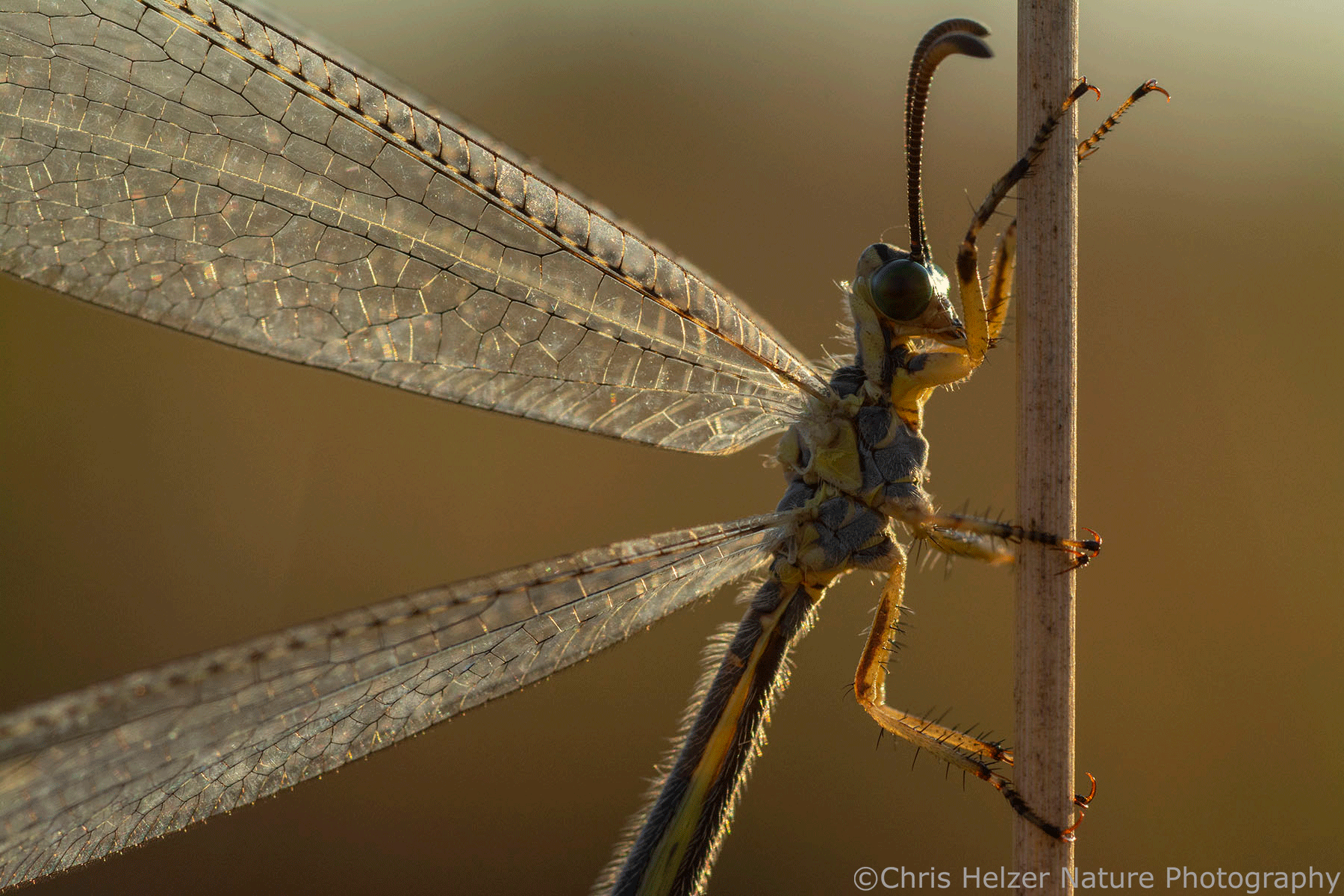
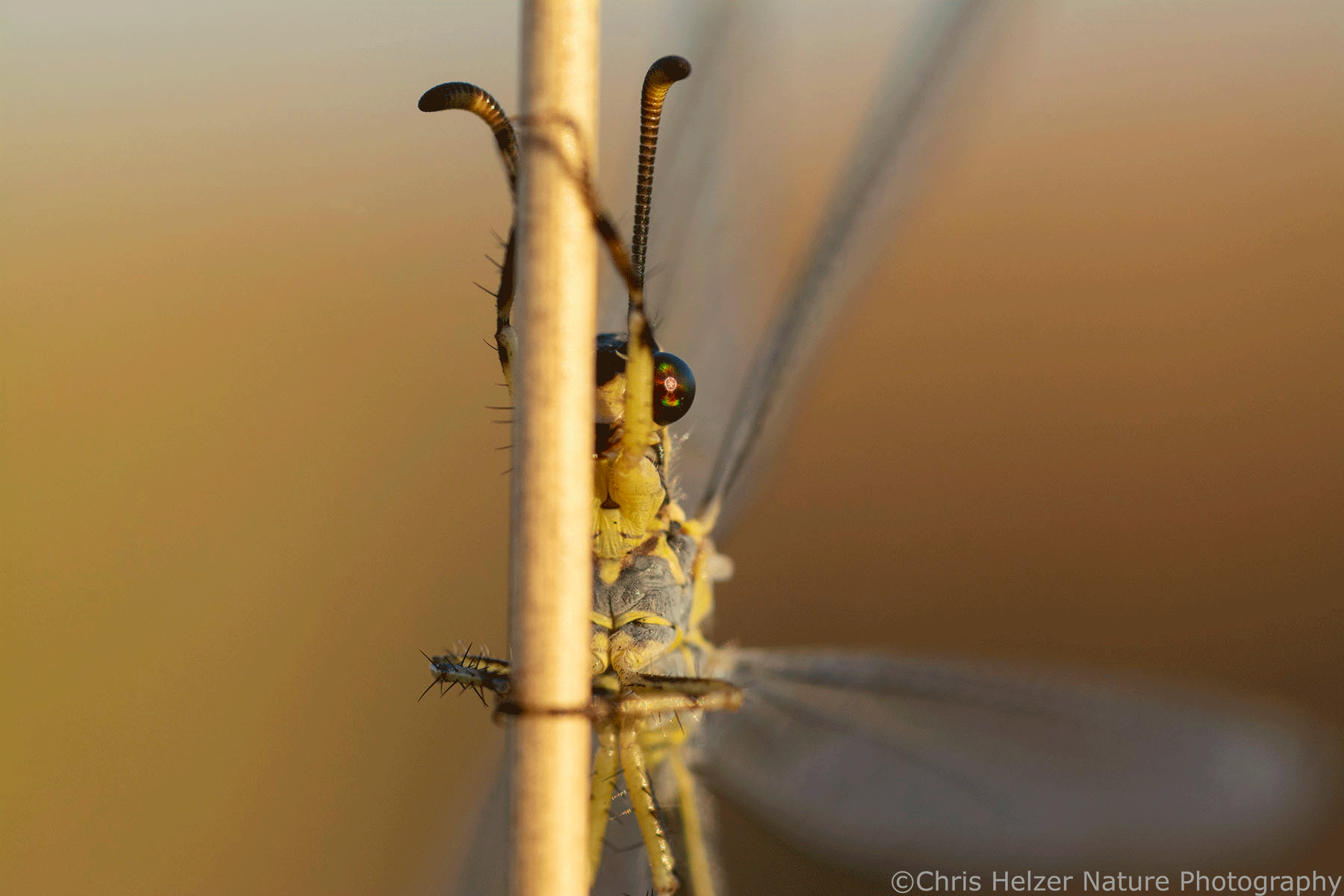
A drone photo showing part of our east bison herd at The Niobrara Valley Preserve. The bison are feeding in a spring-burned flat in very dry prairie. Robber fly in a sand blowout. Nikon 105mm macro lens. ISO 400, f/14, 1/100 sec.A bison calf stares at me as the sun goes down behind it. Tamron 100-400mm lens @400mm. ISO 640, f/6.3, 1/320 sec.A brown-headed cowbird (I think) flew from the feet of a bison, perhaps chasing the dragonfly above it, as the bison walked toward me. Tamron 100-400mm lens @270mm. ISO 640, f/6, 1/500 sec.Bison grazing at sunset. Tamron 100-400mm lens @290mm. ISO 640, f/6, 1/500 sec.A bison cow and calves at sunset. Tamron 100-400mm lens @400mm. ISO640, f/6.3, 1/500 sec.Antlion in the early morning. Nikon 105mm macro lens. ISO 500, f/13, 1/400 sec.Face-to-face with an antlion. Nikon 105mm macro lens. ISO 500, f/11, 1/320 sec.
There was no morning dew for insects to be trapped in, which cramped my style a little, but I managed to get some bug photos anyway. Antlions were especially common in the morning, and it was easy to spot them as their wings were highlighted by the light of the rising sun. Some were too wary to be photographed, but others sat still for me as long as I approached them slowly and close to the ground. I found quite a few male bees and wasps on overnight roosts too, but I just shared a bunch of those kinds of photos a few weeks ago, so I won’t add them here.
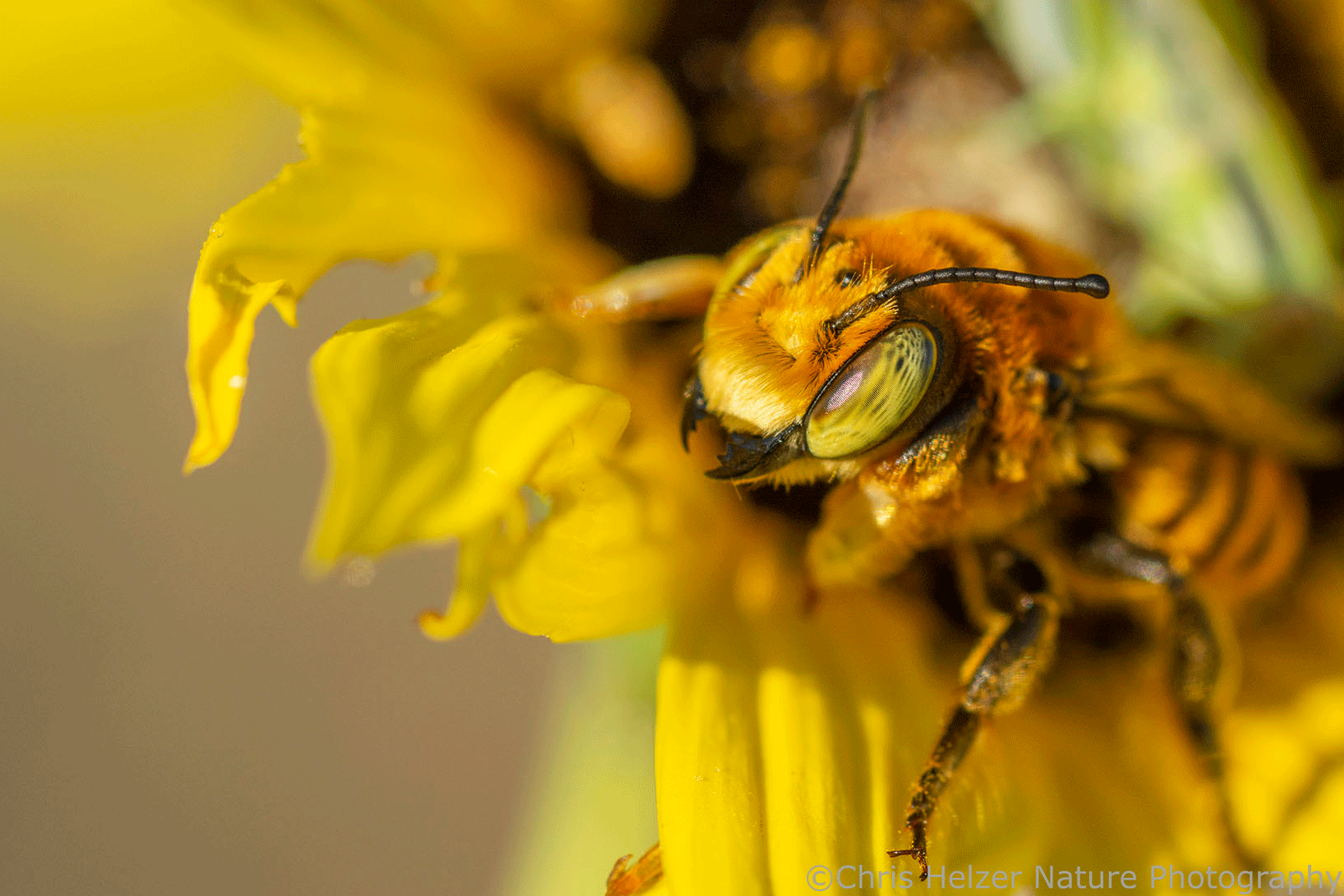
Metallic green sweat bee on a plains sunflower (Helianthus petiolaris). Nikon 105mm macro lens. ISO 500, f/11, 1/320 sec.
Drought or no drought, prairies are resilient and full of life and beauty. I hope you can find an opportunity to go see some of that beauty at a prairie near you!
Among the many impacts of climate change in Great Plains, one that has been weighing heavily on my mind is the increasing competitive advantage woody plants are gaining in grasslands because of increased drought frequency/severity and rising levels of atmospheric carbon. In Nebraska, eastern red cedar (Juniperus virgniana) has received tremendous – and well-deserved – attention in recent years as it continues to spread quickly across the state. However, while I’m concerned about cedar invasion, we have a viable strategy for dealing with it. We can kill it with fire. There is still lots of work needed to build our prescribed fire capacity in Nebraska, but there is strong momentum and I’m optimistic that we’ll eventually get on top of cedars across most of the state.
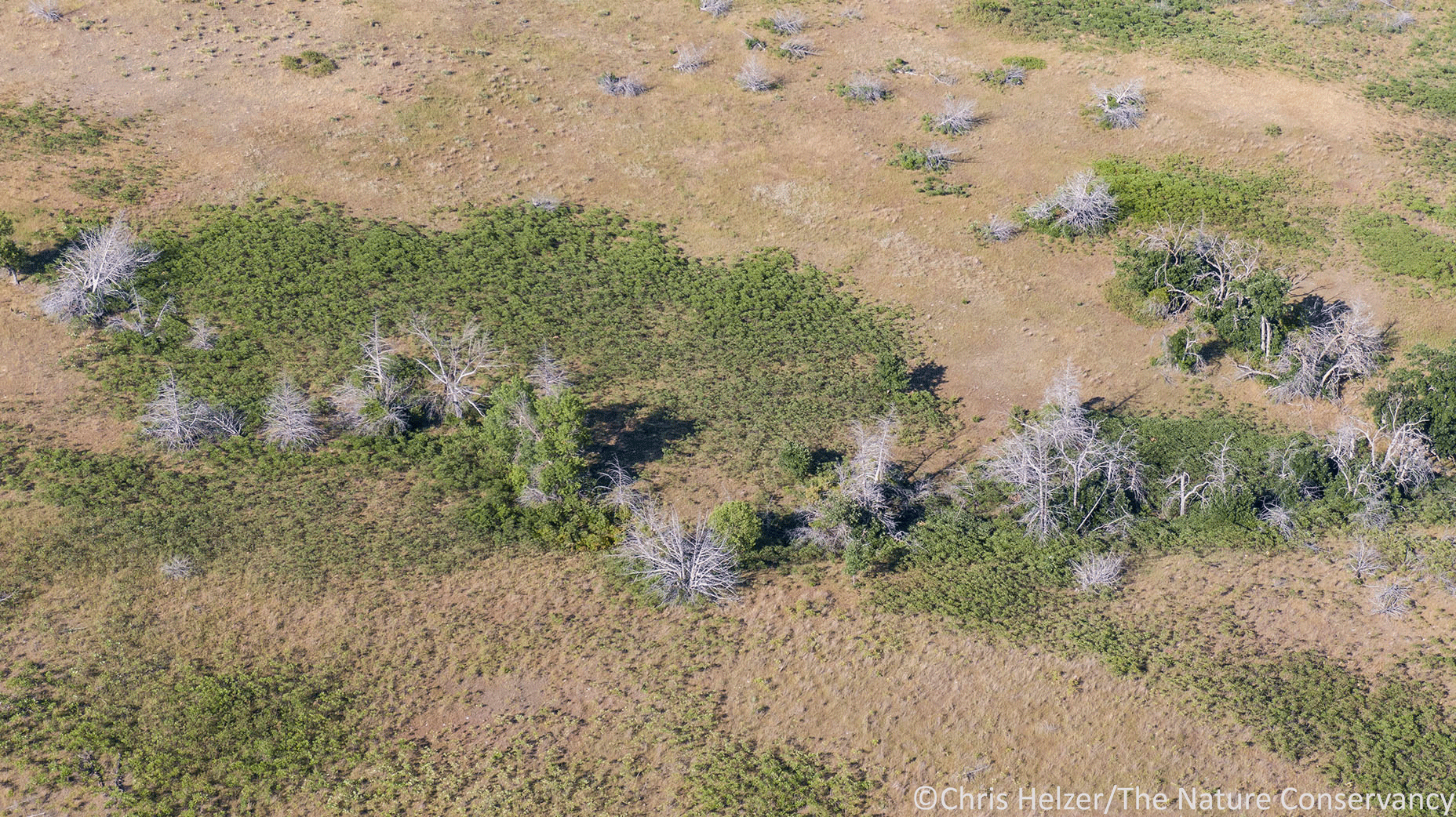
This photo shows a portion of the Niobrara Valley Preserve north of the river, where the 2012 wildfire swept through and killed huge numbers eastern red cedar and ponderosa pine trees. Under the current drought conditions, the green plants in this photo are primarily cottonwood trees, a few bur oaks, and (most prolifically) smooth sumac.
What’s getting much less attention is the growing scourge of deciduous shrubs and trees. Some of those, like Siberian elm (Ulmus pumila) and autumn olive (Elaeaganus umbellata) are nonnative invaders, but some native trees like honey locust (Gleditisia triocanthos) are also increasingly problematic. Those trees and many more can cause big problems for prairie managers on both public and private lands.
Most deciduous trees re-sprout after being top-killed by a fire or being cut down. Even multiple repetitions of those treatments won’t normally kill them, though frequent fires (every year or two over long periods of time) may eventually cause mortality and prevent new invasions. In most cases, once they’ve established themselves, those trees have to be dealt with one-by-one and treated with herbicide to kill them for good. That’s a tremendous challenge, especially when those trees become abundant.
However, while really scary, even the invasion of those trees isn’t the threat I worry about most. I’m much more concerned about the clonal deciduous shrubs – most of them native species – that are incrementally blanketing and smothering grasslands. These include species such as smooth sumac (Rhus glabra), dogwoods (Cornus sp.), and even wild plum (Prunus americana), among many others.
Because they grow in large colonies, connected belowground by rhizomes, clonal shrubs invade as massive cooperative armies, rather than as scattered individuals. This strategy gives them lots of advantages, including an ability to create ever-expanding canopies of leaves that shade out competition. Eventually, that shading-out process can fireproof those clones as grasses beneath the canopy become so sparse that fires won’t carry through them.
Here’s a closer shot of sumac clones and skeletons of dead cedar trees at the Niobrara Valley Preserve, surrounded by dormant prairie vegetation this week. This image, and others below, provides a frightening illustration of how drought conditions can help sumac and other clonal shrubs gain additional advantages over other prairie plants.
Increasing carbon dioxide in the atmosphere gives these clonal shrubs a leg up on many prairie plants. So does the increasing frequency and severity of droughts. While most prairie plants have deep roots, you may remember an earlier blog post that shared recent research showing that only shrubs and trees seem to be pulling water from deep in the soil, even during droughts. Many herbaceous (non-woody) prairie plants go dormant or dramatically slow their growth when the soil dries up. Shrubs like smooth sumac and dogwood just keep plugging away, drawing moisture from further down in the ground.
This week, while spending some time at our Niobrara Valley Preserve, I took some photos that help illustrate the varying impacts of drought on prairie vegetation. The Niobrara Valley Preserve and the surrounding area have received less rainfall this year than during the 2012 drought. The University of Nebraska-Lincoln’s drought monitor shows the area around the Preserve as being under severe drought conditions, but because of local rainfall amounts and distribution, it’s even worse than that across most of the property. As a result, much of the prairie is brown and crispy.
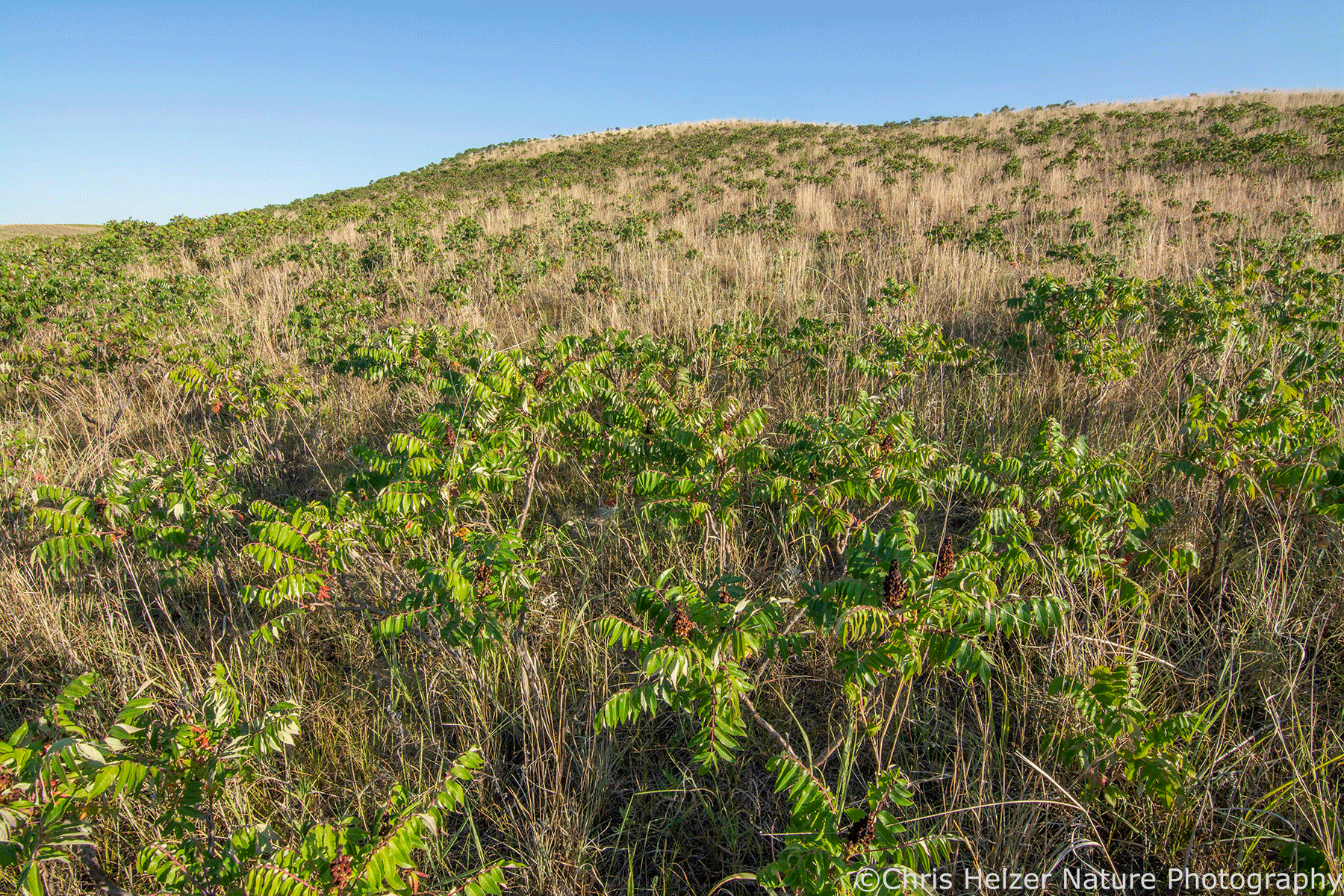
…except for clonal shrubs like smooth sumac and wild plum.
Smooth sumac stands out as green vegetation against a backdrop of drought-stricken Sandhills prairie.These smooth sumac plants look just as vibrant as always while most of the surrounding plants are either dormant or showing other signs of drought stress.
In the midst of that matrix of dried and dormant prairie vegetation, clonal deciduous shrubs are thriving. Those shrubs look perfectly healthy and happy while most other plants have shut down for the year. It doesn’t take a prairie ecologist to recognize what happens if some plants can keep growing and spreading while their competition is sidelined. If summer droughts continue to become more common, sumac, plum, and other clonal shrubs are going to be more and more difficult to deal with.
Dealing with clonal shrubs is a huge challenge, especially when those clones get big. It’s not hard to kill an individual sumac stem. You can cut it off at the ground and paint the stump with herbicide. The real issue comes when you’re facing tens of thousands of those stems. You can broadcast herbicide across a clone, but that will also kill many of the plants beneath. That, of course, is really bad for the productivity and health of the prairie we’re trying to save.
Scientists and landowners in places like the Flint Hills of Kansas or in many eastern tallgrass prairies have shown that burning annually or every other year can keep these clonal shrubs at bay. That, however, comes with its own consequences, including significant impacts to invertebrates and other animals. In addition, at least in the Great Plains, frequent fire can favor grass dominance and reduce plant diversity. It also greatly reduces the options available for grazing systems when you have to leave behind enough grass each year to carry next year’s fire.
More significantly, frequent fire is hard to envision as a feasible option to be applied across the entire Great Plains. Apart from the actual logistics involved in burning privately-owned grasslands at that scale, the smoke produced by those fires would be hugely problematic. Much of the Flint Hills landscape of Kansas is annually burned, and in addition to the aforementioned consequences to wildlife and plant diversity, that annual burning is causing significant human health concerns from smoke concentrations – even in neighboring states.
The Flint Hills is about 4 million acres in size and only about half of that is burned each year. Now imagine the impacts from smoke produced by annual fires across the Nebraska Sandhills (12 million acres) or the majority of all Nebraska’s grasslands (23 million acres). Even if spread across the year, that’s a tremendous amount of smoke, especially when multiplied across other grassland-heavy states like the Dakotas, Kansas, Oklahoma, and others.
Fire will probably be part of the answer, but we’re going to need more than just a significant increase in our prescribed fire work. Goats are being used in some places, and might be another partial answer in certain situations, but goats don’t kill shrubs, they just knock them back. They also eat lots of other plants besides just shrubs, so need careful management to prevent negative impacts to plant diversity. Goats also present a number of difficulties when it comes to managing them – especially in terms of keeping them in place and/or alive.
The point of all this griping is that we need to get serious about finding more and better ways to address the spread of clonal shrubs in the Great Plains. We already have a significant problem in some places – especially in the eastern portions of the Plains and in other specific locations (like the Middle Niobrara River Valley) where shrub invasions have been growing unchecked for a long time. If we don’t find ways to slow it now, the problem is going to overwhelm us.
We waited too long to start dealing with eastern red cedars and now we’re really racing to try to save places like Nebraska from being completely overtaken (some landscapes in the southern Plains are likely past the point of saving). That’s happening despite the fact that we’ve known for a very long time how to deal with cedars (fire). Now we’re facing another wave of invasions that we don’t yet know how to fight. Let’s not wait until our boats are underwater before we start bailing.
…
Ok, if you’ve made it this far and are feeling down, here are a few photos that might cheer you up just a little. While much of the prairie at the Niobrara Valley Preserve was dormant or heavily wilted this week, there were some plant species apart from sumac and plum that were still doing well. I spent a lot of time trying to document which species still looked happy, despite that drought, and there were quite a few – mostly wildflowers and forb-like shrubs.
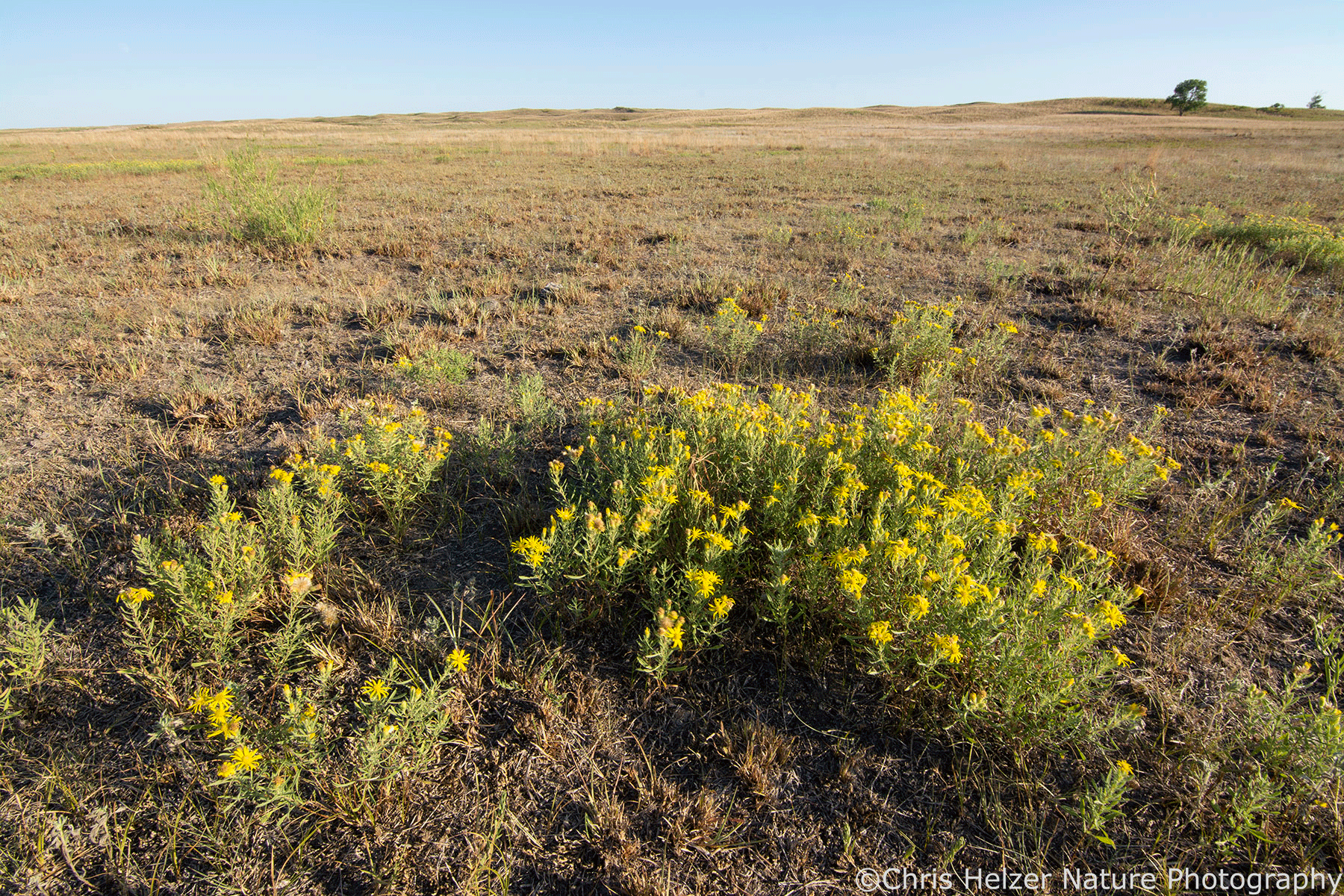
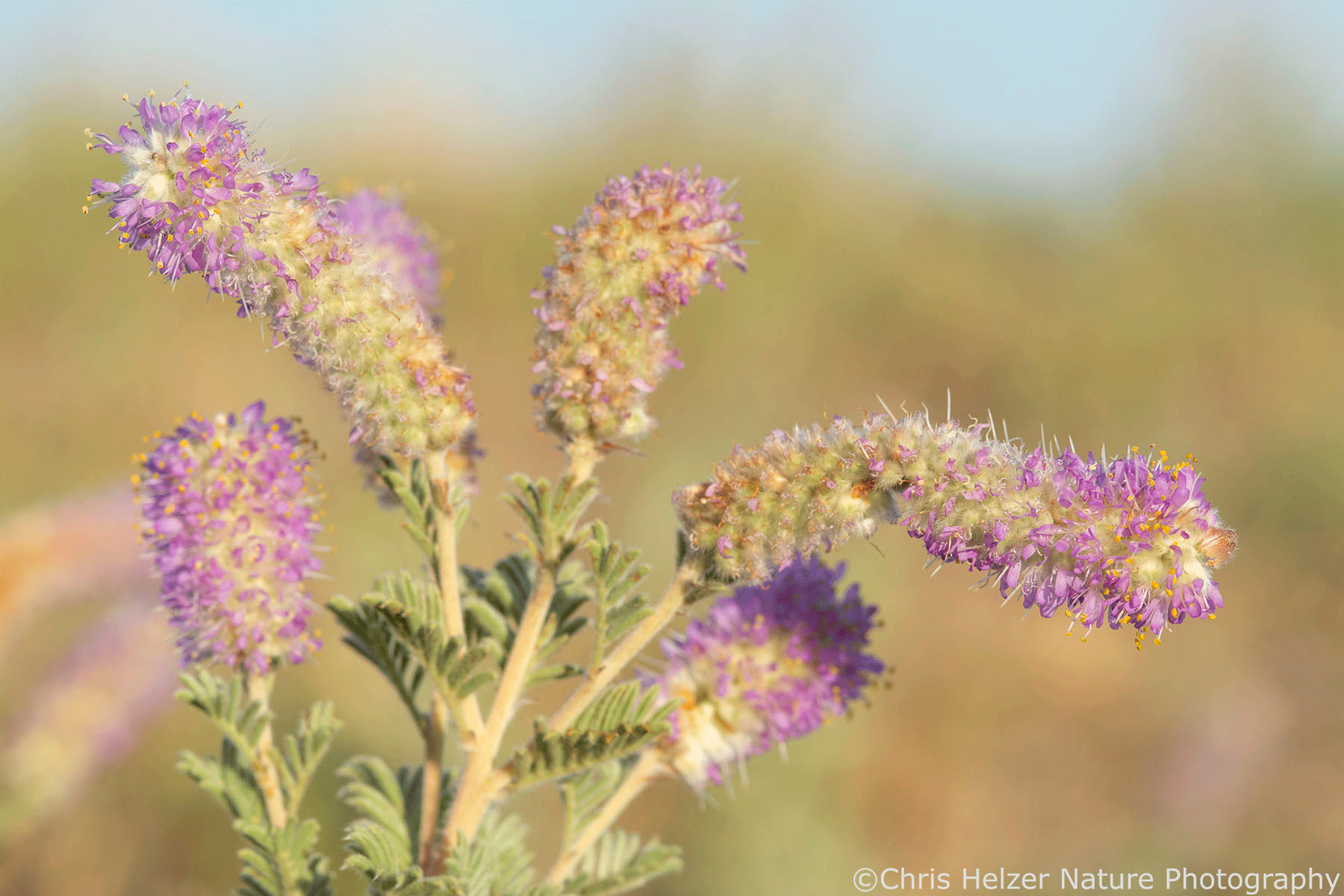
One plant that seems to be doing well despite the dry soils is hairy goldaster (Heterotheca villosa).Lead plant (Amorpha canescens) is also thriving, despite the dry conditions.Many annual plants like this prickly poppy (Argemone polyanthemos) and plains sunflower (Helianthus petiolaris) seem to be weathering the drought very well.Prairie clovers, including white prairie clover (Dalea candida), purple prairie clover (Dalea purpurea) and the species shown here, silky prairie clover (Dalea villosa) are all looking good.
Below is a partial list of plants that were still green and vibrant in the drought-stricken prairies of the Niobrara Valley Preserve this year. I’d love to partner with someone who has the interest and capacity to look at the strategies these plants are using to weather dry conditions. Are these outliers in terms of the deep-roots-to-pull-water conundrum? Or do they have other strategies that allow them to be more efficient with water or effective in dealing with dry soils? So many fun things to think about.
Some of the still-green plants in the droughty Sandhills prairie this week:
Missouri goldenrod (Solidago missouriensis)
Prairie clovers (Dalea purpurea, D. candida, D. villosa)
Cudweed sagewort (Artemisia ludoviciana)
Hairy puccoon (Lithospermum caroliniense)
Lead plant (Amorpha canescens)
Scaly blazing star (Liatris squarrosa)
Hairy goldaster (Heterotheca villosa)
Green sage (Artemisia campestre)
Sand milkweed (Asclepias arenaria)
.
One of the nice things about the prairie plants that are still actively growing and flowering is the habitat they provide for animals that need to keep eating and living during drought conditions. Despite the severe drought, there is still a lot of animal activity in the prairies at the Niobrara Valley Preserve. I caught a little evidence of that with my camera this week, but not enough to be representative of the full spectrum of activity and sound going on around me while I was there.
I’ll end this with some optimism. Despite my real and serious worries about clonal shrub invasion and the facilitation of that by climate change, prairies are still very resilient. That resilience gives me a lot of hope for their future and gives us a lot to work with as we struggle to manage and restore them. Prairies have been through a lot and they’ll survive a lot more if we can continue to give them some help.
This western bush cicada (Megatibicen tremulus) was glad there are still some green plants around to feed on, including this plains sunflower.This bee (and a grasshopper behind it) were also glad to have some green and flowering plants to feed on.









 The Prairie Ecologist