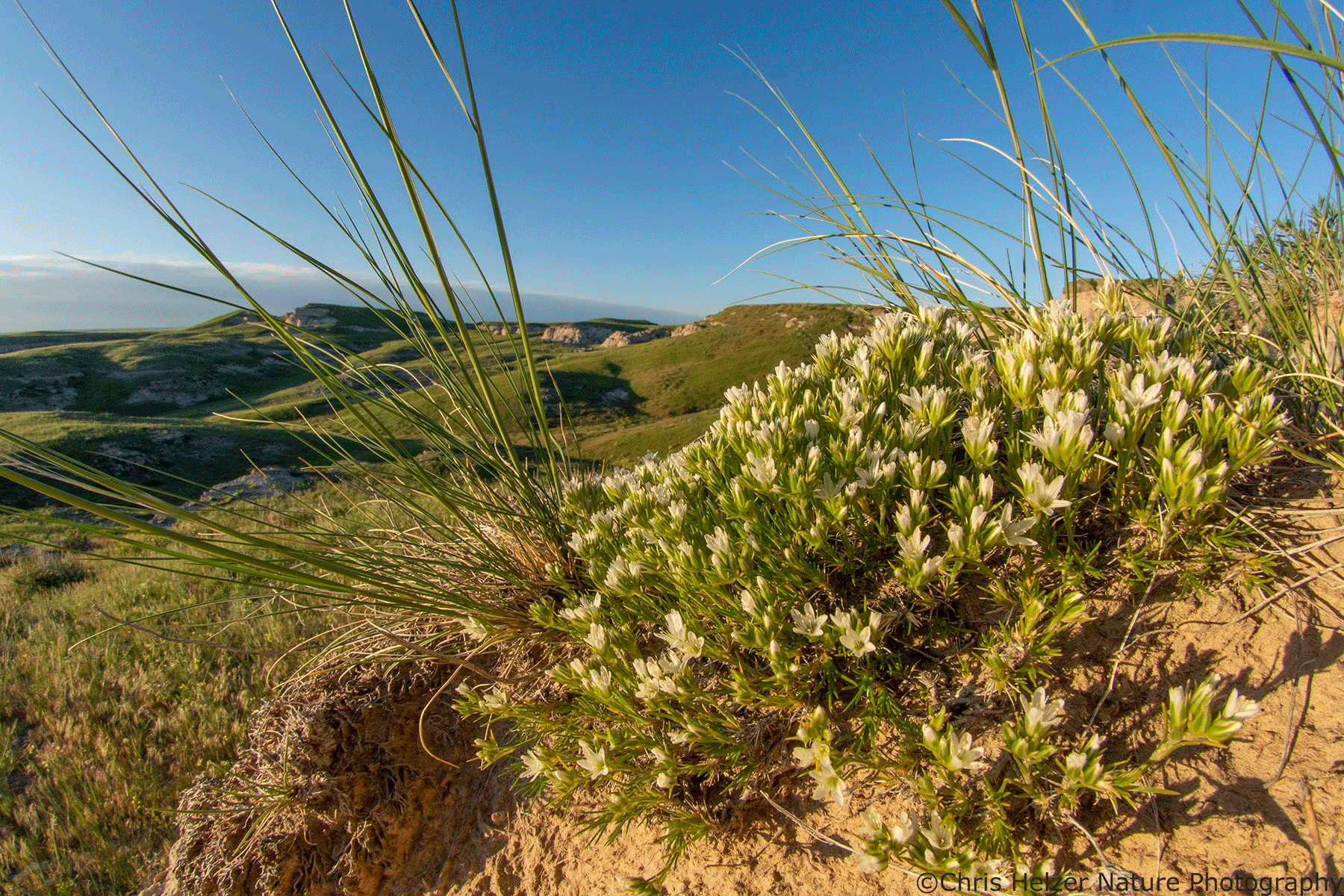
Photos of the Week – June 17, 2022

The Hubbard Fellows (Brandon and Emma) went with me this week to The Nature Conservancy’s Cherry Ranch in the far northwest corner of Nebraska. It’s a property I don’t visit nearly often enough, and every time I go I promise myself I’ll go back again soon. I’m not very good at keeping that promise so far but I’m going to keep trying.
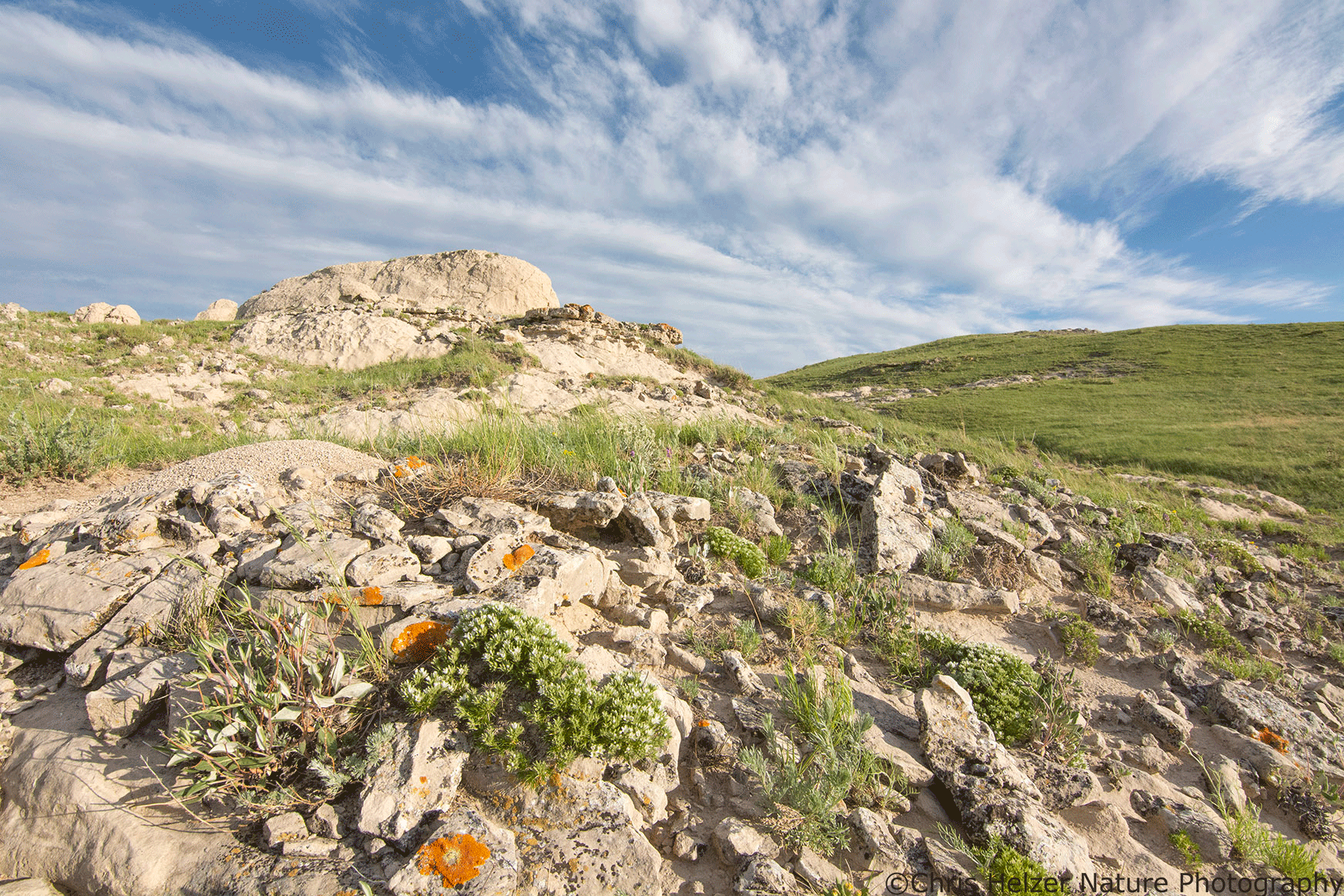
Rocks, prairie, and sky. Tokina 11-20mm lens @11mm. ISO 800, f/16, 1/500 sec.
A big rock formation surrounded by prairie – including some crested wheatgrass (Agropyron cristatum), which fortunately doesn’t seem to be spreading too far. Tokina 11-20mm lens @11mm. ISO 800, f/15, 1/500 sec.
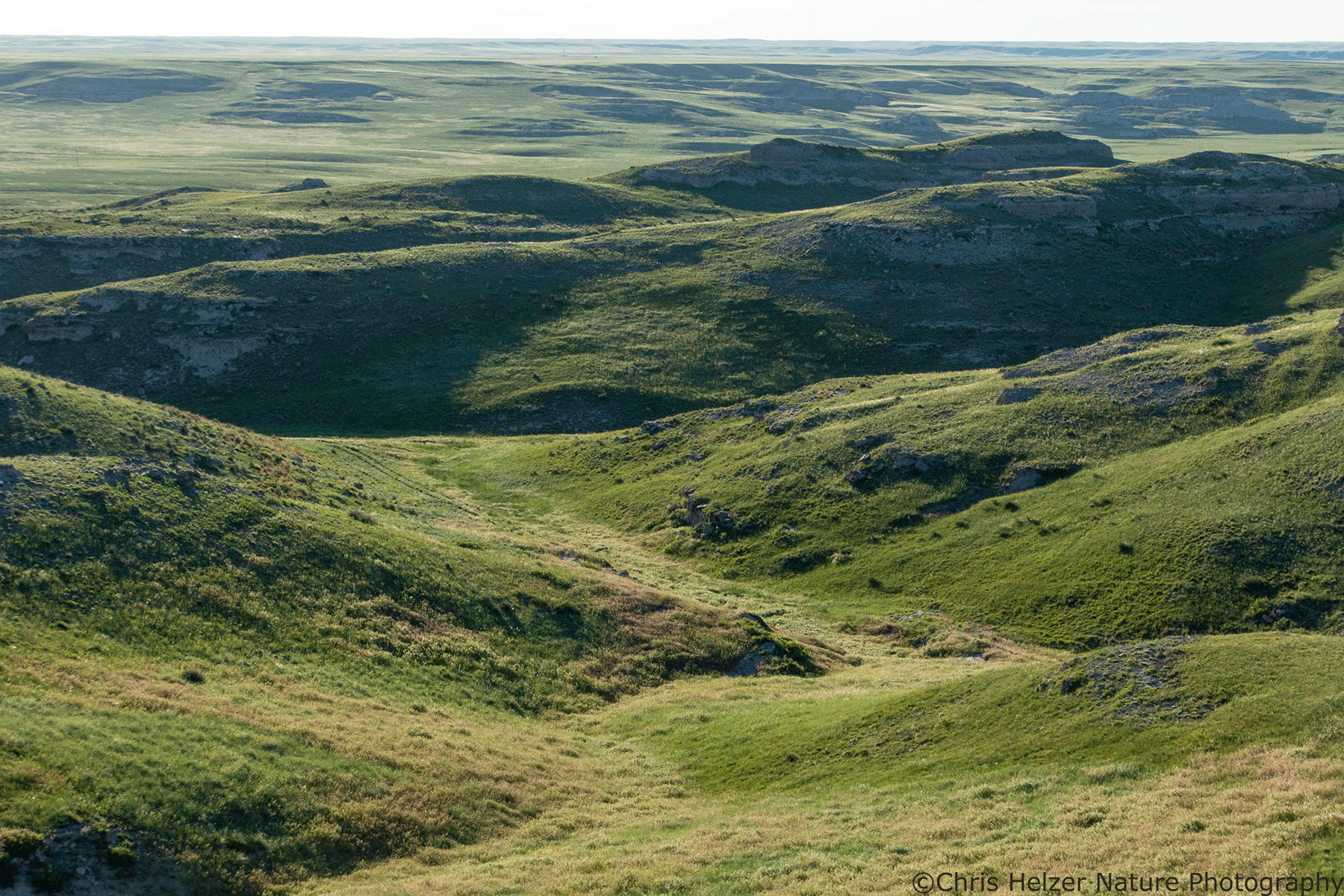
Prairie in evening light. The stream in the valley is the Niobrara River – far smaller than it is further east where it has been designated a National Scenic River. Nikon 18-300mm lens @95mm. ISO 800, f/11, 1/500 sec.
Brandon Cobb wanders off to explore and do some photography. Tokina 11-20mm lens @19mm. ISO 800, f/18, 1/400 sec.

Cherry Ranch is located south of Harrison, Nebraska in the ‘high plains’ – at an elevation of almost 5,000 feet above sea level. It’s a mixture of shortgrass and mixed-grass prairie that receives an average of 15-16 inches of rain per year. The upper reach of the Niobrara River flows through the ranch, providing moisture for some wet meadows in the bottom of its valley, but most of the surrounding prairie is high and dry, with lots of exposed sandstone formations.

I’m an ecologist, not a botanist, so I try to keep up with plant identification but can get quickly out of my comfort zone when I stray too far from the Platte River Prairies and my family prairie. I know more 99 percent of the plants I see along the Platte and about 90-95% in the Nebraska Sandhills, but that probably drops to something around 65 or 70% in the panhandle. The diversity of little plants on the rock outcrops at Cherry Ranch and similar sites are even more difficult, but that doesn’t mean I don’t love looking at them.

However, while I think my plant identifications in these photos are right, I’m certainly not guaranteeing any of them.
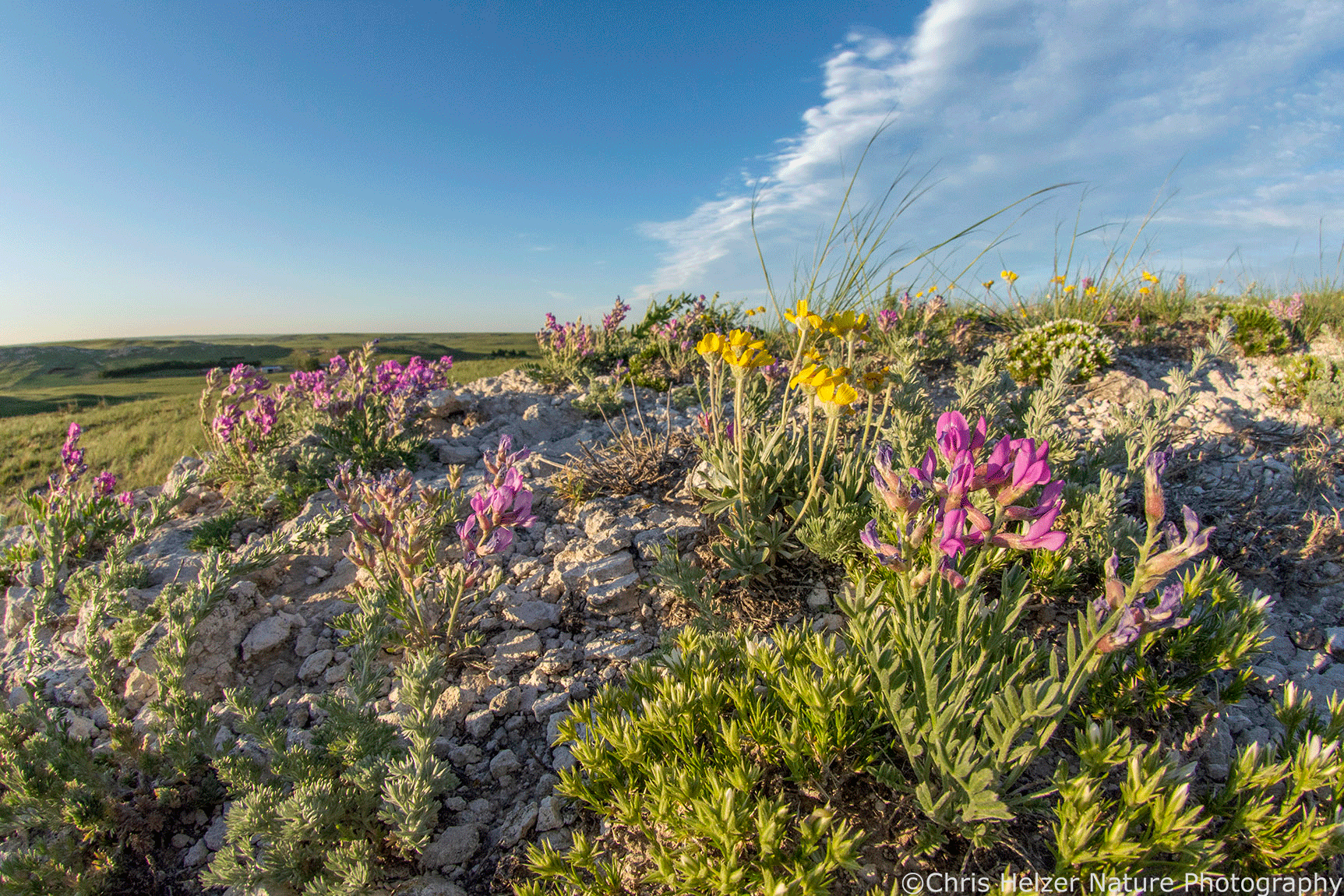
Purple locoweed (Oxytropis lambertii) and stemless hymenoxis (Tetraneuris acaulis) on a rocky hill top. Nikon 10.5mm fisheye lens. ISO 800, f/14, 1/320 sec.
Stemless hymenoxis blooming in a rocky spot. Nikon 10.5mm fisheye lens. ISO 800, f/14, 1/320 sec.
Stemless hymenoxis in late day light. Nikon 18-300mm lens @300mm. ISO 800, f/6.3, 1/200 sec.

We caught both a sunset and a sunrise at the ranch this week, taking advantage of some nice photography light (though it was windy). I took several thousand photos and ended up with about 130 that I really liked. It wasn’t just a photography trip, though, so we spent quite a bit of time talking ecology and management with Travis Krein and his ranch hand Lee. Travis manages the place for us and is one of those people who is more impressive the longer you talk with him.

The first thing we looked at with Travis was a stretch of the river where he and Lee have been experimenting with cattle grazing to suppress invasive cattails – something that was Travis’ idea to try. (It’s working well and we talked about some potential variations to try next.) We also had long conversations about bird habitat, invasive species, fencing and grazing approaches, and lots more. I came away feeling both awed at his knowledge and a little more insecure about mine.
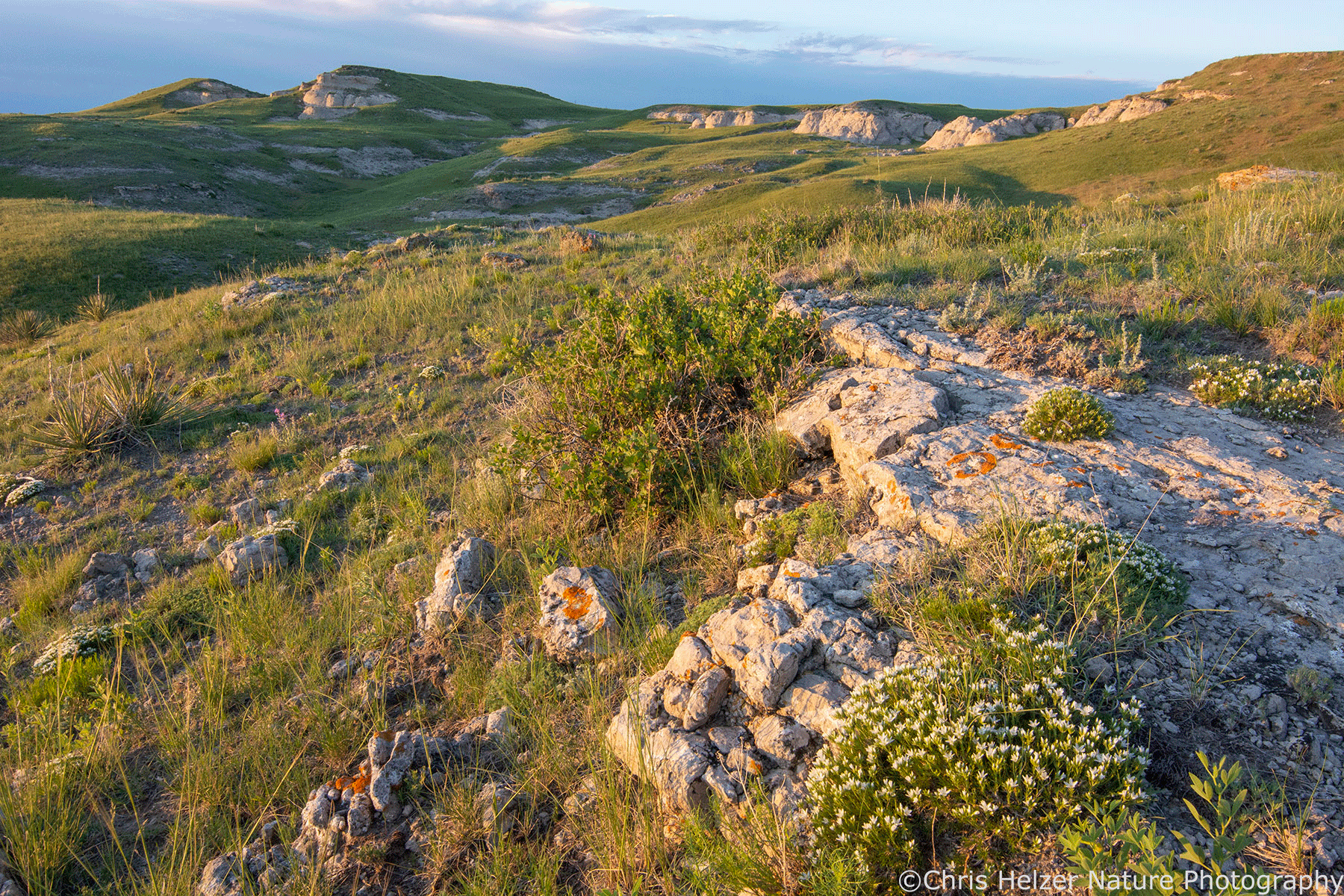
Sunrise light hits the rock outcrops. Tokina 11-20mm @18mm. ISO 400, f/18, 1/40 sec.
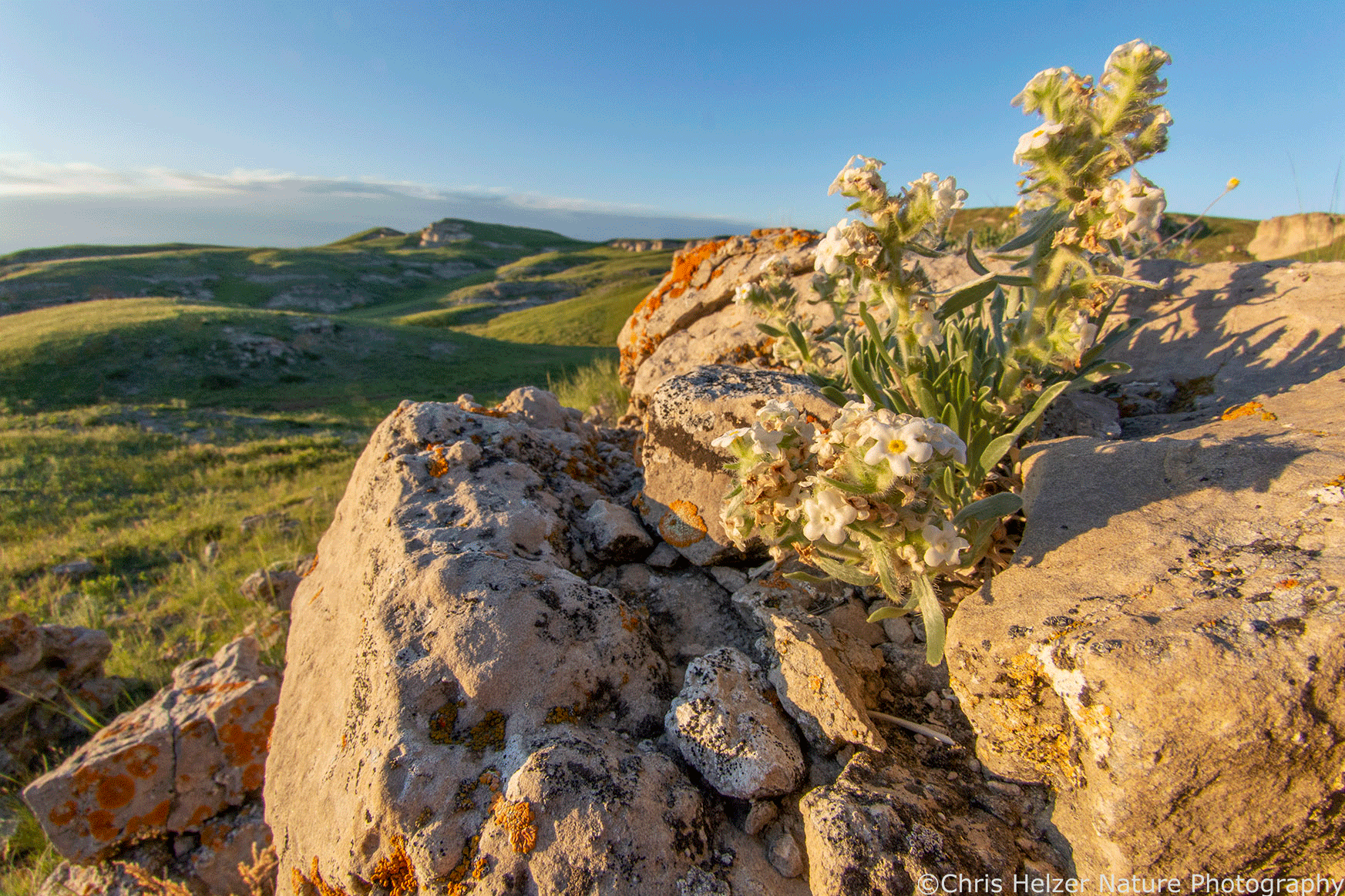
I think this is something in the Cryptantha genus but don’t know what species. Nikon 10.5mm fisheye lens. ISO 400, f/18, 1/80 sec.
Clustered cancer root, aka clustered broomrape (Orobanche fasciculata) is a neat little native parasitic plant that doesn’t make its own chlorophyll. Nikon 10.5mm lens. ISO 400, f/18, 1/100 sec.
I think this is desert sandwort (Eremogone hookeri) but I wouldn’t guarantee it. Nikon 10.5mm fisheye lens. ISO 400, f/18, 1/100 sec.
I’m thinking standing milk-vetch (Astragalus laxmannii) on this one. Beautiful plant! Tokina 11-20mm lens @16mm. ISO 400, f/16, 1/200 sec.
Mixed-grass prairie. Nikon 18-300mm lens @50mm. ISO 400, f/16, 1/200 sec.

It was pretty windy for insects, so I didn’t get to look for bumble bees as I’d hoped, but we still got to see some wildlife. There were mule deer and pronghorn around, as well as nighthawks, lark buntings, grasshopper sparrows, and lots of other birds. A big common snapping turtle was warming itself up along the banks of the river and I spent some time photographing a colony of cliff swallows nesting on a sandstone cliff. It was a treat to see cliff swallows nesting somewhere other than the underside of highway bridges, which is where most of them seem to hang out these days.
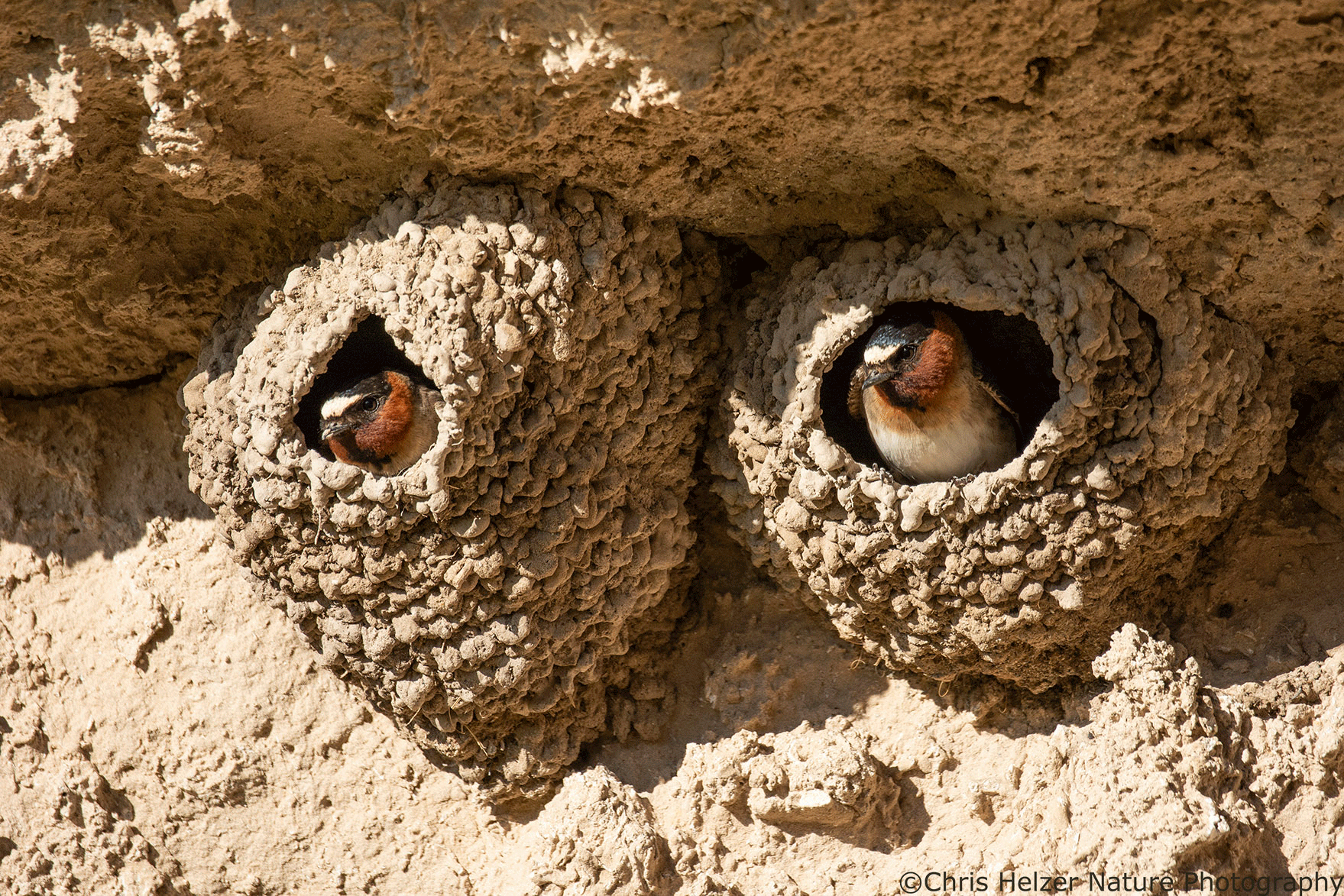
Cliff swallows nesting on the exposed face of a cliff. Sigma 100-400mm lens @400mm. ISO 500, f/6.3, 1/1250 sec.
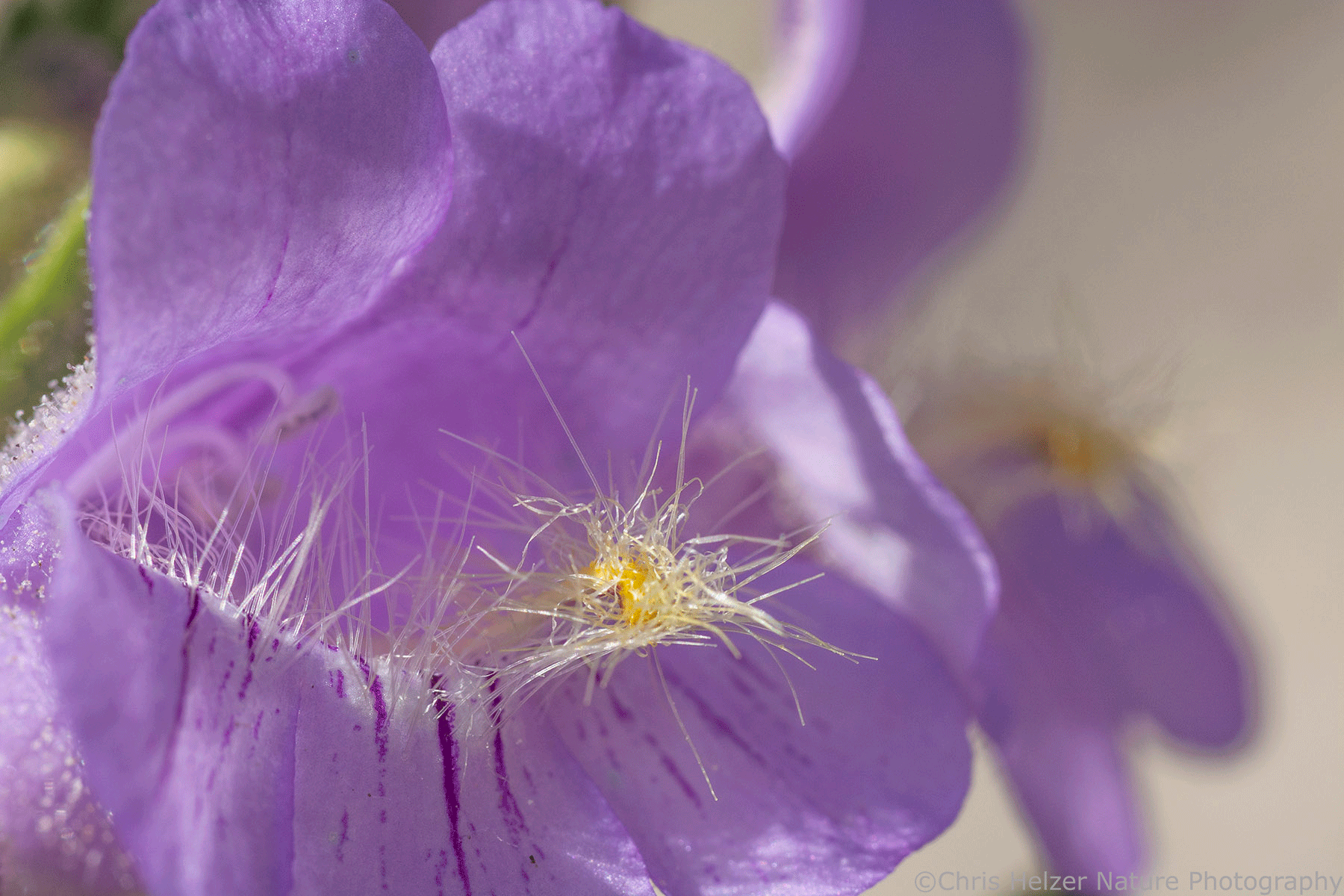
Crested beardtongue (Penstemon eriantherus). Nikon 105mm macro lens. ISO 500, f/16, 1/500 sec.
Emma Greenlee walks through a patch of needle-and-thread grass. Sigma 100-400mm lens @400mm. ISO 500, f/8, 1/640 sec.

Cherry Ranch is a working ranch with no infrastructure to host the public, so it’s not open for hiking or other uses. I’d like to find a way to facilitate some visitation at some point in the future because it’s obviously a gorgeous site, but it’s tricky given the remoteness of the place and a lack of nearby staff. In the meantime, I’ll do my best to get out there more often and share photos and stories with you as a meager substitution.

If you like the look of this landscape, though, there is a lot of public land in the panhandle that’s worth visiting. Chadron State Park, Fort Robinson State Park, Toadstool Geological Park, the Ogalala National Grasslands, and the Wildcat Hills are just a few examples. Those sites contain a combination of grasslands, badlands, ponderosa pine ridges, and other habitats that many would be surprised to know exist at all, let alone exist in Nebraska. I highly encourage you to explore them!

A tiny wasp on exposed sandstone. Nikon 105mm macro lens. ISO 500, f/16, 1/800 sec.
A common snapping turtle basks in the sun along the Niobrara River with a spider on its head. Nikon 18-300mm lens @270mm. ISO 800, f/18, 1/320 sec.

Don’t forget about the upcoming events at the Platte River Prairies in July! The first will be a public field day on July 9 for anyone who wants to learn more about prairie and wetland ecology. The second is a workshop on conserving fragmented prairies on July 25-26 that is aimed at biologists working in grasslands. Both are free of charge but we’re asking for people to RSVP. Information can be found in the embedded links within this paragraph. Hope to see you there!
A Galling Discovery

It was just supposed to be a quick trip across town for a brief photography session before breakfast this morning. The light was nice, the breeze was nearly calm, and it was still far from the near 100 degree temperature forecast for later in the day. I certainly didn’t expect to find something that consumed much of the rest of my day.

On the other hand, what a fun way to have my schedule derailed!

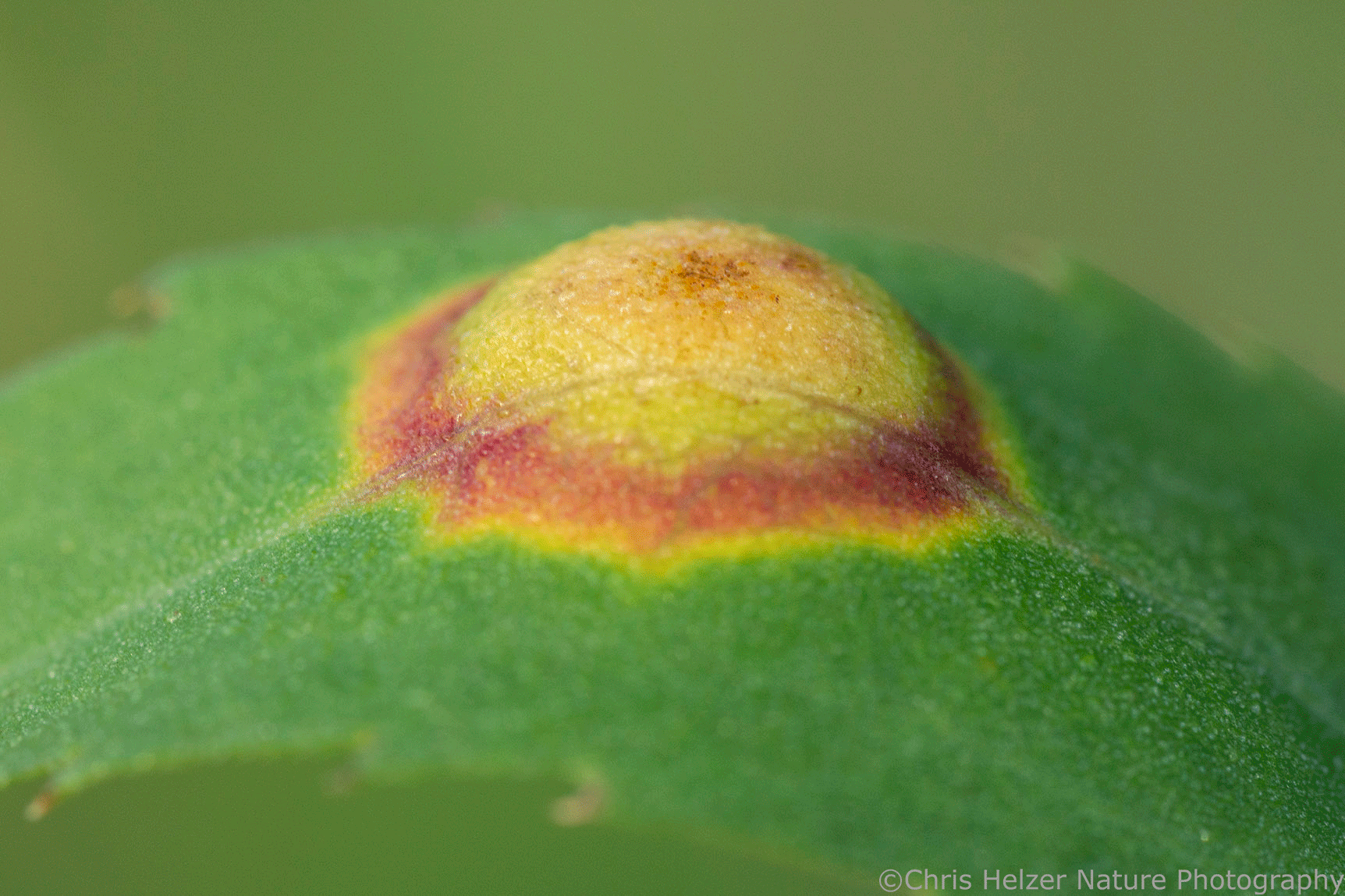
Take a look at the photo below. That surprisingly colorful and beautiful circular pattern on a goldenrod leaf is something many of us see regularly but pay little attention to. For those in the know, it is a gall – a swelling found in plant leaves, stems, or other parts that acts as a hiding place for the larva of an insect. In this case, it’s a gall produced by an ambrosia gall midge (Asteromyia carbonifera). The midge lays an egg on the leaf, the larva hatches and burrows into the leaf and a gall forms around it, giving it a relatively safe and hidden place to feed and mature.

A gall on Canada goldenrod (Solidago canadensis) at Lincoln Creek Prairie in Aurora, Nebraska

That part of the story was familiar to me, though I definitely didn’t have the name “Asteromyia carbonifera” at the top of my mind. What set me off on my journey-of-the-day and made it difficult to focus on other work I needed to do was what I saw when I looked closely at some other nearby galls through my camera’s macro lens.

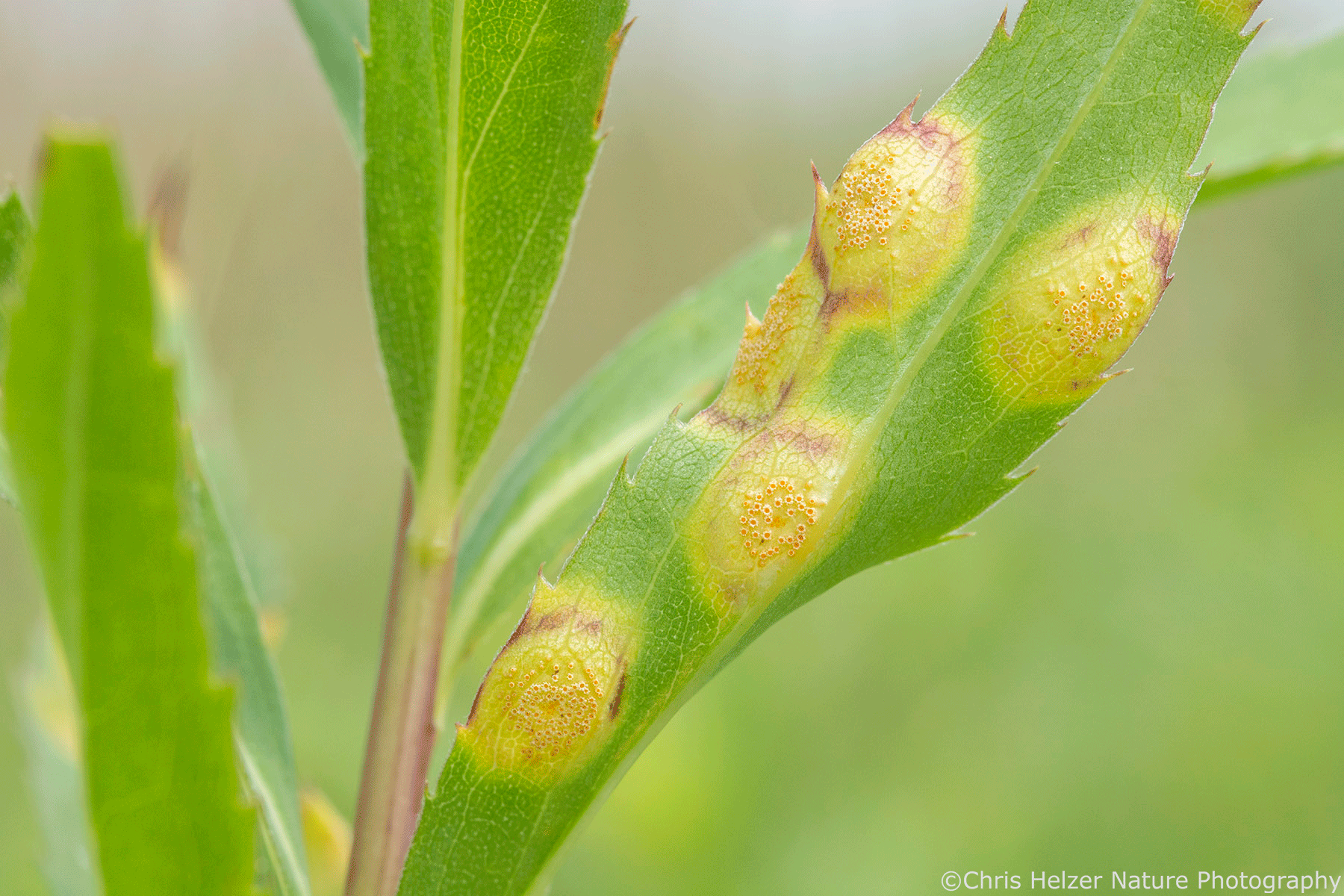
More galls on Canada goldenrod.

What I saw on close inspection of lots of nearby galls appeared to be small flowers emerging from the gall. I’m no expert on galls, and only a semi-pro botanist, but I do know that galls don’t produce flowers. The only explanation I could come up with in the moment was that it might be some kind of fungus, but galls aren’t created by fungus, right? They’re the swelling of plant tissue around the larva of an insect. Or at least they are in the world I’ve been living in.

A close-up view of the tiny ‘flowers’ emerging from the galls on the goldenrod leaf.

As it turns out, the world I was living in was very limited. That’s not surprising, given the number of new discoveries (to me) I make each year about prairies.

Once I started reading up on this topic, I had a hard time stopping. I did anyway, because I had multiple meetings and other tasks to attend to. But during every other moment I could scrounge, I kept investigating and learning from those who have studied the galls of midges on goldenrod leaves.

To start with, larvae that develop inside galls are safe from some dangers, but often prone to attacks from parasitoid wasps. I’d read about that in other examples of galls – most prominently those that form on the stems of goldenrod plants (I wonder what makes goldenrod so attractive to gall-making insects??). Parasitoid wasps have long ovipositors (tubes they lay their eggs through) on their rear ends and can insert those through plant tissue to reach their intended targets inside wasps.

Gall midge larvae inside goldenrod leaf galls like those pictured above are attacked by several wasp species. One, studied by Arthur Weis in a fascinating 1982 short article in the journal Ecology, is Torymus capite. As he describes in his note, the wasp inserts its ovipositor into the gall and then probes around for a larva, flexing the long appendage to and fro. When the ovipositor connects with a larva, the wasp lays an egg on it that will later hatch and consume the larva. Very cool.

The same Weis article, however, introduced me to a much more fascinating story that linked to the ‘flowers’ I’d found. It turns out that there is a fungus that is symbiotic with the gall-making midge. That fungus grows in the gall and eventually forms a hardened ‘shell’ called a stroma over the gall that makes it much more difficult for the wasps to reach the midge larvae inside. Scientists think the formation of that stroma may be triggered chemically by the saliva of the feeding larvae.

The wasps can still penetrate the shell with their ovipositors, but because of the thickness of the fungal layers, the wasps can’t probe around – they can only go straight in and out, which makes it nearly impossible for them to find larvae. Often, they try a few times and then give up and move on.

Whoa.

I kept looking and found a second, more recent journal article by Jeremy Heath and John Stireman III that investigated further and clarified a lot more about what is happening. First of all, the fungus (Botryosphaeria dothidae) is introduced by the gall midge during oviposition. Without going into obsessive detail, when the egg is laid on the leaf, spores of the fungus are attached to it. As the egg hatches and begins burrowing into the leaf, the fungus also enters the leaf. In fact, in this case, the gall is not actually made of plant tissue. It’s made of fungus.

The fungus grows within the leaf and creates a chamber, within which one to several midge larvae crawl around and feed. Here’s the next thing. The larvae aren’t feeding on the leaf. They’re feeding on the fungus! The fungus acts as both protector and food for the larvae.

But wait, it gets better. As the gall matures, it develops the thick protective layer, but also fills the chamber with rapidly-growing mycelium that envelope each larvae in individual pupal cells. Basically, the fungus makes cocoon-like structures for the larvae to pupate in!

I mean…

No one seems to know how the midge picks up the conidia (spores) of the fungus, but it’s assumed that they are somehow actively hunting and collecting those. Then they rely on the fungus to provide food and shelter for their larvae. In return, the fungus gets transportation to appropriate places to grow and then seems to depend upon the larvae for what the authors call ‘hyphal proliferation.’ In short, both species seem to benefit greatly from the relationship.

At our latitude here in Nebraska, gall midges can have multiple generations (maybe three?) per year, which means this process repeats itself a couple times during each growing season. Wasps do still take out some of the midge larvae, but mostly during the early days of the gall formation, before the fungus creates its full protective armor.

I’m an ecologist, which means I study (and revel in) interactions between species. It’s what makes me love prairies and prairie management. I’ve been working in prairies for more than 30 years and hope to be doing it at least 30 more. By the time I’m done, I’m supremely confident that I’ll still be learning about the complex interplay between grassland species. Some interactions I come upon are merely interesting. Others, like this one, blow me away. What a fantastic world we live in!

EDIT: I’ve had a couple people who know fungi tell me that the fungus in these photos is more likely a kind of rust than the fungus I’ve listed from the journal articles (Botryosphaeria dothidae). I’ll take their word for it – I’m no expert on fungi. Does that mean I photographed a different gall/fungus interaction than the one I wrote about? Maybe. If so, what’s the relationship between the leaf gall and fungus I photographed?? None of this changes the wonder and fascination I feel. I’m just more confused than before now!

(If you’re interested in another equally-fascinating story – this one involving beetles and bees – here’s a post from four years ago that won’t disappoint.)