Photos of the Week – May 27, 2022

Here are some photos from last weekend. Spring is progressing quickly and early wildflowers are already producing seed.

The first two photos show woolly locoweed (Oxytropis lambertii) at our familiy prairie. There’s just one small patch of this species and I visit it every year to gauge its slow expansion. Some years it doesn’t bloom, or produces just a few flowers. This year is the biggest and most florally-abundant the patch has been. It’s still only about 3 feet in diameter, but progress is progress. I photographed the flowers with three different lenses but will restrict myself to just two of the images.
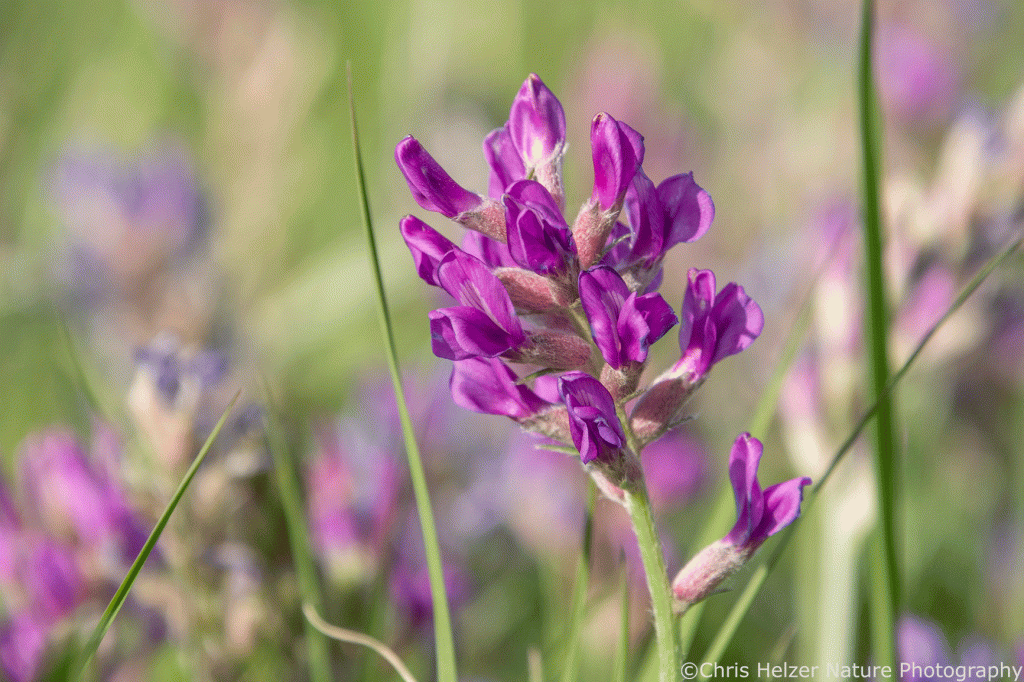
Woolly locoweed – Helzer family prairie. Nikon 18-300mm lens @300mm. ISO 500, f/9, 1/800 sec.

Watching this kind of incremental improvement in plant diversity and abundance is one of the most gratifying parts of restoring a site over many years. Other species are spreading across the site too (moving out of small unplowed remnants into the larger prairie, most of which was farmed and then reseeded to grass in 1962). Blue-eyed grass (Sisyrinchium campestre), prairie violet (Viola pedatifida), American vetch (Vicia americana) and ground plum (Astragalus crassicarpus) are four examples I’ve been watching so far this spring. Also, as an aside, I don’t believe I’ve ever typed the word ‘Sisyrinchium’ without having to look up the spelling. It’s very annoying.
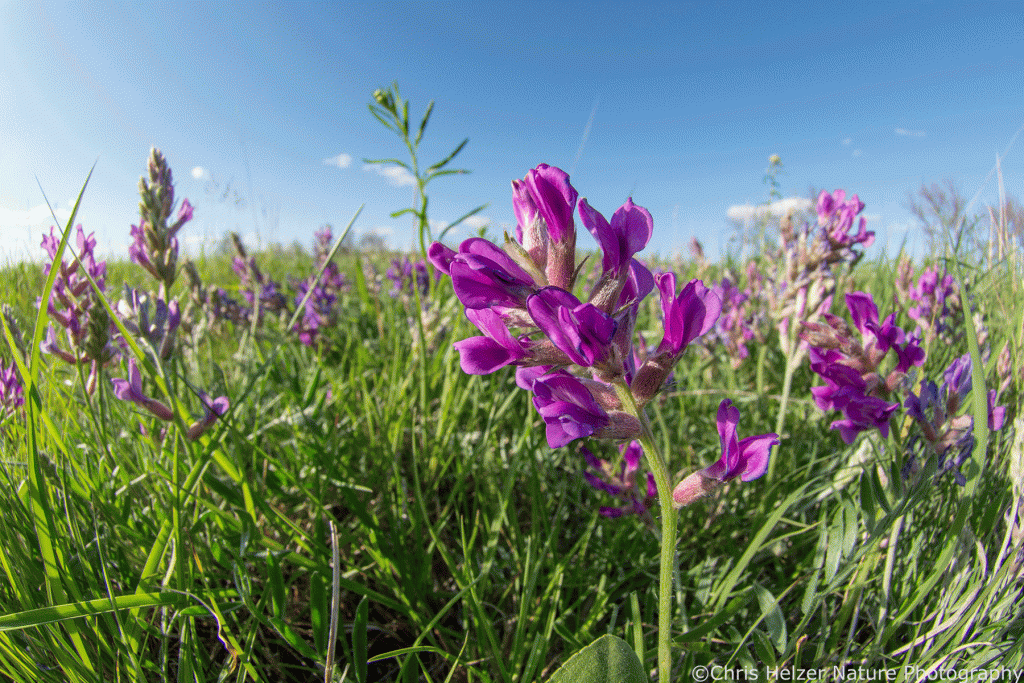
Woolly locoweed – Helzer family prairie. Nikon 10.5mm fisheye lens. ISO 320, f/13, 1/200 sec.

Last weekend, I also made a morning visit to Gjerloff Prairie and caught up on the spring progression there. I saw quite a few bees, but didn’t photograph any of them, but did manage to photograph a few of the abundant flies (lots of different species). I played around for a while with a population scarlet gaura (Oenothera suffrutescens) – a species I’ve yet to find on our family prairie. The first photo below shows a backlit fly perched on top of the plant but also illustrates the cool feature of the flowers, which start out white and then turn red as they age.
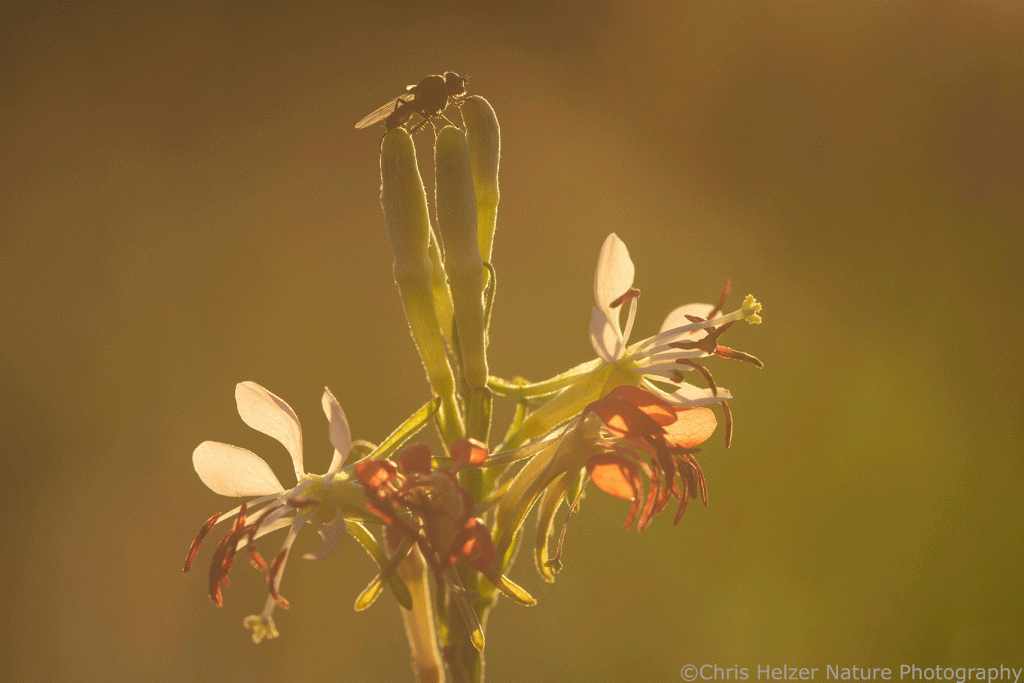
Scarlet gaura at Gjerloff prairie. Not the newest flowers (top) that are white and the older wilting flowers that have turned red. Nikon 105mm macro lens. ISO 320, f/9, 1/1000 sec.
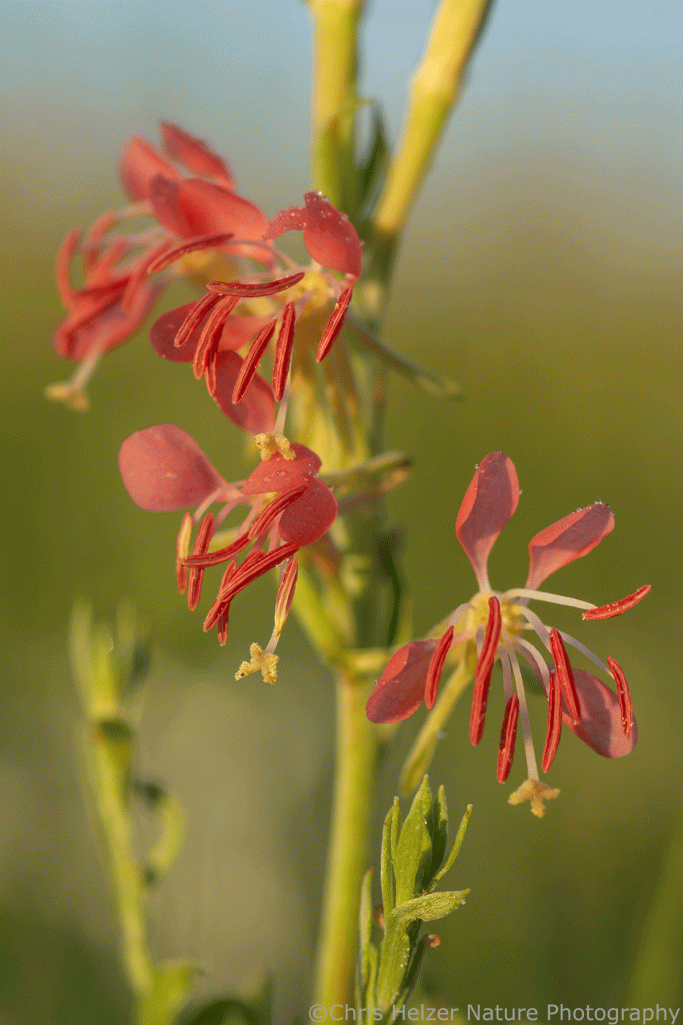
Here’s another shot of scarlet gaura showing only the pink flower color. Nikon 105mm macro lens. ISO 320, f/10, 1/3200 sec.
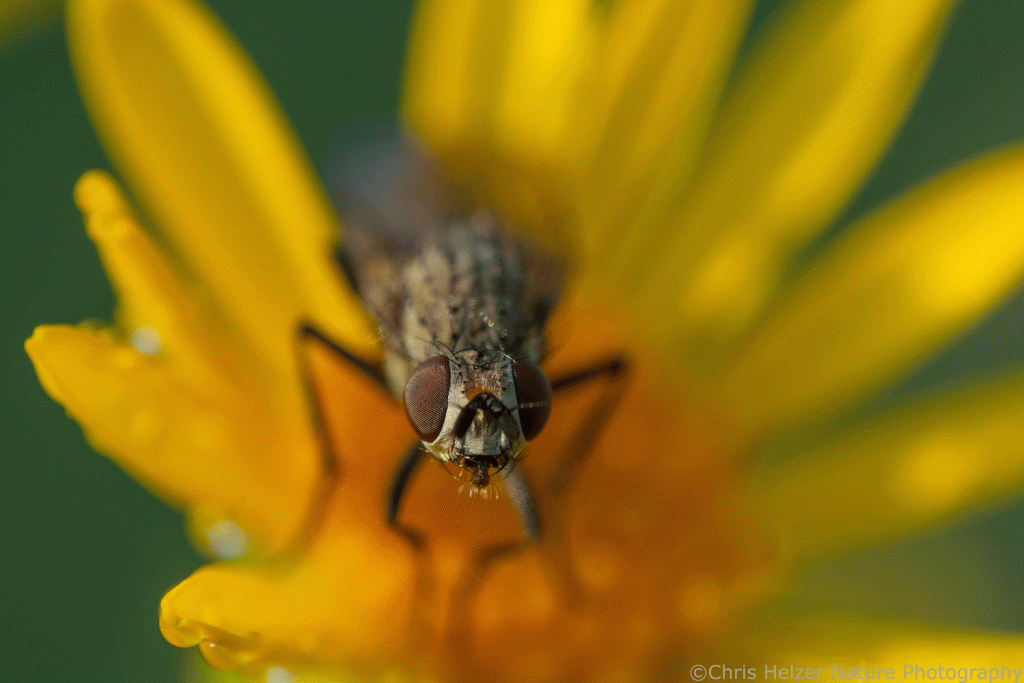
Tiny fly on a prairie ragwort flower (Packera plattensis). Nikon 105mm macro lens with Raynox dcr-250 macro attachment. ISO 320, f/16, 1/60 sec.

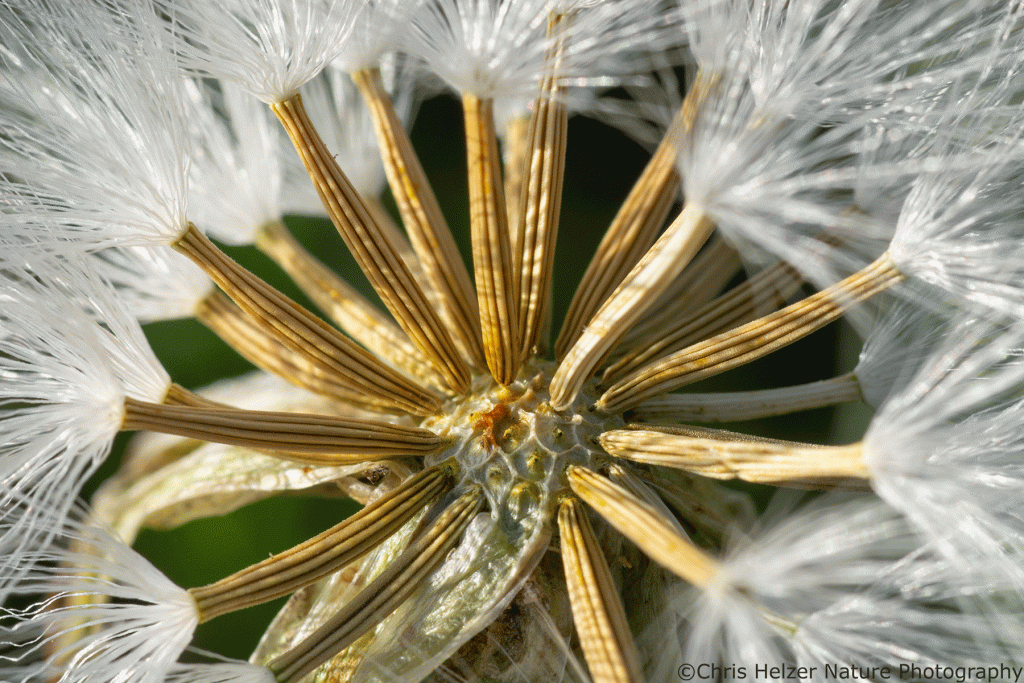
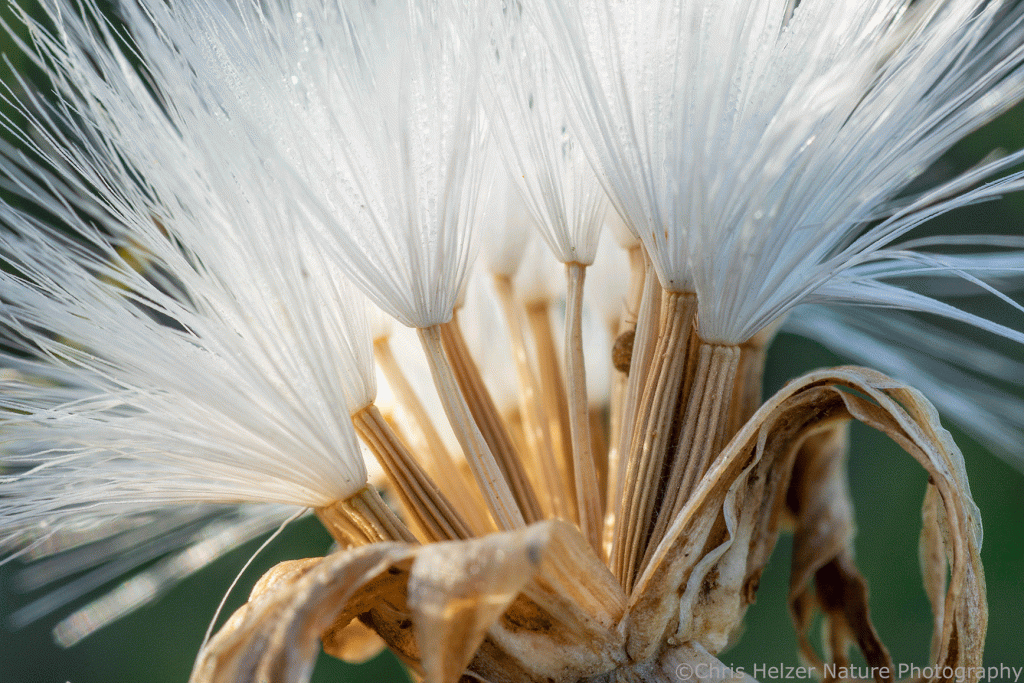
It was moderately breezy at Gjerloff prairie, which made flower photography a little challenging initially. As the sun rose higher, its brightness made things even more difficult. I spent a lot of time following the edges of the shadows cast by hills and photographed seed heads of ragwort and prairie dandelion (Nothocalais cuspidata). The trick was to get the camera and tripod set up while the flowers/seeds were still in shadow and then take photos as the sunlight just started to kiss them and before it got too bright. Here are four of my favorites from that little game.
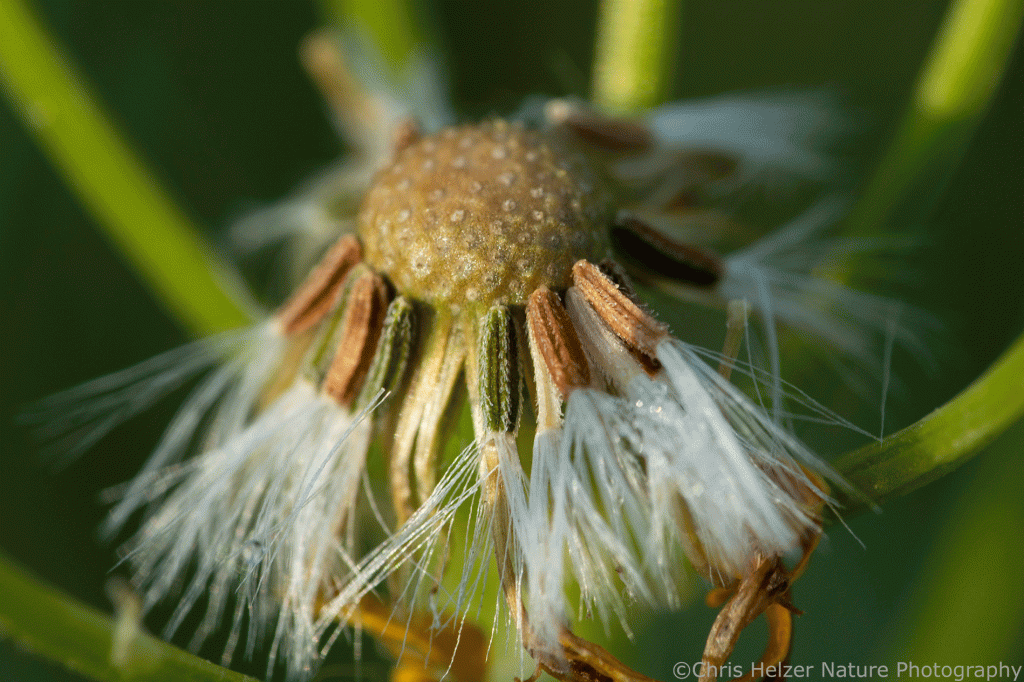
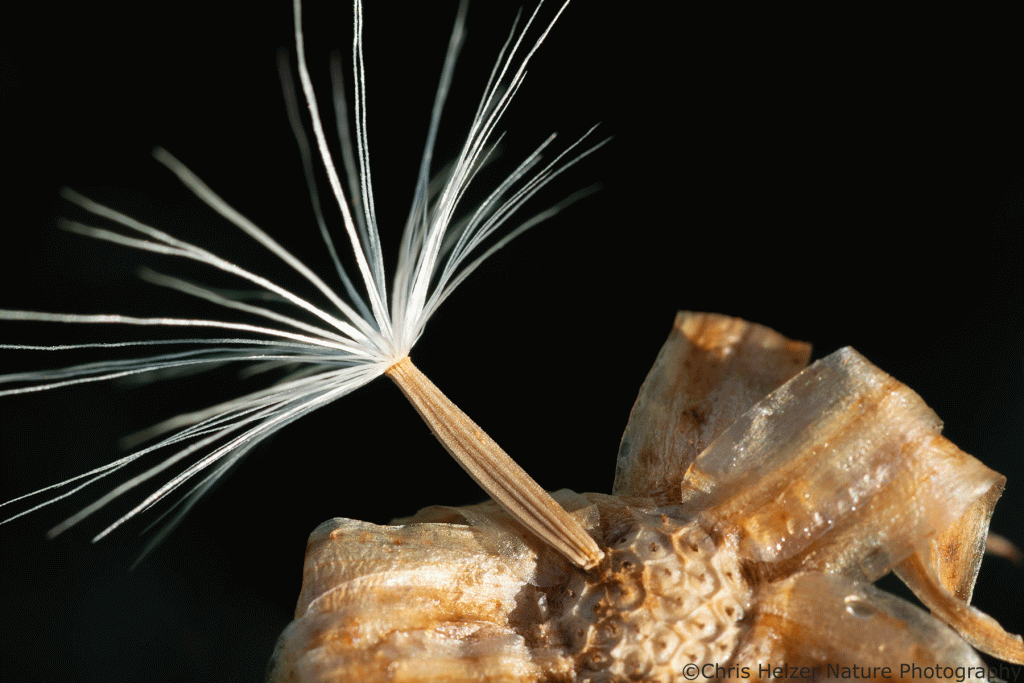
Prairie ragwort seeds. Nikon 105mm macro lens with Raynox dcr-250 macro attachment. ISO 320, f/16, 1/80 sec.
Prairie dandelion seed. Nikon 105mm macro lens. ISO 320, f/22, 1/80 sec.
More prairie dandelion seeds. Nikon 105mm macro lens. ISO 320, f/22, 1/125 sec.
Still more prairie dandelion seeds. Nikon 105mm macro lens. ISO 320, f/18, 1/125 sec.

As I type this, I’m itching to get out to our family prairie on this Friday afternoon because I just bought some crop oil so I can do some basal bark treatment on a bunch of little honey locust trees that are starting to annoy me. I still haven’t figured out what birds are eating/moving those seeds around but I wish they’d stop it. Birds have to at least one vehicle for the seeds because a lot of the trees get started in fencelines where (presumably?) the birds are dropping or pooping them out. But what bird species are doing that? Bobwhites? The seeds are awfully big for songbirds.

Regardless, I’m off to fight back against the invasion. Enjoy your weekend!

Update on the (Modified) North American Prairie Conference for 2022

Well, I have bad news and good news.

About a month ago, I wrote about a modified version of The North American Prairie Conference planned for this summer. It was going to contain a weekend of prairie events in Lincoln, a two day workshop on the conservation of fragmented prairies, and some field trips to eastern Nebraska prairies. The bad news is that I was notified this week that the workshop has been cancelled.

Don’t walk away yet, though! The good news is that a few of us have scrambled to put together the same basic workshop on the same days and have just moved it an hour or so west. The weekend of prairie events is still in play, but I’ll let others talk about whether and how that will happen. This won’t be officially linked to the North American Prairie Conference so we’ll come up with a good snappy title for it.

Here’s what’s going to happen with the workshop (July 25-26, 2022). Two organizations, The Nature Conservancy and Prairie Plains Resource Institute, will host the workshop at their respective locations west of Lincoln. We’re going to make it as streamlined as we can to get all the good out of it without making the logistics challenging for either hosts or participants. People will be on their own for lodging and food and we’re not going to have a keynote speaker or formal presentations from participants.

Instead, we’ll have a series of topics we think will be relevant and we’ll have field-based discussions of those topics at a variety of sites. We’ll record the key points and ideas from those conversations and share them with a broader audience through this blog and other means. If you’ve ever attended a workshop of the Grassland Restoration Network, this will have a similar vibe. (I’m planning to attend both this year!) Both meetings are a great way to get to know other conservation folks and to share ideas while looking at sites and projects. You’ll learn from both the site hosts and other participants who chime in with what they’ve experienced and learned from their own projects.

Part of the workshop will be at Gjerloff Prairie, owned by Prairie Plains Resource Institute – a beautiful loess bluff prairie along the Platte River near Marquette, Nebraska.

The topics will be within the same theme as the earlier-planned workshop. Here’s how I described it before, which will remain accurate: “It will focus on the many challenges facing tallgrass prairies across the Midwest and eastern Great Plains of North America. Those challenges include daunting grassland stewardship issues that are exacerbated by habitat fragmentation, climate change, and more. However, the workshop will also include discussions about the need to engage the public in prairie conservation and find ways to bring both people and prairies into the future together.”

Habitat fragmentation makes prairie conservation exponentially more difficult. The Platte River Prairies is embedded within a landscape full of row crops, trees, roads, and other non-prairie habitat.

I want to acknowledge that the Natural Areas Association is hosting a very similarly-themed workshop in Minnesota a week prior to the one we’ll be hosting. The two were developed independently, so it’s clearly subject matter people care about. We don’t want to compete with that workshop, so please visit their website to learn about and sign up for theirs if you like – if nothing else, it looks like it will cover a much broader array of geography than ours. Maybe there will be a way to pull together some lessons from both workshops and build upon each others’ discussions.

Watch this space for the specific details of our workshop within the next few weeks, including an RSVP process, but here’s what you need to know for sure:

July 25, 2022: 12:30pm – 5:30pm at the Prairie Plains Resource Institute’s Whitney Education Center and Gjerloff Prairie near Marquette, Nebraska. Optional evening hikes at other nearby prairies.

July 26, 2022: 8am to 3pm (approximately) at The Nature Conservancy’s Platte River Prairies south of Wood River, Nebraska. Bring your own lunch.

Gjerloff Prairie has terrific plant diversity, maintained by fire, grazing, and invasive species management.

We will have indoor space (including bathrooms) at both locations but will spend most of our time outdoors, so be prepared for that. Everyone will be responsible for their own lodging and food. There are numerous hotel options in Grand Island, which is located between the two main sites. Hotels, bed & breakfasts, and other options are also available in Aurora and other nearby communities. There are some good restaurant options in Aurora for the evening of the 25th, as well as many more options to the west in Grand Island.

The workshop will focus on a number of topics, including fire, grazing, shrub invasion, restoration, and more. This photo shows a prairie restoration with invading shrubs that was burned last summer and grazed with cattle. So much to talk about…
This restored prairie was burned and intensively grazed for the full season before this photo was taken. It responded with a flush of wildflowers, including species like entire-leaf rosinweed.

I know there were people already planning to attend the workshop in Lincoln. I hope you’ll be willing to slightly adjust your target location and join us a little to the west. I’m excited about this workshop and look forward to some robust conversations about the shared issues we all face as we work to conserve prairies in fragmented landscapes. Both Prairie Plains and the Conservancy have long experience with conservation in Nebraska prairies and have sites that showcase both some big challenges and some innovative solutions.

The earlier plan for the North American Prairie Conference had also included field trips around eastern Nebraska on Wednesday July 27. We will be reaching out to organizations to see if they’d still like to host field trips on that day and, if so, will provide contact information in our next update. If you’re reading this and are at a site that wants to be included on that list of potential field trips, please reach out to me!