
This post is written by Emma Greenlee, one of our 2022 Hubbard Fellows. Emma is an excellent ecologist from Minnesota who is quickly coming up to speed on our Nebraska prairies. This spring, she’s having the experience many of us have had when we look out across diverse prairies that are (temporarily) visually-dominated by smooth brome or other invasives. As our prairies are getting started each spring, the first plants out of the gate tend to be invasive species like smooth brome and Kentucky bluegrass, and where we haven’t burned or grazed, recently, to suppress them, it can look like they’ve taken over the world. However, because we don’t let them do that every year, there are still lots of other players in the prairie too, and they express themselves as the season progresses. Even knowing that, it can be hard to look at prairies when the invaders are partying. A month from now, that brome and bluegrass won’t look nearly so impressive when it’s the nearly-dormant understory of a rich and complex plant community full of wildflowers.
An ecology mentor once told me something along the lines of “ecologists live in a world of wounds.” Recently I was recalling this quote and trying to figure out who to attribute it to—my former supervisor in TNC’s Minnesota-Dakotas chapter? My senior thesis advisor in the biology department at Carleton? Well, I googled it and it doesn’t really matter who said it to me because it’s a paraphrase of an Aldo Leopold quote! In A Sand County Almanac, he writes “One of the penalties of an ecological education is that one lives alone in a world of wounds.” There is surely more than one way to “see a world of wounds” depending on how and where your eye is trained, but the way I usually think about this as someone interested in plant communities is in terms of invasive and/or nonnative species and how they’re affecting native plant communities and ecosystems.
At the time I was introduced to this perspective I didn’t really give this woeful way of thinking the time of day, and I still feel that the mere presence of nonnative species isn’t cause for alarm, as long as they don’t become dominant or tend towards monoculture in an invaded ecosystem. On the whole I’d rather try to look for the possible good any green plant in an ecosystem does than lament and try to control its presence—unless it’s showing those tendencies towards monodominance. That level of invasion would be very undesirable, but in the end I’d still rather have an ecosystem taken over by one species than another parking lot.
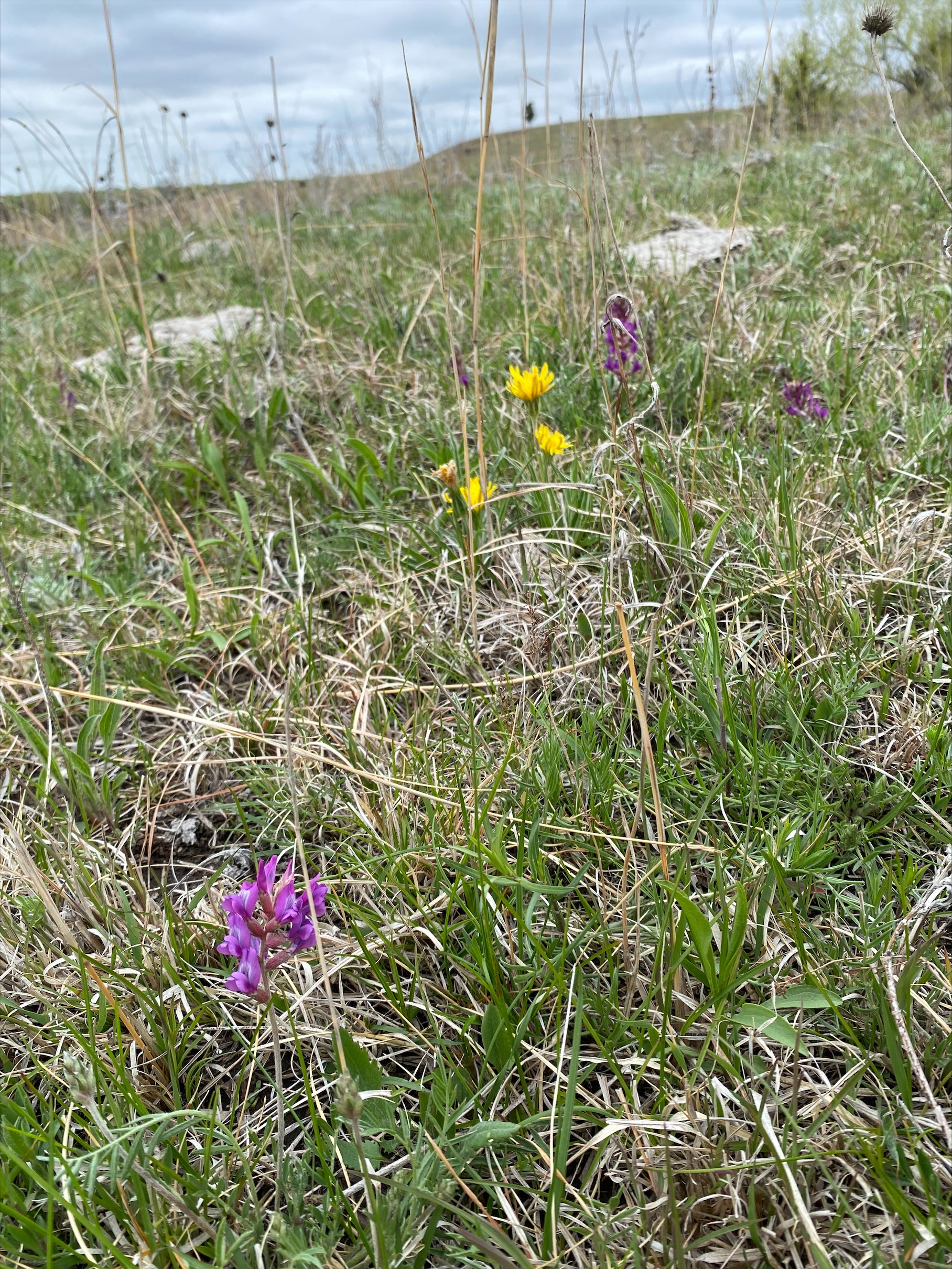
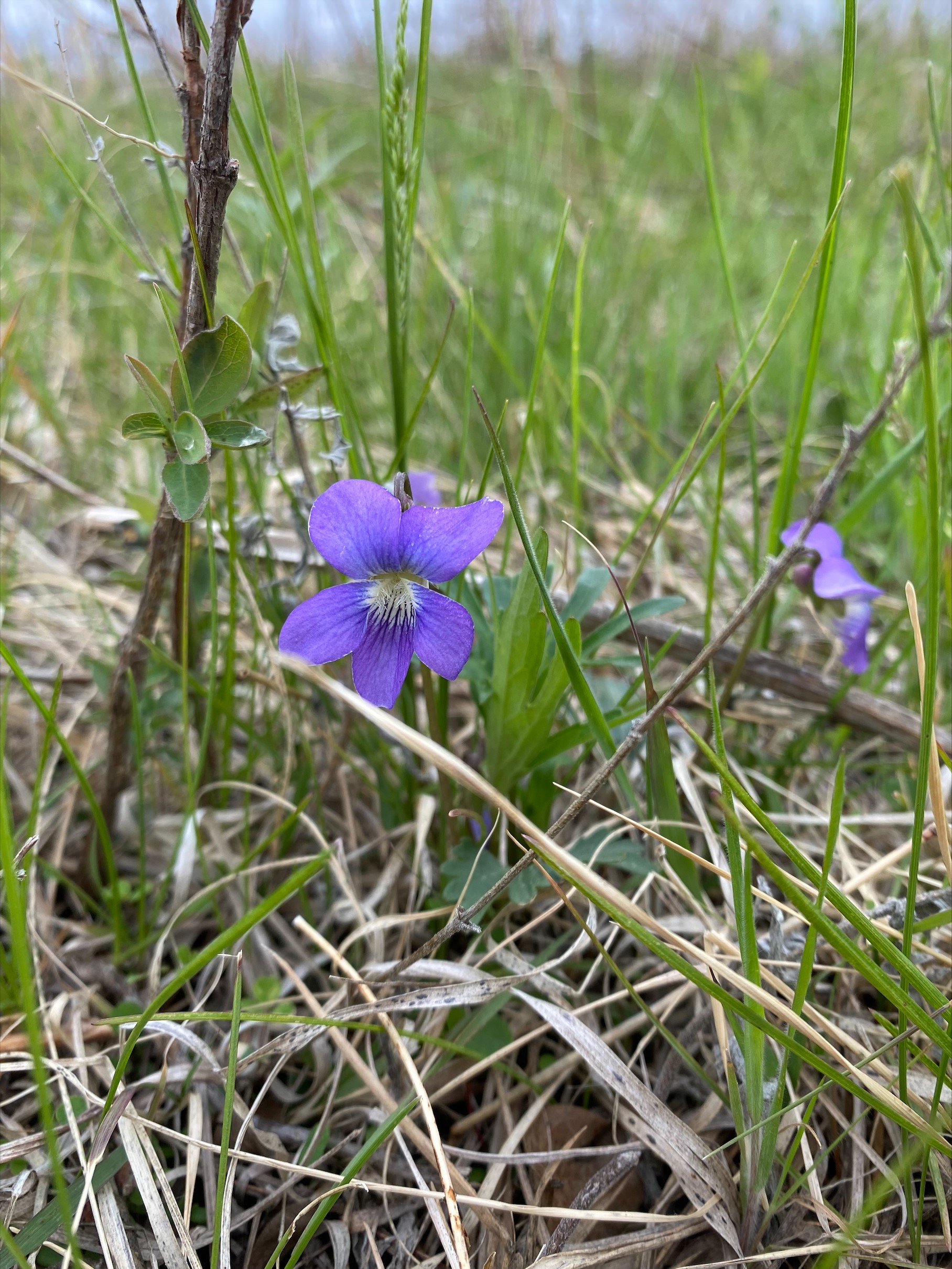
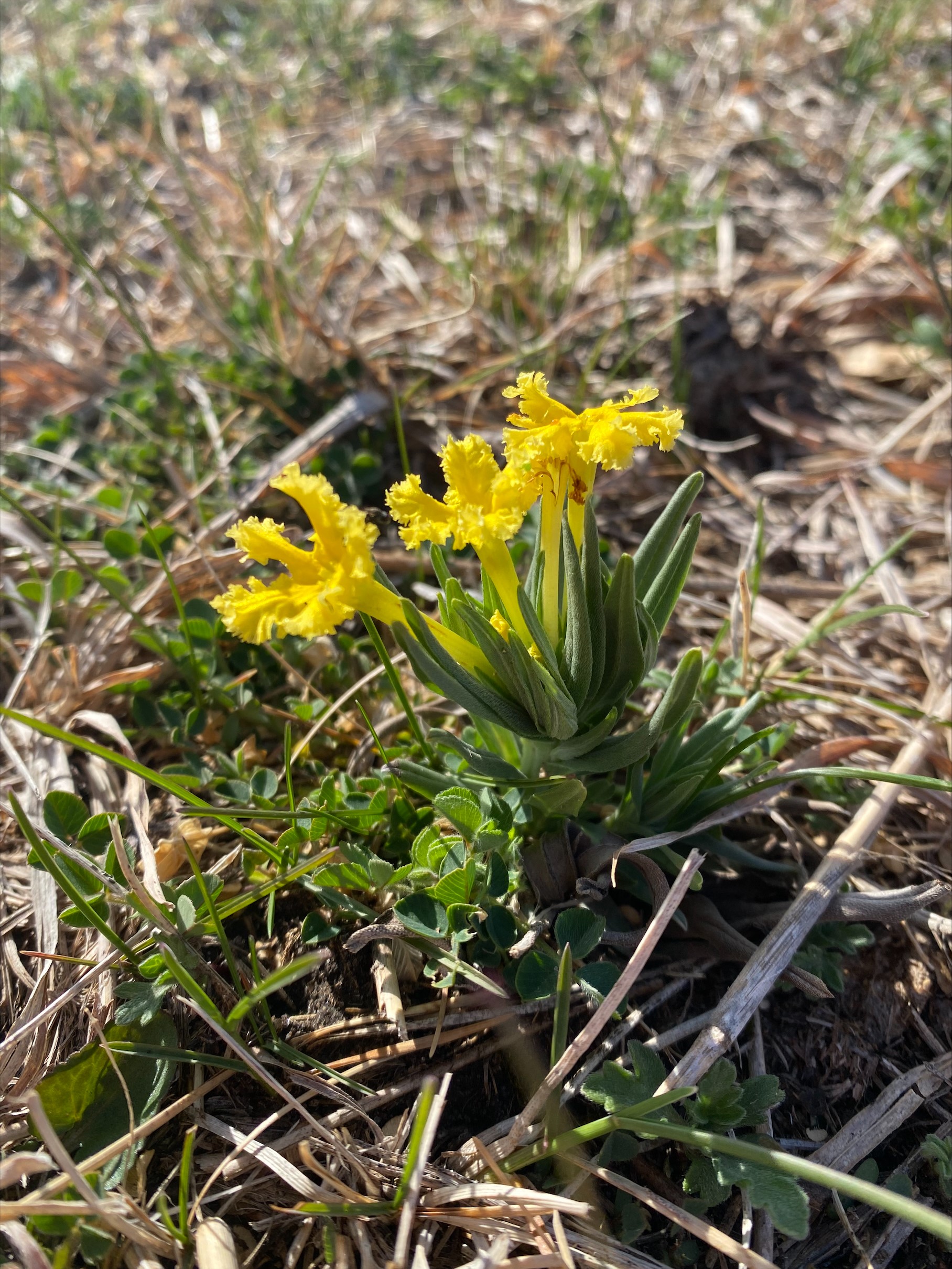
All that is to say that after a few of the much-needed rains we’ve gotten this spring, I was surprised by my distaste upon seeing the invasive smooth brome (Bromus inermis) grass spreading across the landscape around the Platte River Prairies. I’ve internalized the Leopold-like perspective more than I thought! At a glance, it’s rather discouraging, but (as Chris will be the first to tell you) it’s not as bad as it looks. Smooth brome is a cool-season grass (C3), which means its photosynthetic pathway is adapted for growth in cooler environments, and that’s why we see it growing vigorously now before summer hits with full force. And if you’re able to take the time to walk around a site, you’ll see there’s plenty of other things growing too. At the Platte River Prairies some native grasses have also gotten their start, including cool season species junegrass (Koeleria macrantha) and western wheatgrass (Pascopyrum smithii), and there’s even a little vegetative growth of warm-season species prairie cordgrass (Spartina pectinata). Walking around some of our Platte River Prairies sites (and Gjerloff Prairie by Aurora), I’ve seen some native forbs too, both early-flowering species and some that are still basal (just leaves, no flowers)—see my photos for more about the wildflowers!
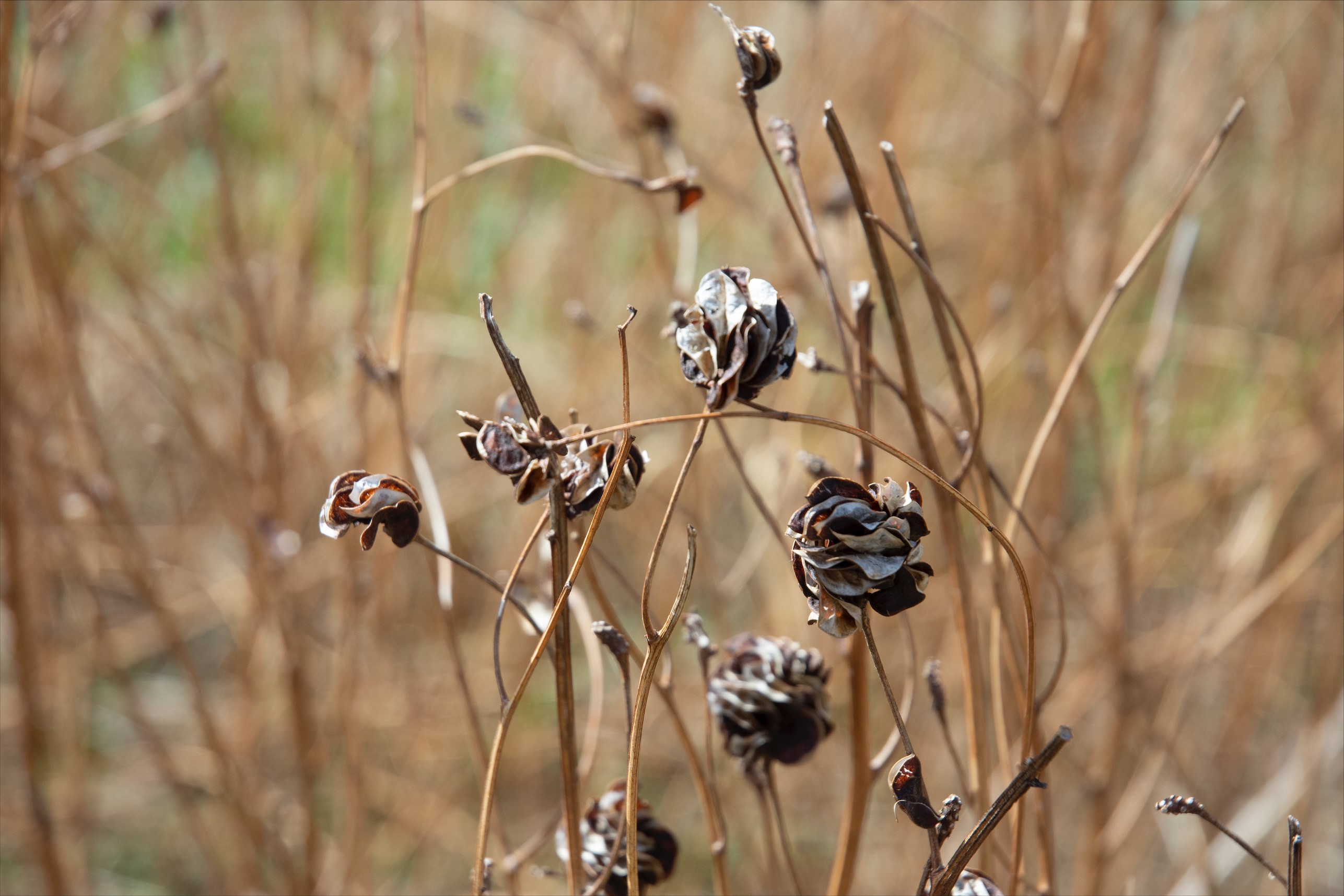
Some of the most common flower colors I’m seeing right now are yellow and purple, which I suppose is true of many prairies at any time of year, but right now it’s more subtle and not the brilliant sea of autumn asters and goldenrod that Robin Wall Kimmerer writes about in Braiding Sweetgrass. But the standing dead vegetation from last year tells an encouraging story of what’s to come in the next several months, with dry stalks of verbena, monarda, sunflowers, penstemon, bundleflower, big bluestem, and more promising their eventual return.
When I was helping a few relatives clean out my (late) great grandpa’s house in Page, NE a few weeks ago I had the chance to visit my great grandparents’ grave. They have a Theodore Roethke quote inscribed on their stone, from his poem The Waking. In searching out the full poem later, I found that Roethke had also written a poem called “Long Live the Weeds”, and it’s surprisingly relevant to our discussion of the “world of wounds.”
.
Long Live the Weeds
Long live the weeds that overwhelm
My narrow vegetable realm! –
The bitter rock, the barren soil
That force the son of man to toil;
All things unholy, marked by curse,
The ugly of the universe.
The rough, the wicked and the wild
That keep the spirit undefiled.
With these I match my little wit
And earn the right to stand or sit,
Hope, look, create, or drink and die:
These shape the creature that is I.
Theodore Roethke
.
I don’t read a lot of poetry, but it’s not too often that I run across a poem that speaks to ecology and land management in this way. The poem could be interpreted as referring to garden weeds, but to me it speaks of our desire to control unwanted species anywhere they might grow, our prairies included. It acknowledges that in our striving to shape the living world around us, it shapes us too, and that we’ll never completely control it, nor should we expect to. But that’s just my interpretation! If anyone has their own take, or has any other ecology-themed poetry recommendations, I’d love to hear them. I know I’ll be thinking of it during any invasive plant management we undertake on the Platte this spring and beyond.


 The Prairie Ecologist