
As grassland stewards, our greatest challenge is to maintain the ecological resilience of prairies so they can adapt to and survive a changing world. That resilience relies heavily upon biological diversity because high numbers of species helps ensure that important roles are filled, no matter what stressors are affecting the prairie.
Unfortunately, managing land for biological diversity is hard. Of course it is – the natural world is incredibly complex and dynamic. None of us has the capacity to become familiar with all the species that live at a single site, let alone how they interact with each other. How can we be expected to make land management decisions that take care of the needs of all those species and their interconnected communities?
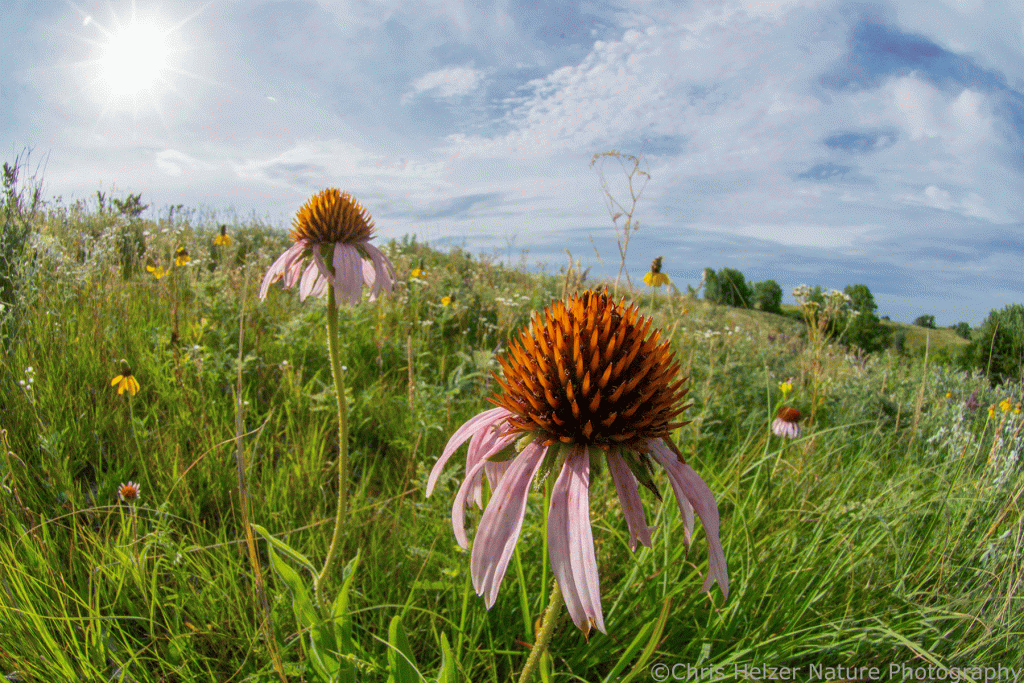
For what it’s worth, here’s how I look at it: All the species in a prairie are competing with others for space and resources. Our job is to manage the game such that ensures nobody always wins and nobody always loses. If we can do that, all those species should be able to persist and keep contributing to the resilience of the prairie.
When my kids were 7 or 8 years old, they started playing soccer in our town’s recreational program and I volunteered to be a coach. At that age level, coaches also acted as referees during games, chasing clusters of kids around the field and encouraging them – while also teaching and enforcing rules. By mutual, unspoken consent, the two ‘opposing’ coach/referees also worked to make sure that no team or player was able to dominate the game. After all, the goal was to make sure all the kids were having fun and were excited to keep playing.
In many ways, that coach/referee role at soccer games was the same role I was playing as a prairie land steward. At the soccer field, I substituted players on and off the field or shifted them from offense to defense (not that there was much distinction at that age). I wanted the strong players to score and enjoy themselves, but I didn’t want them to hog the ball so much other players got bored or frustrated. In the prairie, I was using fire, grazing, mowing, and herbicides to manage plant competition and prevent any species from dominating too much. I was also trying to create a broad variety of habitat conditions around the prairie so animals could find the resources they needed to compete at their best.
As I’ve learned more about prairie species and ecology, I’ve also improved my ability to recognize and manage competition among ‘players’ in the prairie. The more plant species I’ve learned to identify, the better I’ve gotten at evaluating their responses to each other and to various management actions. I’ve also become more familiar with animals beyond birds and other common vertebrates. As that’s happened, I’ve started to see prairies through the eyes of bees, spiders, grasshoppers, and other creatures. Improving my understanding of their needs and abilities has made me better at providing what they need to be most successful.
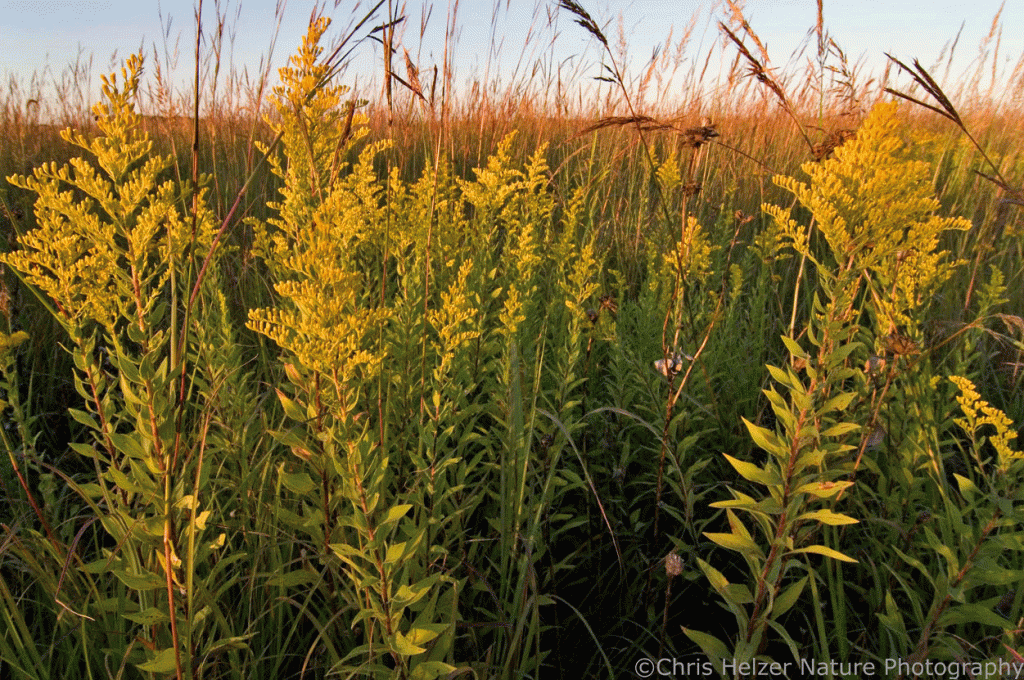

Every land steward manages competition, even if they’re trying to optimize production of one thing (e.g., corn, grass, pheasants, or rare plants). In that case, though, instead of working to balance competition and keep as many players on the field as they can, they’re playing favorites. There can be good reasons to do that, but it can also be dangerous if unbalanced competition starts to reduce the diversity and resilience (and thus the consistent productivity and function) of the system supporting that favorite species or group.
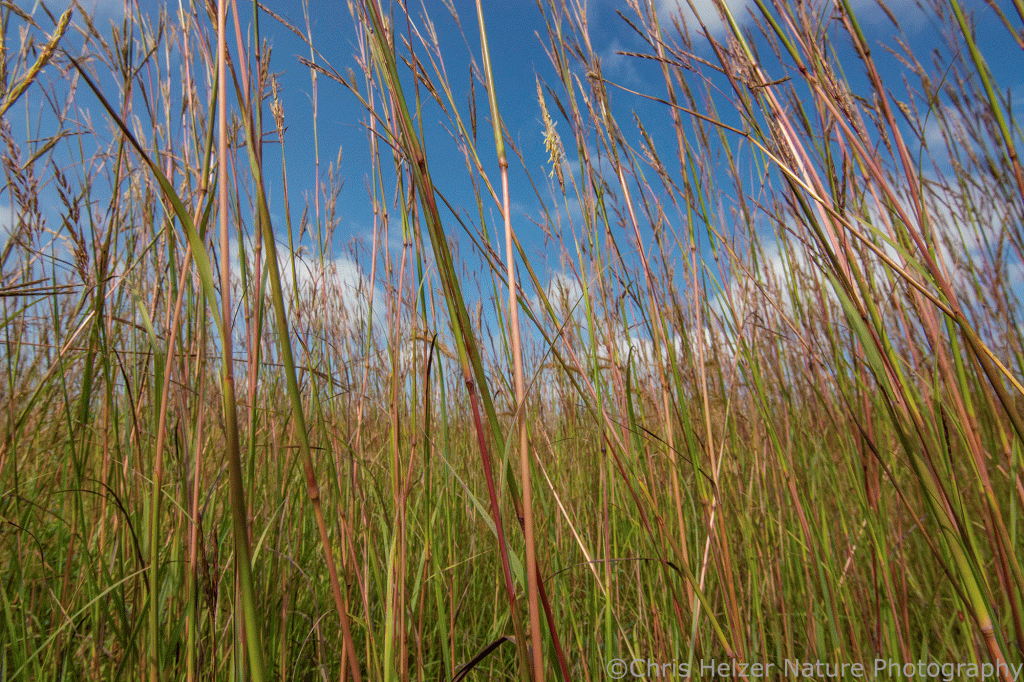
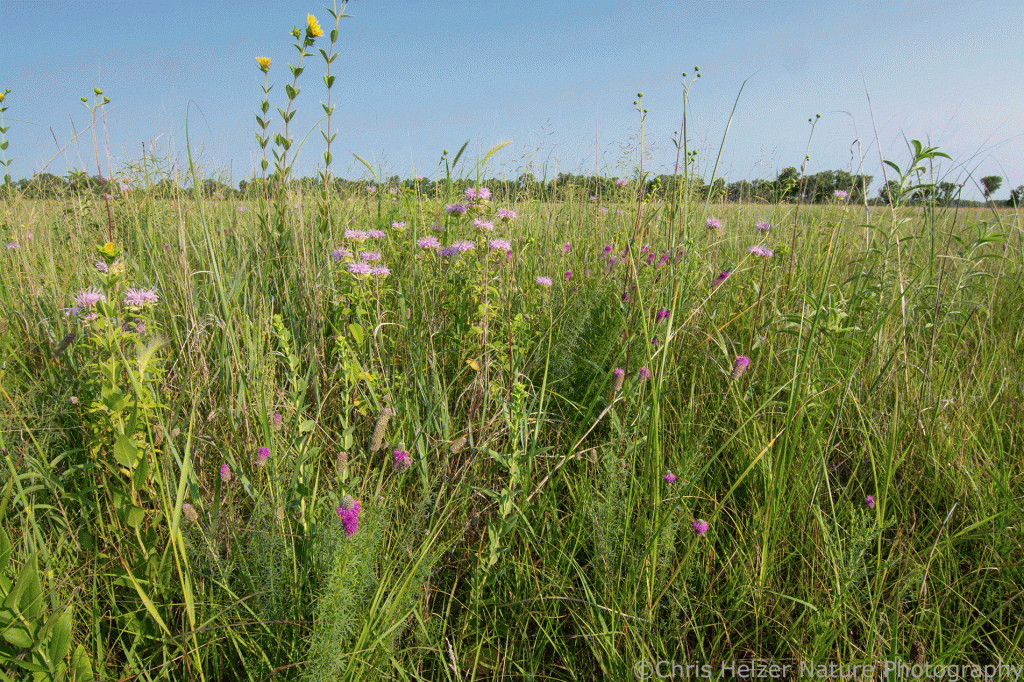
Regardless of management objectives, the more you know about the players in the game, the better manager you’ll be. If you can’t tell one species from another, you won’t be able to see how the composition of a community changes over time. If you can’t detect change, you can’t evaluate the impacts of your management decisions. Once you recognize a species, you can also start to watch what it does, how it interacts with its surroundings, and how its population fares as conditions shift.
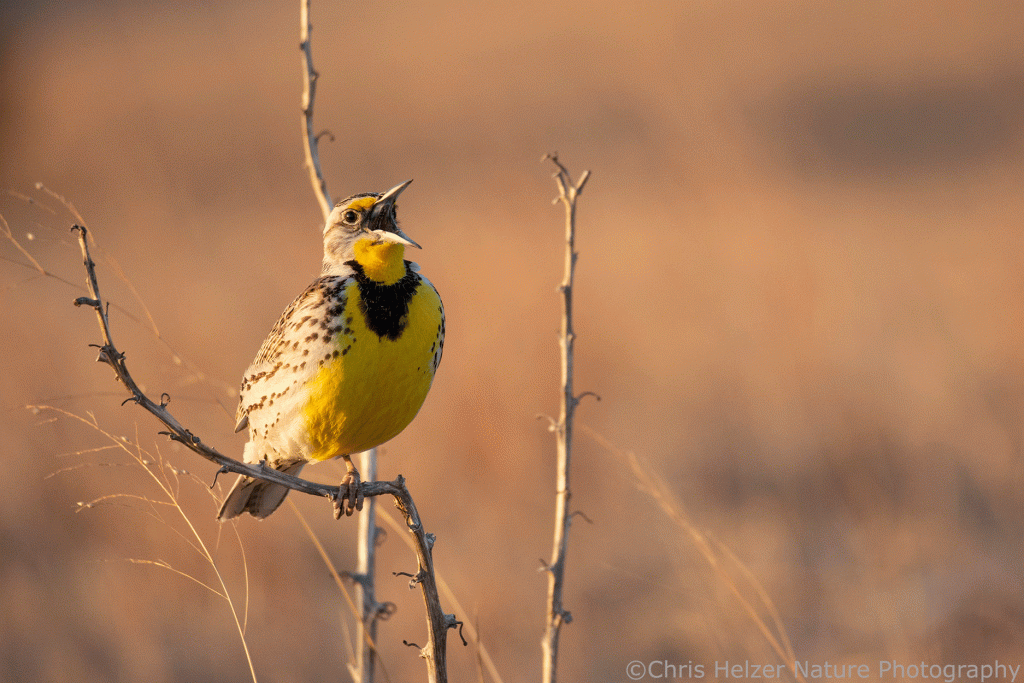
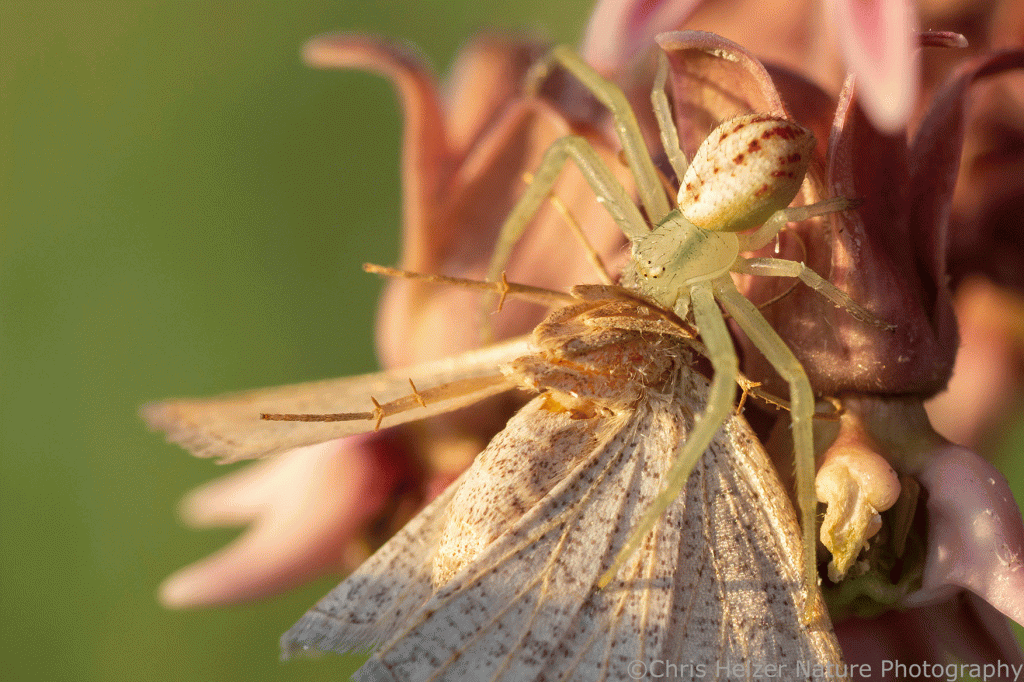
None of us will ever become familiar with identities and lives of all the species that live in our sites, but that doesn’t mean we shouldn’t learn as much as we can. Take the time to go to workshops and hang around with people who know what you don’t. Spend some time wandering the sites you manage instead of just traveling across them to accomplish specific tasks. Yes, you’re busy; I don’t know any land steward who thinks they have enough time to do everything that’s needed. Find time anyway. It matters.
Finally, whether you’re fairly new to land management or an old salt, don’t let incomplete knowledge paralyze you from taking action. Do your best to balance competition as you understand it and pay close attention to the results. If you notice any players consistently getting the upper hand, adjust your strategies accordingly. It’s a long game; we just have to keep as many players in it as we can.







 The Prairie Ecologist