
Hi! I’m Emma Greenlee, and I’m one of The Nature Conservancy’s Hubbard Fellows for this year! I am from Aurora, a small, rural town in the Iron Range in northeast Minnesota. I grew up paying attention to and appreciating the world around me thanks to my parents encouraging this on everyday occasions like walking the dog and special trips like canoe camping in Minnesota’s Boundary Waters.

I went to Carleton College in Northfield, MN where I majored in Biology and minored in Spanish, ran cross country and track, and lived in the Wellstone House of Organizing and Activism for three years. As I got older I looked for a path that would allow me to do good for the planet in a way that corresponds to what I’m interested in, and I was drawn to prairie ecosystems and plant community ecology, which I explored through summer jobs at Cedar Creek Ecosystem Science Reserve, with TNC’s MN-ND-SD chapter, and with the Echinacea Project (an ecology research lab out of the Chicago Botanic Garden).
After graduating, I got to explore the sagebrush steppe ecosystem through a six-month internship with the U.S. Forest Service in Winnemucca, Nevada, focusing on botany work including collecting native seeds for research and restoration use, conducting rare plant surveys, and reseeding disturbed areas on Nevada’s Humboldt-Toiyabe National Forest.
I am really excited to be here in Nebraska as a Hubbard Fellow—to get a well-rounded, holistic view of TNC’s work in the state, continue learning more about prairies, and to explore the connections between ecological research and land management. Thanks for checking out my post on The Prairie Ecologist, hopefully the first of many from me this year!
It’s hard to believe it’s been a month of the Hubbard Fellowship already when I think about all that we’ve done so far. (Forgive what must sound like the royal we, I mean me and Brandon, my co-fellow!) If I used this post to talk about everything we’ve learned and worked on it would come out as more of a young adult novel or epic poem in length so I will just focus on a few of the things the job so far has involved and made me think about.
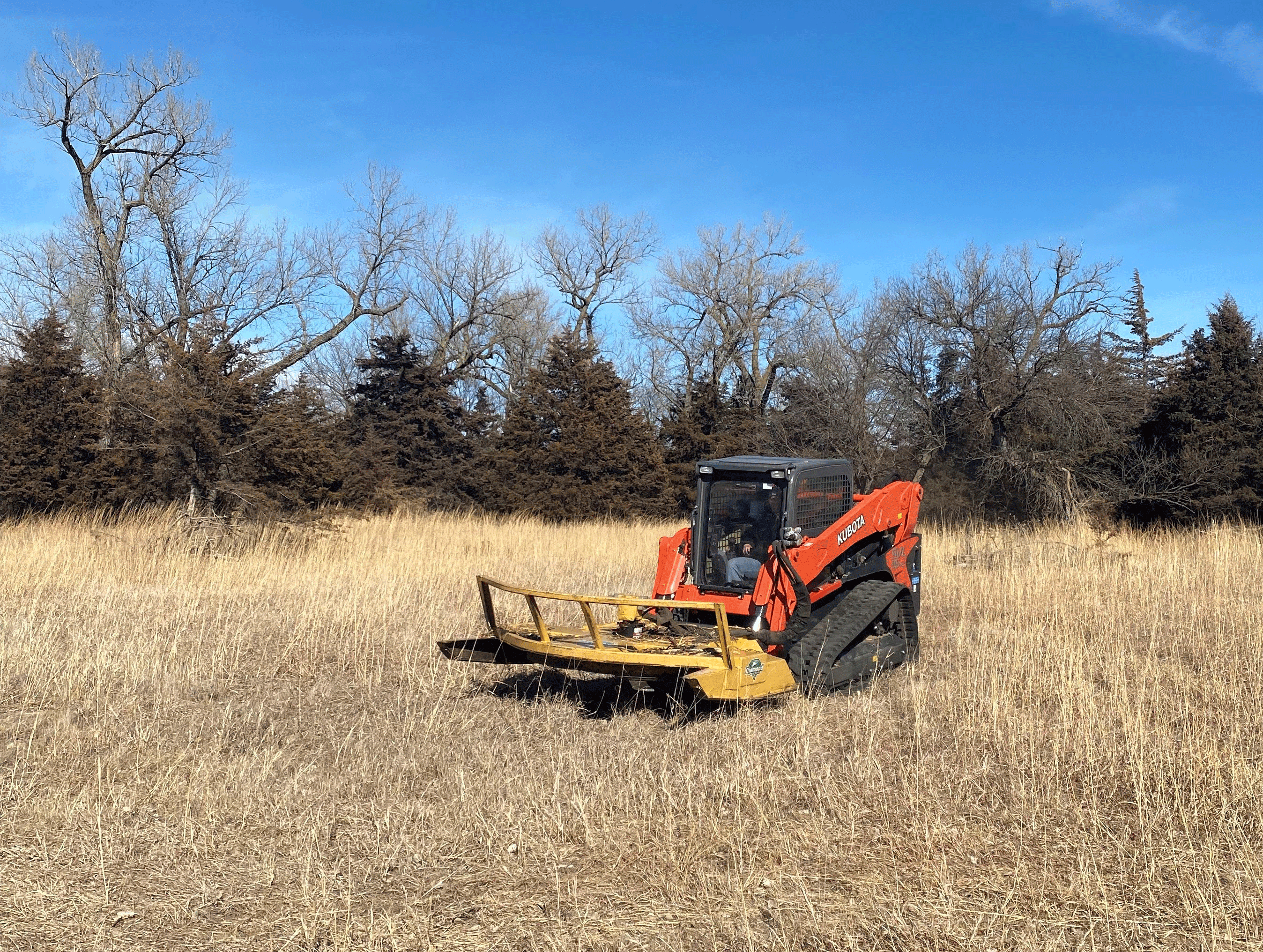
One of our major focuses for the fellowship is land management and I learn best through experience so it’s been good to see how things I know a little bit about or know about mostly in theory are carried out in practice. Something that I knew in theory but that hits a lot harder in practice is just how many things you need to know how to do as a land manager! Chain saws, skid steer, fence building and maintenance, prescribed burning, grazing, and––at least with The Nature Conservancy––outreach skills, whether in the form of sandhill crane tours, bison tours, or otherwise interacting with other landowners. And these are only the things we’ve done or talked about so far, not to mention the seeding, seed harvesting, invasive plant control, and other maintenance skills that will come up as the seasons change.
Besides land management, we’ve spent a lot of time learning about the Platte River Prairies area and its land use history, patch-burn fire and grazing regime, and new plant species. Some highlights of the new plants I’ve learned include:
– Prairie cordgrass (Spartina pectinata), a tall, water-loving grass species with long, gently curling leaves and stiff, mascara brush-like flower branches that look like they could carry a LOT of pollen.

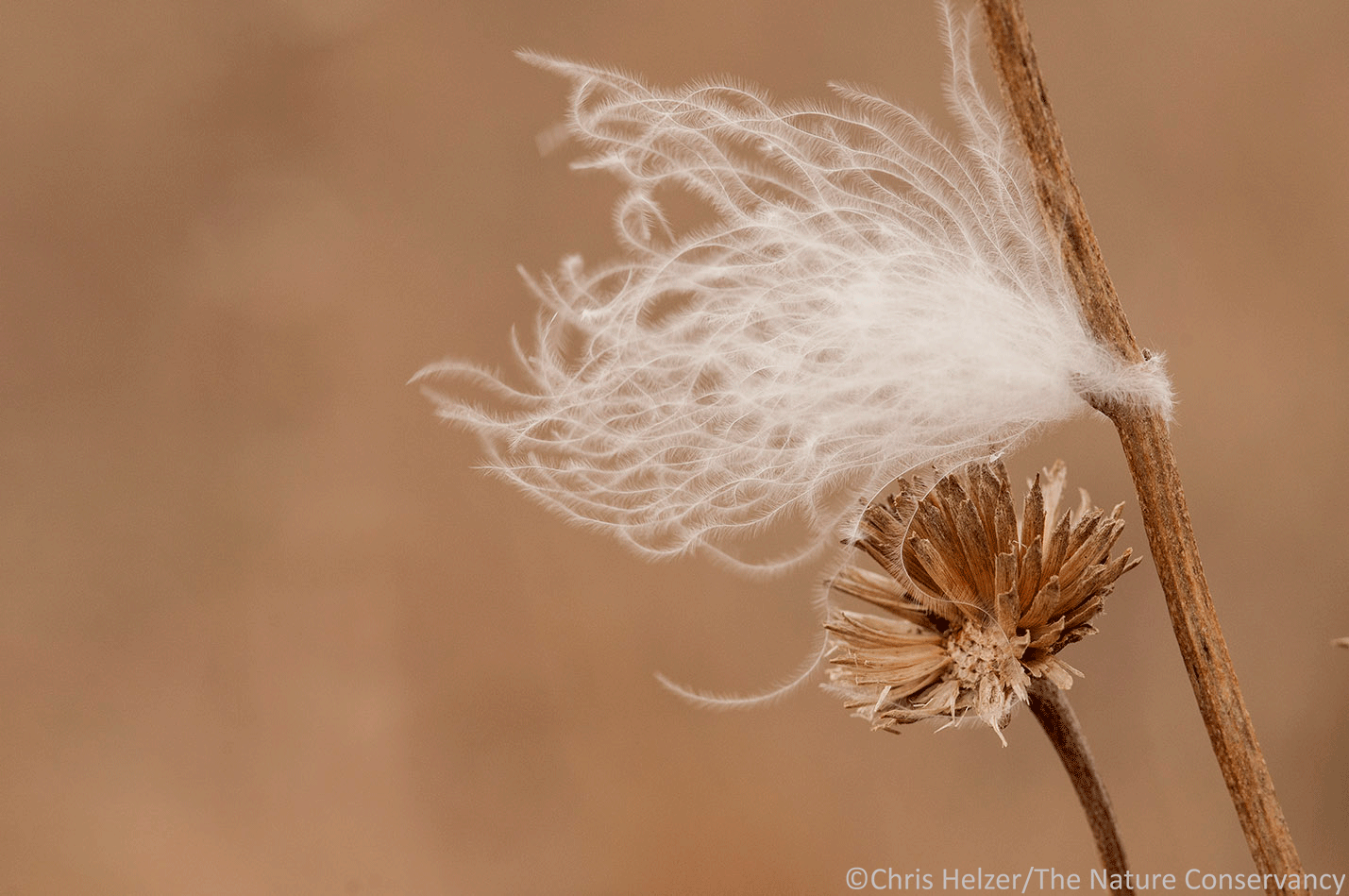
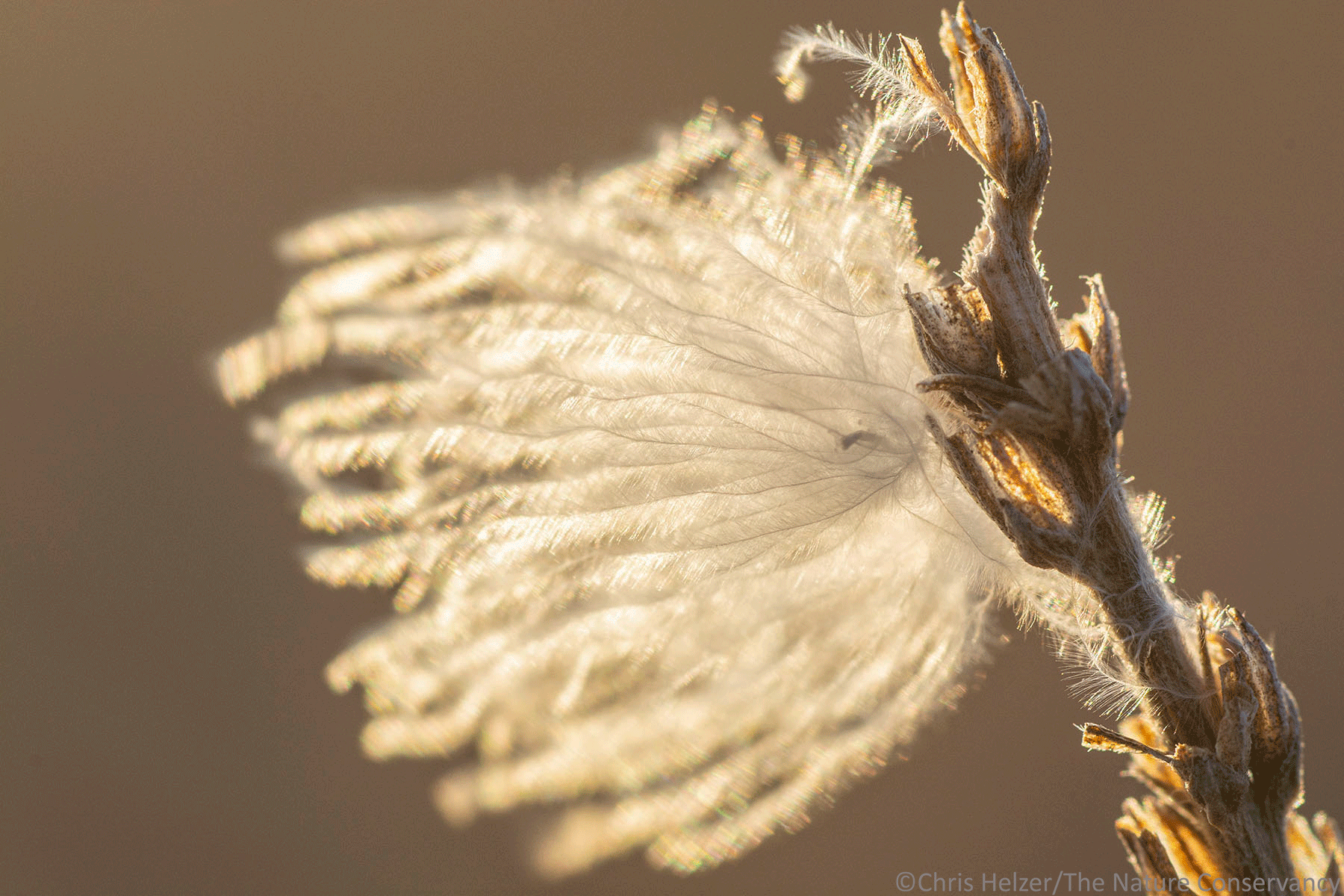
– Illinois bundleflower (Desmanthus illinoensis), a rather tall forb with distinct, curling seedheads when dry (like it is now in the winter season!) and white, fluffy flowers in the growing season that I’m excited to see.

– And a re-introduction to roundheaded bush clover, or as I learned it, Lespedeza capitata. I learned this species at Cedar Creek Ecosystem Science Reserve in Minnesota, where I was first introduced to prairie ecology as an intern maintaining the BioCON experiment (a study on the effects of climate change on prairie plant communities) in 2018. I can still hear my coworker Aidan saying, with full enunciation, “Lespedeza capita-ta”…but this is the first time I’ve come across the species since then, despite all the prairies I explored in the interim! The tall, brown, round (of course) heads of this species stand out between the grasses in the hilly prairie area near our house.

All the time we spent this first month walking around the Platte River Prairies with Chris and Cody (the PRP’s land manager) also impressed on me just how much humans can change a landscape. This seems like something I should already know as someone who grew up on Minnesota’s Iron Range, a landscaped altered by iron mining to include a patchwork of open, rocky pits that are now deep, clear minepit lakes and bare piles of tailings that are now forested hills and ridges. I’ve also spent a lot of time in grasslands, which are strongly tied to management by people, both historically and today.
Despite all that, it still came as a surprise to me when Chris talked about using heavy equipment to restore a shallow lake to a wetland stream along the south channel of the Platte (and all the sludge that this project unearthed). Only 11 years post-restoration, the area looked so normal, or unaltered; I guess I didn’t realize just how fast the ecosystem could rebound. And this is even crazier when you think about all the other restorations on the Platte River Prairies! There are numerous wetland sloughs dug with machinery in areas that I would not have guessed had been converted from prairie to cropland and back again. This to some degree shows my lack of experience with restoration, but it also highlights how much plants can do if you give them the time, space, and opportunity. I’m curious to see what degree of change in the landscape I’m able to observe in just a year at these sites.



 The Prairie Ecologist