
Over the weekend, I went for a walk in our family prairie. The weather was a balmy 70 degrees F and it seemed silly to do anything else. Since it was so warm, I figured I might run into some other creatures taking advantage of the temperatures too.
I was right. I found a cricket, several flies, and a water boatman. Later, as I was photographing some seeds of an ironweed plant (Vernonia fasciculata) that was lying prone on the ground, I even spotted a tiny leafhopper among the seeds.
“Huh,” I thought, “I wonder…”

I wondered if the leafhopper (or another one I saw later) was finding anything to eat on a day like this. If not, it seemed a waste of energy to come out of dormancy and move around. Since leafhoppers feed on the sap of plants by sticking their straw-like mouthpart into them, I couldn’t think of anything it might be eating in February. My best guess was that maybe it was feeding on seeds. I’ve seen false milkweed bugs (Lygaeus turcicus) with their mouthparts stuck into the seeds of false sunflower (Heliopsis helianthoides) and the two insects are somewhat related…
This kind of wondering happens all the time when I’m exploring prairies. In fact, I know a lot less than I wonder about. I write and talk mostly about what I know, and for good reason, but doing so probably makes it seem like I’m more knowledgeable than I am. It also masks a lot of what makes prairies so fun and interesting.
In today’s post, I’m going to share a very small sample of the kinds of prairie-related questions rattling around in my head. I’ve done this before, but not nearly often enough.
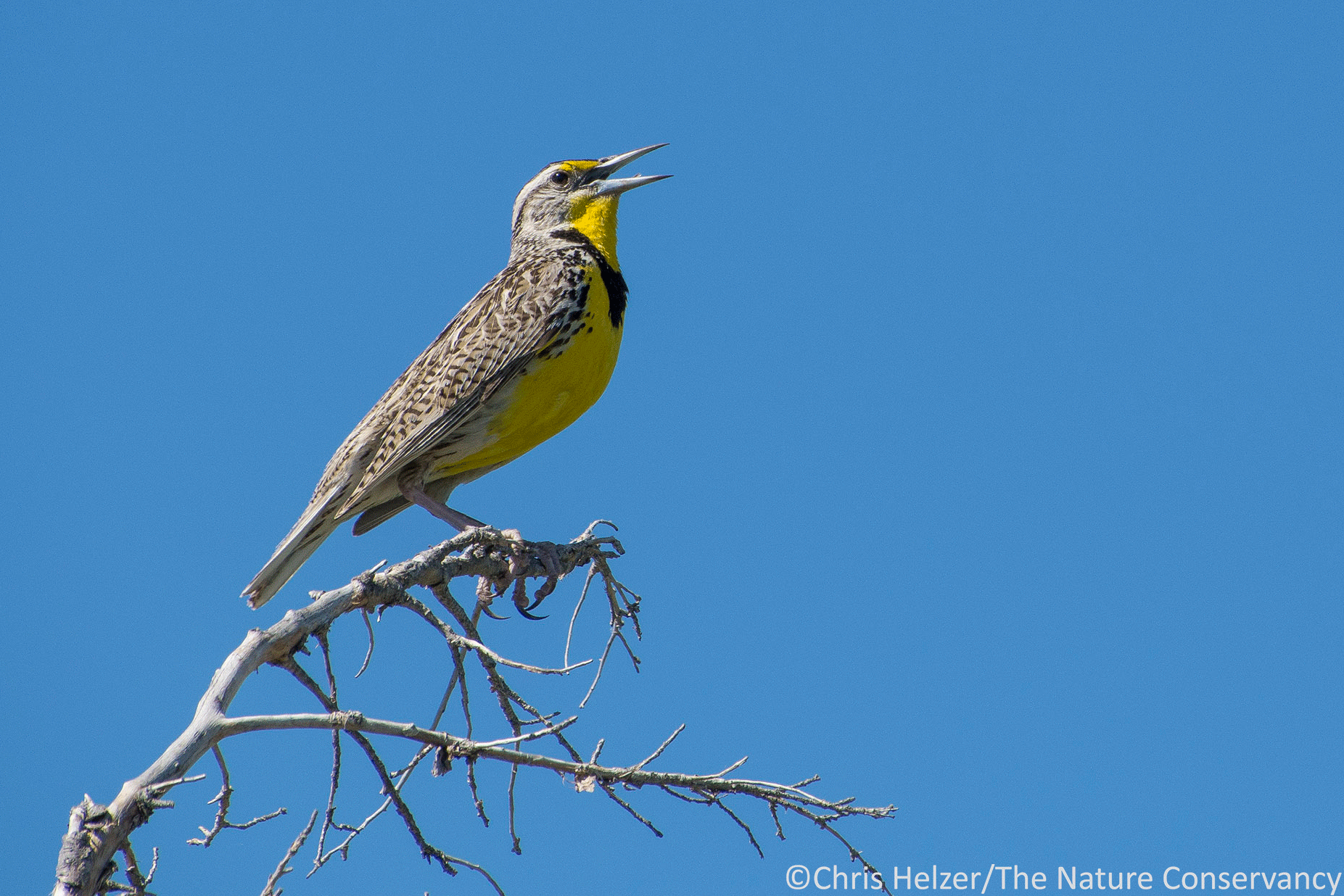
As I walked our prairie this weekend, I was serenaded by meadowlark song. It’s pretty common to hear western meadowlark songs during the winter, but these seemed almost frantic in their frequency. My understanding is that meadowlarks are fairly short-distance migrants – the ones that breed here travel down to Kansas or so and the ones breeding in the Dakotas make their way here for the winter. Or something like that.
If meadowlarks aren’t in their breeding range, why do they sing during the winter? They’re usually hanging around in flocks this time of year, so they’re not singing to defend territories. It seems like they mostly sing on warm(ish) days, so maybe it’s just an instinct triggered by weather or sunlight? If so, do they sing more on warmer days? Or are they just singing because it feels right? I have no idea, but it’s fun to think about.
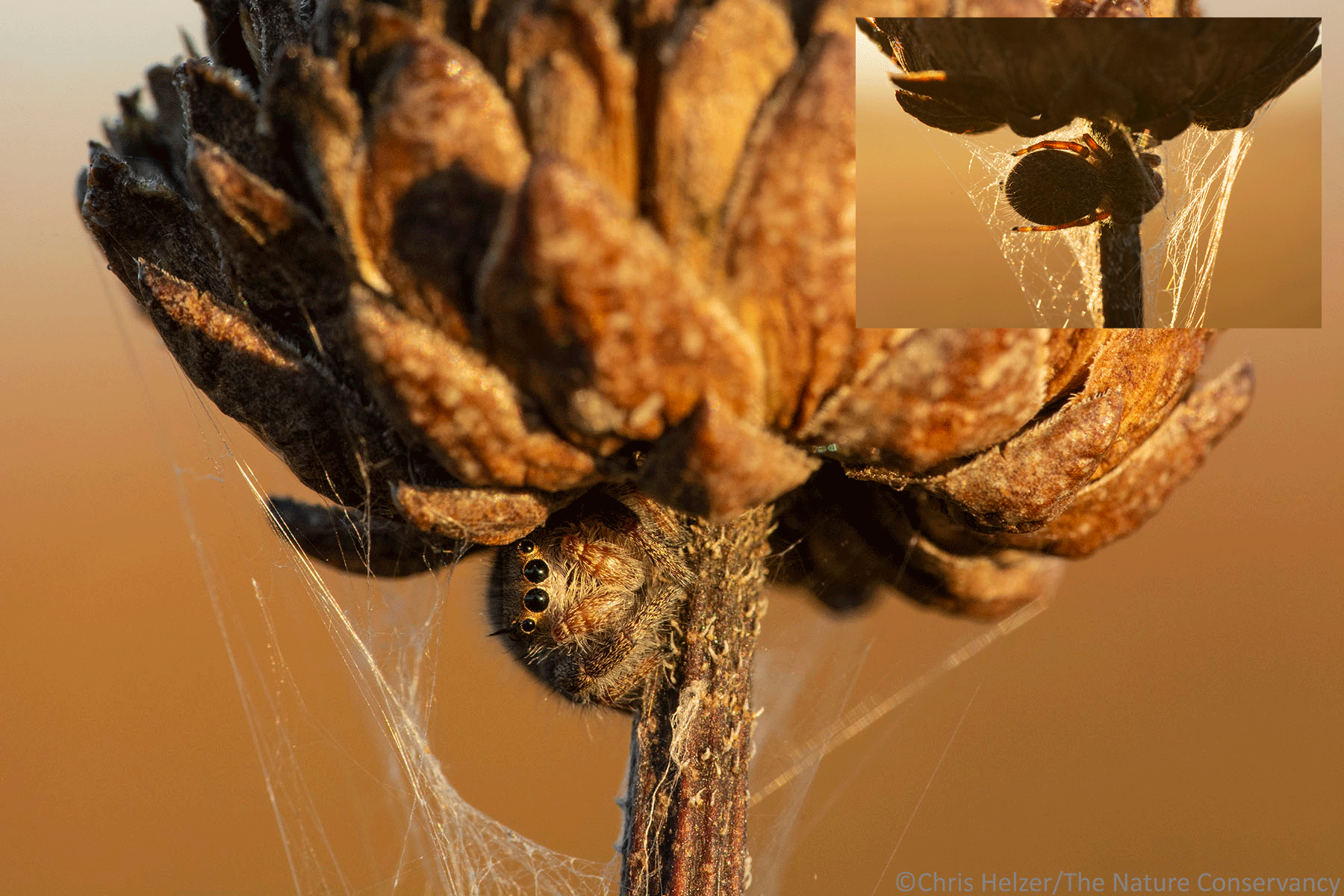
Last October, I took photos of a jumping spider at the top of a dried out stiff sunflower head. It had constructed a wispy cone of silk around itself. I’ve seen and photographed this phenomenon before. I’ve read that these kinds of shelters are sometimes used when spiders (not just jumping spiders) have eggs or tiny spiderlings to protect, and I’ve seen that in person. But I’ve also seen examples like this, where it just looks like the spider made a thin, partial veil around itself to spend the night behind. Is it protecting them against predators? Maybe that amount of silk is just enough to make a marauding nocturnal predatory insect pause or turn around? I wonder…
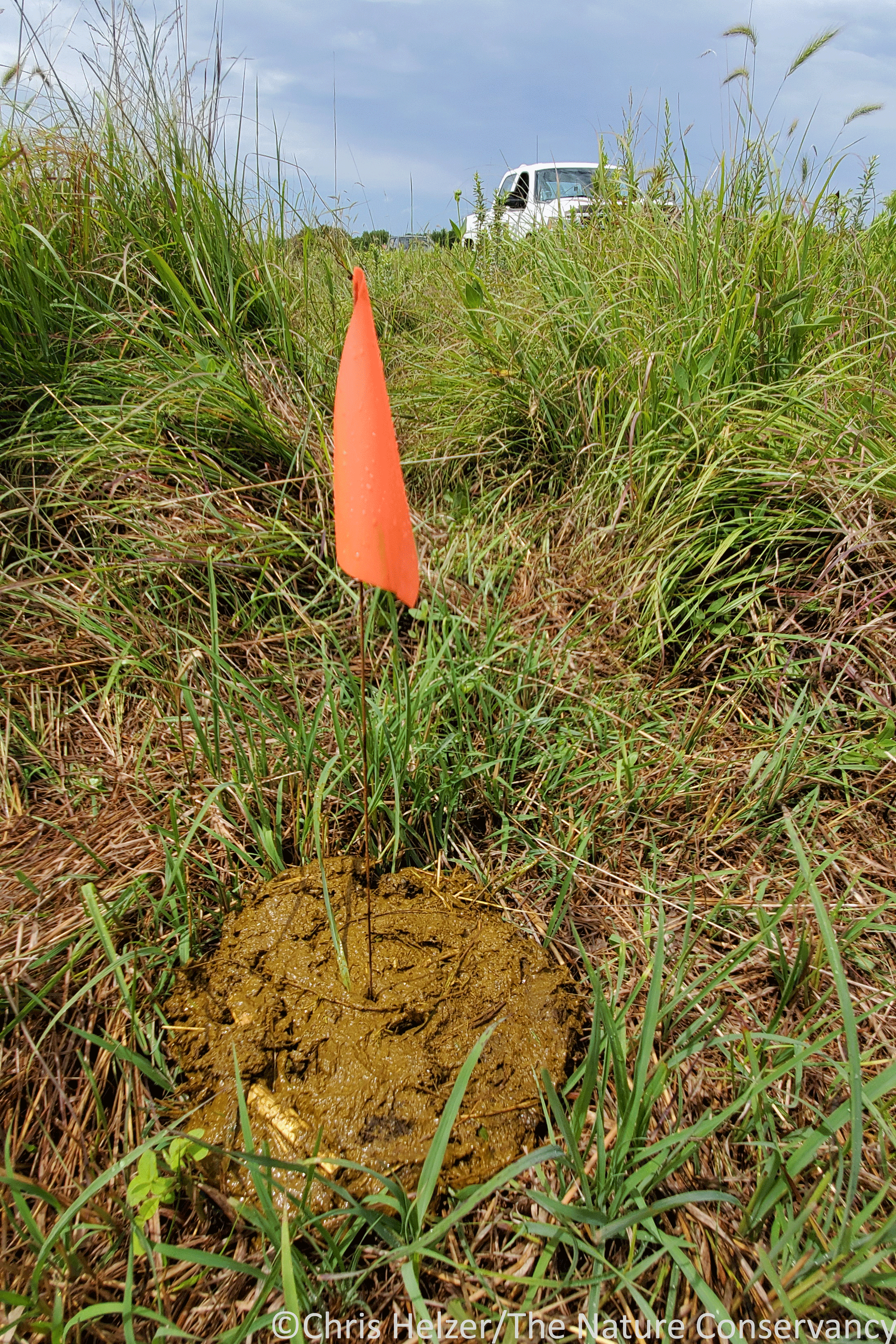
When a cow or bison poops, what happens to the plants underneath that pile? It can take a year or two for some of those piles to disappear. In the meantime, not only are those piles smothering plants, they’re also leeching high amounts of nitrogen and other chemicals into the soil. That combination of high nutrient loading and lack of light surely affects plants. But how? And do the plants beneath the pile survive and return once the manure is gone and the nutrient load has been dealt with by all the mysterious creatures who do that?
In this case, we’re actually trying to answer that question. The gross photo above shows one of the manure piles in a research project we started back in 2020. We’re tracking both the soil and plant impacts of manure piles to learn more about their impacts and how they’re absorbed by the prairie. You can be sure I’ll pass on whatever we learn.
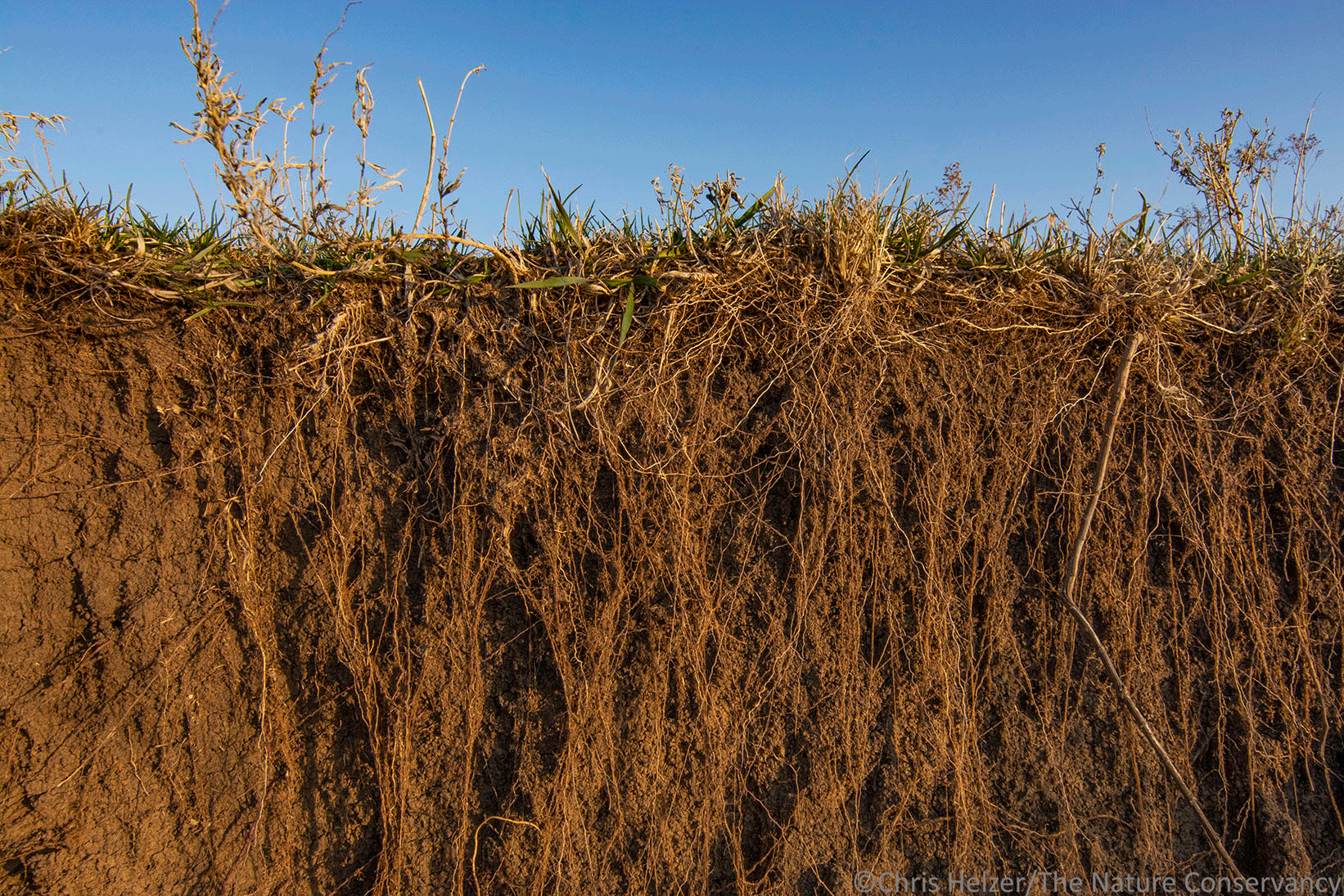
The questions about manure impacts lead me to one of the biggest questions I have about prairies. That question is, “What’s happening underground?”
Seriously, what’s going on down there?
I’m glad to have smart friends and colleagues like Dave Wedin, Hannah Birge, Greg Pec, Sara Baer, John Blair, Seton Bachle, and others who have helped me learn about some of the belowground mysteries in prairies. Still, even with all that help, I’m still pretty mystified.
There’s so much I don’t know, including basic vocabulary words, that it’s easy to get overwhelmed. I really do try to pay attention when people are describing what’s known about mycorrhizae and nematodes and such, but it doesn’t take long for my eyes to glaze over. I can’t even spell mycorrhizae without looking it up. Every. Single. Time.
I’m fascinated by belowground processes and organisms, and I have become somewhat more educated about them, but boy howdy, it’s still a big black hole in my comprehension of prairies.

I’ll end with a question that has plagued me for years and that I know is the topic of much discussion among butterfly experts. Regal fritillary butterflies are prairie specialists whose caterpillars feed only on various species of violets (Viola sp.). For that reason, it seems pretty weird that female regals don’t lay eggs on violets. Instead, they seem to lay single eggs on lots of random plants across the prairie. As far as scientists can tell, they don’t even seek out places where violets are present, let alone abundant, before laying eggs.
In other words, regal fritillaries seem to lay eggs with no regard for whether the sole food plant needed by their babies is around. How has this species survived so long? Its caterpillars hatch out in the fall and overwinter in the thatch, but then have to find and consume enough violet foliage to grow and pupate into an adult. Wouldn’t it be sensible to give them a little head start on that process instead of making them wander randomly around, hoping to find the food they need?
So much to wonder about! I’m confident I’ll spend the rest of my career trying to learn as much as I can and I’ll still end up understanding a tiny fraction of what’s happening in prairies.
And I’m ok with that.
What are you wondering about?




 The Prairie Ecologist