
Most of us involved in prairie management feel like we’re trying to hold back a flood of invasive species that threaten to transform our prairies into something else. For many of us, that flood includes woody plants that can quickly shift a grassland ecosystem to shrubland or woodland. For others, it consists of invasive grasses or forbs that have the potential to form self-perpetuating monocultures and causing catastrophic losses to biological diversity. Invasive animals and pathogens are also huge and growing threats.
Fighting that horde of invaders is time consuming and expensive. Even worse, a changing climate, combined with continued land use changes, continues to tip the balance toward the baddies. The battle is noble and the battle is worth fighting, but – and I’m just tossing this out there for discussion – what if we can’t win?
Seriously, though. What happens if we lose the fight? What comes next?
At both small and large scales, it’s increasingly clear that we’re not going to be able to keep invasives from dramatically transforming some of our prairies into new ecosystem types. A recent study at the University of Nebraska-Lincoln, for example, has documented huge northward shifts in Great Plains ecosystems by analyzing long-term bird data across the region. Much of those shifts are associated with continued woody encroachment. Similarly, scientists in eastern Kansas are finding that while plant diversity does best with ‘intermediate frequencies of fire’, very frequent fire seems to be necessary to hold back the march of trees and shrubs. Frequent fire is being employed (often annually) in many eastern tallgrass prairie fragments too, because of high pressure from woody plants. That high rate of burning, especially in isolated patches, is likely having significant impacts on invertebrate communities and causing unpredictable feedback loops on the rest of the prairie ecosystem and its long-term future.
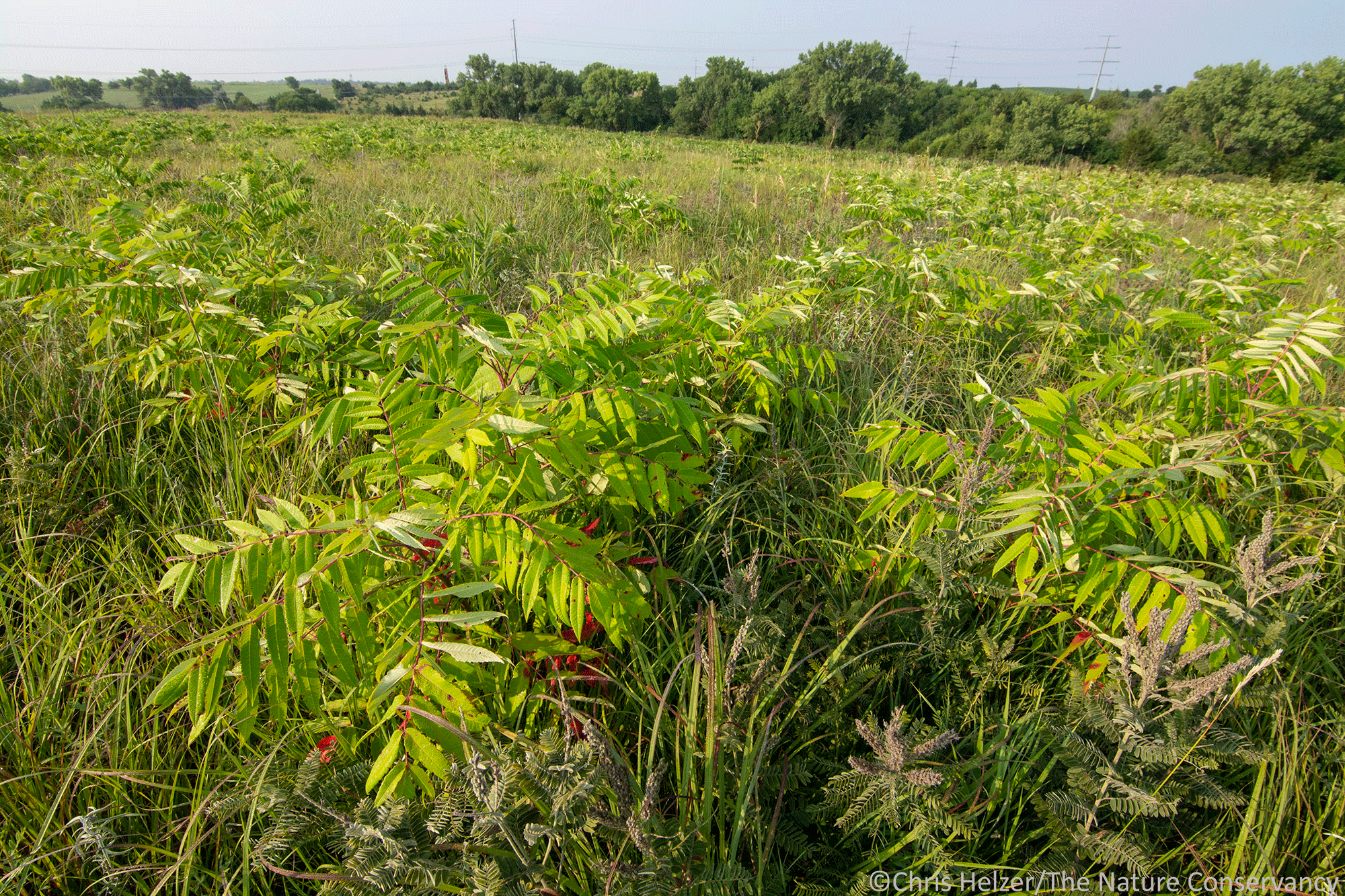
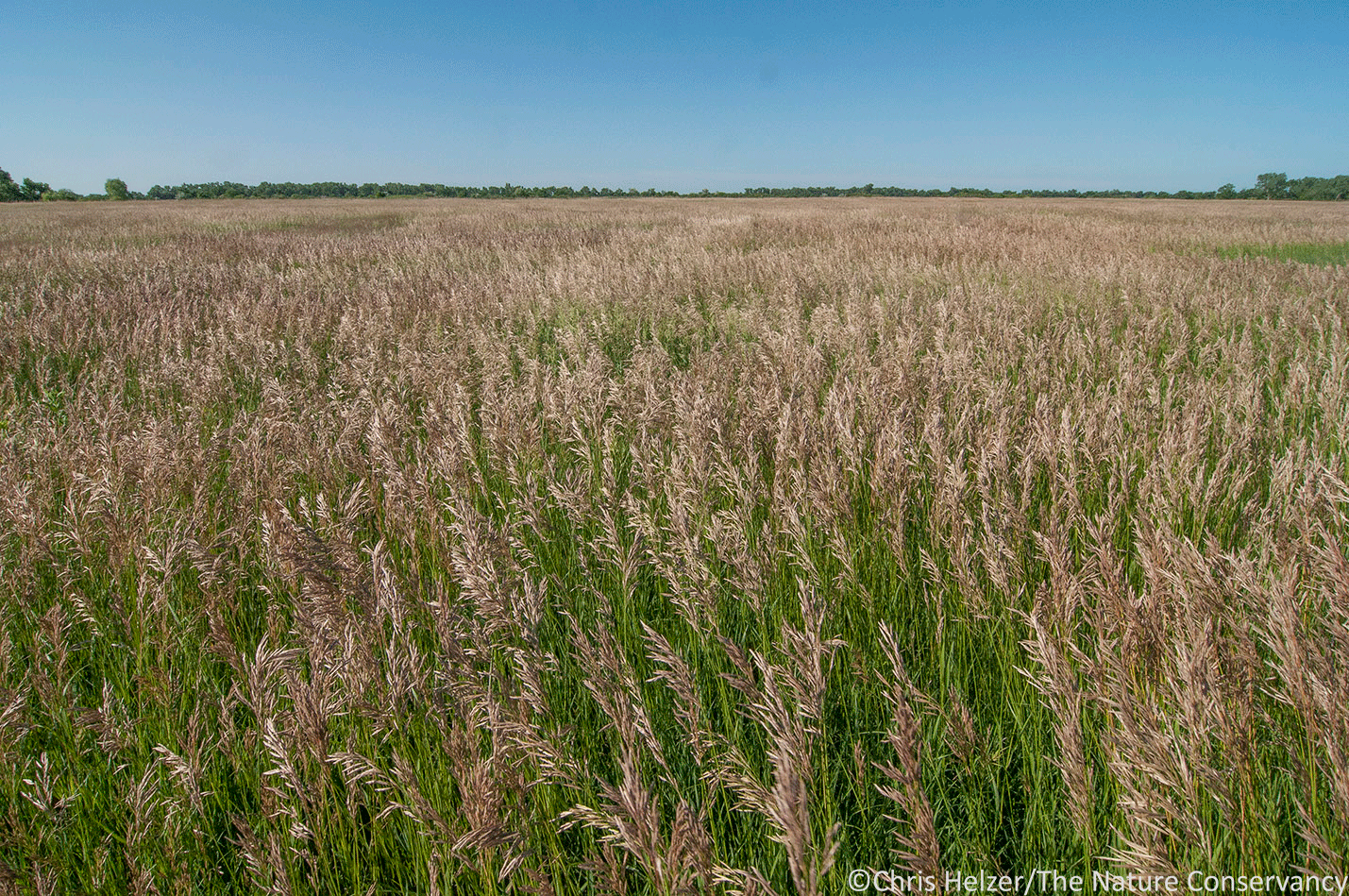
In the southern Great Plains, those fighting sericea lespedeza (Lespedeza cuneata) celebrate when a new approach simply slows the spread of that invader. Reversing its expansion still seems like a pipe dream in many places. Further north, reed canarygrass (Phalaris arundinacea) monocultures have formed along streambanks and across many wetlands and wet prairies. Local eradication efforts are often fruitless, even if temporarily successful, because moisture conditions, nutrient loading, and seed transport from upstream all enable reed canarygrass to quickly recolonize and reclaim its dominance.
These are just a few examples of major invasive species threats that threaten to overwhelm native prairie ecosystems. We might find new approaches or rally enough public support to repel some of those invaders. On the other hand, we might not. What if we can’t stop them? What if huge expanses of prairie become shrubland or woodland? What if diverse plant communities become largely dominated by a few grass or forb species?
If we focus all our energy on fighting and still lose, that loss will likely be catastrophic. On the other hand, if we take a little time to think about how to facilitate the transformation, maybe we can shape a result that’s better than the worst-case scenario. More importantly, if we start now, maybe we can develop and test some management options for post-transformation landscapes now instead of working from behind after transformations occur.
Ok, everybody stop and take a breath. Good. Let me be clear – I’m not saying we should give up. It’s still important to fight and suppress invasive species and manage for the biological diversity of prairies. What I am saying, however, is that while we’re spending the majority of our efforts building dikes to keep floodwaters at bay, maybe we should devote just a little time to window shopping for boats.
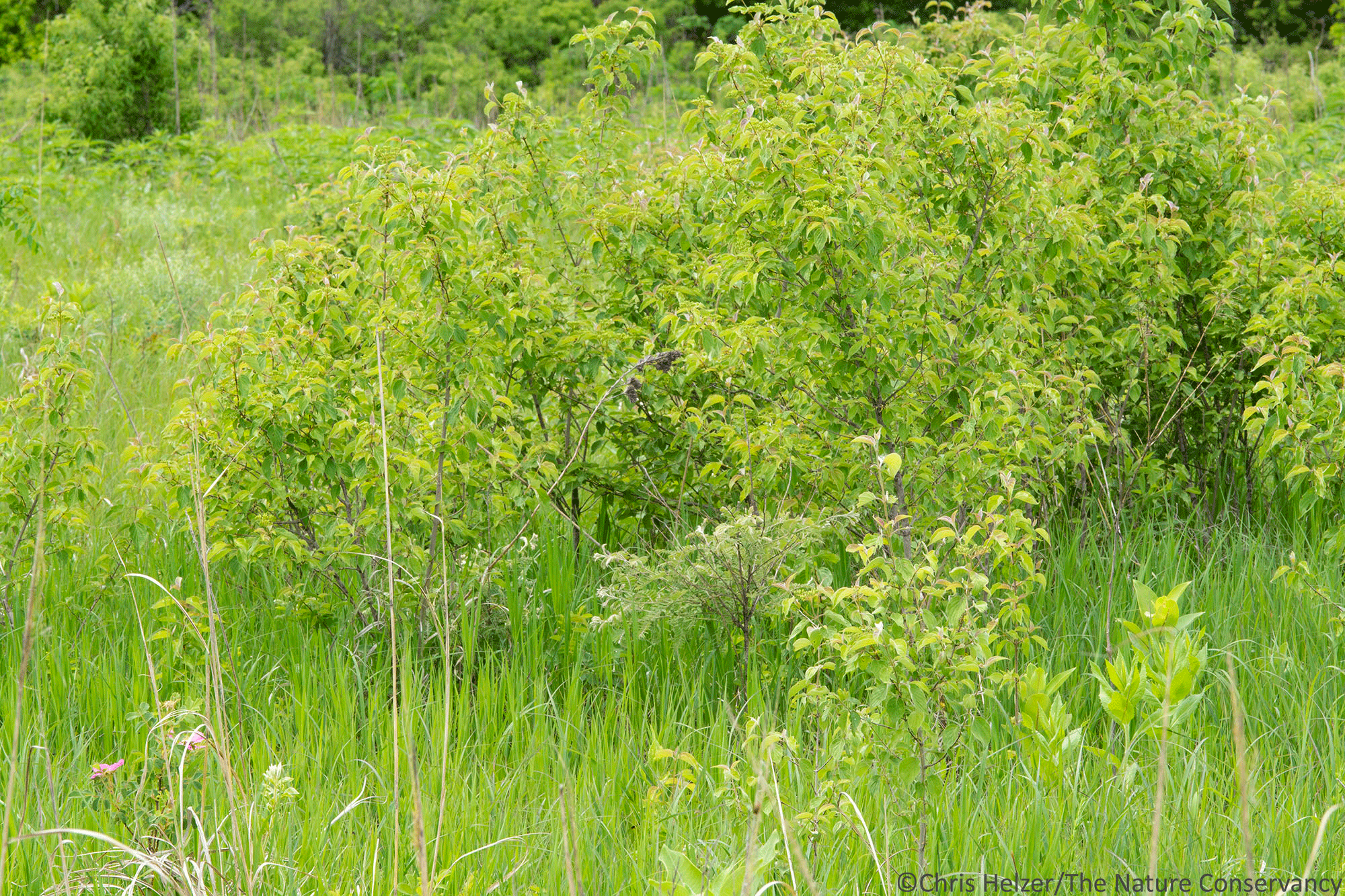
I’ll give you a couple examples of the kinds of conversations I think might be fruitful. Let’s say we have a prairie landscape that, despite our best efforts, is inexorably becoming overrun with shrubs. It seems valuable to start thinking about the implications and possibilities of that landscape as a shrubland. What species of prairie plants and animals might be able to persist with some degree of shrub cover? Which are completely incompatible with that habitat type? What new species of plants or animals might come in with the shrubs and help form new diverse communities? What lessons can we learn from places where this kind of transformation has already occurred?
What kinds of management could we employ in a shrubland to keep the shrub canopy diffuse enough to allow at least some grasses and forbs to grow beneath it? Could we keep enough herbaceous cover to carry fires? Could we maintain enough forb species diversity to support a pollinator community? What is the threshold of shrub density beyond which plant and animal diversity really nosedives and/or can’t recover?
Could we create and maintain some scattered openings within a shrubland matrix that would still host prairie species? What size openings would be needed for various plant and animal species? What kind of connectivity would we need to maintain between those openings to allow populations to interact with each other or shift to new locations over time?
Thinking even further down the road, what might be the next stage of transition after shrubs? A hardwood forest? Is that better or worse than a shrubland? Would we be able to stop or influence that transition if we wanted to?
Under a scenario in which a diverse grassland becomes dominated by one or a few grass or forb species, asking many of the same questions would be productive. It’s important to envision various scenarios and try to understand their implications and possibilities. We should be having these kinds of discussions now instead after a transformation has already occurred.
As we prepare for those conversations, there is a lot we can glean from existing examples of transformed/collapsed grassland ecosystems, or from established ecosystems similar to those being newly created. Parts of the southern Great Plains and elsewhere have already seen major transitions of grasslands into woody cover. What prairie species survived? Were there unexpected benefits in addition to unfortunate losses? How was overall biodiversity affected?
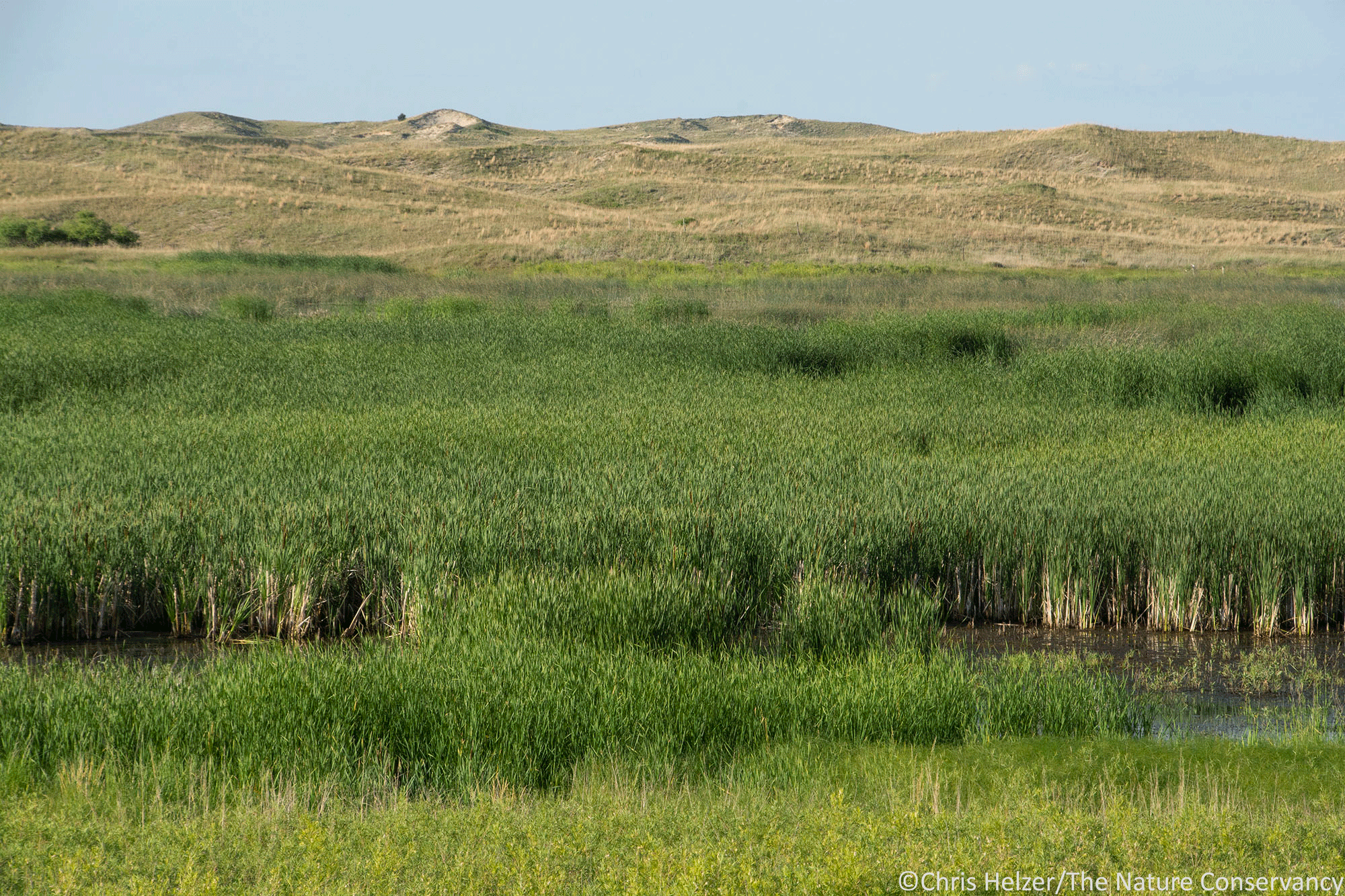
There are plenty of sites overrun with reed canarygrass, narrowleaf cattails, or other similar invasives that can still support many wildlife species if managed for a variety of habitat structure types. In some cases, targeted applications of fire, mowing, or grazing can allow at least a few other plant species to persist within a reed canarygrass kingdom. In more upland sites, there are countless examples of sites where smooth brome (Bromus inermis) or Kentucky bluegrass (Poa pratensis) has spread across entire sites. In many cases, diverse plant communities can still persist under an adapted management regime that keeps those grasses from becoming too dominant.

I don’t have answers to many of the example questions I posed above. I suspect no one does. That seems like a good reason to start exploring them now. It’ll take some time to sort through all the possible scenarios and come up with some possible courses of action. We’ll be able to identify some research questions that will help us better frame those future options. There might be ways to shape the way transitions to new conditions occur – either by slowing those transitions to give species time to migrate or adapt or by supervising the way new communities assemble to help ensure their diversity and resilience.
Thinking about worst-case scenarios is not the same as admitting defeat. It’s a pragmatic approach to a complex challenge. I’m taking lots of steps to prevent my house from catching fire, but I’ve also bought insurance, talked with the kids about evacuation plans, and have my most important documents in a safe deposit box. Having an emergency plan can reduce stress because you know you’ve prepared for the worst.
Look, we know the climate is changing, and it’s literally changing the playing field for plant and animal species. We can see woody encroachment getting more aggressive and we’re seeing more, not fewer, invasive species entering the playing field. Habitat fragmentation, nitrogen deposition, and public apathy, among many other factors, exacerbate the challenges we face. The prairies we’re managing today aren’t the same prairies they used to be, and they’re surrounded by a different and more hostile neighborhood.
On the flip side, we’re getting much smarter about prairie management and restoration. We’ve seen some huge advancements in our approaches to building and maintaining biodiversity and ecological resilience. This fight is far from over and I’m full of optimism and committed to giving everything I’ve got. However, that doesn’t mean we should push forward blindly. Savvy fighters recognize the value of strategic retreats and contingency planning.
Nobody wants to think about defeat or its consequences. I certainly don’t. I also don’t want to think about floodwaters breaking through dikes or my house burning down. Unfortunately, ignoring those possibilities doesn’t make them go away. I think we’d all feel better if we started having some honest and thoughtful discussions about the scenarios we hope will never materialize. Where transformations are inevitable, maybe we can guide them in ways that will preserve as much biodiversity and ecological function as possible.




 The Prairie Ecologist